
There’s certainly a long, intertwining history of cinema and science. Topics in biology, environmentalism, astronomical observation, and human-technology relations have remained at the forefront of documentary concerns since the medium’s earliest shorts. Accordingly, even the alleged paradoxical notions of non-fiction and the avant-garde have found a poignant intersection in some of film history’s most influential pockets. This merger can be traced back to the early zoological shorts of Jean Painlevé and László Moholy-Nagy, through the rise of James Benning’s structuralist movement, and within the reflexive and found-footage works pioneered by Chris Marker, Chantal Akerman, and Bruce Connor. Yet, in a cinematic landscape increasingly dominated by commercial narrativity and formulaic exposition, little attention and opportunity remain for such an experimental documentary tradition. Despite a nearly a 100-year-old precedent, exhibitions of works that blend the surreal, the scientific, the anthropological, and perhaps even the extraterrestrial have moved away from theatrical spaces almost entirely. Nevertheless, in its eighth year, the Cosmic Rays Film Festival in Chapel Hill, North Carolina, remains among the only exceptions, as photochemical processes decay on the big screen, geological formations are etched into celluloid, and visions of industrialism are interrogated in true avant-doc form.
Through its very name, Cosmic Rays pays homage to the scientific and celestial. By definition, the term refers to the intergalactic particles that traverse the solar system to create imagery of the sublime in the sky (or screen) for us to capture as incomprehensible yet awestruck spectators. Since 2018, festival founders Bill Brown, a landscape documentarian, and Sabine Gruffat, an experimental video artist, have cultivated something otherworldly yet familiar through a festival dedicated to pushing the boundaries of film and video as art forms. According to the submission guidelines, the festival seeks to showcase non-commercial short films, 20 minutes or less, that “eschew convention and commerce.” This purposefully ambiguous mission, a substantial deviation from the dominant practices in contemporary film programming (even within the context of a regional festival), is no small feat. Still, each year, the festival captures the attention of a sold-out crowd with a collection of experiential shorts often deemed otherwise too abstract for the theatrical.
Despite its small beginnings, Cosmic Rays is increasingly becoming a hotbed for experimental film in the Southeastern United States. Not only does the festival highlight an eclectic collection of both North Carolinian and international filmmakers, but its gravitational pulls have accumulated an ever-broadening community of spectators, cinephiles, critics, and academics from across the nation. Cosmic Rays’ 2026 program, held March 20-22, only further showcased North Carolina’s established film culture. The festival’s shorts examined non-fiction cinema through an avant-gardist lens in four showcases that blended films from the archive, the cameraless, and the ecologically aware. After over 300 submissions this year, Brown, Gruffault, and executive director Kristin Pearson selected 33 shorts with clear thematic continuity across a three-day exhibition cycle at the Chelsea Theater.
Having the pleasure to attend the series, I found this year’s Cosmic Rays program to be primarily interested in two ideas: the interplay of human, environment, and fauna, as well as the scaling repercussions of urbanism and industrial advancement. There’s a thin line to tread between sermon and science lesson, but the 2026 festival reminded its attendees of the long and volatile relationship between non-fiction cinema and scientific subject matter — a history that has and will continue to exist lightyears beyond the hallmarks of conventional documentary capacities. Of course, industrial critiques are prominent motifs throughout the history of the avant-garde. Following these precedents, the cultural and political threads interconnecting these films felt particularly relevant and cohesive selections fit for both the prevailing zeitgeist and pertinent local issue. Its visions of astral provocations and earthly emulsions, therefore, situate Cosmic Rays 2026 well beyond Chapel Hill’s community art house. Rather, its program falls further in line with the diverse, idiosyncratic galaxy of the experimental documentary genre.
As with any periodic film festival, featured inclusions often help elucidate certain movements, subject matter, and technical trends in filmmaking and film viewing. Festivals, like Cosmic Rays, are therefore useful in identifying the currents of contemporary experimental film culture. Consequently, in an age where digital videography is more accessible than ever before, the filmmakers highlighted at Cosmic Rays seemed partial toward topics surrounding the scientific, but also the recycled, the archival, and the analog. The festival’s programming was implicitly underlined by a refutation of contemporary digital culture and the ease and excess inherent to creating and streaming videographic cinema.
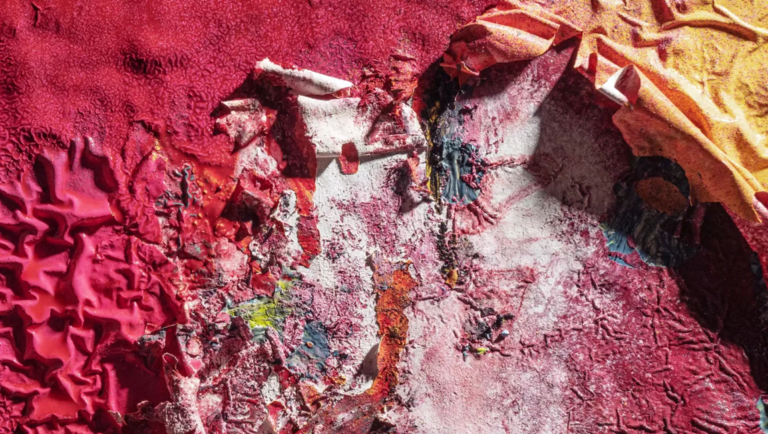
Cinephilia in the 2020s has been largely defined, thus far, by a reemerging widespread affection for the projection of physical film formats. This notion was only amplified at Cosmic Rays, as found footage was singlehandedly the most prominent practice showcased at the festival. Filmmaker Alina Taalman’s Fall Wind (2025) exemplified a nature documentary consisting of repurposed footage from the U.S. National Park Service and Geological Survey archive. Similarly, Bren Vienrich-Felling’s According to Plan (2025), a mockumentary on the rise and fall of the divisive Bradford pear tree, integrates archival footage, recent interview recordings, and cameraless celluloid pressings, reminiscent of Stan Brakhage’s Mothlight (1963). Iowa-based filmmaker Kate E. Hinshaw followed a comparable vein of re-interpretation. In her film Good Neighbors Care (2025), the influence of Bill Morrison’s Decasia is tangible, as she cannibalizes and alters an archival Dupont advertisement onto deteriorated 16mm film.
Later in the program, A Telephone for God (2025) further merged archival interview footage with modern (pseudo-)scientific documentary, as the film attempted to demonstrate man-plant communication using an allegedly spiritual Vogel Crystal. In a lecture co-hosted by the New York-based documentary center, UnionDocs, before the screening, director Nicky Tavares prefaced her film by discussing her interest in the legacy of former IBM scientist Marcel Vogel (1917-1991), whose works with therapeutic crystals linger on the margins of religious and non-Western medical practices. Tavares’ generally neutral portrayal of California’s crystal-worshippers offers a clear delineation from her earlier filmography, which often involved entirely cameraless imagery. Tavares cited filmmakers Lin Lye, Norman McLaren, and Luther Price as her largest influences. These filmmakers, perfectly apt for Cosmic Rays, further blend mixed-media film, animation, documentary, and after-image effects.
Alternatively, other filmmakers in the program were more interested in hallucinations of the present, rather than their contemporaries’ attempts to preserve the past. Just before the festival’s closing ceremony, Brown expressed his thematic interest in films regarding “utopian aspirations.” I can only interpret Brown’s notion of “aspiration” to be a subjective term that I fear may be accompanied by an ironic tinge, recognizing that such idealistic ambitions may come with significant repercussions.
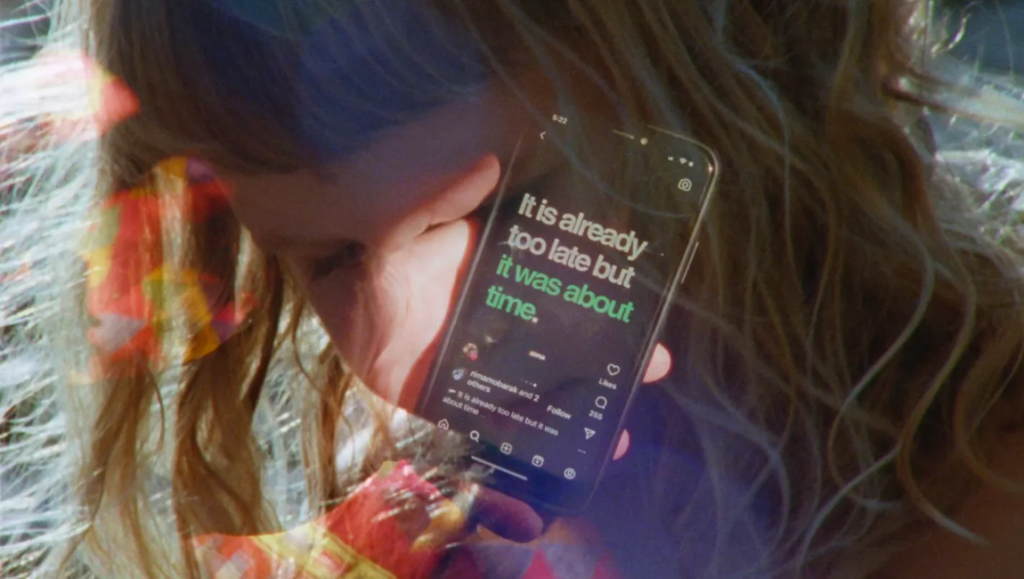
Perhaps the most on-the-nose, though timely and technologically relevant, example is Camilo Restrepo and Jorge Caballero’s 09/05/1982 (2025), which presents itself as an archival documentary short about Latin American violence, only to reveal its status as AI-generated imagery within its end credits. I was marginally surprised at this film’s inclusion and generally unimpressed with its lack of nuance, yet its existence within the festival appears simply a symptom of the very technological innovation that the larger program seemed to almost bleakly denounce. Immediately afterward, Ben Russell’s Another Earth (2025) adopts an equally overt approach to contemporary cultural commentary. The film’s double-exposed 16mm imagery contrasts footage of the director’s own daughter with the overlaying, blatantly political doomscroll that eliminates any room for ambiguity.
As these filmmakers know, there’s a certain tension between what humans have created and what we need to live. 09/05/1982 and Another Earth may epitomize this tireless conflict, but David de Rozas’ Allrecipes (Stuffed Manifesto) (2025) echoes the idea with far more comedic and intuitive grace. De Rozas’ satirically surrealist instructional film — a genre historically utilized by federally-funded industrial films throughout the 20th century — capitalizes upon the absurdity of common objects. Appearing almost as simplistically framed and edited as a YouTube video, the narrator informs his viewers to stuff their social security card in a lemon, a grapefruit in a Dinosaur head, and a birth certificate into a tomato. De Rozas’s constellation of everyday objects tosses logic and bureaucracy completely aside in an agglomeration to make the likes of Marcel Duchamp and Jan Švankmajer proud.
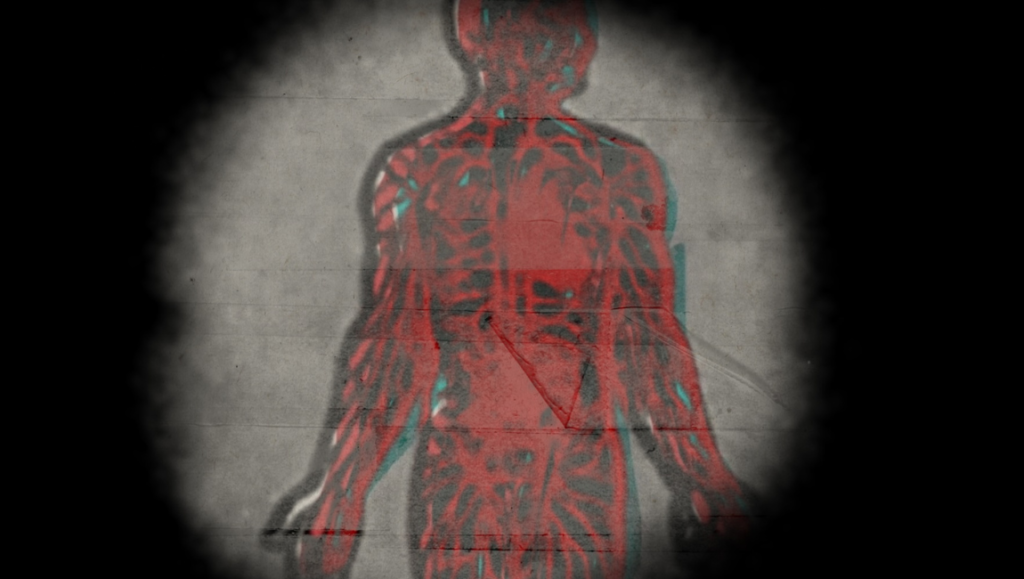
Within the festival, the film that may be most reflective of its broader concern was Kara Ditte Hansen’s Living Containers (2025): a multifaceted portrayal of American bioengineers. The 14-minute short, among the longest in the weekend’s program, pairs dread-inducing images of microscopic larvae with the sensuality and awkwardness of their human researchers. Hansen’s previous films have also been attentive to landscape and environment. Living Containers is thus a concentrated composite of surreal biological investigation and industrial reverberations, often mindful of Godfrey Reggio’s Koyaanisqatsi (1982). Placed within a festival so harmoniously aligned with its subject matter, the film, fit for insects, organisms, models, and machines, perfectly exemplifies how scientifically-fueled provocations continue to exist within the avant-garde heritage.
As someone who’s lived in North Carolina’s research triangle for the better half of a decade, the festival’s technological and environmental content seemed only appropriate to this writer, offering a quiet, curated program of the issues and concerns especially relevant to its neighborhood attendees. Cosmic Rays, a newcomer in innovative avant-garde cinema, serves as one of the few active pockets where time and space are reconstructed onscreen in ways both palatable for local audiences and monumental for keeping the existence of the experimental documentary alive.
Comments are closed.