
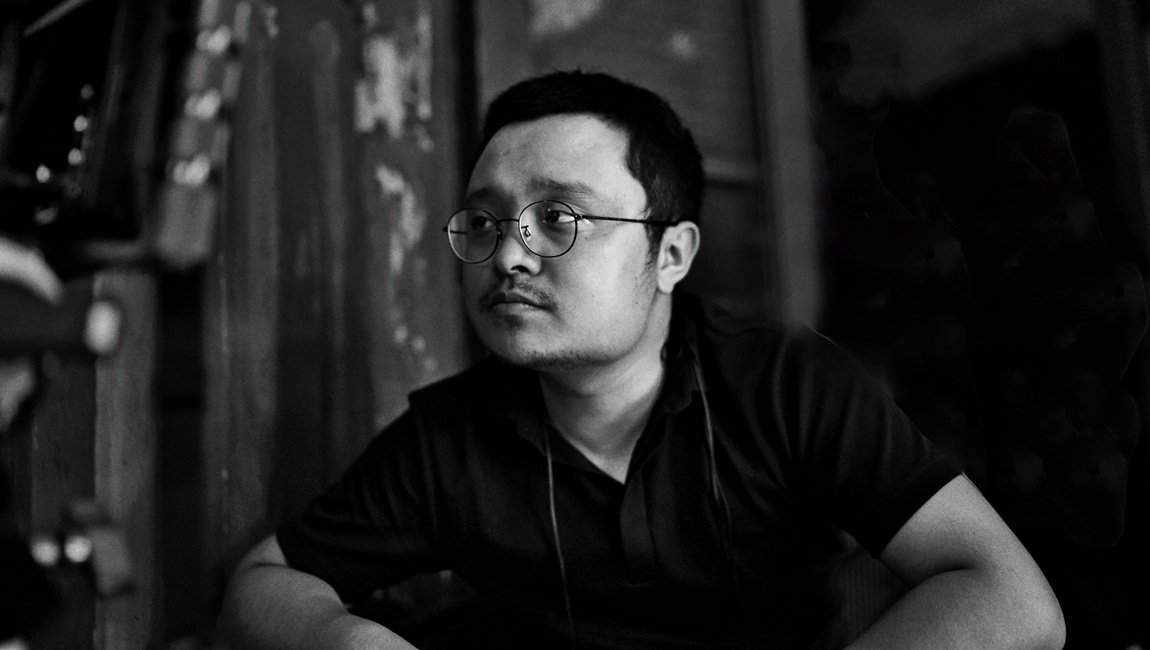
Filmmakers as confident and as distinctive as Bi Gan are rarely as young as he. At just 36 years of age, he’s directed four short films and four feature films to date, the latest of which, Resurrection, has just opened in the U.S. Known for his extremely long takes (2018’s Long Day’s Journey Into Night contains a 59-minute one), formal experimentalism, and entrancing style of poetic, sometimes quirky expressionism, he’s as ambitious as he is assured, and Resurrection is accordingly both his most ambitious and assured work yet.
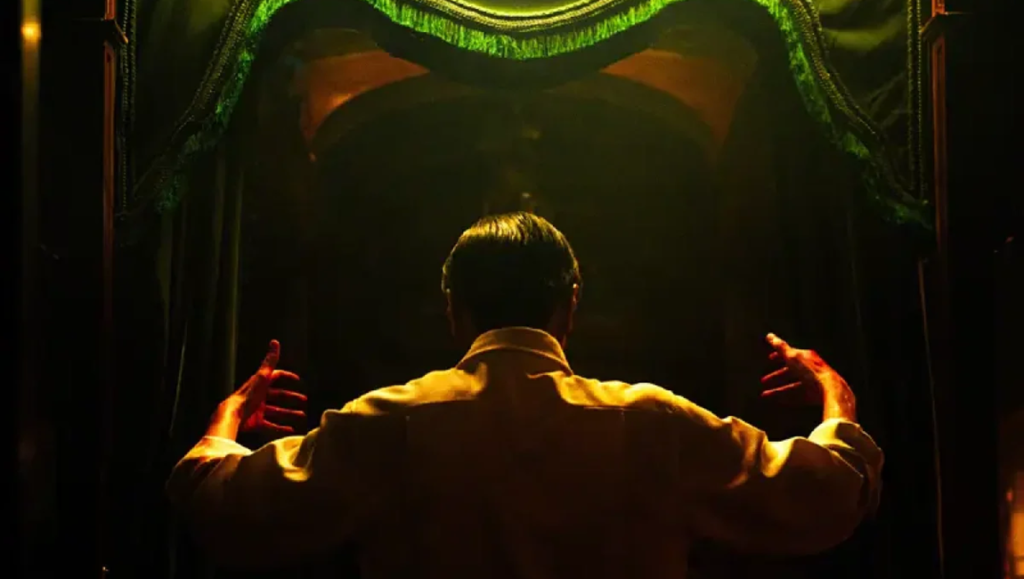
In Resurrection’s early 20th century opening, shortly after the dawn of cinema, humanity has sacrificed the ability to dream in exchange for longevity, and employs special seekers, “the other ones,” to root out those few individuals who maintain this ability, known as deliriants, in order to destroy them. When one such deliriant (Jackson Yee) is captured by an other one (Shu Qi), her compassion persuades her to grant him a gentle demise — she installs a film projector inside him, and experiences his dreams in his final moments. These dreams are of the history of the century in fragments; Bi takes us on an episodic journey through Chinese society in all its momentous change through the 100 years leading up to daybreak on January 1, 2000, each episode in a different style and genre, and each focusing on a different human sense.
It’s a wondrous film, comparable only to Bi’s other work, and patently the product of a major artistic talent. I had the privilege of speaking with Bi over Zoom, where we discussed the myriad complex meanings of a film that touches on themes of spirituality, massive societal upheaval, human destiny, and the journey of cinema right up to the present day.
Padaí Ó Maolchallan: Given all the societal and technological changes in the world so far this century, Resurrection’s 20th century setting has a comforting, nostalgic feel to it. I wonder what kind of responses you wanted to generate in your modern audiences through this setting?
Bi Gan: For me, I think that as we are experiencing new stages of many, many changes within either the film industry or just the whole world in general, it is for us to realize that there are certain existential crises that we are currently experiencing and try to reflect on that and find solutions. This is not just uniquely in China — this is the whole world. Since we are experiencing the here and now issues, including new developments in society and technology, I really see this as a way to think about and focus on issues that we’re dealing with, especially existential crises. We need to look back in order for us to have a deeper reflection on the here and now, so that’s the reason why I’m pinpointing the past century with the scale and the span of 100 years. The 100 years is to look into the love that we all experienced collectively, the darkness that we all experienced collectively, the bitterness that we all experienced collectively in the past century. I think that, eventually, they are the crucial, integral elements to arrive at, the ultimate subjects and issues that we have to face — the meaning of life, what does it mean to be human, the existential questions that we all face. That is, sort of, a roundabout way to answer your question about why I’m using the past century in order for us to do that.
I’m not very knowledgeable about the questions and issues that we face with the film industry. I do think that there are certain spiritual issues and anxieties, especially in the context of China. That is something that I hope we’ll be able to use, and the examinations of the century, to connect that with the film history, the Chinese history, all the different important issues that we all deal with to address the anxiety and the spiritual void that a lot of people now realize is happening.
PÓM: At any given point in history, such as right now, for example, we are at the latest time in history we have ever been at, and that’s true of every time in the past as well. This film depicts a great deal of serious change over many years and, at any point in that time, people would’ve been looking to their past to solve problems in their here and now. Are there any recent changes in the modern world, or elements of the world today, that worry you, for which you may look to the past for guidance, and is that what you were trying to depict in Resurrection?
BG: This is a discussion that is outside or beyond film itself, but I do think that it’s important to talk about. In terms of what concerns me the most here and now, these are similar concerns that a lot of young people are facing and thinking about right now, one of which is the idea of autonomy — as a human being, how are you going to remain who you are in a more wholesome sense? Technology is currently, continuously, and very intensively trying to make us fragmented, whether that’s the short reels that people watch or the streaming platforms or the different devices, making human beings experience life in such a fragmented way. So are there ways that we can reflect on that or, dare to say, even reverse that, and start to think about oneself as an autonomous individual in its entirety, to be less fragmented moving forward? That’s one of the things that I’m concerned about.
The other thing, if I can make it even more concrete, is the anxiety that we have in terms of how inclusive and compassionate we are as human beings. It seems that we have reached a point of human development where you see the divisions and the bipolar ways of demonizing the other side. It seems to be even more difficult for us to have a dialogue and to discuss certain things in such a way without making the other side the enemy and the devil. This is not just uniquely in China, this is around the world. Those are two examples of things that concern me, that I wanted to reflect on and bring to the fore in Resurrection.
One additional anxiety that I have that is also one of the many elements that I want to express in this film is the idea of the individual and their relation to the reality they live in. In this case, I’m using a “film monster,” a “deliriant,” and how it relates to the world that it lives in and that it somehow lives through. It’s difficult enough to actually experience your world because the world itself is very hard to grasp in a philosophical sense, but it’s even harder if your sensory channels, one by one, have been manipulated, distorted and manufactured by all the new technologies and new ways of consuming information. I think that will make us human beings less likely to have a connection to the reality of the world we live in, like what we used to have without these new technologies, new manipulations and new consumptions of information. So I also want to bring that level and layer of anxiety to the fore in this particular film, because that is indeed what we all experience right now. In order for you to do so, you need to think about one sensory channel at a time, to deconstruct it and to realize what has changed from the past to the now to somehow address that as we move forward as humanity in general.
PÓM: The modern world is so much more virtual than the one you depict in the film, and perhaps then it could be interpreted as being less real, less actual in our experiences. I wonder how that relates to Resurrection as film? Film is often really just a representation of reality rather than a reality in itself; memory could also be described in the same way, and memory is a major element in the film as we go through the deliriant’s mind and his memories. As the modern world seemingly becomes less real and more virtual, do you find that these representations of reality, such as film or memory, become more real or more valuable?
BG: One of my concerns is that film and memory are getting more and more unreal, that they’re not as connected to reality as before. If you think about it, film is almost like the ultimate accumulation of all our illusions. With each step away from all these illusions, it’s being altered and distorted by new technologies and the new reality. Therefore, I think that, at the end product, film will be even more distorted and even more unreal as a result. If you think about viewing experiences — film viewers going into the theatre — in the past, that was a crucial element of how we, as humanity, build collective memories. As time passes, with new technologies, this type of viewing experience, these collective memories, has not been utilized as much as before, or has seen a downturn. Without this kind of opportunity, with the theatre as a space to have these moments of building collective memories, how are we going to be able to come to consensuses about things if we don’t have the chance to have communal experiences? To examine a lot of the things that we all experience or endure or are trying to resolve? That’s the way I see how films and memories have shifted, changed and distorted because of the new reality we face.
Through different eras in history and different stages of human development, we’ve somehow experienced our reality not in its absolute realness, not so absolute and authentic. This sense of what’s real is unattainable, wherever and whenever you are in human history. Having said that, I think it’s even harder to accomplish, even more unattainable nowadays because of the different devices and different technology that has changed, fundamentally, the ways we connect to other human beings interpersonally. That poses even more challenges, difficulties, and questions than before.

PÓM: You mentioned earlier about autonomy — it struck me that the film monster is often lacking control. He maybe doesn’t have control over his freedom or his purpose or his destiny. I wondered what your perspective on that was — was this lack of control an oppressive state for him, or was it liberating? I also wondered if you could talk about that in relation to your filmmaking process: how you view control, and its lack, regarding the development, production, and, eventually, viewing of your films?
BG: Starting with the character of the deliriant. He’s a character going through struggles in different eras, trying to define himself and to have a kind of autonomy. But then it’s inevitable, he’s destined to die in the end and then be reincarnated for the next chapter, where he goes through the exact same struggle again, trying to find himself and find his autonomy. I see this as a cyclical way of creating a character going through different eras and facing the exact same fate of having to struggle to find answers and meanings of what it means to live. Sometimes, it will take death in order for you to really understand what it means to live.
There is a famous quote from a director talking about a deep sea fish. If the fish doesn’t burn itself to create light, it and others around it will be in complete darkness. I envisioned the deliriant as such. In order for humanity to get closer to having freedom and autonomy, it requires this character to sacrifice himself, or to burn himself, so to speak, just for some likelihood for the pursuit of autonomy and freedom to happen.
As a filmmaker, I think that this topic of freedom is quite interesting just because the process of filmmaking is probably one of the least free art forms because of the fact that, within filmmaking, there are so many different elements that will have certain limitations, impositions, and parameters that you have to follow and, in the end, somehow resolve the conflict among these different elements in order for you to make film. That’s not unlike the character of the deliriant — it’s not as if you can just make films freely and enjoy the process of making whatever films you want to make. Due to these inherent limitations, regulations, and parameters in the film industry that impose on this particular art forms, I have to think about how I can accomplish all this so that we will have a better working environment for all the filmmakers in the world to express themselves freely. Might I have to go through the route of the deliriant or the deep sea fish, to burn myself in such a way that will, hopefully, offer some light or some answers or opportunities for a freer way to make and show films — to make it easier for everyone going forward. So I see myself in the deliriant, the struggle to seek freedom, and how that connects not just to the character or to myself, but also to the entire world.
PÓM: The deliriant dies at the end of the film. I saw a lot of his travels through his memories as him abandoning these memories and his various senses gradually en route to an eventual death. Given that you’ve described him as a film monster, to what extent does this represent the death of cinema to you and, then, what would the rebirth or cinema look like if that’s the case?
BG: For me, I think I can talk about this in two different elements: one is the character of the deliriant, and one is the concept of death. I designed this particular character because of the fact that film history and filmic language is very accessible, very universal, so I could make the process for the audience to access my film much easier. Therefore, the deliriant as a character is a vessel to carry the audience, to traverse different chapters of the film. I don’t see the deliriant as representing the film industry or the future of film. It’s just a means to an end.
With the idea of death, I wanted to use the concept of death, or reincarnation, or resurrection, to use to film’s title, as a devise to be able to traverse different eras, different genres, different styles, different storylines from chapter to chapter through the act of dying and then resurrecting, as a storytelling device. In terms of whether or not I have certain standpoints or perspectives on whether or not this is the death of the film industry and of film itself? I don’t see this, and I think this is something that will be readily known by audiences. If they just look at reality, they will find the answers that they are searching for. As a filmmaker, that’s not something that I want to answer. To me, the more important thing for the film, through the character of the deliriant, through the act of dying and resurrecting in each chapter, is for me to create a viewing experience that will somehow connect with the audience so that the audience themselves, watching this film, will bring the film with them back to their daily lives, that will forever become part of their consciousness or their subconsciousness. To me, that’s more important to discuss than trying to give clear answers about whether or not we’re experiencing the death of film.
Comments are closed.