
2025 is the year of the teeter-totter. We teeter on the first half of the decade, defined by death and the uninhibited embrace of a digital world, and totter on the second half, defined, so far, by malfeasance in all sectors of public life across the globe. The films on this list move that teeter-totter. Some kick up with hard-earned optimism, others push down with well-deserved cynicism; they all, one way or another, exert pressure on the crazy, awful, sometimes wonderful quagmire we’ve found ourselves in, and show us that cinema — even when backed into the far corner of the playground by Big Tech —still has plenty to offer. As we wade our way into 2026, may we take the offerings these movies share with us to heart.
#50-41 |
#40-31 |
#20-11 |
#10-1 |
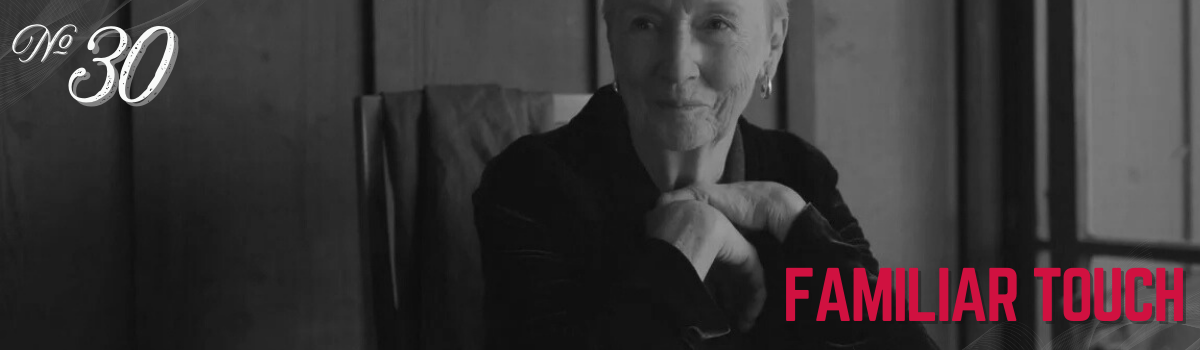
“I’m not a mother,” announces Ruth (Kathleen Chalfant) in Sarah Friedland’s debut feature, Familiar Touch, “I didn’t want kids.” Ruth is speaking to Steven (H. Jon Benjamin), who is not her date for the afternoon as she believes, but is actually her son, dropping her off at Bella Vista, a swanky assisted living facility not far from her cherished home. Her dementia has progressed, and while she can remember her favorite recipes and minute details about growing up in Brooklyn, the identity of her son is lost to her. This early-on pulverizing moment, played brilliantly by Chalfant and Benjamin, is essentially the only exposition viewers will receive in Familiar Touch. Throughout the rest of Friedland’s brilliant film, we are guided into an experience of the unfamiliar surroundings of Ruth’s new life alongside her, as much a fish-out-of-water as she is, as she navigates life in this new place. It’s clear from the bits and pieces of lucidity that we see from Ruth that she was (and in many ways, still is) a strong and independent woman, and it’s the patience and resistance to bombastics of Friedland’s approach that sets Familiar Touch apart from other films about memory loss and aging, as well as the director’s dedication to a construction that never diminishes Ruth’s shine. Yes, we see the crushing moments of a person losing everything that made them who they are, but we also glimpse the small, sunburst joys of finding oneself again, even if only for a moment. — EMILY DUGRANRUT
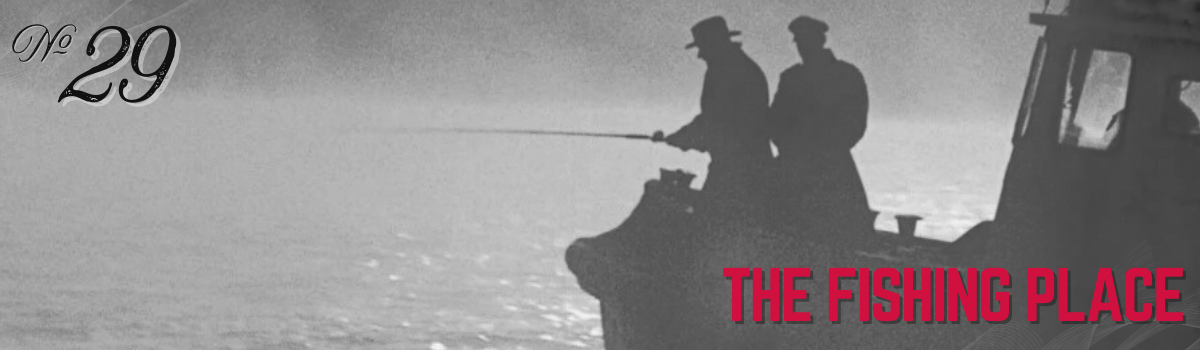
Rob Tregenza is Kansas’ Jean-Luc Godard, and his newest film, The Fishing Place, taps into the spirit of the French maestro as he breaks the fourth wall, hunting the demons of the Nazi-sympathizing right. The American cinematographer and Cinema Parallel president has worked as the director of photography for both Béla Tarr (Werckmeister Harmonies) and Alex Cox (Three Businessmen) in between his own five features, spread across five decades — a workflow consistent with his characteristic meditative and patient photography. The first four-fifths of The Fishing Place slowly moves through the coastal Norwegian county of Telemark during Nazi occupation as Anna (Ellen Dorrit Petersen), a Nazi prisoner, is ordered by her fascist “liberator” Hansen (Frode Winther) to spy on a newly arrived Lutheran pastor, Honderich (Andreas Lust), as his housekeeper. Anna, tormented by the moral contradiction of resistance and self-preservation, finds herself desperate (and powerless) enough to collaborate. This scenic and solemn hour, which wends viewers through some of the most beautiful images of the decade, reminds us that no number of Nazis can stifle the beauty of this world. The last 22 minutes, however, abruptly and unceremoniously cut to the extreme present with a fourth wall-breaking and fluid crane-powered long shot of Tregenza’s own film set. We hear his direction and his conversations with crew members; we watch Lust drop a cigarette; and we witness several undramatic behind-the-scenes moments. The English language enters the fray as the film jolts into the Anglo-shaped present, and the subtitles largely stop for the Norwegian. Anticipated by the question of a dying and guilt-ridden engineer whom Honderich consoles, “What do you think this place will look like in 50 years, no matter who wins?” the jolting edit simply and sufficiently translates the film’s philosophical questions around fascist collaboration and resistance to the present. — JOSHUA POLANSKI
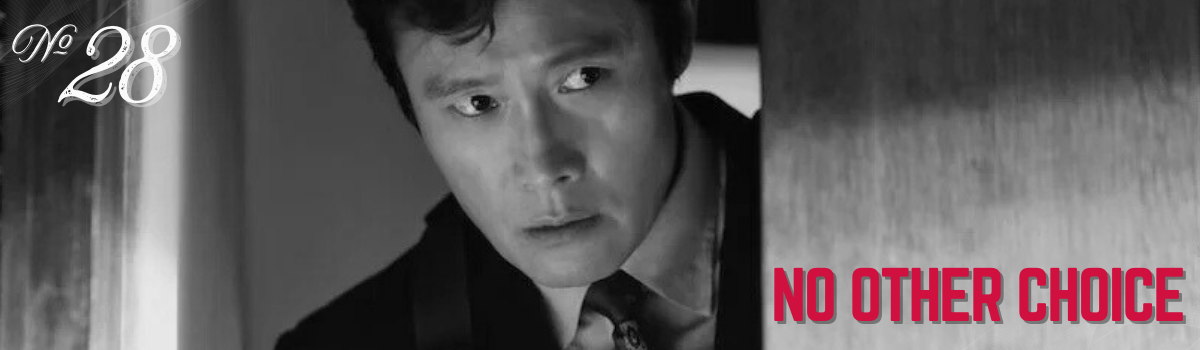
Even without anything in the way of actual class consciousness, films about class play well with contemporary audiences and critics. Most of these empty-caloried exercises are content to set up well-worn upper- and lower-class antagonisms without much thought about specific class pathologies or their relationship to a broader material context. No Other Choice, by contrast, zeroes in on the downward mobility of the middle class, its particular brand of psychosis, and ties them to the political and economic machinations that have given shape to South Korean society, namely the country’s participation in the genocidal war campaign in Vietnam and ongoing industrial resource extraction — the latter, somewhat surprisingly, channeling Robert Bresson’s meditations on environmental destruction in 1977’s The Devil, Probably. Park Chan-wook’s films tend to come with a healthy helping of cleverness as well, but his flash is only ever as good as the drama it propels, which makes his relatively subdued choices (at least when contrasted with his other work) very interesting. The director’s perversity is always most affecting when it burrows itself in the trappings of melodrama, or particularly melodramatic spins on film noir, something he did elegantly with his previous film, Decision to Leave. Although the emotions aren’t quite as big this time around, the ideas certainly are, most of them revolving around the rot that has been eating away at South Korea’s petite bourgeoisie for decades. The final stretch in No Other Choice, and particularly its final reel, meanwhile, rivals some of Park’s grimmest moments, even if their depths don’t reveal themselves right away. — FRED BARRETT
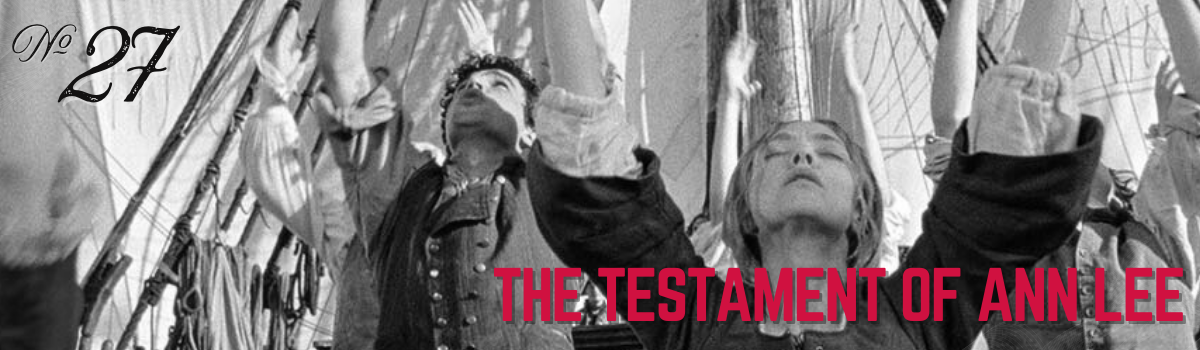 It’s been a pleasure to become, at least through the little ebbs of wider culture, acquainted with Daniel Blumberg. The former Yuck frontman’s scores for last year’s The Brutalist and Mona Fastvold’s previous The World to Come were bizarre and exciting, even in an era when big-budget features have grown more comfortable with strange, dissonant compositions. It’s kind of a no-brainer to give that guy carte blanche for a modern-dance musical, and The Testament of Ann Lee’s song-and-dance routines are proof positive that it’s a good idea. Fastvold’s film about the founder of the ecstatic Shaking Quakers is neither the cheery, escapist musical of the Technicolor days, nor does it have much in common with modern-day semi-ironical reboots. Here, the songs come about during moments of communal religious experience and, though the characters move and sway and beat their chests in a clearly choreographed routine, the film treats this with a respectful distance, accepting that such movement and song truly can heighten reality, or at least make strange things happen. The Shakers were not the weirdest American Protestant sect (not by a long shot), but they were perhaps the most American weird Protestant sect, and one whose legacy is tied to their art: chairs, benches, patterns, and yes, hymns. Fastvold’s Testament is a film that respects such a legacy and reminds us of how truly bizarre America has always been. — ZACH LEWIS
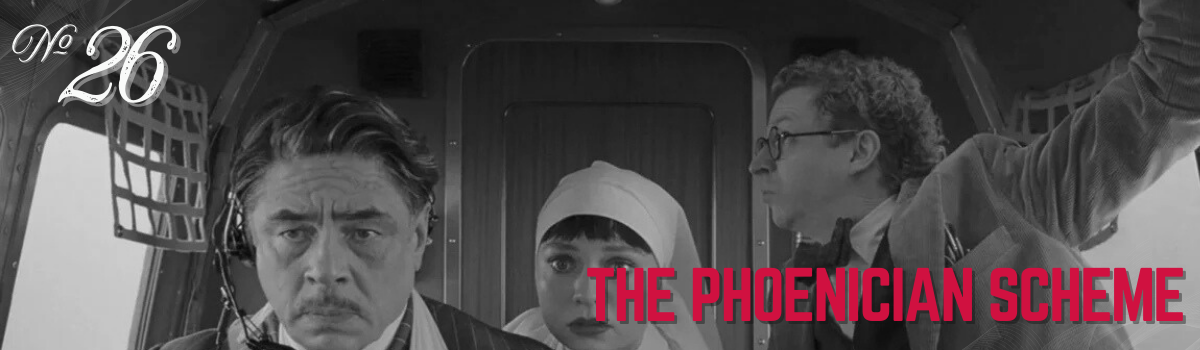 Wes Anderson might not beat the twee allegations any time soon, but that won’t stop him from rolling up his seersucker sleeves to get his hands dirty. The Phoenician Scheme finds the Royal Tenenbaums director at his darkest and bloodiest: flaming arrows arch across shoebox sets, drinks are poisoned, a man is blown clean in half within the movie’s first few minutes. Anderson’s latest stars Benicio del Toro — in top form within a banner year — as Zsa-Zsa Korda, a sunken-eyed arms dealer whose trail of bad checks has baited salty investors across the globe into making sure Korda’s next breath is his last. Faith, until now, has been relatively untrodden territory for Anderson, but The Phoenician Scheme brings him to the pulpit. A near-death experience sends Zsa-Zsa to the heavens in a series of staggeringly austere vignettes that recall Bergman’s and Tarkovsky’s beleaguered reckonings with the Christian Church. Anderson, now ascending toward indie elder statesman, doesn’t seem to be betting big on God’s benevolence as he winds his way toward 60. Instead, The Phoenician Scheme wrestles a defiant optimism from a Wes staple: family. Too bitter to let his rivals absolve his postmortem riches, Zsa-Zsa hunts down his estranged daughter, Liesel (Mia Threapleton), a pipe-smoking nun whose taste for the finer things keeps her position in the covenant in perpetual jeopardy. Their travels and travails cycle through a rolodex of A-listers, new and veteran, to Anderson’s repertoire: old friends like Bill Murray and Willem Dafoe span a call list that sprawls out to new faces like Hope Davis and Bryan Cranston. It’s a web of chips on shoulders and bitter vengeance that, beaten and bloody, nonetheless relents to Anderson’s constant march toward home. — CHRISTIAN CRAIG
It’s clear from the title alone that self-described “psychedelic ethnographer” Ben Russell and his frequent collaborator Guillaume Cailleau are engaging in their own form of DIRECT ACTION in making a 216-minute documentary about the nuts and bolts of a French environmental activist group. (It’s also certainly a kind of ethnography, although there’s not much psychedelia to be found in the film’s long takes with seemingly minimal editorializing — perhaps the undisturbed sight of clouds passing or rain falling is enough of a trip when you care about the fate of the planet as deeply as the cast and crew.) It also becomes clear over the course of the duration that this action is a lifestyle, with daily tasks like cooking and cleaning simply enacted on a grander scale when it’s for a group working together as one to live and fight for land the government wants to steal to construct an airport on, and the need to avoid shooting most people’s faces turned into an artistic principle. There’s even the possibility of art to emerge from this struggle: the protestors stage a DIY rock concert to bring them all together, but it’s Russell and Cailleau’s depiction of the Battle of Sainte-Soline that will linger as one of the year’s great scenes. It turns the infamous clash between the protestors and the tear gas-firing police into something between a single-take actuality reminiscent of Larry Gottheim’s Fog Line, and a deconstruction of the entire project preceding it when an angry woman protestor walks by the camera and tells Russell and Cailleau that these are not the images they should be capturing. — ANDREW REICHEL
 Real heads have been obsessed with Belgian duo Helene Cattet and Bruno Forzani ever since their sneaky 2009 Eurocore/erotica-inspired anthology film Amer. Through their follow-ups, the Giallo-centric The Strange Colour of Your Body’s Tears and crypto Spaghetti Western Let the Corpses Tan, they’ve doubled down and doubled again on their audiovisual abstractions of genre, boiling influences down to pure sound and vision while obliterating obligations to narrative and story coherence. Theirs is a cinema of pure sensation and psyche. So it’s an extra special treat that their latest, Reflection in a Dead Diamond, would seem to be the apex of this particular strain of filmmaking. Ostensibly a roman à clef about a declining star of grimy ‘60s and ‘70s Diabolik-esque spy films reckoning with his own deteriorating mental state, this film is a decadent ASMR fetish board built of the secret underground tunnels, shifting identities, and pulp-goth epics of Georges Franju, Louis Feuillade, Jess Franco, and Mario Bava in all their janky Techniscope glory. Cattet and Forzani’s endless fracturing of narrative and near-constant excesses of noise and image (take a shot every time there’s the sound of fingers dragging across tight leather or a shot of a shattered mirror) distill this into something that is only cinema. This is the duo’s best film yet. — MATT LYNCH
 About a third of the way into Invention, Callie Hernandez answers the question of “Where is Dr. J?,” with a blunt, withering “He’s dead.” It might not seem like much, it is the truth after all, but this interaction is a key to what makes the film stick to the ribs. A million movies about dreaded trauma and grief, and it’s this strange, hazy bit of meta-fiction that distills how fucked up it is to have to perform grief for somebody else. Tying real home videos to a lo-fi noir mystery, Invention follows Hernandez’s Carrie Fernandez as she pieces together just who her father was after he leaves her a bizarre medical device in his will. Meeting a litany of true weirdos played by real-life creatives like Caveh Zahedi and Joe Swanberg, she unravels the life of a man whom everyone seems to have a clear idea about, but her. Beyond the portraits of already pliable minds broken by pandemic isolation and conspiracy theories, Invention paints grief with the complicated brushstrokes so few films ever attempt. Our grief is our own, and in an ideal world, we shouldn’t have to share it with strangers. When a loved one moves on, our relationship with them shouldn’t become a malformed, misattributed memory to placate somebody who “knew” them better. Yet, we do this bizarre dance, pretending to feel something we don’t because it’s easier than admitting we didn’t really know a loved one at all. How much Hernandez gives of her true self to the fictional version of her or her memories is never clear, but that’s the point. Just like her cold, muted responses to strangers assuming familiarity because they knew her father, her grief isn’t for us. The titular invention is not just a physical creation at the center of the film, but a new cinema that finally addresses grief with the honesty it deserves. — BRANDON STREUSSNIG
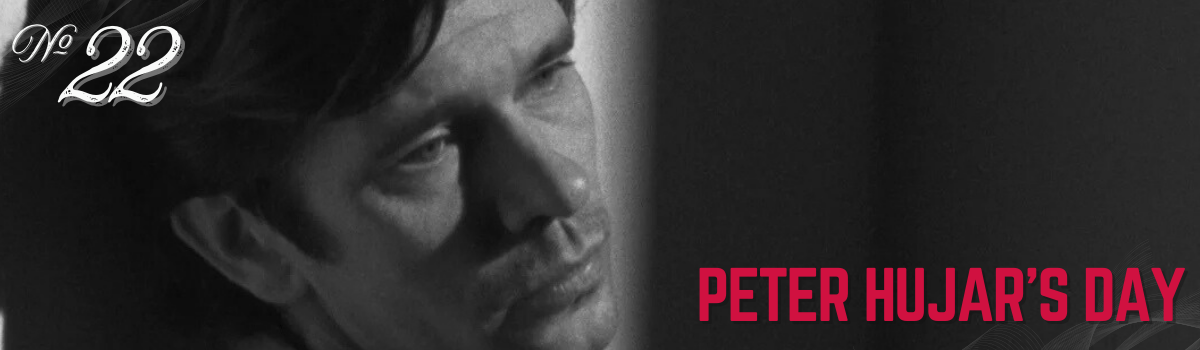 Ira Sachs’ bite-sized, ambrosial experiment is a “portrait” in the truest sense of the word. Befitting its photographer subject, the film is a representation (or more lyrically, an “impression,” per portrait’s dictionary definition) of Hujar in fleeting miniature — a meticulous and languorous snapshot of a sharp shooter. Crucially, it is also a two-hander: not only is the misnomered Peter Hujar’s Day the story of two days in the life of a world-weary Wishaw — the surprisingly busy, and expectedly bleary, December day in 1974 he describes in detail, and the day he spends doing so — it is also the story of two artists: Hujar, the interviewee, and Linda Rosenkrantz, the writer who outlived him. Though the film is largely taken up by Hujar’s halting, rambly accounts, it is palpably anchored by Rosenkrantz, whose compassion and alertness as a listener, and frequent interjector, are occupied with such spacious warmth by Hall that an ostensible monologue becomes a conversation. The pair’s casual intimacy beautifully evinces their decades-long friendship, which would conclude with Hujar’s death from AIDS complications in 1987. As the sun begins to set outside Linda’s apartment window — Peter lounging pensively on her sofa, cigarette in hand, while she gently nags him to quit smoking — we are overwhelmed by the sense that the man’s light, too, is fading with what remains of the day. Faithfully captured, lovingly textured, rigorously crafted; Sachs’ film is a stunning tribute, quietly distilling the great banalities and mysteries of a mortal man, and his immortal art, into time’s most elemental unit. — ALEXANDER MOONEY
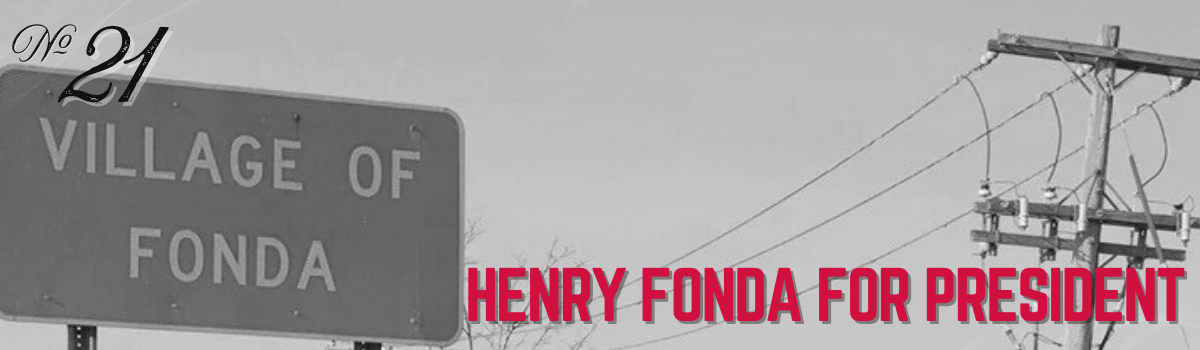 Among the highest goals to which cinema can aspire is to tell us something we could never have known without it, and for the lucky few who caught it during its run at Anthology Film Archives in New York or at periodic one-off screenings elsewhere throughout the year, Henry Fonda for President did just that. It punctures America’s perpetual dream state, confronting its historical love affair between the brutal, racist exploitation of free market capitalism and the utopian ideals of democracy, and it draws direct lines to the present by travelling freely from the fictional America(s) of Fonda’s films to images of its contemporary landscape. Henry Fonda for President is a roving, questing film — minimalist and discursive — and it would not be glib to call it, formally, a Shoah for America. Like Lanzmann, Horwath searches for the truth hidden underneath massive rotations of history with clear-eyed sobriety: every five minutes, there’s a revelation. And as Henry Fonda for President’s content tells us where we are and how we got here, so its style tells us where we’re going. There is no more thoroughly American shot this year than that of a potbellied senior in a The Man. The Myth. The Legend. T-shirt taking a picture of the B-29 “Lucky Lady” on his iPhone as Fonda hedges his knowledge about the bombing of Hiroshima before it happened in voiceover — past, present, and future neatly packaged in a single frame. A Blu-ray release of the movie would be a public good. — ETHAN J. ROSENBERG
Comments are closed.