

Krakatoa
If one were to conjure an impression of the apocalypse, it might be in the heart of sound — a detonation so vast and infinite that all imaginable existence would cease. Kubrick’s Dr. Strangelove lent no little irony to the proceedings of annihilation when it overlaid its closing montage of nuclear warfare with Vera Lynn’s giddily eschatological “We’ll Meet Again,” mocking the unity of the soul against utter atomic oblivion. But this ironic texture is not lost within a very different film altogether. Carlos Casas’ Krakatoa, predating the man-made horrors of the 20th century, dramatizes the most consequential natural disaster of the previous one; arguably the first global event that laid the foundations for ecological consciousness and seeded an appreciation of humanity’s intrinsic connectedness, the 1883 eruption of Indonesia’s Krakatoa volcano devastated tens of thousands of lives in the region, sending pulses of flaming magma spewing into the atmosphere. Although most notorious for producing the loudest known sound — a staggering 172 decibels — in human history, Krakatoa remains a legendary sonic phenomenon, captured only by recordings of the pressure waves it generated in its aftermath and by the dwindling ochre skies worldwide in the ensuing months.
The eruptions feature less as money shots in Krakatoa, serving instead as scaffolds for its contemplative metaphysical landscapes. Capturing the fateful moments of the eruption which eventually collapsed the volcano into a caldera, the film hovers over the idyllic waters between Java and Sumatra. Its silent protagonist is a fisherman named Kesuma (Roni Hensilayah), whose seasoned visage boasts a youthful disposition that’s etched off by the plumes of dust that soon engulf him. As Kesuma spends his days on a vast bamboo raft, oblivious to his terrible fate, Krakatoa’s mise-en-scène shines through in Benjamín Echazarreta’s disquietingly radiant compositions. The fisherman subsists on his catch, a life of repetition and self-subsistence; the sea appears boundless, its openness and isolation intimating a similar ambiguity in time. It is 1883, days and minutes before the end; it is also the present day, with Kesuma clad in a modern T-shirt inscribed with runic characters. The slight temporal slippages further hint at a future yet to arrive, as the end times loom imminent over the doomed soul, onboard his floating home.
Casas’ previous feature, the masterful Cemetery (2019), was a phantasmatic meditation on both the permanence of the soul as well as the limits of cinematic representation, following an elephant in its final journey to a mythical graveyard. Where it turned, perhaps, to the stars in its consecration of nature’s unbidden sanctity, Krakatoa descends into the earth’s very core and down to the microscopic, microcosmic origins of all things. As volcanic ash rains over land and sea, our lone avatar staggers ashore, along a beach, into a jungle, and through the planetary crust. In a final gesture of awe or sacrifice, he escapes time altogether. Taken as a parable for the Anthropocene, the film faithfully documents its anxious longing for spiritual redemption, failing which the only recourse left is the path toward total negation. The immensity of Krakatoa’s images portends their starkly cataclysmic ends, leading eventually to this all-consuming void. Enmeshed in anachronism yet awash with the signifiers of a history yet to be tainted by the specter of environmental collapse, the film mounts a brazen final act, disintegrating into the purest flickers of being and nothingness. With Nicolas Becker’s spectacular sound design approximating the very ineffability of destruction, so, too, do we prostrate before the blind embers of creation. — MORRIS YANG
Honey Bunny
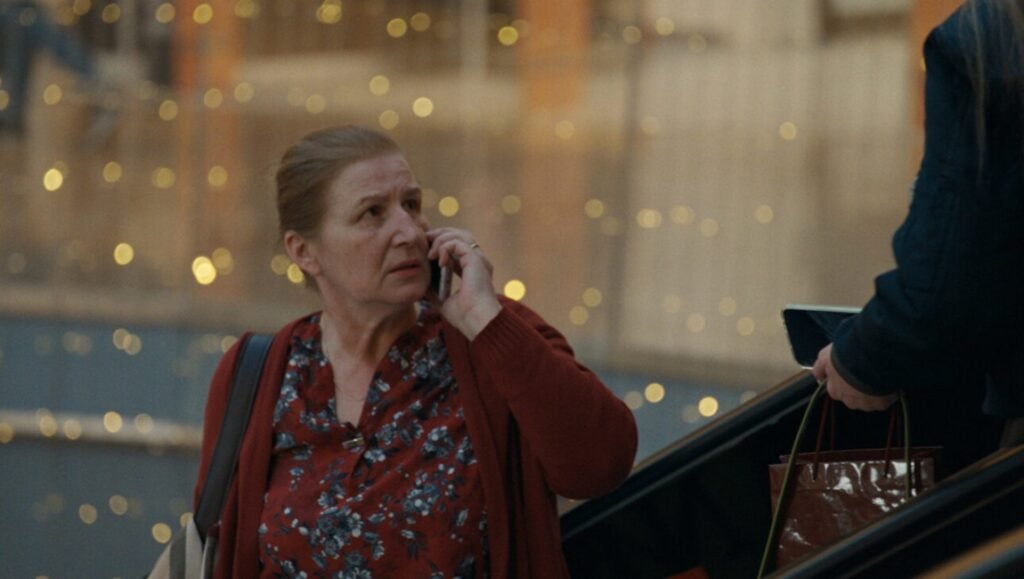
It takes a bit to reach the tongue, but there’s a bile that runs through the otherwise restrained Honey Bunny, the debut feature from Croatian director Igor Jelinović. That southpaw bitterness is something the movie shares with its lead. Tonina (Snježana Sinovčič Šiškov) is the self-styled matriarch of a family watching the sun set on its golden hour. For 15 years, Tonina has served as the sole caretaker for her 90-year-old mother, loading pill planners and wiping her ass as Tonina’s sister, Tajana (Aleksandra Janković), enjoys something closer to an easygoing life. It’s thankless work, and after a decade and a half of servitude, one might think Tonina is owed something for her troubles.
In the fashion of Michael Haneke (though with its blade sheathed), Honey Bunny largely comprises a series of notably long takes, sometimes snaking around a dining room table, sometimes perched in a ceiling corner. There’s a deliberate patience to Honey Bunny’s execution that might have yielded an airiness if Tonina’s family wasn’t so stifling. That goes for Tonina herself, too. We first meet her as she berates a car rental manager for providing synthetic leather seat covers when she’d asked for the real thing; she’s equally quick to snap at her idle husband and chide her niece for gaining weight. So, it’s not exactly a surprise when, counter to an otherwise selfless dedication to much of her family life, Tonina buys out her mother’s estate in Hvar from under her sister without consulting her first.
That purchase cleaves a jagged tear through Tonina’s family. Property disputes are no stranger to the silver screen; Honey Bunny most closely follows the precedents of Olivier Assayas’s Summer Hours, which sees three siblings twist into Tolstoyan unhappiness as they navigate their late mother’s estate without a will. But where Summer Hours smolders, Jelinović’s film crackles and pops. Tajana explodes when she discovers Tonina bought the house, grabbing the fish that Tonina had bought as a peace offering and stomping it into a pâté on the sidewalk in front of her apartment. Fish come and go; it’s through Tonina’s adult nephew, Ivan (Šimun Šitum), that the estate drama becomes disastrous. Ivan is unemployed save for a YouTube channel he keeps to spout venomous and conspiratorial screeds on corporate greed and greenwashing; when he learns Tonina bought the house, he and his buddies visit her home at night to rough her up. They come up short of material damage, but the assault leaves Tonina sleepless for the remainder of the film.
For all its family drama, Honey Bunny is a threadbare affair, sometimes slight to a fault. Its meditations on impending grief and intrafamilial class stratifications can fail to reach insight, and while its patience is admirable, it occasionally comes at the cost of the movie’s pace. But Tonina’s dogged adherence to her family is a marvel, especially as they become more and more acidic. She wouldn’t admit it, but Tonina harbors stultifying guilt over the fallout from buying the estate, and when the family gathers in Hvar to celebrate their mother’s 91st birthday, Tonina is demure to the point of submission. She holds Tajana by the waist and sings; she waves off Ivan’s assault as if he were an errant toddler. But she can’t seem to wish that trauma and guilt away: Tonina tosses sleeplessly at night until anxiety leads her to binge eat in front of open refrigerators, unable to see that a knife pointed inward is still a knife.
Honey Bunny takes its title from a pet name applied to all the women in Tonina’s family — koke, in Croatian, a word that means “chickens” and that doubles as an affectionate tag for a loved one. Here, women throw koke around with the duality of “bless your heart” in the American South: it’s a term as endearing as it is acerbic, its warmth a Trojan horse for decades of pet resentments. Even at their most placid, Tonina’s family sits on the impending estate sale like a burr, stone in hand and ready to throw as soon as someone admits to placing it on their chair. Hvar is a tourist town, and the family spends much of Honey Bunny debating whether the estate should be converted and rented as a series of Airbnbs. But animosity in this house is a permanent lodger, a ghost suffused over the paint on the walls. — CHRISTIAN CRAIG
The Killing of Meghnad
Ashish Avikunthak’s films, like many Asian and African avant-garde films, unfortunately find themselves caught in a tangle of categorization problems when playing in Western festivals. Too avant-garde for regional cinema and too specific for avant-garde cinema, these films cannot be easily assimilated into a rubric of recognizability. The easiest solution is often to discard them for being this hermetic, which sadly often happens, for there is often no exotic allure nor visual aids for Western viewers to grasp the images and visual language that is unfolding on the screen. But the reverse is never assumed to be true for non-Westerners interested in Western avant-garde films, as even in the case of niche subjects, those who possess the means of discourse often end up establishing the law, even if not intentionally.
Though seldom screened in his home country, Avikunthak’s feature films in recent years have thankfully found a home at the Rotterdam Film Festival, and his stock as a filmmaker is slowly growing thanks to retrospectives at The Asia Society in New York and Mubi. This year, he’s back at IFFR with The Killing of Meghnad, an adaptation of a poem by the colonial-era Bengali writer Michael Madhusudhan Dutt, which itself is a retelling of an episode from the Bangla version of one of India’s most renowned epics, The Ramayana (literally, journey of Rama). The Ramayana has been subjected to multiple iterations, reinterpretations, and commentaries across different cultures (even outside India and Hinduism), time periods, and languages, with the “original” source written in Sanskrit by Valmiki before the 3rd century CE, though the original date remains unknown and can also be much earlier. Dutt’s version of this story, however, is extremely unique in its usage of blank verse, bringing an imported, Western form to a familiar, Hindu text. By foregrounding Dutt’s poem, with all its dialogues and verses recited by his actors, Avikunthak also brings out the contradictions associated with Dutt’s English poetry aspirations (he was initially an English poet) and the radically different forms of Hindu poetry and storytelling.
The broad narrative of The Ramayana involves the story of Rama, the embodiment of virtue and an “avatar” of the God Vishnu, born in a kingdom on Earth. Without giving away too many details, for this is a rather large epic, his wife Sita is kidnapped by the king of Sri Lanka, Ravana. Rama, along with his brother Lakshmana, aided by an army of monkey men, must fight with the mighty Ravana to rescue his wife. The episode that The Killing of Meghnad focuses on is the killing of the titular character, who is the son of Ravana and vanquisher of the devas, or demi-gods. Considering his formidability in combat, Lakshmana defeats him using deceit and magic, all while being aided by the Gods. This episode is narrated through the multiple perspectives of heroes, gods and villains, who also end up raising philosophical questions along the way.
Many adaptations, including cinematic ones, of The Ramayana exist, and they tend to focus on lionizing Rama’s virtue and emphasising the battles and supernatural forces at play. Rama is one of the most worshipped Gods in the Hindu pantheon, and in the past 30 years or so, his name has become a war cry brandished by the Hindu right and now enshrined in government by the prime minister and his party to establish a Hindu nation in India. Therefore, these films are imbued with a mystical, mythological aura from the first shot that often tends to flatten any questions that arise from and outside the text. However, many Hindu epics proceed through what the avant-garde filmmaker Mani Kaul called the epic form, which might seem a lot more meandering to viewers used to tighter, dramatic plots that possess a forward momentum. Here, intervals, break points, and philosophical meditations are as crucial to the narrative as the plot development. The story is stretched by multiple perspectives and commentaries from characters and the gods themselves, each of whom mull over the consequences of past and future actions, sometimes even bringing the plot development to a halt in order to centralize an emotion, dilemma, ritual, or question. Avikunthak’s film not only revives this forgotten tradition, but he also doubles down by only showing his actors discuss and debate their emotions and dilemmas, while relegating the spectacle of action and magic, the centerpiece of so many Hindu epic adaptations, to narrations by an actor playing Dutt himself (Sagnik Mukherjee). This rather postmodern device is a lot more common in Hindu epic literature, with even Valmiki inserting himself in the story, but Dutt throttles these forms with his colonialist inflections in poetry, something which Avikunthak visualizes through Dutt ambling along in abandoned colonial buildings. The use of music, though sparing, is striking in its familiarity and unfamiliarity to both Indian and Western viewers, where a cello, an uncommon instrument in raga music even in a sphere where Western instruments have been naturalized, plays a Hindustani Raag. Avikunthak’s commitment to remain faithful to Dutt’s vision brings about the competing influences in the poem, but he shows a sharp awareness of the charged history and significance of the urtext, layering this adaptation with the spirit of that history as well.
The actors recite the text in the film, but the landscape “acts.” Avikunthak constructs his films through a series of scenes set in disparate landscapes of groves, coasts, mountains, and ice sheets, with his actors reciting the text either in stylized gestures and poses similar to tableaux-vivants, an aspect which Avikunthak has termed as “infra-realism,” or as they walk along the landscapes in a tracking shot. Avikunthak’s landscapes suggest volumes when interacting with the recitations, such as the waves of the sea, almost functioning as the containers of Rama’s journey when Ravana and his wife lament Rama’s attack on Lanka as an outsider who crossed the sea from India. But the mental states of the characters and the diversity of perspectives from the two different realms of heaven and earth, each possessing a different temporality according to the Hindu belief, are also mapped onto the physical landscape, with the sounds of nature (wind, waves, rain) freighted with a sense of foreboding and landscapes being subjected to seasonal variations that muddies all sense of time, even if the event was supposed to have taken place in a period of seven days.
While all this sounds wonderful, and that indeed is the case, The Killing of Meghnad still seems forbidding for those less familiar with The Ramayana or Hindu epics. Since Dutt’s poem is Avikunthak’s focus, we are forced to follow the flow of the characters without any contextualizing information on why Rama and Ravana are fighting in the first place. But if cinephilia is viewed as a process of discovery rather than a position of certainty, there will be cases where we need to go against the idea of received wisdom to try to imbibe the rhythms of seemingly alien cultures and forms. As an Indian myself, watching the films of Straub-Huillet, who themselves foreground the text in some of their films, was a revelation, but only when I displayed a willingness to let my ideas and impressions flow around their structuring logic. One hopes that non-Western avant-garde films will also be viewed with a broader mind by both cinephiles and programmers, as only by confronting the unknown can we open ourselves up to new ways of thinking and seeing. — ANAND SUDHA
Unerasable!
It’s a classic conundrum: a documentary focuses on advocacy on a very important topic, and manages to some extent to communicate meaningful information about that topic. But the film is deeply flawed on a formal level, to the point where it ultimately undermines its own power. Do we thank the film for drawing attention to a worthy cause, or do we take it to task for not doing a better job? This is where we find ourselves with Unerasable! The issue is complicated by the fact that the film’s maker has suffered individual persecution and is taking a certain amount of risk by simply making and disseminating the film in question. This only adds to the frustrations Unerasable! provokes.
The film is pseudonymously credited to one Socrates Saint-Wulfstan Drakos, and the exaggeratedly aristocratic, European name suggests a level of wry irony. However, the film sorely lacks whatever sense of humor the director’s assumed name might suggest. This is a documentary about authoritarian oppression in Vietnam, a subject that is sorely in need of examination. One gets the sense that the longer an authoritarian regime is in power, the more normalized their reign becomes on the global stage, and indeed, the repressive Communist government in Vietnam is not as high on our radar as it probably should be. But this also makes painfully clear just what a missed opportunity Unerasable! represents.
The subject of the film is a young filmmaker and refugee who goes by the rather ironic initials “CP.” Since both he and Drakos maintain anonymity throughout the film, it’s not even possible to discern exactly who is who. Are they one and the same person? In any case, CP was a young film student in Vietnam who received a political education in his home country while studying sociology in the Philippines. Upon his return, he made a short film about the imprisoned Vietnamese dissident Nguyễn Ngọc Như Quỳnh, better known by her blogger name “Mother Mushroom.” She was arrested in 2016, although she has since been released and now lives in exile in the U.S., where she and her family were granted asylum.
CP’s short film, While Mother’s Away, focused on Mother Mushroom’s own mother and two children, conceived as a way for Nguyễn to see her children growing up while she was kept from them. We see very brief clips from When Mother’s Away, and although a text at the end of Unerasable! tells us it has screened internationally, it does not appear to be available. (Web searches typically direct us to a Vietnamese feature film from 1980 with the same title, directed by veteran helmer Nguyễn Khánh Dư, so presumably CP’s title is an homage to the earlier work.) The short film places CP in the government’s sights, and after being arrested and severely beaten, he narrowly escapes to Thailand as an illegal immigrant. He eventually gains asylum in Sweden.
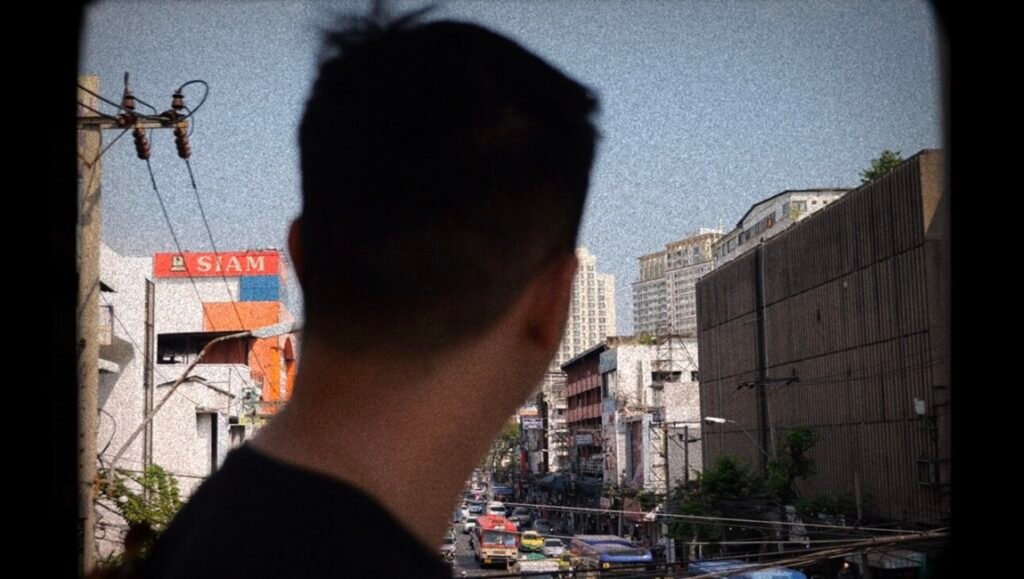
Unerasable! uses numerous visual techniques to obscure CP’s identity, from blurring and distressing the film’s surface to replacing his face with the digitally applied hole punch. Drakos does employ many signifiers of experimental film, including a tendency to enclose the image with the tight, rounded edges of Super-8 film stock. However, there is no consistent application of these methods, and rather than communicating on their own, they seem to just be simple solutions to the problem of keeping CP unseen. At the same time, the first 15 minutes or so of Unerasable! find CP talking about his awakening as a filmmaker, a discussion Drakos pairs with a collection of seemingly random early film clips: Méliès, de Chomón, Buñuel, Fritz Lang, and others.
The most obvious parallel one could make to Unerasable! is probably Flee, the animated Danish film about a gay Afghan refugee whose identity is similarly obscured by the filmmaker. But Unerasable! is not as successful for several reasons. First, Flee was structured as an interview, which permitted director Jonas Poher Rasmussen to frame the specific events of his subject’s life as emblematic of the general plight of international refugees and dissidents. By contrast, the personal digressions in Unerasable! are underdeveloped. CP is telling his story, but neither he nor Drakos can step back and allow the viewer to understand the broader implications of that story.
This film operates on the premise that everyone’s personal saga is inherently noteworthy, and this means that the film often fails to provide a context for understanding what is happening to CP and why. The history of French colonialism in Vietnam, and the subsequent U.S. invasion, are addressed in an opening onscreen text, but these vital elements should have been woven throughout the entirety of Unerasable! The difficulty of making this film, and the risks involved, naturally make it significant that Drakos and CP were able to do it at all. That is laudable. But it also makes Unerasable! feel like an unpolished first draft. One of the most fascinating aspects of the film is CP’s use of Post-it notes wherever he lives. We see him using them in Thailand, to help him learn vocabulary in Thai. He repeats this process in Sweden, as he tries to master yet another language. He and Drakos might have used this notion of translation, organization, and reorganization as a trope with which to help us gain a greater understanding of CP’s experiences. Instead, it’s just one of a number of tangents Drakos leaves hanging there. — MICHAEL SICINSKI
Scarlet
Since 2018’s Mirai enjoyed substantial international acclaim, and was nominated for an Academy Award, Mamoru Hosoda seems to be on a bit of a Western kick. 2021’s Belle was a free adaptation of a classic Western tale: Beauty and the Beast. And now, Scarlet is an even freer adaptation of an even more classic Western tale: Hamlet. Departing from its source with similar wild exuberance, this version of Shakespeare’s classic tragedy has some of the same characters and themes, as well as a genre- and era-bending fantastical quality that all but completely reimagines the Bard’s story with an almost experimental creativity. It also produces mixed results.
That it shares any DNA with Hamlet comes as a surprise even within the movie itself. Only after a foreboding opening sequence in which a young woman, eventually revealed to be the titular heroine, wanders a desolate landscape in rags before collapsing, vomiting, and encountering a spirit, does Scarlet suddenly switch. Now, we’re in 16th Century Denmark, where King Amlet (Masachika Ichimura) is betrayed by his scheming brother Claudius (Koji Yakusho), and wife Gertrude (Yuki Saito), after unsuccessfully trying to convince them of the importance of pursuing peace with neighbouring lands. Moments before his execution in front of a distraught public, Amlet delivers a message to his young daughter, Scarlet (Mana Ashida), one she cannot hear over the crowd’s noise. Bereft and enraged, she spends her teenage years training to avenge her father, but is foiled by her uncle — as she prepares to stab him in his sleep, she discovers that he’s poisoned her.
And so Hosoda takes his retelling of this centuries-old story astray, following Scarlet into the Otherworld, an afterlife barren to behold but rich in violence and peril. The same spirit from the opening scene informs a bewildered Scarlet that her father has passed on from this realm, but that her uncle resides here now. Evidently, time operates differently in this dimension, and the movie is equally disorienting in its pace and structure. Hosoda never settles, never facilitates comfort, neither in his headlong rush through Scarlet’s backstory nor in her odyssey-like quest through the Otherworld. Moments of respite are scarce and swift. Dazzling animated effects distort the viewer’s senses, and a lack of musical score amplifies the bleakness. The narrative moves forward in jagged bursts of energy, sporadic longueurs, and disconcerting ellipses. If our heroine’s journey is an uncomfortable one for her, Hosoda makes it uncomfortable for us, too.
Time’s uncertain operations in the Otherworld bring Scarlet into contact with Hijiri, a paramedic from her future (and, presumably, our present), whose pacifism and sympathy for the many targets of her violent passion initially baffles her, but eventually comes to persuade her of the futility of her quest for revenge after a pivotal encounter with one of her father’s executioners. Hosoda appears to argue that a person like Hijiri might have resolved many of the problems that beset the various tortured figures in Shakespeare’s tale, if not quite prevented the problems from occurring. His physical healing skills are of less value than the compassion that lies behind those skills. Conversely, their enmity lies behind their brutality, emotions driving actions inspiring emotions driving actions, a vicious circle only breakable by a force from outside — in this case, a person from another era.
Yet Hosoda’s reworking of Hamlet is too busy in its whirlwind mishmash of characters, both familiar and unfamiliar, narrative detours, vibrant stylistic flourishes, tonal clashes, contradictions, and coincidences to boast the same richness, and thus it never develops its own ideas with much substance or conviction. The contradictions may be interesting, as in a mostly joyous scene where Hijiri dances with a group of travellers only to be met with mockery, but the coincidences are jarring — a mountaintop-set reunion indicates that Hosoda’s making his own rules as he goes here, which makes matters feel insignificant. Only when he marries the intensity of his style with the intensity of his characters’ emotions does Scarlet amass any real power, but when it does, said power is undeniable. — PADAÍ Ó MAOLCHALANN

All You Need to Make a Movie Is a Gun
The 20th century is insistently knocking at our door. The crises of its institutions dominate the news, its tragedies repeating themselves daily as farce. The most-awarded and discussed films of 2025 — One Battle After Another, Sinners, Marty Supreme, The Secret Agent — all try to answer this unwelcome visitor. Santiago Sein’s All You Need to Make A Movie Is A Gun does so even more literally and substantively than these films, and with a comparable sense of epic scale.
The film’s heart is a found footage documentary based on newly discovered reels shot by a group of politically active students and teachers at the National University of Córdoba (Argentina) in the ‘60s and ‘70s. The material includes narrative and documentary shorts in unfinished form, diaristic audio logs, and recordings of demonstrations; this was the time when resurgent Peronists battled with the military regime and Peron himself returned from exile. The source material ends with Peron’s death and the advent of the military junta, which was assumed to have found and destroyed all of these reels.
Sein structures his material into three parts. The central and longest one is composed of the historical film, which is mostly silent, and “narrated” by separate tapes made by the group’s sound recordist, who recorded much of what was filmed (that material mostly missing), but also, when alone, tapes describing the group and their activities. These diary tapes are a blessing which allow this central section to be coherent and immersive using only the found materials, with no intrusions from the present day. They describe the filmmakers as students, their development as revolutionary activists, and ultimately their disappearances by the state or their plans to flee as the military dictatorship comes to power and radicals are named to the police or paramilitary organizations. The film reels shown along with the tapes are edited to match them relatively seamlessly.
These artists consciously placed themselves in the tradition of Third Cinema, conceptualizing the act of recording and projecting as a weapon in the class struggle. One of them quotes Godard’s famous comment that all you need to make a weapon is a gun and a girl, and suggests that you just need the gun — i.e. the camera. This history and the ideas discussed in the group have tremendous interest and relevance in their own right 50 years later, for activists and artists and anyone concerned with the conjunction of the two. Sein does a good job of letting the material speak for itself. But his film does more than that, bracketing what could almost be a standalone film with two other segments that contextualize and historicize. The first, which opens the film, discusses the history of the reels and tapes that compose it, and how All You Need To Make A Movie Is A Gun itself came to be made. The last, which ends it, tracks down the surviving members of the original group, showing them the footage to gather their reactions and reflections and to trace the history of its other members (who escaped and who did not; not all survived or made it out of Argentina).
These segments are less successful. They provide some valuable context, but they are less clearly edited and bogged down by repeated B-roll footage of film cans and equipment. More to the point, they make the whole film feel rather conventionally documentarian in contrast to the radical aesthetic and political aims of its subjects. Perhaps the filmmakers wanted to respect the very precious materials they discovered without imposing any more risky creative choices onto them, but it feels like a missed opportunity that an otherwise essential and standout work is content to observe the practices of past revolutionary artists without asking what, in formal terms, it would look like to renew their practice in our own time. — ALEX FIELDS
The Originals
One of the difficulties of navigating the Rotterdam Film Festival as a cinephile is the sheer sprawl of its sections, both in terms of older and newer works. While there is the overarching sense that the festival does go for quantity over quality, there remains the possibility of coming across cinemas and filmmakers that are generally sidelined at the more famous and glamorous festivals. Festivals are far more welcoming to ArthouseTM cinema and middlebrow fare, which means that a country’s commercial cinema and avant-garde traditions — the two extreme poles of cinematic consumption — are often swept under the rug. In this regard, IFFR, for all its flaws, can be quite refreshing, as it exposes one to a country’s cinematic histories and auteurs which, at their best, not only expand our worldview, but also clarify certain influences and modes of that country’s arthouse darlings whom we rather carelessly, and even condescendingly, deem as the country’s best filmmakers.
A filmmaker being spotlighted this year is Egypt’s Marwan Ahmed, a rather acclaimed filmmaker in his own country, and whom this writer has unfortunately never previously encountered. To commemorate the release of his recent film, El Sett (2025), IFFR has organized a retrospective of all his works. Ahmed comes from a filmmaking pedigree, which is a more refined way of saying he’s a bit of a nepo baby, with his father, Wahid Ahmed, being one of the most acclaimed screenwriters of the ‘80s (a mere retrospective spawns so many threads to explore) and the screenwriter of his first film, The Yacoubian Building (2002). Critic Joseph Fahim describes Ahmed’s The Originals (2017) as the director’s most “atypical” and “philosophical work” in the program notes, and while a lack of fluency prevents this writer from testifying to its atypicality, Ahmed’s film certainly displays an ambition in its scale of ideas to complicate canonical philosophical questions on free will through distinctively modern lenses of surveillance and smartphones.
The opening shots themselves immediately address this, with a voiceover talking about poultry farming and the taming of the birds, while showing packets of chicken stored in a supermarket freezer. Sameer Aliwah (Maged El Kedwany) picks this chicken up, and Ahmed frames him between the product aisles. In case the parallels weren’t entirely clear, Ahmed swiftly details Sameer’s life as a banker and family man who daydreams of becoming a singer when watching a singing reality show, but is a slave to his routines and habits, where even the pizza place knows exactly the pizzas his family wants; in short, a typical bougie seeking upward mobility. Sameer continues to be framed within “naturalized grids” such as roads, aisles, and doors, until his boss fires him from his bank as a cost-cutting measure. At this time, he’s contacted by Rusdy Abaza (Khaled El Sawy), a member of “The Originals,” an organization that claims to be “the guardians of the spirit of Egypt.” Them surveilling him and other people doesn’t seem to trouble him at all, and faced with sustained pressure from his family’s desire to maintain and upgrade their lifestyle, Sameer accepts a job offer to work with them. He’s tasked with observing Soraya Gallal (Menna Shalabi), a PhD scholar whose research involves a mystical lost drug of the Egyptian civilization called blue lotus.
Quasi-authoritarian, fascistic, and even some good old-fashioned liberal governments in the third world are marked by their affinity toward some kind of nationalistic neoliberalism, and Ahmed immediately plunges into all the contradictions and conspiracies that sprout in such a style of governance. Conspiratorial whispers abound at night, in the form of hushed conversations in cavernous cafes, secret passages in cozy antique shops, hidden houses and narrow alleys, but are contrastingly normalized in the form of media surveillance during the day, covered for by towering corporations that offer futuristic rooms teeming with screens and blinding red lights. The “hidden” and the “normal” continually intrude into each other, and Sameer is less concerned, at first, with their implications, until his fascination for Soraya goes so far that he attends one of her lectures, in which she bombards her listeners with mystical, glamorous images that she intersperses with the slick narrative style of advertisements. Over the course of the film, Sameer wrestles with the choices made for him, either by his mother or societal expectations, across the years, along with the moral dilemmas of privacy and control.
Though Ahmed was already interrogating questions and feelings that Cronenberg successfully harnessed in The Shrouds (2024), he frequently undercuts his filmmaking smarts with a pounding score thumpingly asserting that a hidden, grand conspiracy is afoot. The recurrent sound of ping-pong balls, memories from the glory days of Sameer’s youth, grows louder and louder whenever Samir has a dilemma, and this unwillingness to let the themes percolate not only belabors the points Ahmed has made using his poultry metaphors, but also gives some credence to both Soraya and Sameer in their attempts to unravel a conspiracy to explain the seemingly mystifying vagaries of modern life. Perhaps this was done due to a commercial contingency, but Ahmed overcorrects and even undermines his own ideas in the process. This does take a good portion of the sting by the time we reach the conclusion, especially because it does a disservice to the talent on display. But watching such filmmakers and films reminds us how global themes can be so seamlessly wedded with local specificity, and perhaps we ought to be a lot more careful when we make sweeping statements about films from a particular country. One only needs to lift the veil of markets to discover more interesting filmmakers, of whom Marwan Ahmed, despite my reservations for this film, is one. — ANAND SUDHA
Ah Girl
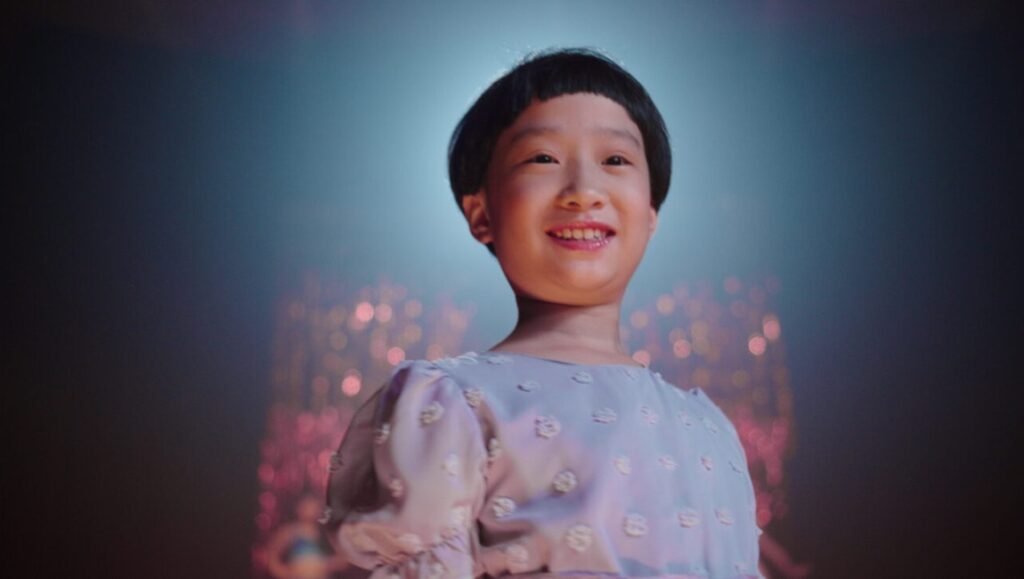
The haze of childhood offers considerable dwelling space for joy and grievance alike; forceful then but mostly latent now, these emotions nonetheless bear the transformative power that frequently molds children into the adults they love and fear most. For seven-year-old Swee Swee (Ong Xuan Jing), the effervescent protagonist of Ang Geck Geck Priscilla’s Ah Girl, imitation is the sincerest and only form of flattery she knows. Her parents are no luminaries of character: her laidback father (James Seah) hawks seafood but is frequently wanting for money, while her mother (Carrie Wong) labors industriously as a tour guide, absent and away for large swathes of time. They are also going through a divorce, which leaves behind its own farrago of emotional and administrative hurdles, both for Swee Swee and her boyish little sister Ah Tian (Sydney Wong). Their hapless grandmother (Doreen Toh), who does most of the childcare and shepherding to and from school, can only manage the fallout from a distance.
No fallout, in particular, occurs throughout Ang’s pleasantly bittersweet feature debut, but its candy-colored frames imprint a sobering if sometimes didactic sense of disconnect for her young characters. Caught not between an age of innocence and one of full-blown awakening, but in the throes of a burgeoning consciousness of their immediate family and environment, Swee Swee and Ah Tian are fighting to stave off the great fear of displacement, even if they do not know it. Their father’s roster of girlfriends, mostly fat and somewhat kind, injects a creeping disequilibrium into a family on the cusp of breaking apart. At school, Swee Swee refuses her English name — nothing quite binds her to it — and seeks time after time to impress her nerdy crush. But when her mother introduces her tattooed boyfriend, and her father hints at giving away Ah Tian to ease up the coffers, an acute rupture forms, shattering the idyllic pretense upheld for so long. Even when it’s patched back, something has shifted; “why do adults,” she laments, “always lie?”
Ang’s subtle portrait of parental neglect and incompetence might recall Shu Qi’s directorial breakout last year, in which a Taiwanese schoolgirl endured a torrent of abuse and utter despair amid the sweltering eighties. Whereas Girl’s lush palette served, perhaps, as an ironic yet hopelessly romantic counterpoint to its grim compositions, the luminescent pastels of Ah Girl invoke a comparatively nostalgic sentiment for the nineties, staged within the outwardly peaceful confines of the Singaporean heartland. The film’s autobiographical roots are credible, honed from Ang’s own tumultuous childhood; less so are its adult characters, resorting on occasion to stock profiles of neatly detached empathy. Yet if Ang relies generously on various markers — references to the era, including the country’s then-nascent ban on chewing gum, provoke knowing chuckles — to sketch the whimsies of the past, she tacitly acknowledges their loss to the present. Perhaps remembrance forgets even the haze of things past; only a miasma remains, and through indulgence is purified anew. — MORRIS YANG
Comments are closed.