
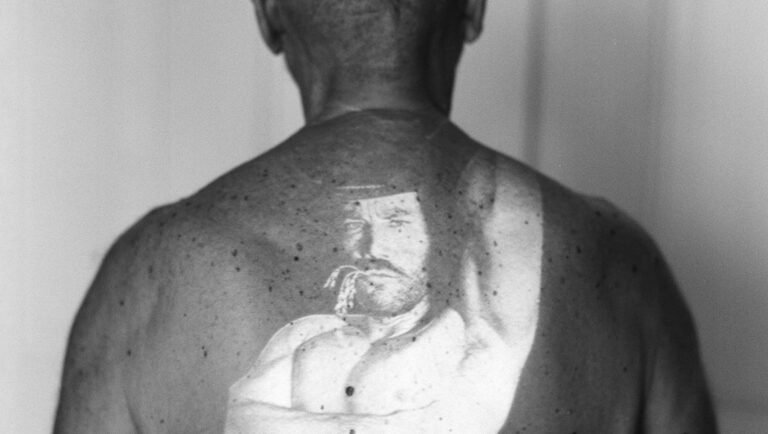
Richard Bernstein is a consummate performer. Better known as Mickey Squires to connoisseurs of gay pornography and erotic photography, fields in which he was one of the most popular models in the early 1980s, Bernstein exuded a rough-hewn, seductive masculinity on camera. The mild-mannered Bernstein, though, has retired Mickey Squires — even calling his persona “dead” — and is now in his 70s and living a quiet life in Palm Springs. Filmmakers Ryan A. White and A.P. Pickle, who previously interviewed Bernstein in their documentary Raw! Uncut! Video! about the fetish porn studio Palm Drive Video, take the schism between the two sides of the man as the subject in their new documentary Mickey & Richard. Their depiction of Bernstein’s reckoning with the legacy of his own iconography as Mickey, and the insecurities and traumas that have affected his life as Richard, is astute and moving. Inventively incorporating archival materials and multiple modes of filming, White and Pickle, by illuminating the life of their subject, raise pertinent questions on the effects of maintaining boundaries between one’s performed identity and private experience.
White and Pickle shoot much of Mickey & Richard on a handheld 16mm camera, lending a grainy, textured aesthetic to shots of Richard lounging by his pool and staged scenes of an anonymous man reaching into his shorts while scrolling through photos and footage of Mickey Squires. This makes a pleasing contrast with the extensive archival footage they use, largely but not exclusively drawn from the films Richard appeared in as Mickey Squires, much of which feature bold colors and bright lighting. The usage of black-and-white 16mm film also lends a nostalgic, home video-esque atmosphere to the contemporary footage of Richard — an intriguing counterpoint to the more typical usage of older technologies to mark events as occurring in the past — yet White and Pickle add an additional, complicating layer to this photographic strategy. At many points in the film, White shoots Bernstein digitally, while also capturing Pickle shooting him on film. In a movie so attuned to the multiple layers of identity and presentation, this is a sharp meta-cinematic gesture, signaling the White and Pickle’s awareness of their own role in crafting an image of their subject through their filmmaking decisions.
Clever as White and Pickle’s cinematic techniques are, they do not overshadow the core narrative of their film, which is that of how Bernstein became Mickey Squires, and how this persona affected his personal life during his career’s peak and in the decades afterward. Bernstein, who is candid and charming in his interviews, relates how he identified with Cinderella as a child, having felt out of place within his family and at school. He came out in college, developed a muscular physique, and moved to San Francisco in time to participate in the city’s gay scene at its pinnacle. After moving to Los Angeles, he would gain work as a model for Colt Studios, one of the premier gay pornography studios. As if he were in his own version of A Star is Born, the studio gave Richard a name, a style, and a persona, which he performed with aplomb.
Despite being in-demand as both a model and an escort for much of the decade, Richard believes that his prominence as Mickey Squires in gay circles isolated him. In contrast to the group of close friends he describes having when he was a newly-out college graduate in San Francisco, the obligation for Richard to perform as Mickey in his social life, as well as his professional life, may have isolated him over time. The most affecting, reflective stretch of the film occurs in the aftermath of Richard’s success as Mickey; personal struggles including decreasing professional opportunities, the death of his lover from AIDS, and his own HIV diagnosis several years later only intensified Richard’s sense of isolation as himself, separate from his Mickey persona.
White and Pickle pay homage to Bernstein’s legacy as Mickey Squires without waxing nostalgic; his talent and influence as a model do not overshadow the complexities his work as Mickey introduced into his personal life. Rather, the emotional core of the film lies in how Richard reconciles the two parts of his life: scenes of Richard participating in new photoshoots as Mickey, despite his professed insecurities about his body as he has aged, and a realization that he has meaningful relationships with people who care for him only as Richard, are affecting and sensitively filmed. Much like its multifaceted subject, Mickey & Richard ultimately reveals itself as a film that is aesthetically appealing, intellectually savvy, and emotionally capacious.
Published as part of IFFR 2026 — Dispatch 2.
Comments are closed.