
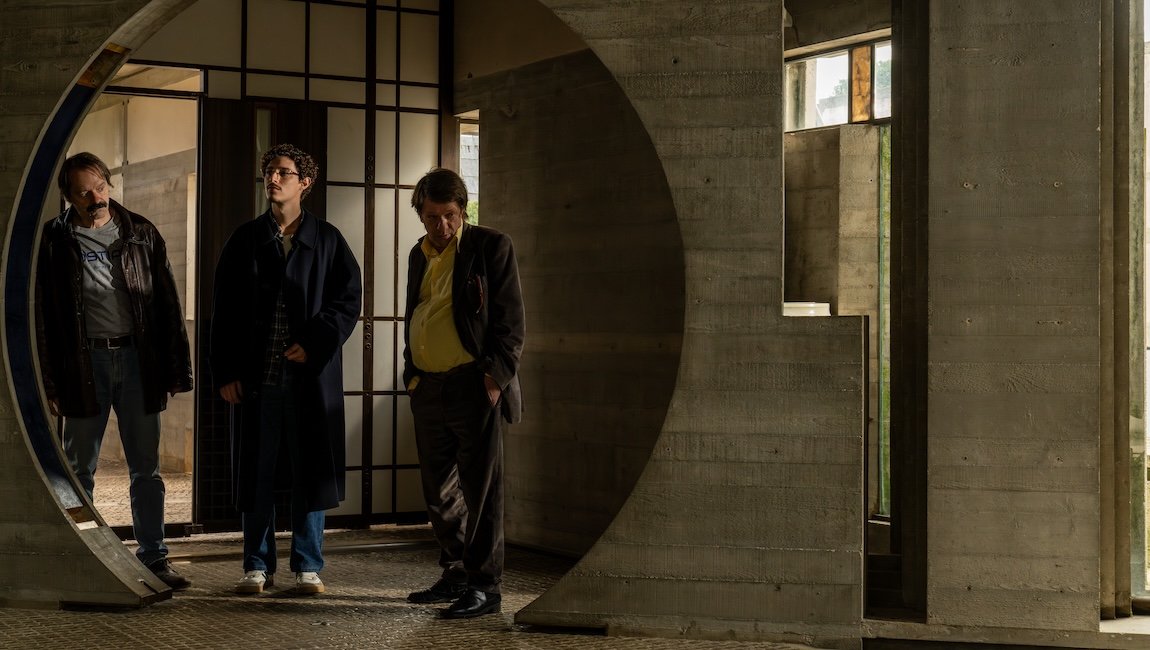
Plenty of films have traversed the anxieties of separation and national identity, specifically the question of what happens when a nation breaks up from within, is no longer its own, and finds its citizens beholden to another way of life. In Francesco Sossai’s sophomore feature, division and anarchy don’t tear away at the social fabric, but it’s clear that something ineffable has been lost, and the search for it proves equally elusive and meandering. The Last One for the Road peddles a whimsical and distinctly European brand of nostalgia, courtesy of its Veneto-set landscapes, through a booze-filled register of melodrama and happenstance. Old men Doriano (Pierpaolo Capovilla) and Carlobianchi (Sergio Romano) are imbued with intoxication and fêted by life’s slow disappointments, and when we first meet them, they lie, dozed off, in a car midway through some kind of nocturnal road trip. Their haggard looks, along with the insistent red glare of the headlights outside, appear to bespeak untold pain and regret.
Doriano and Carlobianchi will not, however, admit to such emotions; their carefree movements regale them with self-assurance, and their bumbling expression tempers the charade of wistfulness with rash, devil-may-care levity. What these men inadvertently stand for, as they make their way through the morose Italian countryside, is a rejection of the times that have, equally unwittingly, passed them by. Progress and industry have yielded no less poverty for them than the bottles of drink they imbibe, one after another, into wayward oblivion. A German stranger outside a pub remarks to Carlobianchi that he came to see Italy before the Italians destroyed it; “I think you’re too late,” comes the reply. When the duo stumble into a late-night celebration by some undergraduates, they all but abduct a young architecture student named Giulio (Filippo Scotti) from the raucous group, cajoling him to ditch his design review and fix his broken heart with them over a long draught and an even more languorous hangover. “There’s never another time,” insists the common refrain.
Sossai, indeed, pads his narrative with long meandering stretches of what might approximate contemplation, borne largely out of the men’s vague attempts to reunite with their long-away friend Genio (Andrea Pennacchi) and of — not altogether separately — the youth’s grudging acquiescence to the muted revelry of his companions. For the most part, the director is content to bask in the flurry of late-night feeling, from whose torpor rises the reminiscing of the old values and days: laziness, promiscuity, brotherhood, even the rural mystique the men fondly recollect from stories of Genio winning the village’s Piaggio Ape race. There are, consequently, few inroads to be made on the subject of reflection proper, sparse as plot and sober cognition are. But the film traces a sentiment quite understated by its genre. While Giulio raves over the aesthetic composition of concrete and water at a burial ground, his elders face the afflictions of a changing political order, with nationalism and the old economy swapped for a Lisbon-Treviso-Budapest highway and the fruits of their illicit past labors rotting, quite literally, beneath their feet. Ever on its penultimate step, The Last One for the Road strides uncertainly toward the future — Ciao, Italia; Viva Europa! — one drink, and then another, at a time.
DIRECTOR: Francesco Sossai; CAST: Filippo Scotti, Sergio Romano, Pierpaolo Capovilla, Roberto Citran; DISTRIBUTOR: Music Box Films; IN THEATERS: May 1; RUNTIME: 1 hr. 40 min.
Originally published as part of NYFF 2025 — Dispatch 6.
Comments are closed.