
2025 is the year of the teeter-totter. We teeter on the first half of the decade, defined by death and the uninhibited embrace of a digital world, and totter on the second half, defined, so far, by malfeasance in all sectors of public life across the globe. The films on this list move that teeter-totter. Some kick up with hard-earned optimism, others push down with well-deserved cynicism; they all, one way or another, exert pressure on the crazy, awful, sometimes wonderful quagmire we’ve found ourselves in, and show us that cinema — even when backed into the far corner of the playground by Big Tech —still has plenty to offer. As we wade our way into 2026, may we take the offerings these movies share with us to heart.
#50-41 |
#40-31 |
#30-11 |
#20-11 |

Characters in Alain Guiraudie’s films express no inhibitions when following their flows of desire, and while, like more maudlin films that loftily uphold the Oscar-approved stamp of love triumphing over the torments of a constricting society, the sociopolitical environment might initially appear as an impediment, Guiraudie integrally weaves it into the desiring fabric. The transgressive nature of their desires needs to be situated within the overarching societal structure, thus an internal navigation of their emotions is externalized on the spatial terrain, whether in the literal mapping of sexual proclivities and boundaries in Stranger by the Lake, where even a voyeur is accorded his appropriate place, or when the anxieties of a liberal’s multi-ethnic environment in Nobody’s Hero manifest as wild fantasies that collide and converge to one particular point.
If Misericordia is his defining feature in an already great oeuvre, it is because he synthesizes all his themes and tonalities from his previous features to zone in on the actions of an insular community thrown into a state of flux by the return of its previous inhabitant. As Lawrence Garcia wrote in these pages, the instability of the community’s desire and the framework itself is laid bare, but so is the urge to accommodate the instability within this framework, and this rerouting and recalibrating of their coordinates of desire is precisely where both the sexiness and the absurdity lies, even if Guiraudie doesn’t shy away from the chilling consequences induced by the forbidden pleasure. Affect doubles as emotion, (exaggerated) performance is strikingly real in its glaring artificiality, and reality assumes the form of dreams. The community and its returning inhabitant, Jérémie (Félix Kysyl), must undergo their trial by fire to integrate its new relations, and the film’s radicality emerges from confronting the messiness induced by the situation head-on, steeping the entire film in an atmosphere of volatile flux. But all that eroticism of rituals and conventions is not without stern reminders of human compartmentalization, one which even renders murder as a mere stumbling block to successful accommodation.
In the midst of all the horrors in the world today, the words echoed by the community’s pastor (Jacques Develay), among the finest characters in recent years, on our collective responsibility ring true across the world even as he refers mainly to the events happening in his village. That Misericordia sustains this nuanced critique of societal functioning amidst the comic absurdity and eroticism makes it among the decade’s greatest cinematic triumphs. — ANAND SUDHA
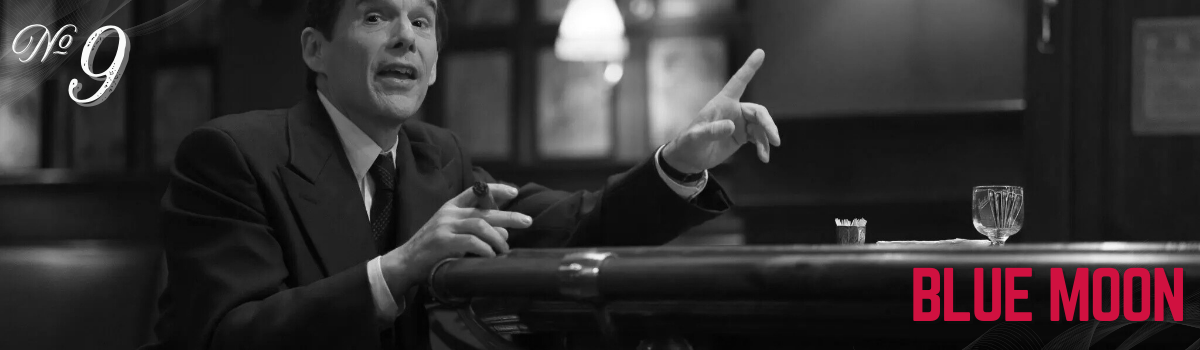
So many elements of Richard Linklater’s Blue Moon seem, on paper, to impose a ceiling on what the film might achieve. It’s unabashedly stagey and theatrical, confined to a single location, intermittently bordering on a one-man show. It trades in nostalgia, flirts with the well-worn contours of the “tortured genius” narrative, and features a handsome movie star “uglied up” for broadly comic effect. Any one of these choices might signal a certain smallness of ambition or a retreat into familiar indie affect. And yet, Linklater seems to nonchalantly absorb and dismantle nearly every one of these concerns as quickly as one comes up with them. Drawing on the reflexivity of his milieu, the depth of his character study, and a writing voice that balances wit, gravity, and levity with such impeccably deceptive ease, the director turns Blue Moon into something expansive rather than limited. Above all, the film offers a rich and searching character study, unfolding with a frank, self-aware melancholy that feels both intimately personal and quietly universal.
Ethan Hawke’s Lorenz Hart is a prismatic creative soul in motion — by turns energized and depleted, emotionally generous and narcissistic, romantically inclined yet riddled with neuroses and insecurities that can curdle into outright repugnance. Linklater refuses to sand down these contradictions into either pathology or absolution, allowing them instead to exist as the lived texture of an artistic life. Hart’s creative spark so often arrives braided with self-loathing; his empathy sits uneasily beside self-centeredness,; his virtues, vices, and vanities circulate through the same bloodstream, offering, pointedly, a striking and rare sense of lived social reality beneath all the period costuming and intricately scripted exchanges. The dialogue moves to the rhythms of someone who thinks faster than he feels and feels more deeply than he admits — and Linklater is unafraid to turn these frictions into grist for both mordant comedy and aching reflection, beguilingly seesawing between the two. The film’s sparsely plotted structure and staging, then, grants that inner emotional churn room to breathe rather than forcing it toward linear epiphanies or redemption.
What ultimately gives Blue Moon its lingering emotional force, though, is its honest reckoning with loneliness (as in, “I saw you standing…”). This is loneliness not as a melodramatic condition, but rather as a quiet, persistent undertow. Coming from Linklater and Hawke after the shared intimacies of their two-hander Before trilogy, this feels particularly poignant. There are sparring partners here — intellectual foils, emotional counterweights — but the film never pretends they fundamentally dissolve Hawke’s solitude. Instead, Blue Moon understands loneliness as something that can coexist with connection, humor, even professional vitality. Crucially, it avoids self-pity; its melancholy is measured, reflective, and unsentimental, grounded in recognition rather than complaint. Linklater treats this emotional isolation with a kind of gentle accountability, neither aestheticizing Hart’s miseries nor denying their weight. In doing so, Blue Moon understands creative life not as myth or martyrdom, but as accumulation — of habits, compromises, affections, and regrets; of exhilaration, exasperation, and everything that flickers between them. It’s a work of sneaky emotional intelligence, trusting its audience to remain with complexity and contradiction, and to accept that any honest portrait of emotional life resists the neat resolution and moral clarity that so many increasingly demand today. — SAM C. MAC
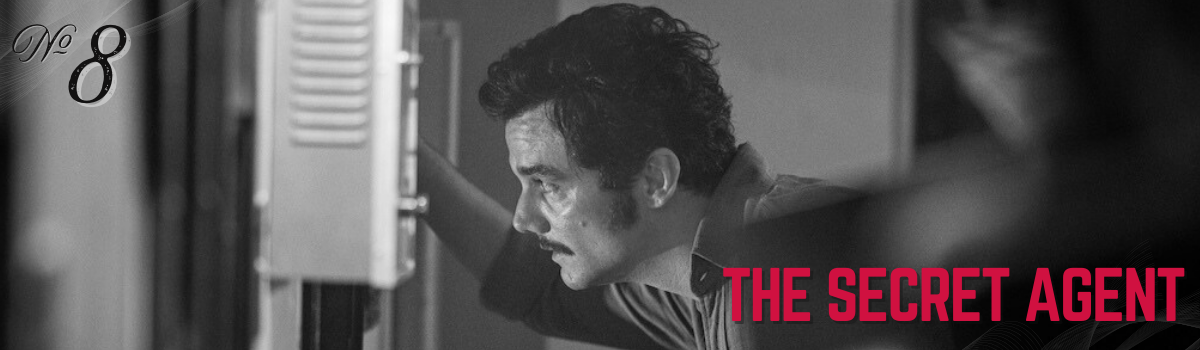
It opens, and it makes sense. A crane swoops us into a period of great mischief not dissimilar from our own: corrupt authority figures, ubiquitous violence, and fake news — this is a political thriller for right now. Except it’s not. The movie is slow, and all the side characters have names. They talk a lot, and not necessarily about the political crisis at hand. The Secret Agent is just as interested in the community around its furtive protagonist as it is him, sometimes even more so: people who live with dignity in dire circumstances — vibrant, full, and true. There has not been a film as sprawling and dynamic about life under martial law since A Brighter Summer Day. And amidst all this, The Secret Agent pulls a major stylistic upset, subsuming the ‘70s political thriller into a humanist historiography that uncovers and restores a lost slice of Brazil’s activist past. These are rebels whose protests are small and silent; for some, the very act of being alive is itself a kind of revolution. Until now they’ve been lost phantoms, and they return to their graves after the movie ends. But Kleber Mendonça Filho gives us a chance to meet them, shake their hands, and say hello: if one defines spirituality as an ineffable force that unites us across time, space, and identity, The Secret Agent is the year’s most spiritual film.
It’s also a Pynchonian parade of pop culture, conspiracy, and pure folklore, lined front-to-back with extraordinary music and unforgettable detours into the margins of Recife — nowhere else this year do you get Holocaust survivors, cats with two brains, and disembodied legs on murderous rampages under one roof. The Secret Agent is a testament to cinema’s transportive, imaginative power. It’s a power at risk of fading. The 20th-century mode of moviemaking lies critically ill, and Mendonça Filho’s film comes to us in a year swollen with goodbyes to it; several of them great. One Battle After Another says “that’s all folks” with a churlish wink, and Resurrection insists everything that dies someday comes back. The Secret Agent, however, is the most honest: it understands cinema’s function in the world, for normal people — how movies are a fundamentally impermanent thing that nevertheless keep the nightmares at bay. Is adeus ao cinema premature? We’ll someday find out, but The Secret Agent at least gives it just a little more time on the operating table. — ETHAN J. ROSENBERG
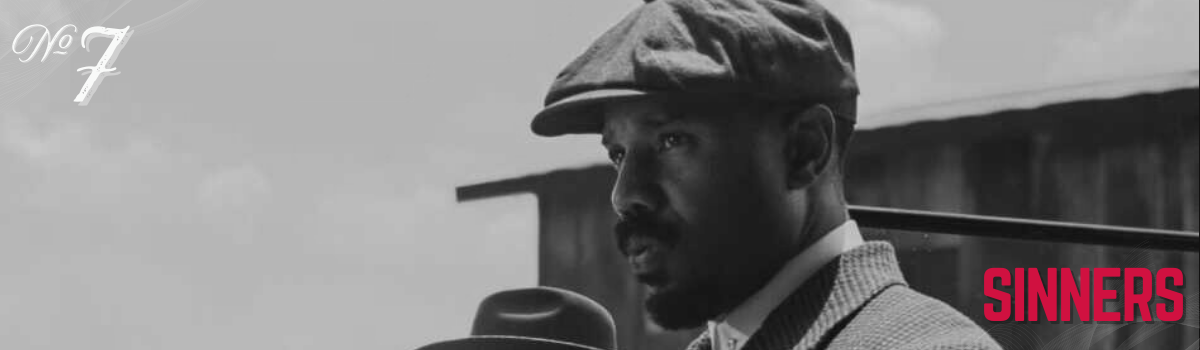
Because the term “worldbuilding” has become film critic shorthand, we can forget exactly what it means for a work of art to build a world. A world is a space in which acts and events unseen to us have determined in advance that only certain things can happen. Worlds follow a certain logic, but they are also subject to chaos. Worlds, in other words, are dense spaces of historical and personal possibility, in which (as Marx put it) human beings make their own way but not in conditions of their choosing. In this regard, a “world” is essentially a culture. Sinners is a film about, among other things, the culture of the 1930s Jim Crow South, the web of influences that gave rise to the Delta Blues. We understand on an intellectual level how this part of Black culture developed, how it was a response to the lived conditions of chattel slavery in the American South; the syncretic forms of Black Christianity that formed from this displacement and enslavement; the Blues singer as an American griot; the signifyin’ of slave communication and the oral tradition. Historians have charted all this; you don’t need my amateur take.
There are so many scenes in Sinners that speak directly to these traditions and how, at the particular moment depicted in the film, they coalesced into the Delta Blues. But one moment stands out because it helps “build a world” that depicts both cultural expression and the sources that make it possible. Delta Slim (Delroy Lindo) is riding with Stack (Michael B. Jordan) and Sammie (Miles Caton), describing the aftermath of a performance tour that he and a friend went on. A white impresario took them to various clubs where they played the Blues for white folks, making a decent amount of money for doing so. But Slim’s partner was stopped in a Southern town, and, with money on his person, was accused of stealing. Slim describes in detail how his friend was lynched and, with palpable anguish, lets out a wail that instantly segues into Blues singing.
Sinners isn’t exactly about watching a culture come to life — it’s already there — but Ryan Coogler demonstrates how the unshakable weight of a shared past becomes culture, how art expresses personal and collective history. The concept of culture has been cheapened in our time, used as shorthand for petty political grievances, or as a way to demonize those who are different from us. But as we see in Sinners‘ centerpiece, the bravura sequence shot that unites Black life across continents and centuries, culture is a tie to our ancestors, how we find our place in a hostile and confusing world that, indeed, we make every day, but not under conditions of our choosing. — MICHAEL SICINSKI

When, during a Q&A for Magellan, Lav Diaz baffled his translator by claiming he cast Gael García Bernal during coitus with Albert Serra, I was glad to find that the video clip was originally posted by a small but dedicated fan account, “Magellan Film Updates.” Whether the account is kinda-sorta affiliated with Janus Films’ distribution plan or not, it’s at least a little heartening to see a quasi-national pride in Diaz’s work, especially since his career has been one of nonstop investigation of the Philippines’ (and, by extension, its people’s) place in the world. This mock-FYC campaign (Magellan was sadly not shortlisted for best international feature) would be unimaginable for most of Diaz’s previous works, such as the eight-hour-long Lullaby to the Sorrowful Mystery or even his other film shot in color, Norte, the End of History, as nobody typically expects protracted, austere black-and-white semi-documentaries starring non-actors to appeal to the Academy voting body. But Magellan is different, and no review of the film (including my own) spared mention of its relatively short two-and-a-half-hour runtime and its honest-to-God movie star in the lead role. Hardcore cinephile instinct says this would normally be the marks of a sellout, yet Magellan is not only still real-deal Diaz, but one of his best.
DP Artur Tort conjures strangely warm hues — the kind of colors that cause you to stop what you’re doing and call your partner’s attention to a particularly vibrant sunset — to paint the journey of the Golden Age of Discovery’s poster boy. This kind of beauty would normally be so overwhelming as to be kitsch, if it weren’t also frequently accompanied by a legion of dead bodies strewn about the beaches and jungles of the various islands Magellan visits. The film oscillates between these moments of beauty and barbarism, reminding us that the ugliest moments of history took place in areas now considered highly desirable vacation spots. But even with that, the strength of Magellan lies in its unwillingness to oversimplify its politics. It assumes you don’t need to be convinced that colonialism is merely bad, and instead spends its time in the details of Magellan’s legacy — his wife, his bouts of mania, his pleas with the church, his evolving stance on the act of conversion, and the series of personal choices and historical circumstances that push him to justify wanton slaughter. Magellan is the culmination of Diaz’s passions and interests, so it’s especially great that the budget Diaz deserved is spent in all the right places. — ZACH LEWIS

One of our finest contemporary chroniclers of the void and the nationalistic rituals related to staving it off may have found a subject that was too perfect for his interests. Andrés Roca Rey is considered the greatest bullfighter in the world right now, and Albert Serra wants to know exactly what that means across his Afternoons of Solitude. There’s an ever-present entourage around Roca, forever designed to encourage the peculiar form of aesthetic appeal that this ancient sport has built up around itself, but they’re ultimately as faceless as the crowds that Serra avoids showing. They only exist to praise the size of his purportedly arena-sized balls, and to curse and denigrate the bulls for daring to take offense at being stabbed to death and flaunting the aggression they were specifically bred for. (Links between this particular manosphere and our contemporary moment are perhaps a little too easy to spot.) Ultimately, the focus for the arena scenes is just hombre a toro, multiplied by the traditional six showdowns, although usually that well-trodden structure is three matadors facing two bulls apiece over the two hours of showtime. Here, it’s rendered as a one-man event, where our over-valorized lead possessing the name Rey would be too on-the-nose if it weren’t real.
There are also preludes and aftermaths devoted to the most parodic form of Spanish machismo. Roca gets himself crammed into the kind of corset-like costumes that make masculinity look awfully frilly by his lords-in-waiting, makes prayers to his higher power to justify his killings and hope they don’t backfire on him, and then gets transported between hermetically sealed environments as he murders his way through the country’s population of bulls. (He’s Peruvian, but you’d never really know it despite the intense Spanish nationalism baked into the sport — his backstory and what drew him to this morbid art isn’t what interests Serra.) Bullfighting itself is boring and thrilling, repetitive and ever-shifting. When there’s a goring of man or beast, you can’t really tell where the blood in the sand is coming from, and it does happen on both sides of the battle — the second bullfight nearly ending in disaster is clearly the scene Serra was chasing after the entire time he filmed Roca at work. The men in front of the camera are vultures who think they’re swans, but the man behind the camera is mesmerized by the sheer audacity of how they swaggeringly operate. — ANDREW REICHEL
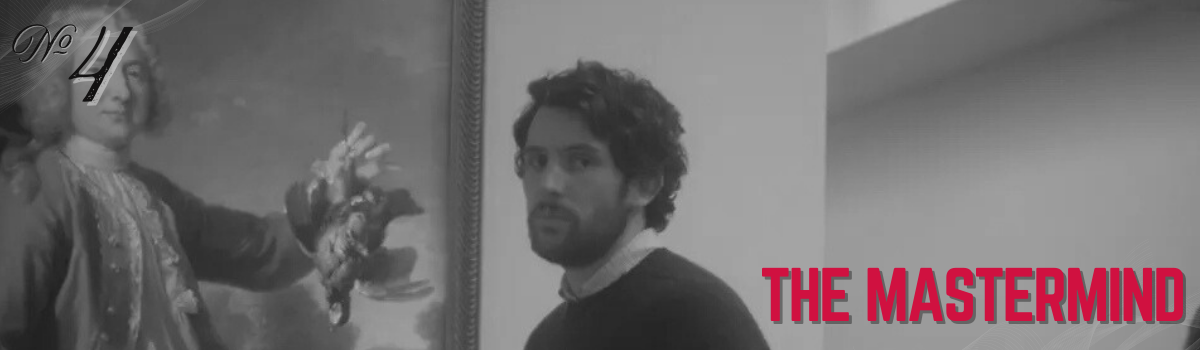
Terri tells J.B. to hang up — she is serious — but he keeps talking. A conspicuous click interrupts their conversation (J.B. talks and Terri, maybe, listens). We know law enforcement are listening in on J.B.’s confession. He says he did it all for his wife and kids. He also says he did it for himself. Then he asks for money. He didn’t seem to notice the click, or his wife’s warning. There are many such clicks in Kelly Reichardt’s The Mastermind. Tricky Dick smiles on a campaign poster; televisions blare about Cambodian incursion; though most touching is a scene on a bus, in which J.B. looks ahead to a young couple swaddling a baby. The man is a sailor. Hours later, J.B. looks again, and the man is gone. Sent off to distant climes. A strange reflection of his own conundrum. There is some fragment of the apparently futile Vietnam venture that seems to chime with J.B.’s itineracy; it is curious that, despite being an outlaw, J.B. makes sure to distinguish his “type” from draft dodgers hiding away in Canada. In fact, he is a man with less conviction. As everyone seems to tell him, he didn’t seem to think it through; it seemed, at the time, to be a thing worth doing.
A slapdash heist, and a carload of abstract paintings. Back home, after the robbery, he takes down one of his own pictures and hangs up a stolen Arthur Dove. This is probably the only moment in the film of real satisfaction. The question pounces on us: why these pictures? J.B.’s father doesn’t seem to think they would be worth the trouble. He is (of course) correct. J.B. is acting quite outside of particularly financial or activist concerns. The robbery is instead a strange vortex of his personal hangups; an attempt to redeem his education, and his taste, and his disbelief in the basic expectations of American life. Artists must be accountants, and businessmen; wouldn’t there be some justice in being paid to lift art in broad daylight — a crime as dazzling as it is stupid? Well, not particularly. Josh O’Connor’s general daze never quite twigs what it is he is doing, or why; he is doing this for someone, for some reason, and it might have been worth it. He is, by the ending, swept up by a genuine protest, and apprehended for a cause he does not believe in. This seems to be the trend of J.B.’s wandering: ping-ponging about so many apparent convictions, himself the space between. — MILO GARNER

Over the course of a now three-decade career, Jia Zhangke has reigned as one of our premier chroniclers of a volatile, ever-shifting 21st century. China has seen monumental changes, and Jia has been there to document not only seismic economic fluctuations, but also the existential ennui of existing in the midst of a century of neoliberal economic policies and digital encroachment into personal spaces. Caught By the Tides represents not only a culmination of this project, but also a radical formal departure from Jia’s prior works, even as it only exists on a continuum with them. A heady mélange of repurposed home video footage, outtakes, and behind-the-scenes material from his own films, plus some new material filmed during Covid, Jia crafts a loose, makeshift narrative that recounts the first quarter of the century in a self-reflexive, essayistic fashion.
Here, Jia’s longtime collaborator (and spouse) Zhao Tao plays Qiao, an aspiring singer and dancer who works at a low-rent club. She’s dating Bin, played by Li Zhubin, another familiar face from several Jia films. They quarrel, and he eventually disappears, decamping to other cities and taking jobs with varying degrees of legality in an attempt to make the big time. She drifts along, searching for him for a period of time before finally giving up. Some years later, in the midst of stringent COVID protocols, they cross paths by happenstance. Despite obvious aging, they recognize each other, and this tenuous reconnection ends the film on a tentative, conciliatory note for the future. That’s about it for the narrative, which as others have pointed out, bears a certain resemblance to Jia’s Ash is Purest White (also starring Zhao as a woman reconnecting with a lover after many years), while also referencing (explicitly or otherwise) Unknown Pleasures and Still Life. Jia accomplishes something here, then, that feels akin to Linklater’s Before trilogy, or Benning’s One Way Boogie Woogie/27 Years Later, where a film, whether documentary or not, winds up capturing the passage of time in very literal, startling ways. But the construction of Caught By the Tides becomes something different by virtue of its unique components; the collage of different kinds of images becomes not only about time passing, but a concrete, material representation of that time. Lo-fi DV footage, HD images, and current Arri Alexa technology all combine into a sort of living history of 21st-century filmmaking techniques, while simultaneously reflecting on each individual viewer’s history with Jia’s work (truly, it’s hard to gauge exactly what someone would get out of this film without prior familiarity with this oeuvre).
The displacement caused by the monumental Three Gorges Dam project is still a central structuring idea for Jia’s conception of 21st-century China, and variations on heroic bloodshed tropes and gangster movies in general inform his approach to narrative. But what sets Tides apart is the director’s radical repurposing of our sense of time itself. An aged Zhao Tao becomes a temporal artifact, regardless of the film surrounding her, and her interactions with shiny new technologies point toward a strange, unknown future. Not merely a remix or a B-side, Jia is also still quite capable of stunning images; one of Tides’ most remarkable sequences finds a group of masked people at a dance lesson, awkwardly trying to keep space between themselves and their partner while a worker weaves through the crowd, spritzing disinfectant everywhere. It’s a bracing reminder of our very recent past, just one of the stops on Jia’s decades-spanning tour of modernity. It’s been a long, strange journey, and there’s still much to come. — DANIEL GORMAN
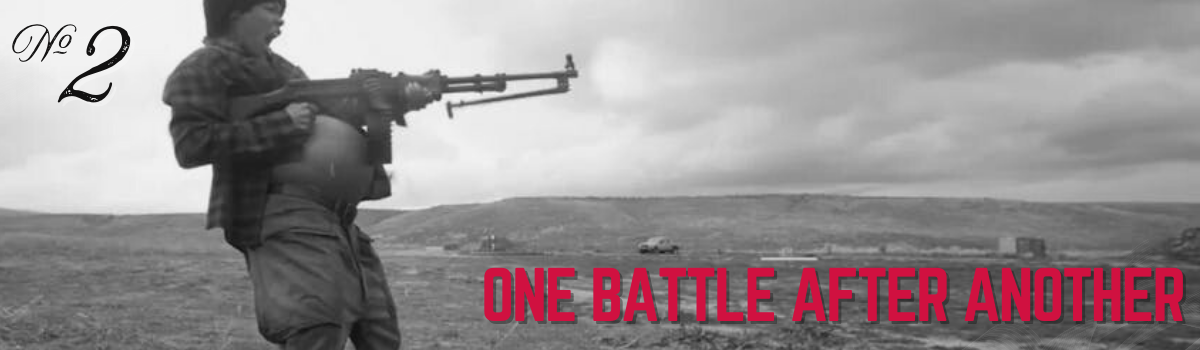
When’s the last time you went to the cinema and didn’t have the urge to look at your phone even for the minutest of seconds? When’s the last time it felt like a film could branch out into infinite directions, and you’d be happy to journey along with it on any and every one of them? When’s the last time you’ve laughed as loudly as you’ve quietly sobbed? The sensorial and experiential pleasures of Paul Thomas Anderson’s One Battle After Another are as visceral as they were in Boogie Nights (1997) and Magnolia (1999). But you could see — and more importantly, sense — his effortful exertions there: aggressive camera push-ins didn’t so much create emotion as carve (and crave) it; mosaic narratives didn’t so much expand his film’s world as collapse it. Everything pushed toward the center, then, despite the abundance of narrative (and tonal) digressions. OBAA is, in many ways, PTA returning to this sort of classical, propulsive form.
But with the experience of someone who knows when to hit pause — or at the very least, navigate narrative and tonal lanes — without calling attention to it. PTA’s formal looseness (not to be mistaken for laziness) allows OBAA — despite the constant presence of Jonny Greenwood’s excellent but also very noticeably clickety-clackety, Jon Brion-esque score — to never consistently feel its straining to make a grand statement. It moves in all sorts of directions freely: first, taking Perfidia’s lead to display a whirlwind montage of stylized (if you’re being cruder, fetishized) leftist rebellion dominated by sex and violence; then, brilliantly contrasting this by taking St. Sergio’s lead, who’s unflashy display of defiant rebellion dominates the sensei-tional “Baktan Cross” sequence; and, finally, fusing these disparate sensibilities in the spectacular “River of Hills” sequence, which requires Willa (the astonishing Chase Infiniti), the confused teenager at the heart of PTA’s film to (literally) pull the brakes to, at least temporarily, put an end to this seemingly endless sense of violent propulsion.
Where then, you ask, are the two biggest stars of the film — Leonardo DiCaprio and Sean Penn — in all this? Stumbling through the hazy maze of America as Doc does in Inherent Vice. Or entirely consumed by the always-looming threat of forces bigger than themselves, also like the “Golden Fang” in Inherent Vice. The pleasures of OBAA, you see, are not just limited to Anderson’s earlier films: instead, the director’s latest is a near-perfect assemblage of both old and new PTA, the definitive arthouse blockbuster that swivels and swerves while still somewhat sticking to a familiar lane. — DHRUV GOYAL
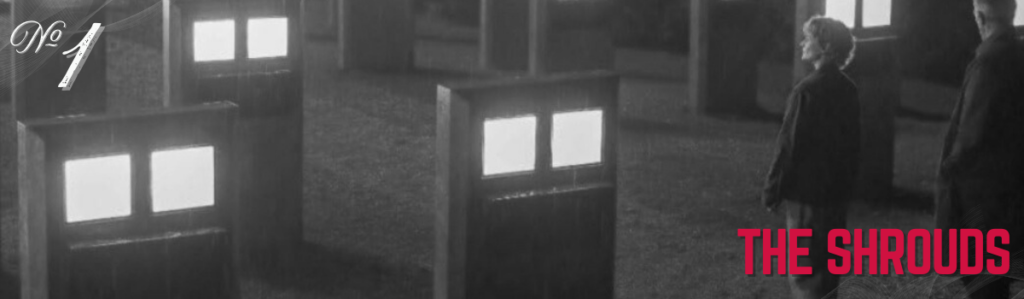
It’s not hard to see why David Cronenberg’s The Shrouds has disappointed so many of even the great director’s most passionate fans: this is a cold, bleak, distant movie, its bold blend of icy esotericism and callously broad satire offering no easy way to tap into its strange frequency. But the distance is the point — Vincent Cassel’s Karsh’s wealth, ambition, and grief have isolated him from the rest of the world, and from any compassionate understanding of what it means to be human. Like every other ubiquitous technological device in our modern world, his supposedly groundbreaking invention — a live camera feed of your deceased loved one’s decaying corpse — purports to bring people closer, but instead only pulls people further from the essential experience of living. And further he pulls himself, into bizarre conspiracy theories and nocturnal fantasies, a man alone and adrift in an unreality of his own making.
Karsh is building a future, but it’s a future designed around the past, and the conflict strands him in a kind of temporal stasis, slowly atrophying his mind, like the corpse of his wife (dead for four years now) that he watches with an obsession that barely even resembles love anymore. Like all Cronenberg protagonists, Karsh is, effectively, infected with a virus, but he’s too disconnected from the real world to acknowledge it — in his eyes, it’s his wife’s corpse that’s infected. The passivity of this situation — a man virtually observing a virus on a four-years-dead cadaver, a virus that itself might only be a hoax, or just a figment of his imagination — allows his own virus to fester, and the impossibility of reconciling his ever-worsening condition with any kind of tangible or practical solution warps his obsession in escalating mental and logical spasms. But Cronenberg offers no outlet for these spasms, and even a significant last-act attack of violence isn’t witnessed, and may also only be a hoax.
The slow, glassy bleakness of The Shrouds makes for a disquieting viewing experience — it’s all loneliness upon loneliness, breeding paranoia and compulsion. But if you can’t find a way into Cronenberg’s vision, he’s found its way into your life. Karsh’s poring over the most minute, probably inconsequential details on a virtual image is an experience most of us will relate to, even if the details here are far more (characteristically) unpleasant. A perceptive, provocative movie, unyielding in its distance, yet closer to reality than it may seem. Inspired stuff, and one of Cronenberg’s very best. — PADAÍ Ó MAOLCHALANN
Comments are closed.