
There’s no denying that a long tradition in horror exists of the unseen being scarier than showing the monsters. Hitchcock was famously quoted as saying, “I believe in putting the horror in the mind of the audience, and not necessarily on the screen.” Spielberg, out of necessity, had to hide the shark as much as possible, and it helped make Jaws an enduring masterpiece. The imagination’s ability to conjure the monsters we can’t see is a special thing, and when a filmmaker can tap into that, it makes the experience all the more chilling. With this ethos in mind, Ian Tuason’s feature debut, undertone, is an aural experience that builds its dread through immersive sound.
Evy (Nina Kiri) is her mother’s caretaker by day and a true crime/unsolved mysteries podcaster by night. While her mother lies upstairs, Evy and her co-host dive into their latest spooky spectacular. Having been sent a series of recordings without any context, the two begin to listen to and break down each tape on the pod. As the tapes detailing the eventual unexplained deaths of a married couple progressively get creepier, Evy’s reality begins to shift. The deeper she sinks into these recordings, the more her surroundings creep up on her. Her sense of time falls apart, visions of her catonic mother lurch around the corner, and the apparent curse that sent the couple to their doom seems to have its claws in her.
With a background in Virtual Reality — his early shorts experimented with 360° soundscapes — Tuason has a natural ear for what scares us. Deafening screams, whispers that seep under your skin, and creaking floorboards that echo in your skull, Undertone’s terrors paint the picture in your mind. It’s a tricky balance — you are watching someone sit in a chair and listen to sounds after all — but Tuason, through clever blocking and gaming out when to show you the horror, walks it well. Far more than a visual podcast, undertone’s last act fully opens up into something potent, signaling Tuason as an interesting new voice in horror.
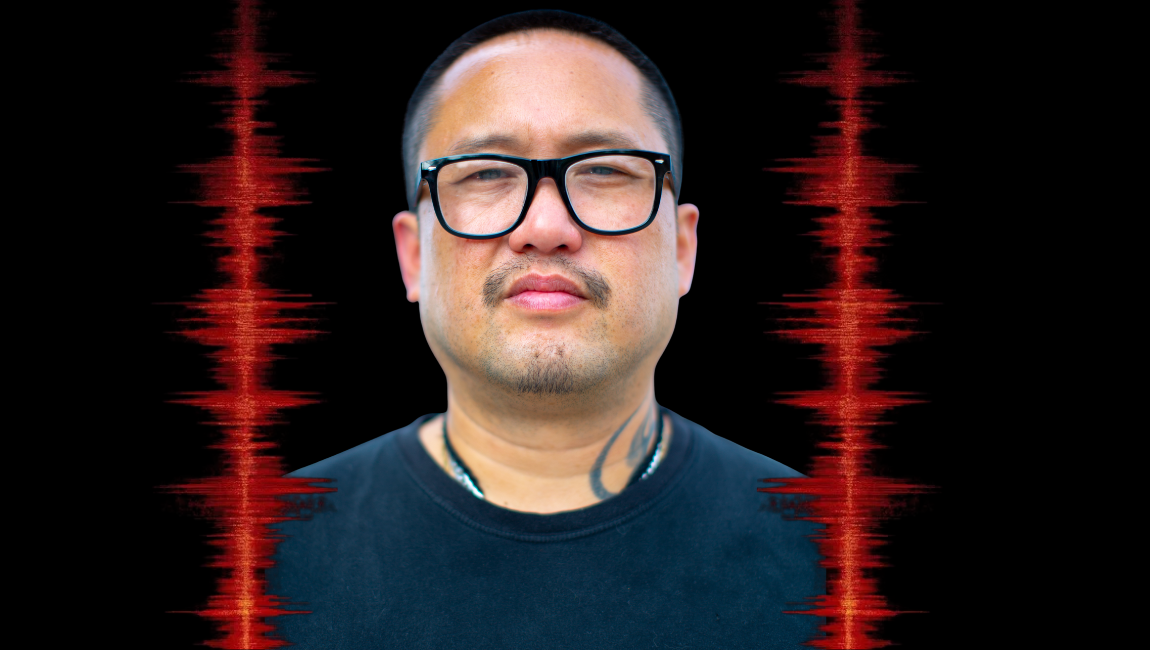
Ahead of Undertone’s release, I sat down with Ian Tuason to discuss making audio cinematic, how he drew on his own personal pain to tell this story, and what he hopes to bring to Paranormal Activity 7.
Brandon Streussnig: There’s a world wherein a film like this isn’t cinematic, and you’re stuck watching someone listen to recordings for 90 minutes. What went into your approach to avoiding that?
Ian Tuason: I had to draw from different movies and use cinematic techniques that kind of conveyed the same message that I wanted to convey in every shot. So every shot had an intention, and I just had to find a technique to express that. I had to draw from different movies because I needed an arsenal of techniques in order to make one location feel interesting. In that way, the entire movie is just all cinema language. There are no big set pieces or gorgeous exteriors. It’s all just language, really.
BS: What were some of those films you were drawing from?
IT: Well, there are horror films like The Shining, Psycho, Alfred Hitchcock. Then I moved into other genres. There was We Need to Talk About Kevin, The Sopranos, surprisingly.
BS: Wow. What about The Sopranos in particular?
IT: The Sopranos had to build a lot of tension because it’s not an action show, it’s a drama. It was violent, but the tension is always the anticipation of violence. So I drew from that show. There were a lot of shots from that show in undertone.
BS: One of the things I dug most about this is how you open it up in the final act. I don’t want to spoil how we get there, but it feels like being pulled through a haunted house against your will. I know you come from a background in VR, and I’m wondering if you leaned on that for this sequence.
IT: Yeah, definitely. I played around with cinematic language in VR. How do you make a film with a 360° frame? A lot of the experiences that I thought worked were either “Don’t move the camera,” or “If you’re going to move the camera, move it slowly on rails,” which is like a haunted house amusement park ride. That way, you’re passing through a space. So now the soundscape is in front of you, then beside you, then behind you, and then it trails away until you hear something or see something new. When I was creating VR experiences, that really worked, so I thought that technique would end the movie perfectly.
BS: I really appreciate how the film treats Evy’s shortcomings with so much empathy. There’s a real truth to her. We rarely see how caregiving can burn out and fray those who do it, and I found the honesty here so refreshing. Talk to me about how you approached that.
IT: I was caregiving for my parents when I was writing this movie, and I drew from whatever emotions I was struggling with. Then I went back and rewrote a lot of the audio recordings that were sent to Evy to reflect the emotions that Evy was struggling with, which were repressed guilt resulting in denial. I think I was also bottling up a lot of my emotions in that situation because, well, first, I wanted to numb it by drinking, and then as an addict, you tend to deny that you’re an addict in order for you to get your fix, get that relief. Then you start lying, and then I had Evy begin to lie. And the more you lie, the more isolated you feel because no one can help you because no one knows that you’re going through all those struggles. That was how my experience influenced the movie.
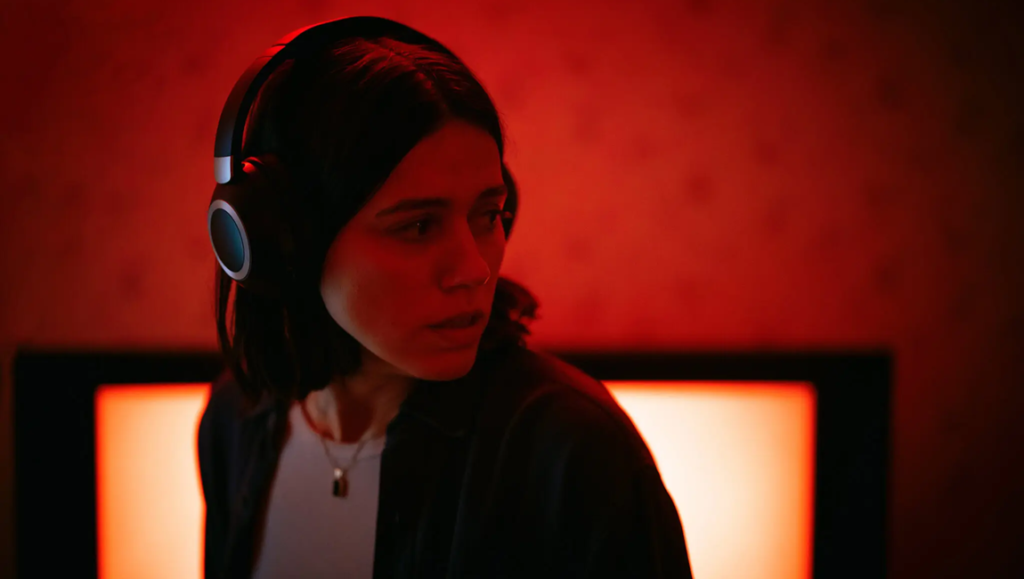
BS: In Evy, you have a terrific actress, Nina Kiri. It can be so difficult to be an active listener on screen, to make that compelling. What were the conversations you had with her on how to play Evy? Did she get to rehearse at all with the recordings?
IT: She listened to them for the first time on set. We recorded the tapes a couple of days before principal photography, and they were recorded here in the same house. I blocked the two actors, Jeff Yung and Keana Bastidas. They each took turns holding that iPhone, which captured a lot of the audio. And then we created the tapes for Evy to listen to for the first time on set to get those genuine reactions. So all the reactions you see from Evy listening were her listening to the actual tapes that you hear [in the movie].
BS: There’s such an ecosystem around True Crime, and I like that she’s almost being punished for exploiting it. Was that on your mind while conceiving this?
IT: Yeah. We did some rewrites. We made it clearer that the tapes were not something that she should have listened to. It’s almost like an audio virus where you shouldn’t have exposed yourself to these audio tapes because now it’s too late, you’re infected. That kind of draws from the creepypastas that the movie investigates, where things go viral, but in this case, it’s a supernatural/technological virus. We played around with that.
BS: How did you land upon the demon haunting her, Abyzou? Was that a creation of yours or something you found through research?
IT: I found it through research. I wanted to find a demon from ancient folklore that killed children. The idea was that Evy doesn’t want to have a child, and maybe she’s unconsciously summoning this demon to take away this burden that she has. That was the original idea. And then I found Abyzou, which was a demon from the Testament of Solomon, which is an ancient book, an ancient scripture. She was perfect for this movie. Again, it’s just like nursery rhymes. The Testament of Solomon is passed on through oral tradition.
Solomon’s Testament was his oral rendition of what he says he went through. Then that gets passed on from generation to generation until we have this being that exists only in our imagination. But since we’re all connected in many ways, in language and culture, who’s to say that this entity doesn’t really exist? It’s almost like a celebrity right now, like Taylor Swift. She exists in our head a certain way, and whoever Taylor Swift is as a person is almost irrelevant at that point.
BS: I know you can’t talk about it too much, but it was recently announced that you’d be directing Paranormal Activity 7. What excites you about jumping into that world?
IT: Well, the world already exists. It has its own lore. They didn’t want me to continue that lore. They wanted me to invent my own, but tie it to that world, and that’s the only way I would have been interested to do it — to be able to create my own world. So I pitched it to them, and they agreed that it would make a great reboot. But what I’m excited about is near the end, when we reveal what the connections are from my world to their world. That’s exciting to me as a fan of the franchise.
[Editor’s note: While we may not always agree on the quality of finished products here at InRO, we endeavor to make space for such disagreements, as well as rebuttals and reappraisals.]
Comments are closed.