
When is the ideal time to learn your significant other’s most shameful secret? The new comedy The Drama argues the best time is “never” and the absolute worst time is “one week before your wedding.” Written and directed by Norwegian filmmaker Kristoffer Borgli (Sick of Myself), The Drama luxuriates in the clammy isolation of laying yourself metaphorically bare; simultaneously horrifying your significant other and closest friends, while still having to power through the embarrassment en route to the most stressful day of your life. And the title of the film notwithstanding, it’s largely intended to play for disquieting laughs. In The Drama, the inconvenient truths we turn over in our mind escape containment and cause a snowball effect. Every scene in the film eventually works its way back to the same bone dry joke about what is a loved one actually capable of. Modest in ambition and scope (while still starring two of the most famous actors in the world), the film iterates on that queasy theme for nearly its entire runtime, attempting to find the mordant humor in exploring what lapses are considered unforgivable. Depending on your appreciation for “cringe,” it’s as funny as it is excoriating.
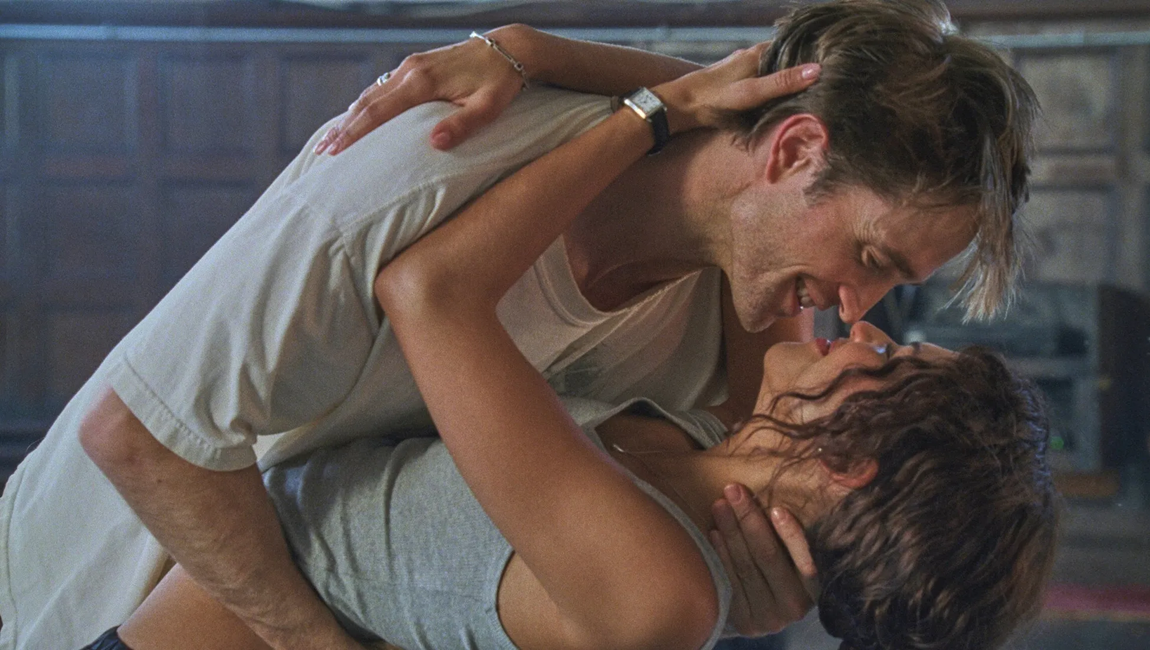
Zendaya and Robert Pattinson star as Emma and Charlie, the proverbial “perfect couple.” Photogenic yet endearingly awkward — she is deaf in one ear and has an off-putting laugh, he has perpetual bedhead and is a bundle of anxieties; movie stars: they’re just like us! — Charlie and Emma have been dating for two years and are in the home stretch of wedding preparations. Trouble kicks off during a dinner with best man Mike (Mamoudou Athie) and his wife Rachel (rockstar-turned-actress Alana Haim) when, over too much wine, the discussion turns to the landmine of a question: “what’s the worst thing you’ve ever done?” The two couples go around the table sharing mortifying personal details until Emma’s turn arrives and she stuns the group with her answer. The “mystery” over what Zendaya’s character did is at the center of The Drama’s marketing, although, to be clear, it’s dispensed with at the end of the first act (in the interest of preserving the shock factor, this review will take pains to avoid spoiling it). What’s germane to discussing the film is that as a teenager Emma contemplated doing something truly monstrous, only to step back from the brink at the eleventh hour with no one the wiser. And from there what started as a well-lubricated game played by friends threatens to torpedo the impending nuptials — Rachel in particular is so aghast that she tries to back out of her maid of honor duties.
Taking place in between the myriad final preparations leading up to the big day (sessions with the photographer and florist, rehearsing the first dance, adding the final touches to your post-ceremony speech, etc.), Charlie and Emma are forced to grapple with the nuclear-grade fallout of Emma’s confession. In the days leading to the wedding, we follow our two main characters on parallel tracks. Emma understandably puts her head down and focuses on the festivities, trying not to think about her status as a once and future pariah, while Charlie clings to the front that everything is fine while internally he’s melting down. What once would have been considered innocuous behavior by Emma takes on sinister overtones, reinforcing Charlie’s worst suspicions. Every conversation with friends and coworkers is an opportunity to interrogate a “hypothetical” scenario that makes him visibly uncomfortable. And while it’s Emma’s past that drives the plot of The Drama, the film is ultimately about Charlie’s existential panic as he oscillates between wanting to believe his fiancée when she tells him that she’s not the person she was in high school and the overriding desire to cut and run.
The setup of The Drama is remarkably similar to that of Bobcat Goldthwait’s 2006 indie Sleeping Dogs Lie — although the revelation at its center couldn’t be more different — but what the film really seems to be in conversation with is Borgli’s previous film, the Nicholas Cage vehicle Dream Scenario. That film employed a fanciful premise — what if an unassuming man kept appearing in the dreams of strangers and was blamed for the nightmares “he” caused — to explore a persecution complex and cancel culture, and, in its own way, The Drama is also about thought crimes. As the film makes abundantly clear, Emma didn’t actually do anything wrong; whatever her reasons for desisting (which may not have been entirely altruistic), she’s being condemned for an impulse she didn’t act on. It raises all sorts of thorny questions. What is even the forgiveness structure for troubling thoughts that were smothered in the crib either out of common sense or self-preservation? And where’s the line between something being definitely wrong and something that makes people feel so powerfully uncomfortable that it only seems that way? That last prompt takes on an unexpectedly meta resonance with the recently unearthed news that Borgli dated a 17-year-old while he was in his late twenties (not that anyone asked, but the age of consent in Norway is 16). How is someone supposed to grow as a person if what they’re “guilty” of is making others feel “icky?” Either Borgli was projecting when he conceived of the film or life has a funny way of imitating art.
Scored to piercing woodwinds and employing a clipped editing scheme that often cuts out of scenes a beat too early, The Drama is constantly putting us on our backfoot; synthesizing the abrasiveness as well as headiness of the situation. It’s a film of micro-indignities, self-rationalization and flop sweat-flailing. Everything is played more or less “straight,” albeit heightened just enough to be recognizable as comedy, and even then it’s likely to be in the eye of the beholder (the one exception is that Borgli is a little too fond of using unexpected regurgitation as punctuation of a scene). The subtext of the film is that Emma’s revelation brings out the worst in others whereas she, by comparison, appears temperate and well-adjusted. In particular, Charlie’s spiraling out frequently leads to him lashing out or making a spectacle of himself. Further, the character walks right up to the line of transgressing himself, only to stop just short in a regrettable instance of the film gilding the lily.
The rare Boston-shot film that neither tries to pass itself off as another city nor emphasizes its more touristy landmarks, instead The Drama effectively uses the harsh northeastern light, minimalist production design, and the town’s brutalist architecture to convey isolation and an oppressive sense of stuffy propriety for our characters to bounce off of (you’d be forgiven for thinking that Borgli shot this in his native Scandinavia). Despite how handsome the film’s stars are — minimal efforts are made to make Pattinson appear like the sort of person who’d be gun-shy approaching a beautiful woman — Borgli has succeeded in making an “anti rom-com” that emphasizes discomfort, cowardice, and moral compromise. Don’t let the poster of Pattinson and Zendaya posing in each other’s arms fool you. Woe is the date-night couple that takes in The Drama without carving out time for some awkward post-screening conversation. And for the love of God, don’t take the bait and ask your partner what’s the worst thing they’ve ever done. Honesty is overrated.
DIRECTOR: Kristoffer Borgli; CAST: Zendaya, Robert Pattinson, Alana Haim, Mamoudou Athie; DISTRIBUTOR: A24; IN THEATERS: April 24; RUNTIME: 1 hr. 46 min.
Comments are closed.