
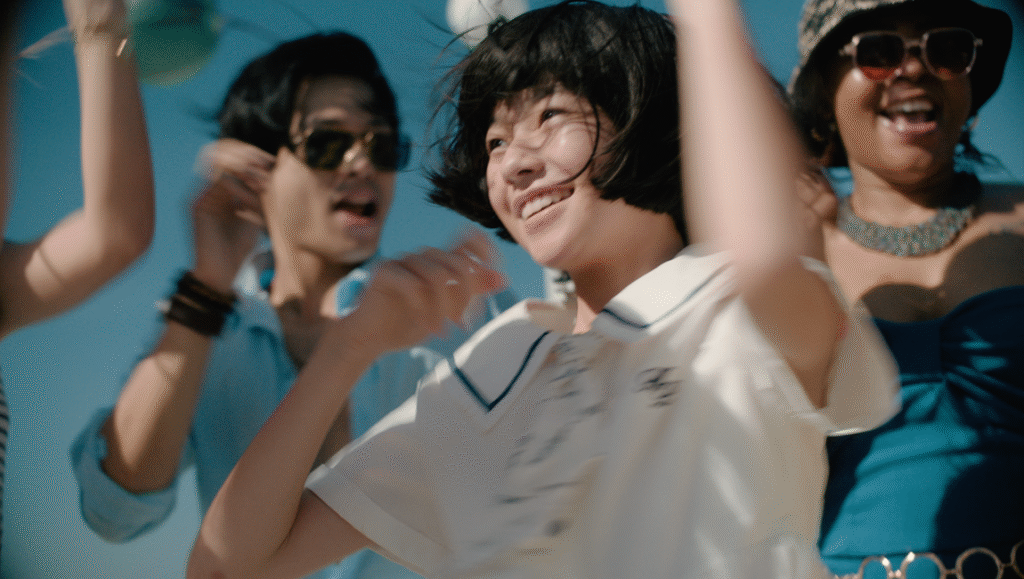
Renoir went relatively unnoticed when it premiered in competition at last year’s Cannes Film Festival, its squat, youthful perspective perhaps lost amid the crowd of lauded adult stories. An unusual and somewhat unclassifiable sophomore feature from rising Japanese filmmaker Chie Hayakawa (Plan 75), Renoir follows 11-year-old Fuki (the extraordinary Yui Suzuki) as she moves through 1980s bubble-era Tokyo, where her father (Lily Franky) is slowly dying of cancer. As Fuki moves from home to hospital to school and back again, she experiences: tension with her mother (Hikari Ishida); clashes with her teachers; hypnosis; and harassment. The world is full of feeling — much of it upsetting and hard to reckon with. We know this full well as adult spectators; perhaps Fuki will come to understand it later.
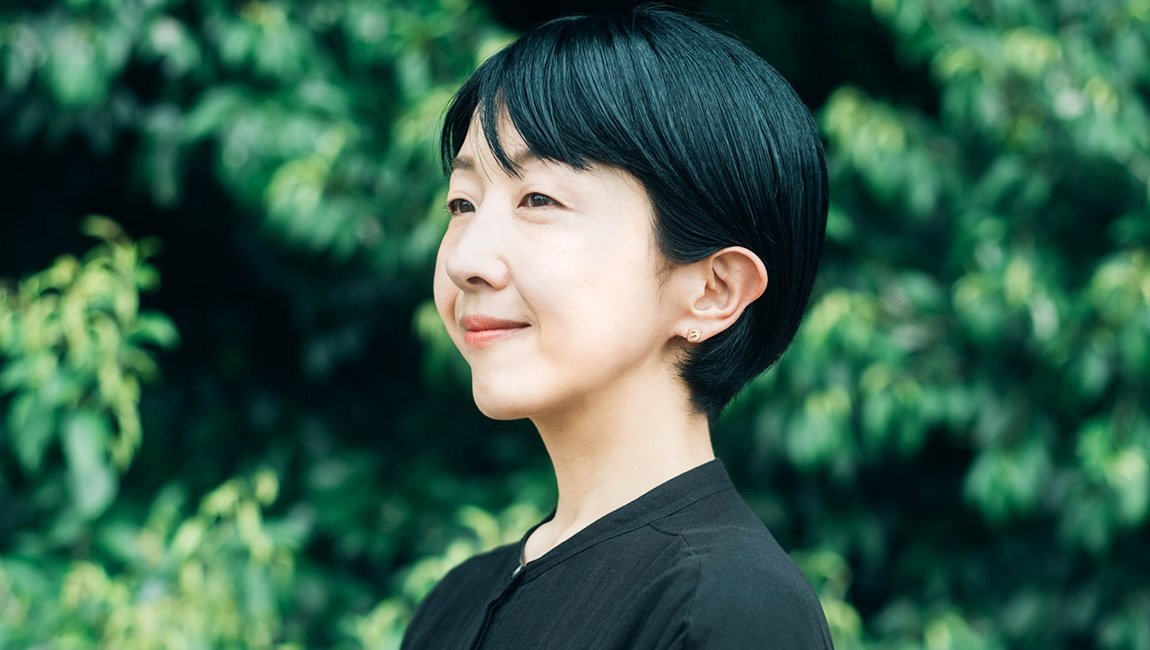
Ahead of Renoir’s U.S. theatrical release this week from Film Movement, I had the pleasure of sitting down with Hayakawa to discuss mentally storyboarding during adolescence, capturing the ineffable on screen, and why children should see her film, which, at first glance, isn’t made for them.
(Thank you to Monika Uchiyama for translating.)
Blake Simons: I want to start by asking about the first seeds of this film. I’m aware that you first germinated the idea in your twenties. When the first stills for this film were revealed ahead of its Cannes premiere last year, there was an evident visual homage to Shinji Somai’s film Moving. Was the nod to Somai’s film part of the concept from the very start, or was that something that emerged later?
Chie Hayakawa: I’ve wanted to become a filmmaker since I was a child. I saw Somai’s Moving in theaters when I was in middle school. I remember feeling that I wanted to make a film like that myself someday, with a child protagonist. So, as I was writing the script, I was incorporating these little homages to Somai.
But, at that time, it was before Somai was really being internationally recognized — I didn’t think international audiences would catch on to those little homages. A year or two later, at the Venice Film Festival, they premiered the new restoration of Moving, and after that, he became beloved by cinephiles all around the world. Then Renoir came out, and cinephiles seemed to notice those nods. It was a very strange, but happy experience for me.
BS: Another filmmaker whose work came to mind watching Renoir — surprisingly so — was Todd Solondz, specifically his film Welcome to the Dollhouse.
CH: It’s a film that I love, but I hadn’t even thought about whether it had influenced this film!
BS: I think it shares a similar melancholy and wisdom in exploring a young girl’s adolescence and the unusual ways in which she might emerge into the world.
CH: That makes me very happy.
BS: This is an interesting career progression for you, to have made a film about the late stages of life and the elderly in Plan 75 and followed it up with a film about the early stages of life, and what it is to be young.
CH: With Plan 75, my want to explore death was greatly influenced by my own experience of growing up with a father who was battling cancer. With Renoir, I wanted to think about death from the child’s perspective — a child observing a person nearing the end of their life — and consider the idea of whether people have the opportunity to die with dignity.
BS: How did you get yourself into the mindset or the perspective of a child when you wrote or directed this film? What are the steps that you took to bring yourself back into that world?
CH: Ever since I was a kid, I had been thinking about scenes and moments in my life that I wanted to eventually incorporate into a movie or see in the form of a film. I had been collecting these episodes in a notebook. Unfortunately, I lost that notebook. But because I had written everything down, I have a stock of all these memories that I carry with me. Because I knew that I wanted to make them into a movie someday, I was able to recall these details that a person would normally forget.
BS: What’s it like to immortalize those memories on screen like this? Is it cathartic?
CH: You could say that it’s a kind of catharsis, but I also feel like too much time has passed since I had those original experiences. If I’d made this film when I was younger, I think that distance would be much closer, and it would have produced a greater feeling of catharsis. But because of the time that’s passed, I feel like I have a much more objective perspective on those experiences.
BS: It’s interesting that you mention objectivity, because it’s a curious quality that I feel your filmmaking has. There’s a melancholy to your filmmaking, but it’s viewed from a distance. Is that something you’re conscious of creating during the creative process, this kind of one-step-back melancholy? Is that feeling there on the page in your screenplays, or is it something that only starts to seep into the scene once you have it within your frame?
CH: Yes, it’s precisely the type of mood and feeling that can’t be put into words that was the core motivation for me to make this film. When I was writing the script, it was at the top of my mind. But I was worried about whether those ineffable feelings and moods would come through when the actors started to perform their roles. Thanks to the very strong and talented actors, I saw the scenes and moments slowly emerge and become reality. I’m very thankful for that.
BS: You lived and studied abroad, then returned to Japan. Do you consider your filmmaking to be particularly Japanese in character, or not?
CH: I think Japanese qualities — as the fact that we often don’t say how we feel — are reflected in how my characters don’t express themselves very directly. And they often sit with themselves in the quiet — perhaps that makes it very Japanese.
BS: A common thread across the Japanese cinema that succeeds on the festival circuit is that many contemporary Japanese directors are particularly good at directing children and capturing their stories.
CH: I think that Hirokazu Kore-eda has had such a great influence on people’s perception of Japanese cinema. I’ve heard a lot of people note that there seem to be a lot of films depicting children in Japanese cinema. I think it’s because of his influence.
BS: Your filmmaking demonstrates that you possess similar qualities to Kore-eda, in that you have a sensitivity and empathy in how you work with your child actors.
CH: I’m very glad to hear that, because I’ve been watching Kore-eda’s films since I was in high school. He’s someone who I very much admire and respect.
BS: I’m delighted, of course, that Renoir is now receiving a U.S. release from Film Movement. Here in the UK, where I’m calling you from, there’s still no sign of a release for the film. And that leads me to think about how unclassifiable and unusual this film is — I mean that in a good way. When you were developing the project, did you have a sense that you were working on something that might be straightforwardly saleable and marketable, or was it more that you felt that it might be an uphill struggle, but that this was the film that you wanted to make?
CH: I made this film thinking that it would be very hard for it to be commercially successful. It’s precisely because Plan 75 was successful that I was able to make this one as a second film. I think it would have been very hard to make this as a first feature. And I knew that, if I let this moment pass, I may not ever get a chance to make this film.
BS: I’m glad you took that chance. Emotion is heavily embedded into this film, and I feel like our discussion has reflected that. Is there a specific feeling that you want to leave your audience with when they walk away from having watched Renoir?
CH: For adult audiences, I hope that they reconnect with long-forgotten feelings of being a child. And for audiences that are children, I hope that they see that there are people who understand how they feel, and that it becomes a way for them to discover themselves.
BS: Beautiful. It fascinates me that you say “audiences who are children” when there’s a lot in this film that isn’t necessarily appropriate for children. Nonetheless, you want children to see this film. I guess the world isn’t necessarily appropriate for children, right?
CH: Yes, I think that some people might say that it would be too soon for a child to see a film with these kinds of themes, but that’s precisely why I want children to see it. I think about how kids often feel like they are misunderstood by others, that no one understands them. And there are also so many things that they don’t realize about their experiences, and they carry a kind of loneliness because of that. That’s precisely why I would love for children to be able to see this film, and for its themes to touch them in some way.
Comments are closed.