
Our Effed Up World
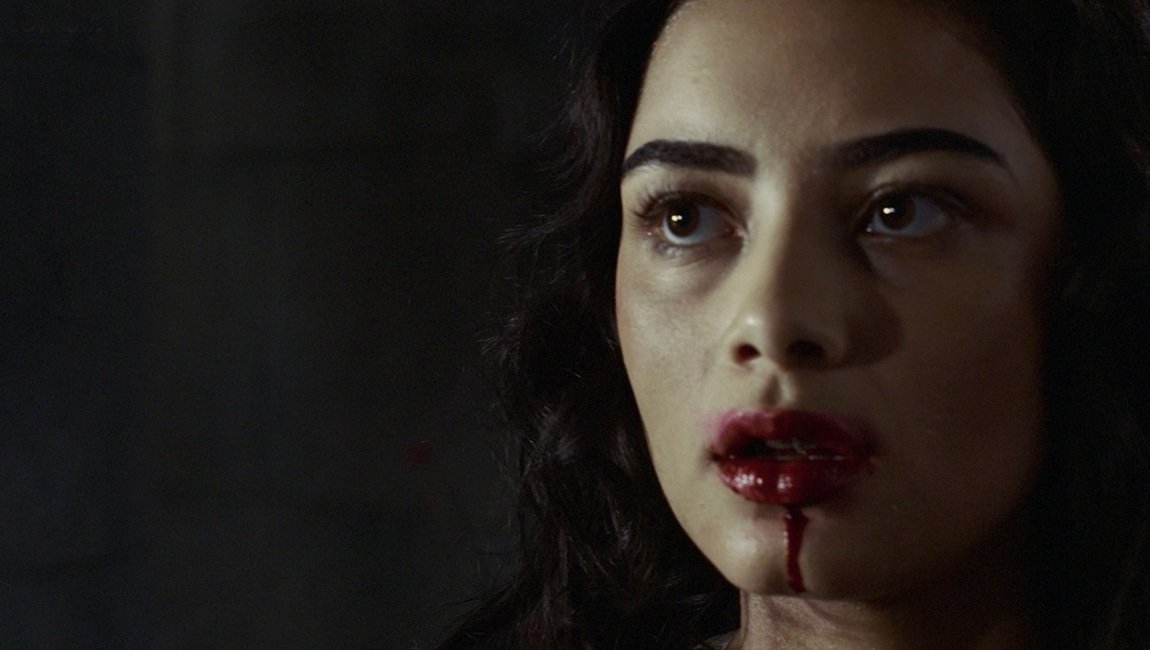
Australian writer-director Alice Maio Mackay is not quite 22 years old, and now has seven feature-length productions under her belt. But there’s often a downside to being a wunderkind, as anyone from Orson Welles to Xavier Dolan could tell you. As the work draws greater acclaim, it can become harder for an artist to trust their instincts and continue pushing in new directions. Mackay’s latest, Our Effed Up World, is by no means a perfect film. But when we look back on her career in the future, it will undoubtedly be seen as a transitional work, a bridge between her brash B-grade monster movies and a new level of maturity.
Following her breakthrough film, 2023’s T Blockers, Mackay seemed to double down on the campy genre pictures, until the relative seriousness of last year’s The Serpent’s Skin (released theatrically in 2026). Guided by a pair of charismatic lead performances by Alexandra McVicker and filmmaker Avalon Fast, Serpent’s Skin was essentially a love story between two lost souls, complicated by the presence of a predatory demon. Our Effed Up World goes even further in pushing the genre material into the background. Yes, there is an alien lifeform that caught a ride on a meteor and is consuming various young Australians, but there’s a level of dramatic seriousness at work that suggests that Mackay is interested in making movies about human relationships, with supernatural beings serving as plot complications and not the main attraction.
Sheri (Sara Thompson) is a young woman raised by her astronomer father Hank (Scott Major). The film opens during a meteor shower, and we learn that Sheri has a fear of meteors and other such otherworldly detritus entering our atmosphere. This “astrophobia” is a key to the true heart of the story, which is Sheri’s conflicted relationship with her dad. A researcher and academic, Hank tends to lose himself in his work, and while his love for Sheri is never in doubt, she sees him as too passive. This father-daughter conflict reflects new dramatic territory for Mackay, and allows her to continue her ongoing interrogation of gender in a slightly different way. While gender nonconformity is a given among Sheri and her friends — including nonbinary video store owner Finn (Jess McLeod) — young people can sometimes place unfair, normative expectations on the previous generation, reflexively wanting a father to “act like a man” without interrogating just what that might mean.
Shortly after Sheri breaks up with her himbo boyfriend Harry (Jordan Dulieu), he goes missing. We soon discover that he is the first victim of a predatory alien that takes on the characteristics of the humanoids it consumes. Sheri, Hank, Finn, and Sheri’s best friend Poppy (Annapurna Sriram) all join forces to slay the monster, and do so in short order. In fact, the alien angle is strikingly underdeveloped, as if Mackay felt obliged to adhere to the genre brief even as her true interests lay elsewhere.
Above all, Our Effed Up World is a character study of Sheri, a woman navigating various forms of loss. Her mother died when she was young, and recently her grandmother (Kerry Armstrong) succumbed to cancer. Her breakup with Harry, although seemingly justified, shows that Sheri keeps others at arm’s length, and as the film progresses, we discover that she is defined by a nihilistic streak. Where the idealistic Poppy insists that they must fight to save humanity, Sheri is ambivalent at best. In the end, Mackay seems to ratify Poppy’s sincere commitment to the future over Sheri’s detachment. At its core, then, this is a film about what we are expected to do (or not do) on behalf of the effed-up world of the title. And on a meta-narrative level, one gets a clear sense that Mackay herself is working to free herself of the strictures of camp-horror and wholeheartedly embrace humanity, even when it may not seem to deserve it. — MICHAEL SICINSKI
The Samurai and the Prisoner
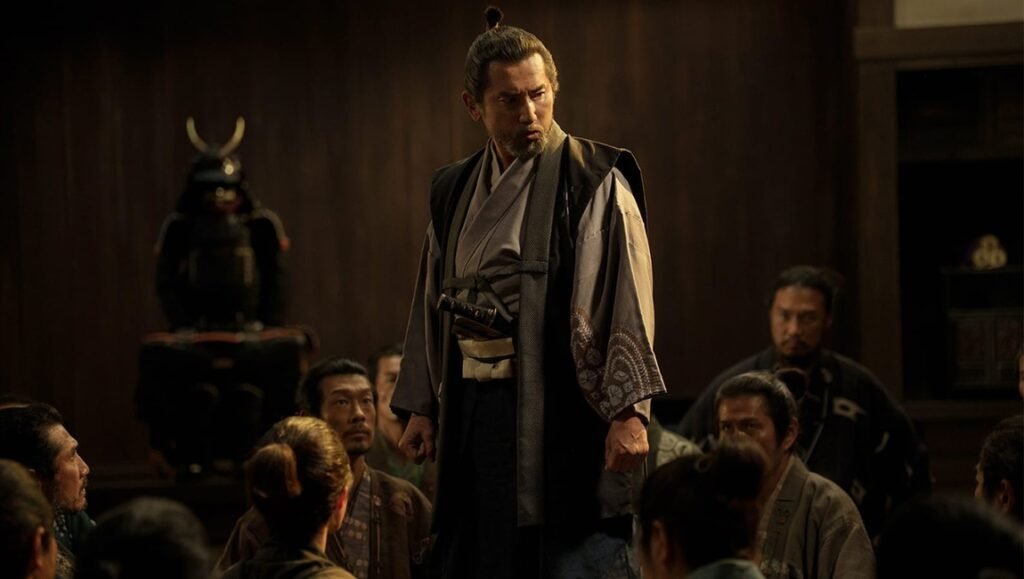
Over 40 years and as many movies into his career, Kiyoshi Kurosawa has finally made his first samurai film. Maybe it was the looming shadow of that other Kurosawa keeping him from the most iconic Japanese genre. Or perhaps it was just a matter of budget, since achieving the look of the distant past is usually far more expensive. Besides, few filmmakers are as of the moment as Kurosawa, whose Pulse imbued the nascent internet with metaphysical terror at a time when his contemporaries were still dicking around with the analog terror of VHS and whose recent Cloud centered a chase movie around the absurdity of online resellers. He’s made a few period pieces, like 2020’s Wife of a Spy, but The Samurai and the Prisoner, an adaptation of Honobu Yonezawa’s historical novel, is his first jidaigeki.
The formal promise of Kurosawa doing such a project — that the clean, geometrical lines of period Japanese architecture would be an ideal match for the director’s still frames and precise staging of actors — is realized within the walls of Arioka Castle where Araki Murashige (Masahiro Motoki), former retainer of Oda Nobunaga, holes up against his former boss’s siege. Murashige seeks to be a different kind of daimyō than Oda and the other samurai lords, resisting senseless execution, even when death is essential to his captives’ honor. But when he refuses, against the wishes of his devout Buddhist wife, to execute a child whose traitorous father has perished, the boy dies anyway, falling victim to a bizarre crime — an invisible arrow passed through the three-inch opening of the door to his chamber. The Samurai and the Prisoner thus reveals itself as a mystery story — another heralded literary tradition in Japan — but this is merely the first strange case Murashige will face during his yearlong besiegement. The film is split into chapters, each focusing on a different incident, like the disembodied head of a slain enemy becoming disfigured or the divine striking down of one of Murashige’s samurai, which gives the impression of an anthology of brief adventures that are eventually tied together.
A murder this inexplicable is too great a puzzle for Murashige, smart as he is, and so he enlists the help of the renowned samurai strategist Kuroda Kanbei (Masaki Suda), held captive in the dungeon after urging Murashige not to defect. These men and the matter of Kanbei’s imprisonment are taken from historical record, but Yonezawa’s novel imagines a new dimension to their relationship not unlike that between Will Graham and Hannibal Lecter. Brilliant Kanbei can solve these mysteries with just the information Murashige shares, but instead of revealing the answer to his captor, he gives arcane clues that lead to a solution only once Murashige considers them. As he visits the prisoner, Murashige grows closer to Kanbei, giving over his trust and, in turn, enabling Kanbei to have outsized influence beyond the dungeon’s walls.
Though not his invention, this dynamic is pure Kiyoshi Kurosawa, a filmmaker who constantly probes questions of influence, especially as they pertain to violent action. A scene midway through the film recalls Mamiya’s deadly mesmerism in Cure: Kanbei, having been brutally beaten in the dungeon, whispers something we’re not privy to in his assailant’s ear, leading the guard to attack Murashige, who cuts him down. Kanbei remarks on his ability to kill from within captivity, and this indirect violence proves key to the larger undertaking here. Though Murashige objects to murder, an ostensibly moral stand that flies in the face of traditional understandings of samurai honor, the circumstances of war around him make it so that those he spares, like the boy in the first chapter, meet their doom anyway. Worse, some of his inaction, namely capturing Kanbei rather than allowing him to save face in death, has a rippling effect of greater violence down the line.
All the hallmarks of the genre, from stern, strategically minded samurai warriors to swordplay and palace intrigue, are in some measure present in The Samurai and the Prisoner, but the qualities that buoy the film are those specific to Kurosawa’s filmmaking. As this is ultimately a chamber drama, focused more on terse exchanges of dialog than in the flashing of blades, it sometimes risks feeling stagebound, but Kurosawa’s signature sense of space, conveyed in the wide master shots he returns to, enlivens scenes beyond their already sharp scripting. The space between Murashige and Kanbei when they first sit across from each other in the dungeon feels wider than the image itself, a gap further accentuated by the pillar that cuts across the frame, separating them. Elsewhere, Kurosawa, who never really leaves his horror bonafides behind, can make the simple crossing of a room into a violent act worth a gasp.
In the climactic confrontation between Murashige and the person behind the schemes — to say who would be to spoil, obviously, but the performer in question brings the house down in this scene and deserves mention — the camera tracks as his antagonist walks around the room delivering a monologue, coming close to Murashige a few times before heading in a different direction. Then, the two collide, their bodies coming together dramatically for the first time in the film. Their faces in close proximity, this evaporation of physical and emotional distance, is The Samurai and the Prisoner’s most violent image. — CHRIS MELLO
Dance Freak
The following statement about Alan Resnick’s first feature, Dance Freak, can easily be misconstrued as a fault on the film, an accusation of artistic counterfeit. For one, the very mention of something reminding one of David Lynch’s body of work is automatically cause for alarm, that the subject of this comparison is derivative in some way. Yet with Resnick’s latest, somehow, this comparison and many others only serve to bolster his already distinct style of absurdist comedy. The statement in question: Dance Freak evokes the visual syntax of everything from Twin Peaks: The Return (2017), to Inland Empire (2006), to Tetsuo: The Iron Man (1989), to 964 Pinocchio (1991), to Maya Deren’s oeuvre and various motifs from silent-era cinema. This is a compliment above all else, as Resnick leverages such muscular inspiration, turning what could have been just a feature-length Adult Swim-style bit into an arresting piece of multimedia art. This statement is, also, an insult upon this particular critic who generally tries to avoid the cardinal sin of film criticism: collating a bunch of comparisons. So much for that goal.
The “plot” of Dance Freak is more of a vibe than a linear set of beats. It involves a man named Obie (Robby Rackleff) who stumbles through an economically depressed, industrial coastal town, all shot in strikingly visceral, monochromatic black-and-white photography. He works a dead-end office job that, for the sake of guesstimating, might as well be life insurance, and has a wife (although she insists she’s not) named Dorty (Megan Koester) who is running for a nondescript government office on a campaign to “give a new coat of paint” to the town they call home. Along the way, Obie runs into increasingly surreal and hysterical encounters with a cast of notable actors, among them Stavros Halkias, Sarah Sherman, and Conner O’Malley. Many of them, acting as a testament to Dorty’s campaign, use hyperbolically violent, profane language about their town and each other, including a running gag with other men pointing out Obie’s inability to take care of Dorty, that she deserves better. And Obie is always right there while they say it to her.
Clearly, something is not right, and to top it all off, there is a “Dance Freak” who looks eerily similar to Obie running amok and killing people in shockingly creative ways. He is dressed like a 1950s greaser — something similar to Elvis, if his gyrating caused people’s skin to grotesquely scrunch inward like a balloon instead of inciting moral panic. These slasher moments are among the film’s greatest strengths, showcasing Resnick and team’s use of multimedia. Sometimes, they employ animations or stop-motion projections of animals and insects which coexist in different styles and even frame rates alongside the usual action or human movement already present. At other times, they apply exaggerated filters to characters’ expressions, like one that Grumpy Cat-ifies Obie’s face and another that renders a woman’s eyes scarily wide and bulbous. The Dance Freak himself makes appearances as uncannily frightening as the feverish Locomotion scene from Inland Empire, with Lynchian use of strobe effects, isolating spotlights among void-like darkness in the frame’s periphery, and dizzying camerawork that seems to break through to other dimensions or visual planes while thrashing about.
Dance Freak makes perfect sense (meaning none at all) as a longform evolution of the artist responsible for viral experiments like Unedited Footage of a Bear (2014) and This House Has People in It (2016). Whereas those shorts played with the grammar of found footage, home video, and infomercials, gradually using them to surreal, disarming, and sometimes downright horrifying effect, Resnick’s feature-length endeavor deals in the aesthetics of the experimental art film, the slapstick silent film, underground punk videography, and more. Inserting his erratic brand of humor into these styles and remixing it all even further from there, he gives us a film that lives up to its title and transcends mimicry. In fact, let’s cut this review short so as not to explain or analyze away its many surprises. Instead, let’s look to an instructive quote from Obie’s “computer mail” that we catch glimpses of him composing early on: “piss, piss, piss. i dont need water anymore. gurl i am going to bring a gun into the office and watch it kill stuff. DIE!” — TYLER THIER
Also Playing
Nightborn
Hanna Bergholm’s second feature has had two lives. At its world premiere in the Berlinale competition, Nightborn was generally considered a low point in an already underwhelming lineup. As far as hybrids between arthouse and genre cinema go, the Finnish director seemed tonally undecided, visibly wrestling with a stiff screenplay and stiffer performances. Five months later, however, it took the Cheval Noir for Best Film at Montreal’s Fantasia International Film Festival, with lead Seidi Haarla also awarded for her performance. That it fares so much better with a genre crowd indicates the film’s potential to have its cake and eat it too. Bergholm’s sophomore feature, however, straddles the line between these tonal extremes so awkwardly that it generates tension out of neither — let alone any tension at all.
As a follow-up to her much sharper Hatching (2022), Nightborn strains the body-horror-as-psychological-metaphor approach that carried Titane (Julia Ducournau, 2021) and The Substance (Coralie Fargeat, 2024) into the ranks of contemporary classics. It’s an even more overt genre take on the maternal anguish that recently shaped Mary Bronstein’s If I Had Legs I’d Kick You (2025) and Lynne Ramsay’s Die My Love (2025), while naturally harkening back to the demonic urtext of Polanski’s Rosemary’s Baby (1968). But if anything, Nightborn mostly brings to mind Nightbitch (Marielle Heller, 2024), an Amy Adams curio in which a mom finds postnatal relief among a pack of dogs.
What exhausts those tropes here is the film’s literalness — as if subtext really is for cowards. Saga (Haarla) and her British husband Jon (Rupert Grint) move into the spacious but timeworn country house, deep in a Finnish forest, where she spent much of her childhood. Seemingly enchanted by the ancient spirits circling the place, Saga abruptly decides she wants a family. The arrival of the baby is, unsurprisingly, anything but a blessing. With every beat of the plot foreshadowed by typically unsettling horror effects — think angular sound design, micro jump scares, whispers from the woods, and gnarled trees that seem to trap human faces — the only real suspense is whether the newborn can live up to its spooky hype.
And Kuura’s arrival certainly comes with a healthy dose of the uncanny. The growling baby is so unusual that he is initially kept from family members, much as the audience is denied a clear look at him for most of the film’s running time. What we do see is its almost furlike hair, tiny claws for fingernails, and an unchild-like appetite for bloody red meat. Much of the actual horror in Nightborn stems from Saga’s subsequent psychological torment, as she endures nursing her ferocious newborn that leaves her bruised, bitten, bleeding, and mentally depleted. All the while, she is gaslit into normalcy by her reluctantly optimistic partner and her stifling family. Bergholm clearly makes the point that recent motherhood can be horrific and painful, that it requires taxing bodily labor rarely acknowledged by others. A noble theme, albeit one delivered by making the horror all too literal. There is little dramatic space for Haarla to express genuine isolating dread, and no one interesting enough around her to amplify it. The film simply relies on playbook horror tricks to carry its central metaphor of motherhood-can-be-hell over the finish line.
While composer Eicca Toppinen (of Apocalyptica fame) sustains the spooky vibes with his jarring score, Bergholm’s formal register doesn’t suit the tiny monster now running amok through the family home. At some point, the always amiable Grint seems more at a loss with the film itself than with the family as it’s almost literally torn to shreds by Kuura. And how can he not be, when every interesting detail Bergholm has woven into her script immediately slides to the background again? Notions of witchcraft, ancient forest spirits, and trolls are either just alluded to or handled so matter-of-factly that none of the spiritual density that makes folk horror so captivating manages to find fertile ground here. Amidst that absence, Bergholm finds no solid ground of any kind. — HUGO EMMERZAEL

Born in the Jungle
Latvian cinema, and especially animation, has been under either a spotlight or a microscope, depending on the vantage point, since Flow took home the country’s first-ever Academy Award. The 2025 French industry event Cartoon Movie spotlighted the Baltic country’s animation, and the country has even further capitalized on the film’s success with promised investments for animation. Latvian was also the focus country for Lisbon’s MONSTRA Animation Film Festival 2026. It’s in this pressurized context that Latvian animated feature director Edmunds Jansons’ new film, Born in the Jungle, blunders its chance to follow the successful path of Riga’s dark grey cat.
The concept is essentially Home Alone but in a jungle. In 1950s Venezuela, Elizabeth’s parents decide to spend the summer in the middle of the jungle, far from their social lives in Caracas. Elizabeth, at just nine years old, already knows the jungle isn’t for her. Her yet-to-talk younger brother Leo has a different story. The chaotic jungle is just a green playground to him. When mom and dad head to the city for a day, they leave an unprepared Elizabeth in charge. Alligators, leopards, sloths, monkeys, and more greet the siblings in their day-long adventure into the jungle near Angel Falls. The two make friends with a mythical otter-hamster creature they name Fluffy, a little Indigenous kid named Nev, and wind up in a game of cat-and-mouse with poachers who want the creature for their own grubby financial gain.
Keen viewers may note that Jansons’ colorful and friendly animation finds its closest Western comparison in Rugrats, and that’s not by accident. Rugrats creators Igor Kovalyov and Klasky Csupo, Russian and Hungarian filmmakers respectively, were tremendously influenced by the work of Estonian auteur animator Priit Pärn (Triangle, Night of the Carrots) and his graphical surrealism. Jansons was an actual student of Priit Pärn at the Estonian Academy of Art, where he earned an M.A. in animation. Keeping the creative colorist and unpolished homey appeal, Jansons’ films don’t simply regurgitate the master’s: the former is less serious and always beautiful, the latter is more moralistic and occasionally willing to let his films get ugly.
Loosely based on the life of Latvian explorer Aleksandrs Laime, the visuals and context of Born in the Jungle together promise something like a Latvian Rugrats-style kids’ adventure with the political awareness of Hayao Miyazaki. But Jansons’ film shows none of the reflection you would expect in 2026 for a story about Europeans “discovering” parts of Venezuela. Faithful to the neo-colonial ambition of Laime, who searched for a “diamond river” in the South American jungle and became history’s first recorded human to reach Angel Falls, Born in the Jungle exploits Venezuela artistically.
The all-European co-production shows no interest in the Venezuelan context in any specific ways, nor even in the 1950s. Indeed, should the film taken place in any other jungle in the world, the only change necessary would be to perhaps adjust the skin tones of the handful of Indigenous people Elizabeth and Leo encounter. Meanwhile, the mid-20th century setting makes for some cutesy propeller plane animations and might explain the parents’ willingness to let a nine-year-old babysit a toddler in a jungle, but it adds little to the world as conceived by Jansons. There aren’t even any real concepts being juggled. Originally produced in Latvian, not Spanish, along with an almost seamless English dub, the language doesn’t get any closer to the culture of record either. Most strangely, the unapologetic romanization of European “exploration” of South America and the absence of the turbulent political context of this specific country in this specific time as they experience a military dictatorship is simply flabbergasting.
The aforementioned Indigenous people of the jungle are marginally more personified than the animals in Elizabeth and Leo’s single-day adventure. Leo, who can’t talk, seems capable of what sounds like a stereotypical Native American war cry one finds in Westerns. A minor plot about returning a giant diamond to the “mountain spirits” becomes distasteful when the “spirits” are, in fact, Nev’s people. His language stays untranslated — forever foreign and mysterious to the viewer — as he rescues the siblings and traverses rivers and mountains to evade the poachers. He also shows a (stereotypically) crafty side as he materializes a stretcher to carry the drugged Fluffy. Nev is an ideal case study for the tired native guide trope that reduces Indigenous peoples to navigators with the upper hand over nature, in the service of white protagonists. Crossing off myopic native character types like a checklist, Nev saves animals, guides the siblings to safety, and leaves them with a magic gift before returning home, where their explorer father and mother await them with his loving arms. This exotifying writing would be better off confined to museums as a relic of the previous two centuries than as the backbone for 2026 feature film.
Jansons’ romanization of European exploration does function to route his visual genius. Combining cut-out and 2D computer animation, the jungle is both geometrically expressive and fluid; foreign and familiar. The flora evoke a sublime otherworld, and the plethora of adorable animals are rendered distinctly and empathetically in an almost arts-and-crafts style. (Only Fluffy strikes a derivative aftertaste: the off-white colored mammal can fly, and its parent at the film’s end is the size of a school bus. If that description conjures an image of Appa from Avatar: The Last Airbender, you won’t be alone in thinking so.) And the colors of the jungle pop like a more prudent, sylvan Jack Kirby comic: as if holding other colors hostage, various woodsy yellows and greens hold power over the film’s look and cautiously allow a single contrasting color, like a cardinal red or an angelic white, to enter the jungle’s chartreuse palette. All of which is to say, the film’s beautiful animation truly romances with style. It’s just a shame it’s all in service of romanticizing the colonialist European exploration of the Americas. — JOSHUA POLANSKI
Los Vampires
In Los Vampires, director Craig Mitchell draws on the parallel production of Universal’s two 1931 Dracula films, then gradually lets that industrial history go magnificently to hell. Luis De Ossario (Henry Ian Cusick), a Spanish actor watching his career recede, has been hired to play the Count for a company working overnight on sets occupied by an English production during the day. What begins as a funny drama about prestige and professional panic inches toward suspense before surrendering to gothic delirium. The night shift first describes De Ossario’s subordinate place within Hollywood; soon, however, it governs his failing sense of time and his inability to tell where performance ends. In this way, Mitchell’s limited resources become an advantage: the soundstage closes around the actors until cinema itself seems vampiric, promising De Ossario the immortality his industry has denied him while calmly naming the price.
Universal’s early-sound production practices supply Mitchell with an uncanny premise. Tod Browning’s English-language Dracula was filmed by day, with Bela Lugosi as its star; George Melford’s Spanish-language Drácula used the same sets at night, with Carlos Villarías and Lupita Tovar leading another cast. These multiple-language versions briefly answered the problem posed by synchronized sound before dubbing prevailed. Mitchell retains the arrangement but replaces its participants with fictional counterparts. De Ossario and Kürt Orlov (Thomas Kretschmann), the Lugosi surrogate working days, embody an industrial disparity without presenting their hostility as historical record. The studio admits the foreign actor on compromised terms: he must work while Hollywood sleeps and suppress his interpretation to imitate Orlov.
All of this would remain dry film history cleverness without Cusick, who makes De Ossario’s humiliation wonderfully combustible. He carries himself like a man whose pride is all that remains liquid; debt and diminishing prospects have otherwise left him stuck. Copying another actor confirms that the studio values his fluency more than his art. Cusick keeps the resentment active even in De Ossario’s comic indignation, his accent lending the character authority without advertising strenuous period work. Kretschmann answers him with a colder vanity. Orlov knows that a rival using the same costume, gestures, and scenery might expose how little of a star image belongs exclusively to its star. Their encounters move through threats and reluctant admiration. Competition over Bianca (Daniela Couso), a novice actress brought from a Mexican convent, gives the jealousy an erotic outlet, although possession of the role remains the deeper contest.
Once the two Draculas begin circling each other, their quarrel spreads into the geography of the studio. Mitchell and cinematographer Simon Coull reserve black-and-white for the Dracula footage being produced, while the surrounding world remains in color. Monochrome initially belongs to the finished image, color to the labor outside it; the longer the shoot continues, the less useful the boundary becomes. De Ossario and his colleagues sleep on the soundstage, sometimes inside coffins used as props. It is a terrific joke and the cleanest image of their predicament. Ricardo Jattan’s production design uses repeated corridors, crypts, dressing rooms, and artificial partitions to make a modest space feel mentally expansive.
The closer De Ossario gets to Bianca, the less stable that geography becomes. When he searches for her, the camera follows her face and body without establishing the path leading to either. Handkerchiefs, veils, and thin hanging layers interrupt sight without concealing her. Red light floods her rooms and the routes toward them, offering a warning De Ossario declines to understand. It returns after the death of the nun assigned to accompany Bianca, as though her final restraint has been removed. Couso’s composure lets the camera’s instability gather around her. Suspense comes from watching De Ossario invent rational explanations for what the image has already revealed. He thinks Bianca has disappeared into her role, while remaining oblivious to the same process within himself.
De Ossario loses time as readily as he loses his way. Evan Millard’s editing places us inside that confusion. Several transitions fade to black with the finality of television act breaks, one place where the construction feels cheaper than the ideas. More effective are ellipses that swallow days. De Ossario loses a tooth and begins taking honey supplied by the nun as a botanical analgesic, later learning that it behaves more like potent wine. Sleep deprivation and intoxication make time unreliable. Cuts deposit him after intervals he cannot account for, and the audience receives no steadier position from which to reconstruct them. Missing time can conceal anything a mystery wishes to postpone, but here the convenience grows from De Ossario’s bodily condition and becomes a persuasive subjective form.
Before the plot fully commits to horror, a low bass note with heavy vibrato begins disturbing its comic rhythm. Josh Mancell’s score gives the sound a physical wobble rather than an orchestral sting, as though the studio were vibrating beneath the dialogue. Comedy remains present in bruised egos and absurd labor conditions, but the music slowly withdraws its protection. Oscar Nuñez, as Gaspar Lazano, brings an unavoidable residue of affection from The Office, and thankfully Mitchell does not exploit that familiarity as a gag; Nuñez is simply a reliable, welcome presence within the company.
By then, the corpses outside the studio, their blood drained, can no longer be dismissed as an unrelated mystery. Bianca’s origin, on the other hand, makes that exponentially harder. The nun invokes a modified version of the Mexica Cihuateteo tradition, turning death in childbirth into a vampiric lineage. Once the nun is gone, Bianca no longer respects the partitions around her. Neither does the film, and its backstage drama begins obeying the vampire story being shot.
Mitchell is at his best once rational explanation stops providing De Ossario with shelter. His fear of being forgotten and his fury at imitating Orlov become parts of the same temptation. Vampirism offers him the chance to surpass the English Dracula and remain fused with the role. Remaining human means keeping his soul while accepting that cinema may file him away as a relic. Cusick makes De Ossario embrace the offer with palpable terror and an appetite he can no longer conceal, and the decision frightens because he genuinely wants it. With Los Vampires, Mitchell has delviered a hugely entertaining film about an actor who confuses artistic freedom with becoming inseparable from an image. — GUILHERME QUIREZA
Comments are closed.