
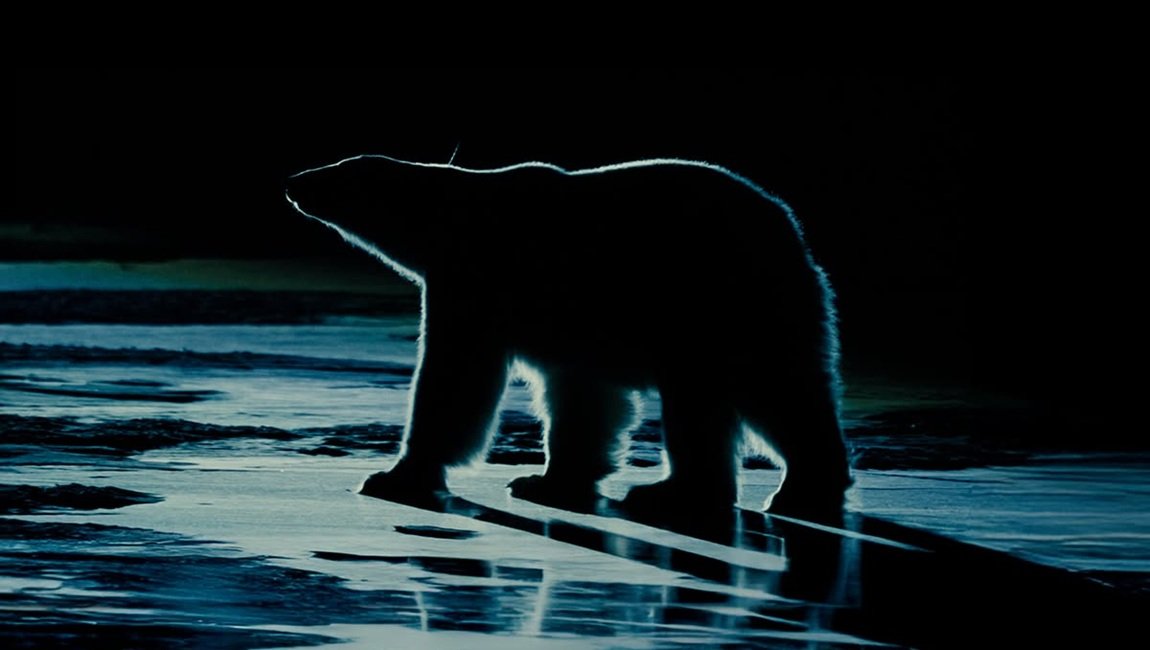
Those Coca-Cola commercials with the CGI polar bears from the mid-’90s have a lot to answer for. Cuddly polar bear pups slurping bottles of soda obviously have no connection to realit, but those omnipresent seasonal ads went a long way toward anthropomorphizing and defanging one of the largest and more fearsome predators on land for a couple of impressionable generations. How else to explain the booming tourist business in Churchill, Manitoba, a town with less than 1,000 year-round residents that has nevertheless established itself as a destination for anyone looking to board giant armored personnel carriers in order to get an up-close glimpse of these massive creatures in the wild. And it’s not simply buses fortified like tanks; Churchill has built an entire economy and infrastructure around raising awareness of the bears as well as humanely capturing, tagging, and returning the animals to less “densely” populated areas after they venture too close to civilization (in the old days they would simply shoot them on sight).
On its face, this is precisely the sort of feel-good story conservationist-minded people are hardwired to embrace, and yet Nuisance Bear, the new documentary from filmmakers Gabriela Osio Vanden and Jack Weisman, makes a compelling argument for the systemic harm of this sort of benevolence; not only perpetuating a cycle of behavior that ensures it continues, but creating a problem for Churchill’s Inuit neighbors in nearby Arviat, Nunavut. Lacking the government resources — and tourist dollars — of the comparatively affluent Churchill, the residents of Arivat, who are overwhelmingly First Nations people, are even barred by law from hunting the bears for most of the year (and even then are required to participate in a lottery simply to have the opportunity). In the film’s telling, it’s the animal kingdom’s equivalent of driving a violent criminal to the outskirts of town and then forcing someone else to deal with them.
Even the name for these wayward animals (serving double-duty as the film’s title) smacks of cutesy infantilization, as though a 1,300-pound bear trying to break into your home or storefront were merely a “nuisance.” Emulating the detached observation of a nature documentary for long stretches, Osio Vanden and Weisman’s cameras capture one particular bear as it roams landfills for food before venturing into residential areas, sniffing around trash cans and attempting to force its way into buildings. We also observe the almost Keystone Cops-like efforts of the local “Bear Patrol,” which makes best efforts to corral the animal by setting giant cylindrical traps with seal meat attached to a trigger-release — which the bear is still able to outsmart — as well having city officials shoot paintball guns and fireworks at it to direct the polar bear’s path. After finally tranquilizing and capturing the animal, we follow the intake and processing at “bear jail” where the large mammal is restrained, has its ear tagged with a radio transmitter and its back painted with green dye in advance of being suspended from a large net and helicoptered dozens of kilometers away to outside the city limits. It demonstrates a level of deference and compassion for an animal that feels disproportionate with how even humans are often treated — particularly the working class, Indigenous people of nearby Arviat.
It’s the perfect collision of good intentions and the profit motive — aft erall, there’s a thriving tourists and photo-safari industry to consider — that naturally shifts the problem to a minority community. Narrated by Inuit elder Mike Tunalaaq Gibbons, who has a very personal understanding of just how dangerous these animals can be once they no longer fear humans and their hunting grounds are being shrunk by climate change, the film presents a stark dichotomy between Churchill and Arviat, with the two municipalities subject to the same laws but a starkly disproportionate level of resources. There’s also the small matter of where exactly Arviat is supposed to send the rogue bears, which they call “avinnaarjuk,” even if they had access to helicopters in the first place. Letting the situation largely speak for itself with minimal overt editorializing, we watch a community forced to jump through burdensome hoops simply to protect themselves. There’s a perceptible undercurrent of paternalism to the entire dynamic with the residents of Arviat being reduced to drawing tags from an Igloo cooler simply for the “privilege” of shooting one of these animals lurking on the perimeter of town. Hunting polar bears used to be a part of life for the Inuit, and they’re now seemingly at the whims of a government that prioritizes the animals’ well-being over their own.
Nuisance Bear makes for a fitting companion piece with Penny Lane’s documentary, Wild Inside, which was released earlier this year. That film, which took a 360-degree approach to the media frenzy around the escaped Central Park Zoo owl, Flaco — who evaded capture in New York City for over a year — served as a gentle indictment of the romanticization of animals living in confinement and the unintended consequences of interceding on their behalf (it’s strongly believed that Flaco finally died from ingesting all the poison coursing through its nightly meal of sewer rat). Osio Vanden and Weisman by and large allow viewers to draw their own conclusions about the situation, but the film is undeniably confronting liberal audiences’ aversions to seeing animals — even unruly predators — harmed; drawing out the suspense whether our “hero” bear — marked in green and viewed through a rifle scope — might be taken down, forcing us to grapple with what it means to not take the shot. And that’s after we’ve already heard secondhand accounts of bears viciously attacking and even killing Arviat residents. The film forces the viewer to sit with the question of why we prioritize the lives of animals (even misleadingly adorable-looking ones) over people and whether there are unintended consequences of altruism. Sometimes the difference between benevolence and terrorism is just a matter of what zip code you live in.
DIRECTORS: Gabriela Osio Vanden & Jack Weisman; DISTRIBUTOR: MUBI; IN THEATERS: November 6; RUNTIME: 1 hr. 29 min.
Comments are closed.