
Latin America — though hardly a monolith — has historically been near-unilaterally excluded from leading cinematic institutions, whether commercial distribution, festival programming, and critical and academic consideration. These tides are only just starting to turn as efforts to diversify the bodies ruling these institutions has broadly led to greater recognition of historical and contemporary film from the Global South (which in addition to Latin America, also includes Africa, Oceania, and overlooked parts of Asia). These strides were especially evident at the 62nd Chicago International Film Festival. As other film festivals prioritize celebrity and early access to buzzy titles, the third largest U.S. city’s tentpole festival hasn’t overlooked the “international” part of its name; this year, Latin America and the nuances within the diaspora were represented in the programming, artists-in-attendance, awards juries, and the awards themselves.
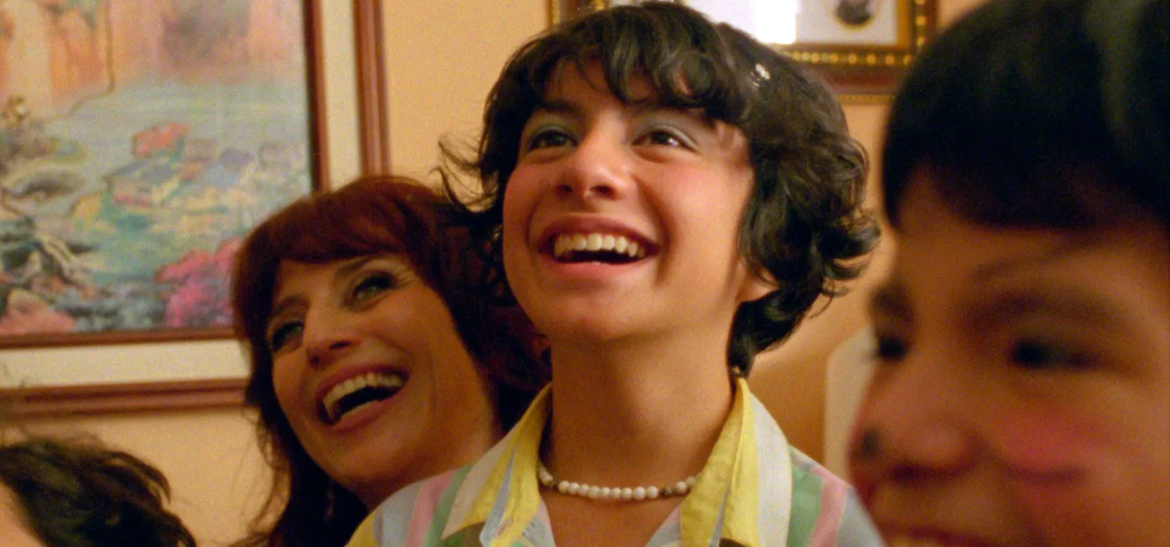
I watched 10 of the 13 Latin American features that were part of this year’s Chicago International Film Fest schedule, including seven of the eight programmed in competition, four of which were jury award-winners or special mentions. One of the immediate highlights — and one of my favorite movies I’ve seen all year — was Alessandra Sanguinetti’s documentary The Illusion of an Everlasting Summer. Sanguinetti, an American-born photographer who was raised in Argentina from age two onward, began documenting in 1999 her two young neighbors Guillermina Aranciaga and Belinda Stutz, two cousins around the age of 10 who resided in the Buenos Aires countryside. Over 25 years, the girls would become Sanguinetti’s muses, featured in some of her most prolific work and and the subject of two published photography collections: The Adventures of Guille and Belinda and the Enigmatic Meaning of their Dreams (2010) and The Adventures of Guille and Belinda and the Illusion of an Everlasting Summer (2020). Sanguinetti’s documentary shares its name with the latter collection and compiles footage taken between the photographs, following the cousins’ lives from girlhood through their mid-30s.
Lately, there’s been much chatter about documentary filmmaking in the wake of Nathan Fielder and Lance Oppenheim’s three-hour Elizabeth Holmes epic. The Illusion of an Everlasting Summer should be considered a major entry in that conversation. Though the film is a companion piece to Sanguinetti’s series of photographs, it does something entirely its own that can only be achieved through the cinematic medium: It replicates the jarring sensation of time. We spend nearly half the movie with Guillermina and Belinda at that early age — indeed a time that feels endless as they play pretend, put on performances, take in life on a farm, and share with each other and Alessandra (who they affectionately call “Ale”) their dreams. The first jump forward in time, when they begin to show interest in boys and grow out of their playful exuberance, feels natural enough, but before we can acclimate to this new phase of their lives, we jump forward again. And again, gradually spending less and less time on each new life development. The edits into the next time frame always feel like they come a moment too soon, an intentional play with form that leaves you breathless and longing to go back to the languid days of dress-up.
Time isn’t the only emergent theme. When Sanguinetti first starts capturing Guillermina and Belinda on film, there is no grand design other than seeing them as they are. But in the edit, Sanguinetti wisely identifies moments of foreshadowing the lives ahead of these girls. Without planning, performance and gendered expectations inevitably carry through to adulthood. There is no illusion that this documentary is a construction, and like her photographic series, Sanguinetti is selecting what we do and don’t see. It is a testament to her skills as a documentarian that the result is a poignant, melancholic capsule of change from the limitless potential of youth to the compromises and losses of growing up, particularly as a woman in a remote environment that is itself at risk of disappearing.
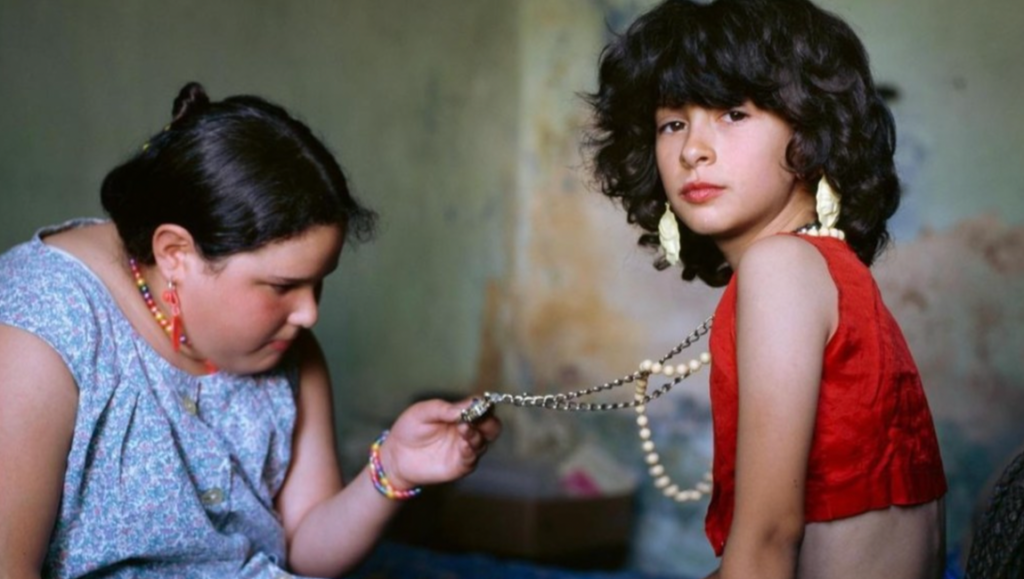
Colectivo Colmena member (a Mexican filmmaking collective) Fernanda Tovar’s debut feature Sad Girlz is also preoccupied with girlhood. Maestra (Rocío Guzmán) and Paula (Darana Álvarez) have aged out of the pure innocence of childhood, but an incident between Paula and her crush at a party taints their teenage sincerity. Sad Girlz often made me think of another film I reviewed this year, Big Girls Don’t Cry, in how both movies portray teenage girls’ achingly fruitless attempts to narrativize trauma in the hopes of wrestling back their autonomy. But even more fundamental to Sad Girlz is its central friendship. When Maestra recognizes that Paula is reeling from something uncontrollable, she tries to control the situation herself; as an act of love, and as an attempt to make sense of an injustice. Guzmán and Álvarez (who both appeared in Chicago for post-screening Q&As) have a believable and sweet chemistry that was developed, per the Q&A, through improvisational character development led by Tovar. Maestra and Paula are two girls forced to act older than they’re ready to be while still holding on to the guilelessness of their youth. The film includes gorgeous cinematography from Rosa Hadit Hernández (a specialist in underwater camerawork), capturing the two competitive swimminers in the water, conveying that this is where they feel safest.
Another Mexican film about growing up too soon is Bruno Santamaría Razo’s autobiographical semidocumentary Six Months in a Pink and Blue Building, which had its U.S. premiere at the festival. Six Months starts with an interview between Santamaría Razo and his mother. Though the film is mostly narrative, this interview sets up a couple of key details: one, that the film we are about to watch is based on the director’s childhood memory of a specific period in his life; and two, that he has shot it in his actual childhood home. We then jump back to the mid-’90s and follow Bruno’s (Jade Reyes) perspective as his father Mundo (Gabino Rodríguez), an underemployed illustrator, receives a life-altering HIV diagnosis, driving a wedge between Bruno’s parents (Sofía Espinosa, who plays his mother Diana, is stealthily one of the film’s strongest elements) and inevitably impacting Bruno’s self-image as he comes to realize his attraction to his best friend Vladimir. Santamaría Razo is not trying to retell childhood stories, but actively processing them via the act of filmmaking. Like this year’s Blue Heron, Six Months is bringing the audience into the fallibility of his memory, reminding us that even documentary elements aren’t depictions of reality.
Six Months in a Pink and Blue Building received a worthy special mention from the Outlook Competition (the category for LGBTQ+ films), and Santamaría Razo himself was part of the Documentary Competition jury that awarded The Illusion of an Everlasting Summer the Gold Hugo prize in the category. Another Latin American selection took home the Silver Hugo for Documentary: the Swiss-Cuban film Tricontinental, Letter to Open in Case of, directed by Laura Cazador, which had its North American premiere at the festival. Tricontinental is another experimental documentary, but moreso it is a densely researched, explicitly political documentary on the life of the late journalist, film critic, and revolutionary Michèle Firk. In just over 90 minutes, Cazador uses Firk’s biography and writings as the basis for a multi-decade history of anti-imperial movement leading up to the 1966 Tricontinental conference in Havana, Cuba, a one-time convening of delegates from over 80 countries in the Global South. Cazador speaks to Firk through the language of cinema, connecting the timeline of Third Cinema to contemporaneous revolutionary events. But Cazador’s documentary also poses probing questions about both the value of art and the success of resistance over time, acknowledging the sacrifices Firk made and the disagreements that created factions in movements prior to and during the Tricontinental. This is not an easy entry-level text for an audience passively interested in progressive history, but it is certainly recommended (if not required) viewing for those looking to connect to historical leftist movements, reckoning with how to topple the United States and its allies’ continuous, bloodthirsty, global imperial rule.
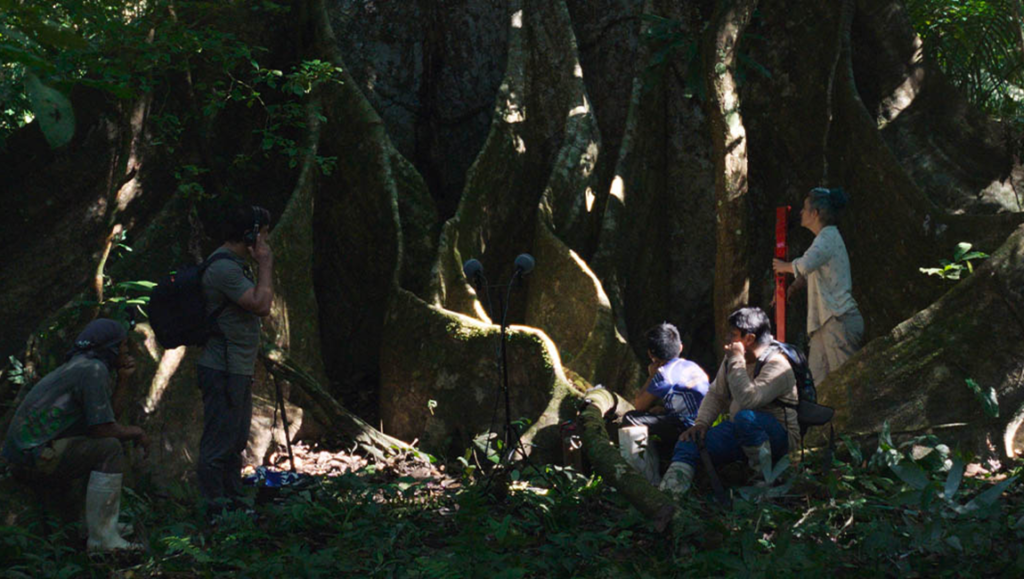
The echoes of imperialism and its impact on Latin America in particular were felt through several festival selections. Meritxell Colell Aparicio’s Far From the Trees — the sole film from the diaspora in this year’s International Competition — is a Matryoshka of colonial aftermath. Adela (Angélica Castelló) is a Mexican sound artist seeking to carry on the legacy and memory of her grandparents, who were Catalan Republican exiles of the Spanish Civil War. She goes to Peru to record endangered languages, including Quechua, accompanied and assisted by her guide Lucho (Jose Luis López Cama), who is familiar with the area’s Indigenous communities. Meanwhile, Adela’s 98-year-old grandmother Toni is back in Mexico under the care of Paula (prolific Mexican actress Teresa Sánchez), Adela’s former nanny and maternal figure. Adela’s Catalan lineage was the victim of fascist, Francoist Spain, but Catalonia’s history is not completely divorced from Spain’s colonization of the Americas nor the slave trade. Colell Aparicio puts forth a lyrical film about ancestral memory, but never shies away from the complications of searching for a shared history. Yes, Catalan and Quechua are both endangered languages, but Adela is ignorant to her privileges, prioritizing her desperation in keeping her grandmother alive over the well-being of the Mexican woman that cared for her, who only has so many more sacrifices to offer to Adela’s family.
Privileged ignorance is fundamental to Neto Villalobos’ Love is the Monster, a restrained, dystopian thriller about a grandmother unwilling to adapt herself to the conditions of the hostile near-future, nor prepared to take accountability for her interpersonal failings as a mother, featuring a delightfully unbalanced lead performance from Paulina García. In Gessica Généus’ New Directors Gold Hugo-winner Marie Madeleine, dystopia is already here. Généus (who also stars in the film) paints the lead character as a modern Mary Magdalene, a sex worker residing in a brothel across from an evangelist church. Joseph (Beonard Monteau), son of the head of the church, initially tries to save Marie, first through an under-resourced medical system and later through invitations into the faith. Their reluctant friendship forms the basis of the film, but this initial intersection takes Marie and Joseph on similar but separate paths, trying to break out of the only structures they know in Haiti and unsure if there will ever be a way out.
Even lighter films in the program had a political bent. The festival featured the World Premiere of Chicago multimedia artist and filmmaker Reveca Torres’ While We Are Here, another experimental documentary that incorporates video diary alongside interviews with disabled artists in Chicago and interactions with the work of prominent disabled artists throughout history, including Frida Kahlo, Vincent Van Gogh, and Henri Matisse. The film is inspirational — not in a stereotypical hopecore look at disability, as the documentary is realistic in understanding disability as something that is neither life-ending nor a superpower. Torres shows the labor that goes into caretaking and is honest about her own frustrations in communicating her ideas without always being able to execute them herself. The documentary truly shines when it shows how artists respond to each others’ work over time, finding new meaning in the work through both personal and creative identification. Gabe Klinger’s narrative Brazilian feature Isabel is, similarly, a look at process and communal efforts to realize a dream (in this case, the art of wine expertise). Isabel is one of the slighter films of this group, but it is also one that embraces realism. Isabel (Marina Person) needs more than some pluck and a dream to get her wine bar off the ground, and Klinger and Person’s script is willing to engage with a gentrifying São Paulo, where even a boutique small business owner hoping to celebrate Brazil’s natural, small-batch wines can’t compete with the market. The remaining Latin American film I saw, Valentina Maurel’s Forever Your Maternal Animal, might be the least political of the batch, but still shares themes of identity and lineage.
Of all 13 Latin American features in this year’s festival, nine were U.S., North American, or World Premieres, eight were directed by women, and seven had talent appear in person for post-screening Q&As. Regarding that last point, it was noted at the festival’s awards ceremony that this year in particular was especially challenging for talent to appear due to the travel bans and restrictions imposed by the Trump administration. Award-winning directors Gessica Généus and Laura Cazador specifically both cited in their video acceptance speeches that they were unable to attend due to their respective residencies in Haiti and Cuba. Généus’ acceptance mentioned that winning an award in the U.S. while being prohibited from traveling here felt like some sort of joke, but also named that as a reason why the award is particularly meaningful. Her film is not beholden to borders; it can reach us even when she herself can’t.
Comments are closed.