
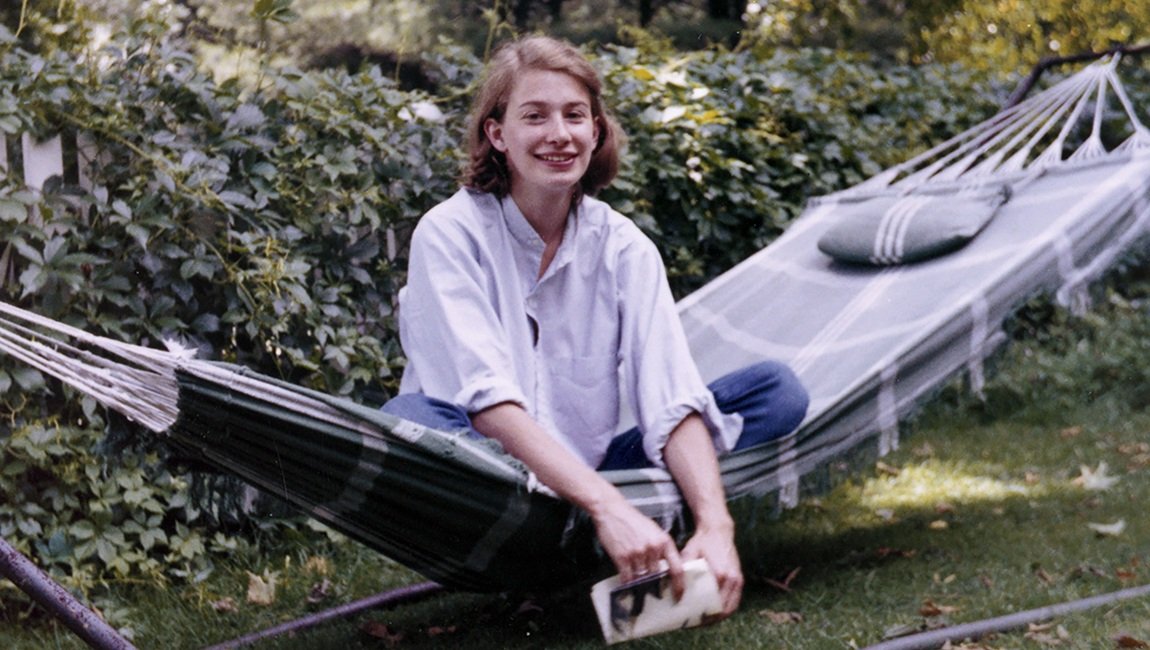
Mary Oliver: Saved by the Beauty of the World, an entry in the PBS series American Masters directed by Sasha Waters (Gary Winogrand: All Things are Photographable) and released to theaters courtesy of Kino Lorber, is neither a comprehensive nor a linear examination of Oliver’s life and career. But neither are Mary Oliver’s poems linear or comprehensive. They are brief, ecstatic, and highly emotive observations of the “soft animal body” of humanity within the swelling belly of the natural world. Waters’ film borrows this blithe, poetic form and offers a scattered thematic experience which, impressively, is as emotionally accessible as the poems it presents. Bracketed by emotionally charged readings of Oliver’s poetry, from “The Summer’s Day” by Stephen Colbert — who struggles to keep composure, becoming visibly emotional — to “Wild Geese” by Helena Bonham Carter, the film delivers Oliver’s words alongside biographical sketches, literary analyses, and personal anecdotes through archival materials and a series of in-depth interviews with figures ranging from cult filmmaker John Waters (a close friend of Oliver) to contemporary poets such as Nick Flynn and Major Jackson. Other notable voices, and faces, include Steve Buscemi, Oprah, Lucy Dacus, and viral singer-songwriter Jesse Welles. On the whole, these interviews are compelling and informative, dense with so much individual detail that in the edit none feel repetitive or extraneous.
The substance of the film is glued together by airy, flitting 16mm B-roll which embraces light leaks, scratches, the flickering substrate of the medium, apparently in an attempt to evoke the transcendental qualities of Mary Oliver’s words. This handmade aesthetic is part of Sasha Waters practice. Tutored under Michael Almereyda, Baraba Kopple, and Hal Hartley, Waters shows a careful attention to film form that mostly lives up to Mary Oliver’s deceptively simple poetics. Still, despite its occasional beauty, this footage is implicitly filling the time, being a more visually stimulating alternative to a black screen or simple overlaid text. Much more impressive is the carefully edited archival footage, with sources as disparate as Häxan (Benjamin Christensen’s 1922 silent film about witchcraft), sliced clips from experimental filmmakers Arthur Lipsett and Joyce Wieland, and dozens of home movies from various archives. Taken together, and coalescing in the hands of Waters and co-editor Meghan Sims, these sequences present a glimpse into the past, a vision of the American milieu — and specifically, the beatnik scene — which Mary Oliver emerged from. Alongside selections from Mary Oliver and Molly Cook’s personal archive of photographs, these images offer enticing visual impressions of Oliver’s poetry, an effect which is most exciting when combined with the largely astute commentary from interview subjects.
The film engages with a breadth of thematic vantages, presenting Oliver as: an iconoclastic hermit following in the tradition of Walt Whitman and Henry David Thoreau; a radical female poet who gravitated to the home of Edna St. Vincent Millay; a lesbian who, in the words of John Waters, was “not a lesbian activist”; and the most famous poet in America, derided by snobbish critics, and who hadn’t received a full-length book review in The New York Times in four decades. The narrative we follow functions then as a microcosm of American literature, from the burning out of the beatnik ’50s through to the present day, as much as it does as a story of Mary Oliver’s life and career. Post-war woman poets such as Anne Sexton and Sylvia Plath were characterized in the collective unconscious by a “problematic sexuality,” and their “female genius” was assumed to result in “shame, social death,” and “actual death.” Mary Oliver, who moved to Greenwich Village after working on the estate of Edna St. Vincent Millay, and then tailed the stumbling hippie crowd to Provincetown, seemed to be following a similar path. But instead, she turned to the woods, to a life of quiet purpose. Oliver and her partner Molly Cook worked for Norman Mailer, typing his manuscripts and managing his complex, heavyweight literary career. They managed a small bookstore (where a young John Waters worked), struggling to survive, until Oliver’s book American Primitive won the Pulitzer Prize and her selected poems the National Book Award. Oliver became an overnight success, after decades — a familiar story, and a far-fetched dream, for aspiring poets. As the 20th century gave way to the 21st, Oliver was finally recognized as the most significant poet in America. Her poems have always been found by the people who need them, readers who flock to her “like flies to flypaper.” Mary Oliver speaks to people, according to poet Ariana Reines, who are “torn open by life.” People who don’t need a critic to explain why the poem affects them so much.
Neither will people require a critic, this writer included, to explain to them the appeal of Saved by the Beauty of the World. While not breaking any new ground in the documentary form, it offers an impressive and very welcome breadth of perspectives on Mary Oliver’s life and work. Beginning and ending in recitation of Oliver’s words, her saintly, direct address of “spiritual investigation,” words which plumb the depths of human emotion via a profound connection with nature, Mary Oliver: Saved by the Beauty of the World gives viewers a very clear and generous opportunity: to discover her poems for themselves — perhaps the poem they need.
DIRECTOR: Sasha Waters; DISTRIBUTOR: Kino Lorber; IN THEATERS: July 3; RUNTIME: 1 hr. 31 min.
Comments are closed.