
The late Adrienne Shelly’s posthumous 2007 release Waitress was always an odd choice for a musical adaptation, but 10 years after its Broadway debut — and on the other side of a proliferation of movie-cum-stage shows, where even The Queen of Versailles gets the musical treatment — Waitress: The Musical’s legacy persists, arguably eclipsing the original Sundance darling. Shelly wrote Waitress while pregnant with her daughter, and her personal vulnerability over becoming a mom shines through both movie and musical. (The latter is especially owed to Sara Bareilles’ tender score.) Waitress is filled with challenging adult circumstances — unplanned pregnancy, abusive relationships, low economic status — and messy adult feelings — wasted time, infidelity, the fear of being a mother — that allow its protagonist Jenna to be complicated and unfinished. That Adrienne Shelly’s life was cut too short to see the next chapter gives the added feeling of a life in suspension, stippled by hope, but shrouded in the tragic senselessness of living.
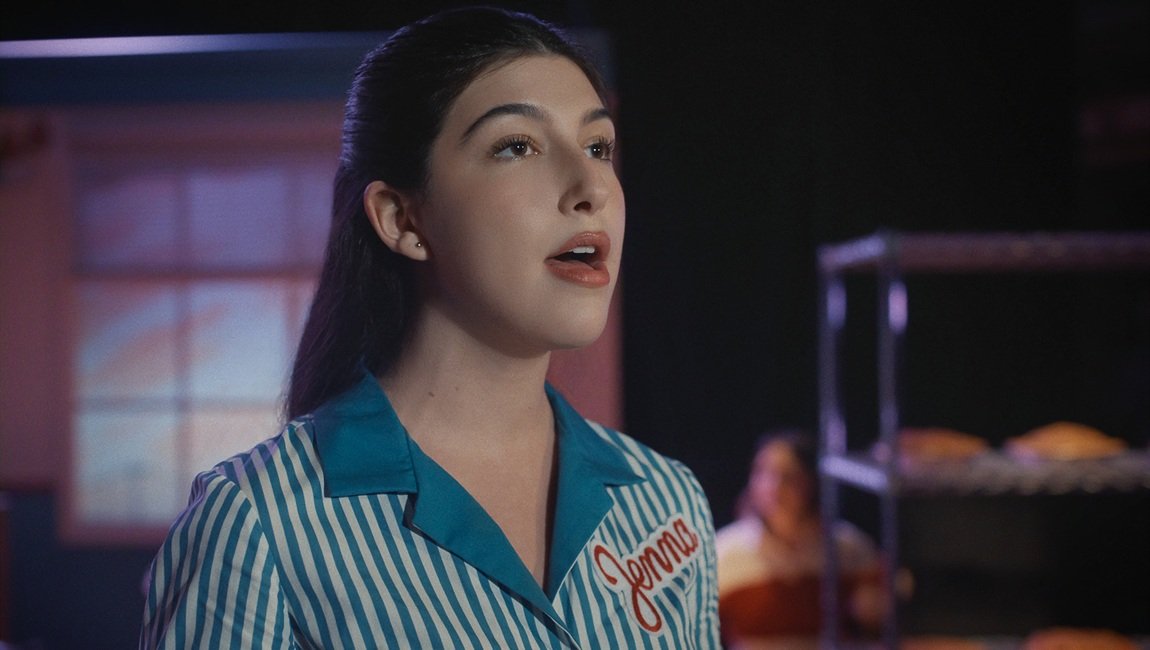
If that is a lot to convey to a Broadway audience, it’s especially a lot to hand to teenage thespians, but in Don’t Say Good Luck, a new Netflix movie from Julia Hart, Sophie Birenbaum (Sunny Sandler) will take it on. To be fair, Waitress: The Musical (the high school version) is apparently piloting a production at a Wisconsin school this fall, but Hart doesn’t water the musical down in the glimpses we see. Most impressively, the use of Waitress in Don’t Say Good Luck accomplishes more than giving Happy Madison heir Sandler an audition tape; it keeps in conversation Waitress’ woman-centered journey of trying to mold yourself into a whole person when painful experiences threaten to rip you apart.
Melanie Lynskey embodies the adult side of things as Sophie’s mother Elizabeth, a one-time cancer survivor whose latest doctor trip brought a death sentence. The movie bucks the tropes expected with a cancer narrative by focusing Lynskey’s performance outside the confines of “gradually dying mom.” A somewhat frustrating decision the movie makes is never naming the particular form of cancer she’s grappling with (nor the exhausted treatment options), but the upside of this decision is that Lynskey isn’t bogged down by trying to portray particular symptoms. She’s a mom, she loves being a mom, and she is trying to do much better than her mom (Bebe Neuwirth, playing non-distinct passive aggression). She’s gotten into a mostly good place in life, and her relationship with Sophie is evidently extremely close. Even within an otherwise very happy family (Max Greenfield plays frictionless dad Ted), Sophie and Elizabeth’s relationship is special and separate from Ted and the young twin brothers. In very little time, it is made clear that Elizabeth has worked hard for this life — and that’s what makes something so out of her control feel so particularly cruel.
And on the other side is everyday theatre kid Sophie. She approaches her audition for Waitress with low expectations, hoping at best she’ll get the role of Dawn (played by Shelly in the movie). A contrived plot point involving butt-dialing reveals the severity of her mom’s condition just as she’s up for her callback, unlocking an emotional register that’s raw in a way practice just can’t achieve. That acme of performance grants Sophie the lead, and the rest of the movie follows her navigating a dream-come-true (that she’s not confident she’s earned), the typical high school drama of crushes and changing friendships, and the heavier reality that her mom will die within the year.
As mature as Waitress might be for high school (don’t forget Jenna starts sleeping with her gynecologist), the movie does a good job mirroring the themes of motherhood and unplanned inevitabilities without being heavy-handed in the comparison. Sophie’s director Mrs. Parker (a very warm Stephanie Beatriz) gives her an assignment to ask her mom what it was like to be pregnant so that she can get in the correct mindset for the eleven o’clock barnburner number “She Used to Be Mine.” The ensuing conversation between Sophie and Elizabeth, privately held away from the boys, evokes the feeling of trying to learn as much as you can about a person before they’re gone. It doesn’t get Sophie into the correct mindset through literally understanding pregnancy, but by feeling what’s at the heart of Jenna’s song: life in suspension.
It’s generous to say Don’t Say Good Luck is unique. It’s a slight film, though it’s Hart’s delicacy — and the restraint in the script, co-written with husband/collaborator Justin Horowitz and novelist Laura Hankin — that brings the movie to a place of honesty, even if the plot threads can feel overly familiar. The end is unpreventable, though the movie isn’t interested in hospital bedside conversations, gravesite visits, or theatre as therapy. Sophie’s troubles are typical of teendom, but Hart prefers to sit with the sensation of keeping a handle on things well beyond control than highlighting the drama. Like the upcoming high school production of the musical, Don’t Say Good Luck aspires to be Waitress for a younger crowd. The inclusion of Waitress may just be set dressing (and it’s even more of a stretch to say Hart is directly invoking the original movie), but Don’t Say Good Luck ultimately operates in the same understated, fragile territory as Shelly’s longing film. Sandler, for her part, outperforms her nepo-baby status, importantly keeping up with Lynskey’s outstanding if under-explored work portraying a woman at the end of a life that should’ve had more time, a woman hoping her daughter makes the most of a life still ahead of her.
DIRECTOR: Julia Hart; CAST: Sunny Sandler, Melanie Lynskey, Max Greenfield, Jack Champion, Stephanie Beatriz; DISTRIBUTOR: Netflix; STREAMING: August 14; RUNTIME: 1 hr. 35 min.
Comments are closed.