
What Can’t Be Mentioned
The obvious thing to say about Dan Sallitt’s new film, What Can’t Be Mentioned, is that it can’t be fully appreciated without first seeing its more-than-a-decade-old predecessor, The Unspeakable Act — and it’s hard to disagree. Sallitt’s films have always been concerned with the vacuums created by the swift, sudden, and unprompted passage of time. His most well-known, Fourteen, followed the painful swell and compression of a close friendship over the course of 14 years, using delicate but devastatingly timed ellipses to unmoor the viewer from temporal logic. Life is not logical, Sallitt seems to say, and neither should a film about it be.
Perhaps the same attitude should be applied to the gaps between these companion films. While those familiar with The Unspeakable Act may have really felt the duration of the intervening 15 years, the effect of watching Sallitt’s latest would suggest no time had passed at all, and that the actors had aged at the snap of a finger. Questions of continuity be damned, just go with it!
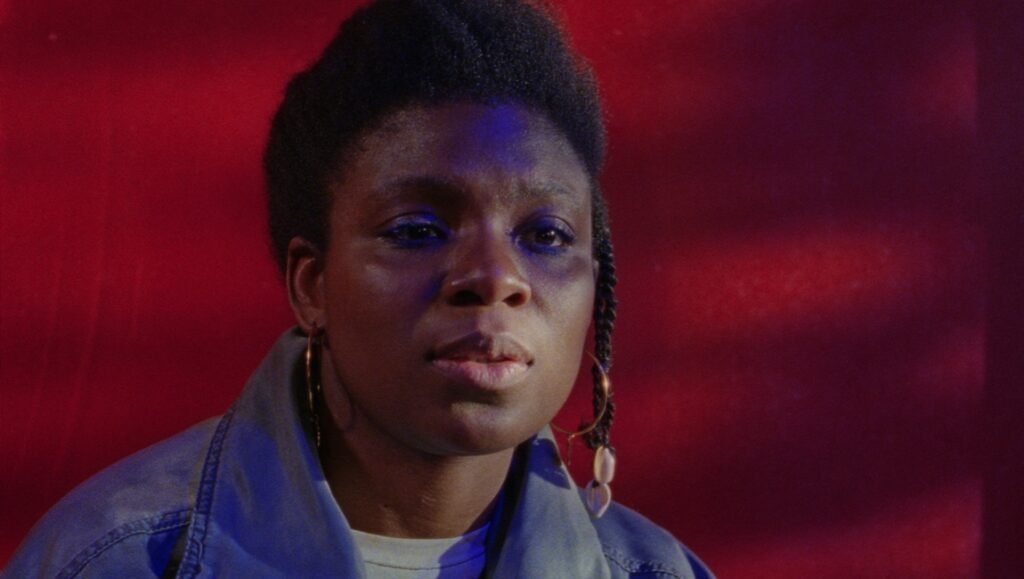
What Can’t Be Mentioned finds Jackie (Tallie Medel) as a therapist-in-training whose intimacy issues and ambiguous, unresolved issues with her brother are triangulated by Sallitt within a thoughtfully observed psychoanalytic comedy. Comprising intimate details of human emotion rather than instructive narrative context, it is precisely through familiarity with the former film that the latter becomes so rich with tension and friction. Like Freud, to whose psychoanalytic framework Jackie adheres, we know her sexual insecurity and repression, which rub and tug against each other throughout the film, are busy deep below the surface, each a lingering trace of the previous film.
The title of The Unspeakable Act obscured and illuminated its own meaning, at once directly referring to Jackie’s reluctant attitude toward virginity and the boys who wouldn’t acknowledge you the day after taking it, while hinting at the specter-like presence of sibling incest. Today, nearly 15 years later, she’s no longer a teenager grappling explicitly with a sexual attraction to her older brother, Matthew (Sky Hirschkron), but a married adult grappling with something more ambiguous. Fittingly, the new film opens in a bedroom shrouded in darkness and set to the sounds of rustling bedsheets and frustrated exclamations that betray Jackie’s newfound aversion to sex with her husband, Anthony (Kyle McCormack). The rejection is, as Jackie later insists during couples therapy, all in her head. She loves Anthony and finds him attractive, if occasionally hard to live with.
The first half of What Can’t Be Mentioned is dominated by a series of one-on-one sessions in various configurations. Along with couples therapy, Jackie consults her own client, relays stories of and questions about them to a professional mentor, and continues therapy with Linda (Caroline Luft), whom she began seeing as a teenager in the first film. At first, it’s not the content of the sessions that is most interesting or relevant. One client comments on the strangeness of having a therapist seemingly as young as Jackie, another says his wife is too nice and thinks they could “get somewhere” if she were meaner, and a young teenage girl is scared about opening up. These admissions aren’t exactly prompts to viewers acquainted with the previous film to expect something; Sallitt instead uses them to illustrate an entirely new, fleshed-out version of Jackie.
Previously, she was a mess of neurotic, teenage contradictions, obsessed with but not exactly tortured by her deviant attraction; wise beyond her years and stridently herself, but so sensitive to disruptions in the world around her (Matthew’s departure for college chief among them) that she crumbled whenever she was forced to contend with them. As an adult, she has an air of self-assuredness that comes across less as a front than it once did, and more as a tribute to self-work and the natural passage of time. It manifests in an upright posture, and in the way she sits forward in a chair during a session rather than slumping back into it. Her seeming unflappability in the face of intrusive intimacy issues with her husband is perhaps a byproduct of doling out advice rather than receiving it, but it also belies the cracks in her foundation of productive introspection. The change in comportment from the first film is stark, probably too good to be true.
The teenage Jackie comes back to life over a tense weekend at Matthew and her pregnant sister-in-law Lily’s (Kit Zauhar), house. She sits on the couch with her feet tucked under her legs and lets her neuroses, insecurities, and hair-trigger moods surface from a bottomless well of wine. This film is a gas tank, pressurized after every scene by more and more emotional content. Jackie prods Lily with increasing intensity about intimate personal details, like whether or not pregnant sex with her brother is still good, or if she ever saw her hippie parents have sex. To anyone who hasn’t seen The Unspeakable Act, the sudden immature shift in Jackie’s demeanor will seem improbable. But for those who have, it’s confirmation that the old Jackie hasn’t changed all that much.
Sallitt’s locked-off camera and precise compositions allow for unexpected dynamism and productive unease to play out in each scene. The Unspeakable Act was dedicated to the then-recently deceased Eric Rohmer, and you can see why. His patient frames are playgrounds for actors to talk about their hang-ups and move in ways that mirror them. What Can’t Be Mentioned follows the same approach. Where Medel squirms and writhes in place and Zauhar shifts in shock and defiance at the impropriety, Hirschkron is still, as if steeping in the tension between them. Where Jackie is alive, Matthew is weighed down by years of his own troubles, which this film doesn’t have space to accommodate.
It’s not worth spoiling how or in what manner What Can’t Be Mentioned’s nervy emotional crescendo hits its peak — a revelation of feelings at once predictable yet shocking in its delivery — but Sallitt lays clues earlier in the film that suggest the direction it might take. The pleasure of What Can’t Be Mentioned is in attaching oneself to its early cerebral pathways (Freud and counter-transference among them), only to lurch uncomfortably to their visceral counterparts. Flowing wine, libido, and jealousy form a heady concoction that, once drunk, turns nebulous unease — recounted by Jackie in the film’s first five minutes as the worry one of her clients feels over leaving the pre-teen son and daughter alone together — into a blaring siren to those who have seen The Unspeakable Act, and an ominous drone to those who haven’t. That Jackie’s own issues have so far lingered dormant, intellectually scrutinized but emotionally untapped, means the unspeakable act now is to mention what is on everyone’s mind. — CHRIS CASSINGHAM
At Night
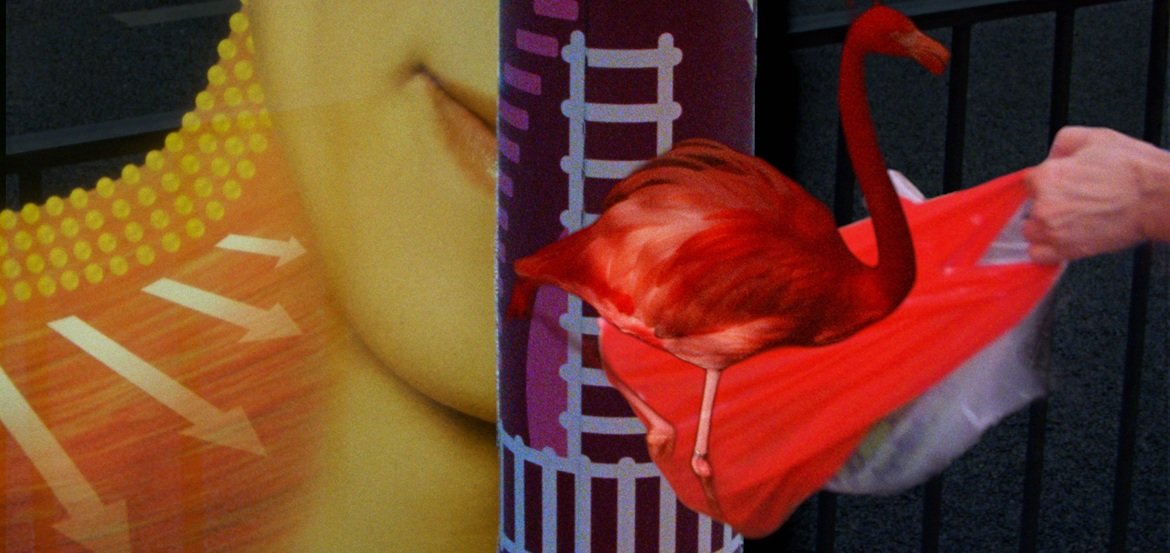
As the title would have us to expect, Beatrice Gibson’s At Night is indeed (mostly) a nocturnal film, but Gibson does so much more than merely shooting the streets of Paris at night. “Night” here not only constitutes the time of the day marked by the absence of sunlight, but also our attitudes to it, the feelings it evokes and invokes in a culture predicated on working through the day, the brief moments of respite it offers from the grueling impositions of daily life, and maybe, just maybe, the fleeting opportunities for freedoms and reflections that are normally curtailed by the norms of the day. Opening with a quote from Alice Notley’s poem — itself famous for its extravagant use of quotation marks breaking each verb, let alone phrases — where each word appears one by one on a black screen, almost cadenced to the background sounds of dripping droplets (or the blinking of an eye), At Night is a film situated in the space between sleep and wakefulness, where people slide in and out of personas, shift between multiple states of being, drift from one encounter to another, floating along the bright, fluorescent night lights of sleepy Parisian streets to the steady, calm hums of cars, metros, night buses, and shutters of shops closing. The darkened skies and hums lull one to sleep, while thoughts and memories stifled during the day awaken, transporting us from one surreally charged location to another that sustains the liminality of the hour and state of mind.
In this seemingly free-floating world, the notions of character and narrative no longer hold sway, but this doesn’t necessarily imply an absence of the political or a breakdown of societal structures. In fact, the night almost emerges as a time of reflection and resistance precisely because we are strangled by the strictures of the day. (There are complications for those who work at night, and that perhaps is a subject for a different film, but as films such as Bette Gordon’s Variety [1983] and Marie-Claude Treilhou’s Simone Barbes or Virtue [1980] testify, the atmosphere is starkly different from the daytime grind.) At Night is mostly peopled by women, and this lends the film’s shots a particular poignancy, allowing the women navigating a patriarchal world some much-needed time for their thoughts and reflections. Gibson follows seven women specifically, most of whom aren’t even given a name, and even the ones who are are thrust into different spaces and conversations to the extent that any information gleaned from one context almost morphs into something different in another. Settings, scenarios, and conversations lead to multiple modes of expression, recontextualizing seemingly recognizable character traits into something more exploratory and expansive. Femininity itself is in a state of flux, challenged by class, race, gender-fluidity (queer musician Adam Christensen, whose “femininity” contrasts with the normative framework), and even work, with each of the performers relating to sexuality, motherhood, and material realities through their expanding perspectives.
Alice Notley’s verse (“I am a tone of voice. Warming, shifting, pausing, changing, including, asserting, exulting, including, including, turning and including.”) marks not only the beginning of the film, but its operating principle, especially in its rhythmic, almost incantatory, repetition of the word “including.” Gibson includes a diversity of perspectives not to lump all females into one basket, but to push forth a feminism that foregrounds heterogeneity. Stark inequalities exist amongst the women themselves, and these end up structuring their encounters. A filmmaker played by Gibson herself is only able to meet her former household help (the only character with a name, Didi) in a department store whose owner shuts off the lights and closes the shutters the moment they cross each other’s path. Any attempts by the filmmaker to “equalize” the power dynamics and privileges governing their relationships by staging meetings in public spaces (bars, stores, metros and buses) are thwarted by the internal dream logic of the film itself, laying bare the fiction behind the documentary depictions of the Parisian streets and details from the performers’ lives. In the conversation that ensues, Didi confronts both the filmmaker’s privilege and guilt over it, targeting her critique toward the system as a whole. When the conversation ends, we see the morning light for the first time.
The centerpiece, which is slightly underwhelming compared to the rest of the film, involves six of these performers, discussing their attitudes toward sex and motherhood, informed by their experiences and perspectives. Gibson’s camera tightly films each of them, allowing room for no other person in the frame barring reflections of these women themselves (aptly, reflections on windows are a common visual motif). Their conversations are more reflective of the discussions emerging from ‘70s and ‘80s feminism, and while some of their ideas on power, sex, and nuclear families are interesting and even radical, they often register as throwaway lines that are rather underexplored. The film’s radicality, both aesthetically and politically, lies, however, more in Gibson’s embodiment of nighttime’s liminality than in these conversations, where she uses the ambulatory moods of the night as a guiding ethos for feminism itself. In a world which rigidly defines and delimits the behavior and actions of women, restiveness emerges as a form of resistance. Gibson’s triumph is to ensure that this restiveness, however loose and open, isn’t directionless, combining a defiant refusal to be tied down with a clarity on what needs to be done for a better future. — ANAND SUDHA
Currents Program 3: Surface Noise
Having seen all six Currents shorts programs at this year’s New York Film Festival, Program 3: Surface Noise emerged as the most successful of the groupings. The six filmmakers (and one painter) featured in it all generally had a better handle on what they were aiming for; all the films were legitimately experimental, and even the entries that didn’t always work were at least respectable programming decisions. Starting with the least successful film, even Laura Kraning’s Interwoven Intervals had clear merit and was a justifiable inclusion. An exercise in laser printing black-and-white geometric patterns onto transparent 16mm film leader, the soundtrack is the sound of patterns as they pass through the sound head and are read optically. It’s hardly the first optical soundtrack film, but those are usually enjoyable for at least part of their running time as you get to see what patterns the filmmaker has come up with, or if they’re capable of turning the noises into a new kind of music. Interwoven Intervals’ patterns are pleasurable to look at for a stretch, but it struggles when it tries to expand to a larger scope and begins embracing the digital side. Kraning incorporates outside music that doesn’t serve the project, and begins dividing up the screen so that we see the same visuals in photonegative form — none of these effects really bring out anything new, and you start to realize how few variations there ultimately were. By the time the screen is like nine squares of a chessboard, all showing the same visuals as either black on white or white on black, the film starts to feel like it’s played itself out, but it at least got off to a good start.
Monochromatic visuals also play a role in two of the three titles that were shown on celluloid prints, but said pair is otherwise that of complete opposites. Siegfried A. Fruhauf’s Flim Flam was shown on 35mm and is a rather bombastic sound film, while Karissa Hahn’s Moored Shadow was shown on 16mm and was totally silent. Hahn’s film was by far the shortest film in the program at only four minutes, but by her standards, that’s an epic: her running times are almost always single-digit numbers, if not less than a minute. Like most microshorts, its pleasures have to be modest, but in this film they’re real: a series of whip-pans and readjustments that turn a sunny woodland into a place where something surprising seems to pop out when the blurs settle down for a bit. Fruhauf’s film, meanwhile, is perhaps the hardest to assess, and it’s also likely the hardest to watch. The strobing effects involving horizontal stripes and exclamation points that go from black to white and back again, all in fractions of a second, are positively eye-searing. (There are also color portions that are relatively less assaultive.) The numerous visuals related to zebras are definitely a thematic throughline of sorts, but whether the film totally coheres, or is just a series of optical illusion set pieces on a Tony Conrad theme, would probably require a second look and some more investigation into Fruhauf’s body of work to totally determine. One could argue that the title referring to a piece of deception means that a sense of things not cohering after your eyes have been assaulted is part of the joke, which would be a legitimately innovative trick to pull.
Simon Liu’s Procedures kicked off the program, and this was a strong sequencing choice. It feels the most accessible of the group, both in the sense that it’s a typical Liu film and that his style is the easiest to appreciate for its surface pleasures. By this point, it can be a bit hard to tell apart the variations between Liu’s various deconstructions of Hong Kong, but his visions of the city are like no one else’s: bright colors, nonstop superimpositions, loud sound design, and plenty of mixed media bombast. Procedures will likely be remembered as “the one with the eggs” in subsequent Liu retrospectives, and the sheer abundance of them throughout this movie has a charming drollness to it, even if one can’t entirely explain why it’s funny. For an overt joke, simply keep an eye out for a sequence involving a little girl watching a television show. It’s not as thrilling as Devil’s Peak (2022), but there’s plenty to enjoy.
Ultimately, the program’s second film and its finale made the most immediately compelling cases for what experimental film could do to reinvigorate the medium. Even with the many rewards earlier in the program, sometimes one wants an experimental film to really provoke, and Cameron Worden has once again made a 35mm film that both serves as a wild closer and makes other filmmakers look timid. Day One’s title winds up suggesting the possible nightmare a projectionist might have of a potential first day on the job, or perhaps a primordial origin point for celluloid. (Worden is an experienced projectionist who frequently works with 35mm slide projectors — he stated in the Q&A that as long as images are visible and sound is audible, Day One is being properly projected.) An entirely photochemically-produced work seemingly inspired by Paul Sharits’ quote about “[giving] up imitation and illusion and [entering] the higher drama of celluloid, two-dimensional film stripes, individual images, nature of perforation and emulsion, [and] projector operations,” Day One’s visuals are only summarizable in the sense that colors, shapes, frame lines, and scratches are easy enough to conjure up in the mind’s eye. The approach is mostly closer to a slow and gradual bleed from one visual to another rather than single-frame flicker, but there are certainly exceptions. The soundtrack is the real thrill: the sound of prints going wrong in full stereo, also generated photochemically. After the film’s conclusion, faced with an audience that looked actively drained from the experience of listening to the projector’s subconscious for 16 minutes, Worden cheerfully talked about how the film took inspiration from epic poetry. If all experimental films aspire to poetry, then perhaps that makes Day One a testament to the superhuman forces of celluloid creation and its emergence from the primordial ooze of chemicals that make up what we see on screen.
The second film, and the likely highlight of all 20-something Currents shorts, was Jonathan Seungjoon Lee’s Practice Towards Light, a collaboration with the painter Yun-hee Huh. (The exact number of shorts is hard to settle on due to a few older titles being mixed with the new, but the only other contender for best of the 2026 bunch was in Program 2, with Johann Lurf’s musical timelapse astonishment Forever…Forever.) The film had already been made available for a time to online viewers as part of an online program entitled Repeat as Necessary, and while it may have set the bar too high for the films that one saw at NYFF, it wound up serving as a terrific advertisement for attending this particular Currents program. A silent film shot on 16mm, Practice is a portrait of Huh performing her daily ritual of plein air painting the sunrise as it rises above the waters of her hometown. Seungjoon Lee, who shot four rolls of film across each of the four seasons and used each roll seven times to create superimpositions, wound up making a portrait film that seems to fuse everything it’s capturing into one single movement. Huh frequently appears to be painting the real waves and sunsets into motion, while the various colors of the waves and sunsets bleed effortlessly into one another with maximum sensuousness. Superimpositions in experimental film are predominantly associated with Jerome Hiler, but his work tends to have a bit of sprawl rather than the single-minded focus that both Seungjoon Lee and Huh are achieving in the fusion of their respective artistic practices. The silence is that of bliss, and that’s the sensation the film inspires. Portrait films rarely achieve their goals so ideally. — ANDREW REICHEL
Comments are closed.