
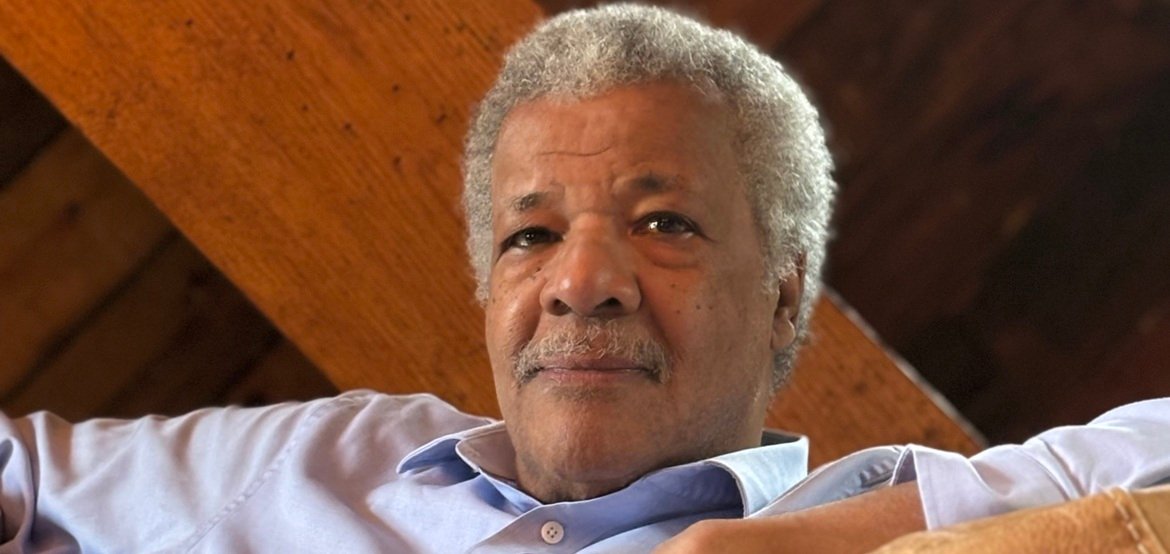
50 years after gathering the Harlem Renaissance’s brightest minds in Duke Ellington’s townhouse, and a decade after his death, William Greaves’ magnum opus, Once Upon a Time in Harlem, is finally out in the world. A titanic undertaking brought to fruition by Greaves’ son David, Once Upon a Time in Harlem is a breathtaking archival achievement.
Greaves, one of the great filmmakers of our time, is best known for Symbiopsychotaxiplasm: Take One. An experimental documentary where the lines between reality and artifice in cinema blur, Symbiopsychotaxiplasm wrestles with who actually authors a film. Is it the writer? The director? The camera crew capturing it all? What about the crew capturing them? A direct throughline to filmmakers like Caveh Zahedi or Nathan Fielder, Greaves broke barriers for what cinema could be. Having made hundreds of documentaries, Greaves’ eye saw mountains of change across a career that spanned six decades. In many ways, he may be the vision behind Black America in the second half of the 20th century. The scope of what he captured is astonishing.
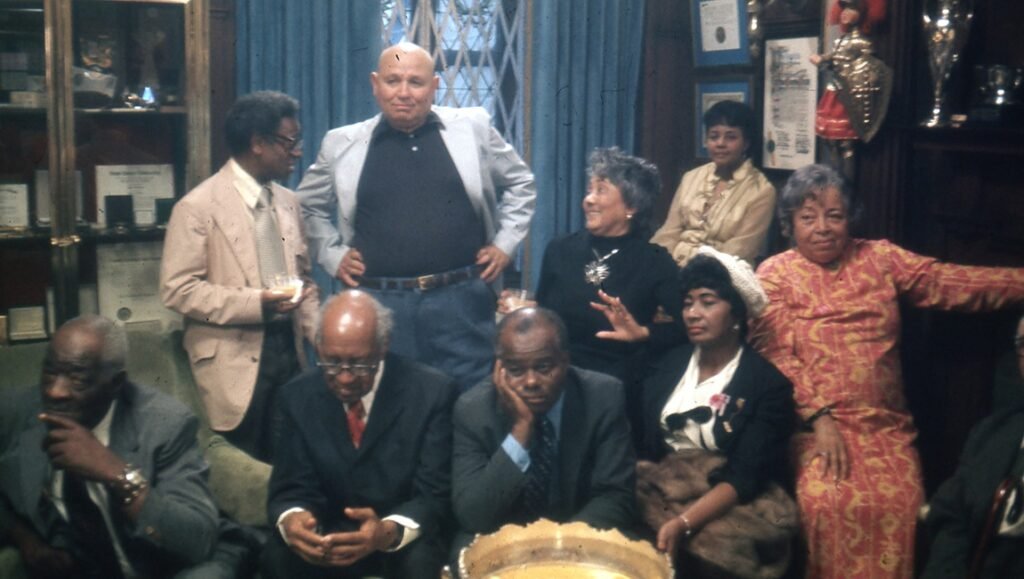
He may be known for Symbiopsychotaxiplasm, but it’s Once Upon a Time in Harlem that will be remembered as his masterpiece. Taking that obsession with authorship and truth, he distills it into a roving conversation between giants of the Harlem Renaissance. Once relegated to black-and-white still images and writing on a page, these men and women come alive through debates, drinks, and laughs. The weight of who and what you’re seeing — painter Aaron Douglas, poet Arna Botemps, photographer James Van Der Zee, archivist Regina Andrews, and so many more — is difficult to process. These were the people on the ground in the ‘20s and ‘30s, living through one of the United States’ most fruitful periods of creativity. Hearing their stories, and more importantly, seeing how much these memories mean to them, is one of the most moving experiences you could ever have. As glasses clink and laughter echoes, these people go from ghosts to being as alive as you or I. We could be sitting right there on a couch next to them. Once the conversation becomes a rolling thread of nonsequiturs, playful roasts of people who aren’t present, and teary remembrances, it’s as thrilling as cinema gets.
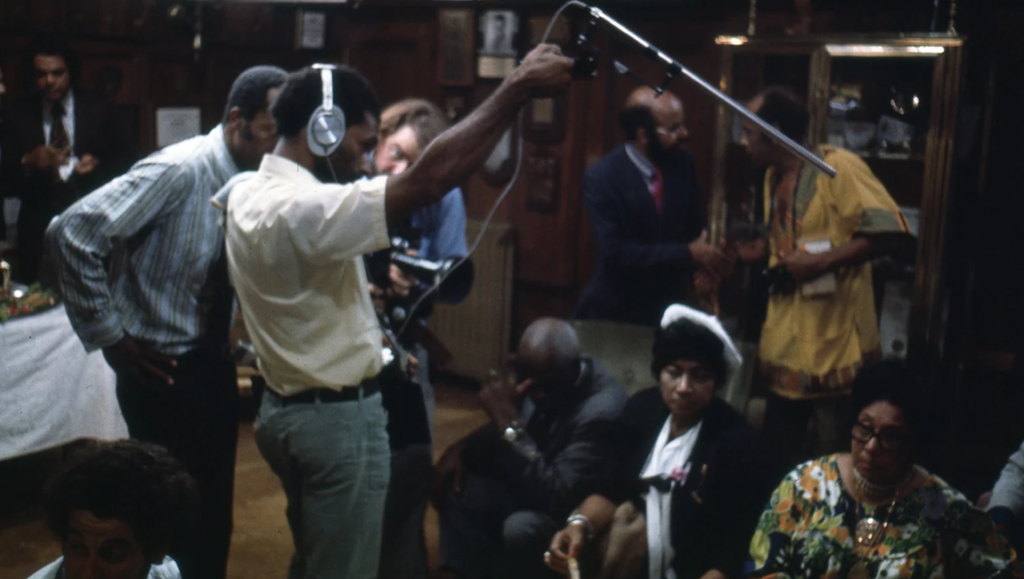
David, who was one of the camera operators in the room at the time, is as key a figure as his father or any of these subjects. Through his archival work, alongside his daughter Liani, he’s helping bring this integral piece of American history into the light. Ahead of its release, I sat down with David to talk about the film, his father, and what it was like to be there.
Brandon Streussnig: Something the film really highlights is the way people, particularly people of color and creatives, carve out spaces for themselves in times of struggle. It happened during the Harlem Renaissance. It’s happening here, in this film. How do you think people can still find those kinds of places in 2026, when they seem so sparse?
David Greaves: Well, it can happen, as it did there, and in their apartments, in the houses. It’s a question of will and understanding the importance of relationships that transcend ideology, that let people be in a room with others with different opinions and exchange them in a civilized way. I think that what was interesting about that time is that, don’t get me wrong, the people there were, if you will, escaping a really dangerous situation throughout the country. They came to New York as sort of a safety.
As Aaron Douglas says, it was a place where you could feel safe and relaxed. Maybe, folks today don’t feel that same impetus. Perhaps they don’t feel the same need to come together. Yet, having said that, I think there could be conversations going on now that are as important as those were, but there’s no camera there recording it, so that people will know years later, “Oh wow, they were thinking about that in 2026. Oh my God.” That’s what made the moment my father captured so special.
He brought these people together, he brought these four cameras together, and he understood that if you bring these kinds of folks together in one spot and put cameras there to capture them, you’d see something quite spectacular. You would see a time and people you otherwise wouldn’t have known existed, or you’d only see them in black-and-white photos. You would not see the people themselves. Here, you get primary sources about a very important time in America. I think that’s an unusual place to be.
BS: In Symbiopsychotaxiplasm, he’s almost provoking the conversations that make up that film. He’s creating the parameters. Was that at all the case here?
DG: No, you didn’t have to provoke these folks at all to have these conversations. They just fell into it. They just remembered those old times, talking about Garvey, talking about what we call ourselves, that kind of thing. No, he did not have to provoke them. But you see him. We put him on camera as much as we could, where he would say, “What about music? What about this? What about that?” So he would ask that, but they were going at it freeform.
They had their punches, and they were just there, ready to talk. They were just reminiscing about when they were young, talking about old situations they still felt had to be resolved. Things that still aren’t resolved now. What do we call ourselves? That’s something that’s still going on. Straight socialism or negrology, that kind of discussion is still going on. It shows that things change, but a lot stays the same.
The technology may change, but the people, I would say, don’t. When you hear these elders recite poetry off the top of their heads, you have to say, “Gee, why can’t I do that now?” At 96 years old, someone remembers this whole speech, and they’re quoting other people’s poetry. You say, “Gee whiz, these folks were really engaged. Their brains were really working all the time. They weren’t scrolling through their phones. They weren’t meeting over Zoom. They were meeting face-to-face and talking face-to-face. Isn’t that how humans are supposed to be?”
BS: There’s that great moment when Regina Andrews reminisces, and the camera slowly moves in on her eyes, filled with tears. There are so many moments like that. A person talking in the background, someone coming in from the side. Tell me a bit about where the instincts come from on where to place and keep your camera.
DG: Well, first of all, the camera people who my father had chosen were experienced in cinéma vérité, and he worked with them over the years. My father told me you can tell a lot about a camera person by whether they’re willing to get close, because, as you said, all the action really takes place right around the eyes. It was important to be close to see those emotions play out.
That was really a function of having the camera people who were accustomed to doing that. There was an important part, and you see it in the camera movements, when Richard B. Moore is reciting “If We Must Die.” Dad zooms in at that last point, really just to capture that look on his face. So yeah, the camera people, including me, were attuned to looking at the person, maybe staying on their face, even if they stopped talking for a while. That was all having the right people there, the right camera people there to capture it.
BS: You also have that expansive sound design. It’s incredible how much texture and depth you capture. How much of that was found in cleaning this all up?
DG: We worked with a finishing house called Skyline. Back when I was in filmmaking in the ’70s, we didn’t have a finishing house. I remember doing the mix with just the other sounds coming in, and we’d say, “Oh, we’ve got to put a horn in here. We’ve got to put something in there.” Now, we were working with the sound people at Skyline, and so when you see glasses and hear the tinkling, well, some of that has been picked up, some of that is us tinkering here or there.
We did a whole soundscaping thing over many days at the finishing house. That really cleaned up the sound and brought you even more into the moment. I’m thinking of when Jean Hutson laughs at Ted Poston when he says, “I got onto the elevator and left him down there,” and you hear her laugh. Well, that laugh was picked up. I said, “You’ve got to hear her. You’ve got to hear her laugh. You see her smile and laugh, but you really want to hear her.” They were able to pull that sound out. So that kind of thing — the soundscape — really, really helped.
BS: I love how much you allow moments where everyone can make fun of and disagree with one another. It adds so much life to see not only the reverence they have for one another, but that they can pick on each other a bit. I think it’s so important that this isn’t a didactic message spoken to camera.
DG: Oh, it is important, and it was meant to be entertaining. That was one of the things that I reacted to. Dad said, “David, if something affects you viscerally, go with it.” As he says in his concept, the film was meant to be theatrical and move at a snappy pace. So it had to be entertaining. We wanted things that were amusing, that were funny. I wanted to have that in there. Then, if they were funny and historical and looked good on camera, if it did those several layers in one scene, then that was what had to be in.
I’m thinking of Richard B. Moore, when he says, “Theodore Roosevelt was booed and hissed in Harlem.” That’s funny to me, the word “hiss,” that’s number one because it sort of says, “Gee whiz, the hiss.” So that tells you something. It’s funny to me that he says that, and it’s also notable that Black folks were booing and hissing Theodore Roosevelt. That’s of historical importance. And he looks great! Richard B. Moore looks great. So all those elements go in.
Or when Leigh Whipper speaks about Mayor Jimmy Walker. If you know about Mayor Jimmy Walker, you know he was corrupt and a philanderer. People accused him of all kinds of things. But at that moment on the tarmac, when Lindbergh turned away from Bill Robinson and Jimmy Walker shook his hand, and the way Leigh Whipper mimics that, that firm handshake, you say, “Gee, where is that Jimmy Walker? He was a good guy.” So, to be able to change that whole trajectory of how Jimmy Walker was thought about, add another layer to his memory that would’ve been lost. That kind of thing is very satisfying.
BS: As much as this is your father’s film, it’s absolutely yours as well. How did you go about making sure this retained his voice?
DG: When I started going back over the footage, you have to understand, I’d worked with him for 15 years as his assistant in the editing room. We obviously talked a lot about the films as we worked on them. So I’d say that his thinking was in my brain as I’m going through it, and I knew that whatever what it was I was selecting was something that certainly he would’ve gone with. He would’ve agreed with. Some moments would have resonated with him more, just as some resonate with me more. We may have had differences about this or that, but I think he would have approved of the final choices.
BS: This footage is 50 years old. Is there anything in it, any moment, that’s changed for you now versus how you thought about it when you shot it? Is there anything that’s really stuck with you?
DG: It was only when we started, really started after it was all restored, that I came back into it. Looking at it again, all of it is really amazing to see the kind of thinking that these folks were capable of, what they were doing. I think that was just very impressive. It certainly impressed me that they had the memories. You were listening to primary sources from a time folks wouldn’t know about. They would not know, and you’re hearing these primary sources speak about how they collaborated. It was very important to see how they collaborated, how their personal relationships affected their art, and how they also had fun.
I love when Regina Andrews speaks about her and the boys going through Chinese restaurants. So I put the picture of her in the middle and these four guys around her, so you get the idea of that. Imagine these young people walking down the street just having a good time and laughing and not knowing that a hundred years from now, people would look at that, imagine that scene, and say, “Wow, what kind of time was that? These people can walk down Lenox Avenue.” I think that kind of thing was very satisfying. You’re able to go back to that time and just imagine them as young folks just working together, having fun together. It was satisfying to bring that out.
BS: You were a young man when this was first shot. You’re right in the middle of this new Black American independent filmmaking movement pioneered by your father, Bill Gunn, Melvin Van Peebles, Kathleen Collins. Were you ever able to see that moment as a moment? Or were you too deep in it?
DG: Oh, I was in the moment. I was in the editing room. I was preparing the cameras. I was out working on something. I was doing sound. I didn’t really have time to take part in the arts movement and such. I was busy tending to my knitting, if you will. The world was just happening. As Bruce Nugent says, “When you’re in it, it is the now.” You don’t think of it beyond that generally. My head was in the editing room, in the budgeting. That’s where my brain was during the ’70s.
I was not thinking about the importance of the film to the history and all of that. I was just thinking, “I’ve got to sync it up.” I was working with the editing table. In fact, when I first started going back over the footage, I wanted to go back and see something. I was looking at it on the computer, and I wanted to go back and see something. My hand shot out to where the control panel would’ve been on the editing table, muscle memory kicking in to say, “Oh, you want to go back?” My hand just shot out. And I said, “Oh my God!” [laughs]
After 50 years, those other neurons were also firing, like, “Okay, you’re back in the editing room, you’re back in the editing room, let’s get on and on with it.” So that was kind of satisfying, kind of relaxing, you could say, “This is not new to me. Yes, it’s from 50 years ago, but it is not new to me. The whole process is not new. I remember what it was that we were doing.” Working on it now has been a real pleasure.
Comments are closed.