
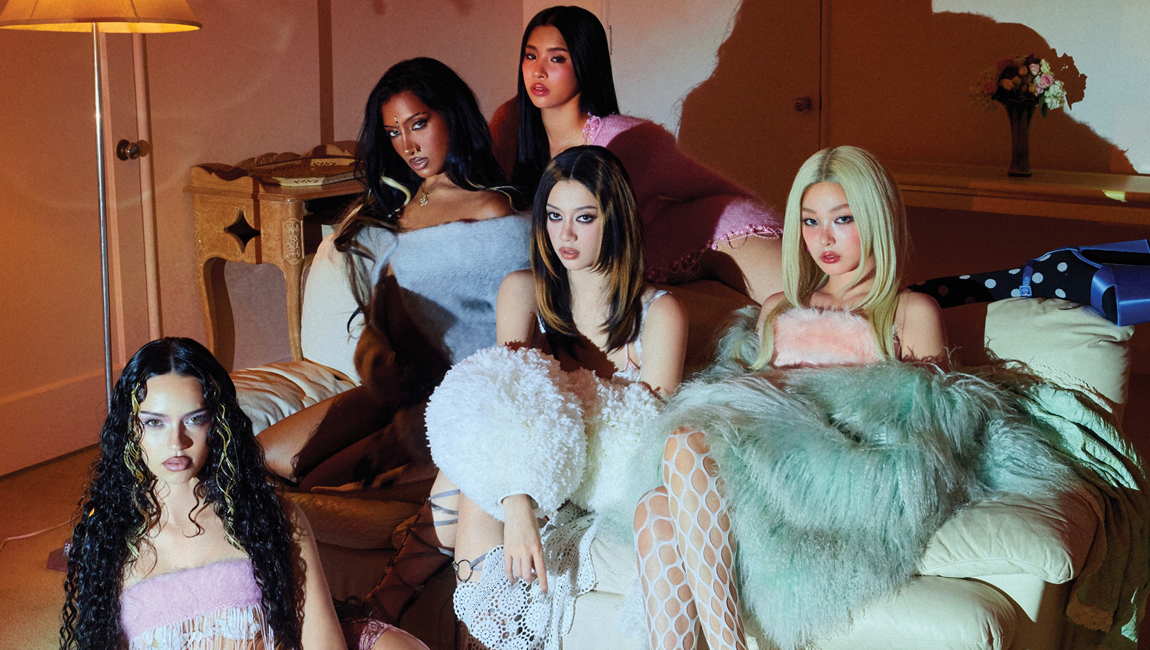
Seeing the new KATSEYE documentary in August of 2026 is a lot like seeing a brand new feature from a recently deceased actor. Between filming and release, the global girl group’s leader, Sophia Laforteza, announced a “temporary” hiatus to focus on her mental health. Fans have entered full doomsday mode, and they have reason too. (Just search the band’s name on X for proof.) The six-person group is down to four for the moment. Manon, the group’s lone Black member, is also on a “temporary” leave, though her spectral presence in the documentary feels closer to erasure than a temporary absence.
Instead of a boilerplate message warning audience members to keep their phones in their pockets, the film starts with an invitation to pull out the dreaded second screen. A QR code leads fans, called Eyekons, to a downloadable commemorative ticket where they can choose a digital ticket, entirely indistinguishable from an NFT, of their bias. A mentee of Kirsten Johnson, hired hand director Nadia Hallgren is under no illusions: she knows KATSEYE: Wild Hearts is best watched with a six-inch rectangular distraction in hand.
Moving from their debut in 2024 to their latest “era,” the five members presented in the film show little interest in the actual creative process of their music. They all speak of the “first time I heard ‘Gnarly,’” and how it made them feel or what they envisioned with their choreography after hearing the demo. Alice Longyu Gao wrote the song and seems to have performed the demo, though, unless missed by this critic, her name isn’t spoken; the song arrives as if dropped off by the magical storks at Hybe and Geffen Records. They “hear” the music before making it their own. This is the norm, to no fault or exception of theirs, in pop music, but it’s startling how uninvested the members seem in the creative process itself. They use vague and non-committal terms like “bold” and “mature” to describe their latest music; how it is bold or mature is left to the imagination. Lara is the only member shown as a writer — and her writing process, negotiating the identities of the other members and incorporating their stories into the heartbreak song “UNLOVEU,” mostly functions to tease that there might be more to KATSEYE than KATSEYE: Wild Hearts shows.
Hallgren incorporates cellphone imagery well beyond the opening QR code. Whether through social media reaction videos or fancams, a non-insignificant portion of the film’s runtime takes place via phone-screenlife material. These screens are the main way the fans engage with the group, gleefully playing into the parasocial attraction of K-pop, but Hallgren also seems genuinely interested in representing the Gen-Z group through Gen-Z TikTok aesthetics. In two instances, two members being interviewed answer the question with nearly identical vocabulary, so the director opts for split-screen interviews where the dialogue plays on top of each other. This small creative choice makes a compelling case for the girls’ closeness.
Elsewhere, the creatives — choreographers and performance directors — behind KATSEYE get a surprisingly large role, rather being left to blend into the background as is too often the case in these sorts of spotlight documentaries. Grant Gilmore’s emic description of his occasionally off-putting and eclectic choreography style demonstrates the awareness and personality that goes into the art form, and which is absent from what we see from the group members. Another performance director talks about the color and aesthetic choices for the music video “Gabriella” in a way that really showcases the artistry behind KATSEYE. It also makes clear who the capital-A artists are.
The film’s final 20 minutes proceeds to consist of unbearably dull flattery of the Eyekons and the obligatory “we do it for the fans” gobbledygook that is standard to the genre. It’s a bit repetitive here, especially without any depth of interviews about what being an Eyekon means to any of their biggest fans, and some of it comes across as apologetic — a defense against ill-intended online “claims” speculating about what may have catalyzed or contributed to both Manon and Sophia’s mental health struggles. One of the members even thanks the fans for always “defending” them, a word choice that feels out of context in terms of what the film actually shows but is carefully included nonetheless.
There is an interesting documentary to be made about KATSEYE, the girl group with a small collection of passports that skyrocketed to the top of the charts all over the world. They had the potential to conquer the music world — and their many tongues would have helped them open doors beyond both K-pop and American pop. But caught in a Squid Game of their own, the six-person group currently sits at four as they promote their new EP and film. They say the exists are temporary, but Manon is little more than a ghost in KATSEYE: WILD HEARTS. She is seen only in old footage and talked about in the past tense, when at all. Even more bleak, the girls spend nearly 10 minutes lauding and adoring Sophia as the motherly figure of the group and the leader that answered interview questions when nobody else knew how — the group’s center of gravity. But perhaps its Gilmore who frames things most precisely, and risks becoming a prophet of doom, when he professes: “Wild is the make it or break it era.” Less pressure certainly would be a welcome stranger to KATSEYE at the moment.
DIRECTOR: Nadia Hallgren; CAST: KATSEYE; DISTRIBUTOR: Trafalgar Releasing; IN THEATERS: August 12; RUNTIME: 1 hr. 20 min.
Comments are closed.