
The starting point for anything one might observe about the nature of money in the world today needs run, if one is to be sensible, through Karl Marx and the consideration of capitalism. In doing so, the invariable conclusion arises that attention to Marxist thought must include the recognition that an understanding of political economy entails a comprehension of religion if one is to enjoy a perception of financial realities, let alone participate in a meaningful critique that takes effect within the world. As Marx himself writes, in the opening to the Critique of Hegel’s Philosophy of Right, “the critique of heaven is transformed into the critique of the earth, the critique of religion into the critique of law, the critique of theology into the critique of politics.” Religion, then, is an essential stepping stone on the path toward a materialist understanding of economy, finance, the flows of currency, and — with reference to the film that will shortly be the subject of this writing — cryptocurrency.
Inevitably, cryptocurrency, if we take the impetus to religious criticism seriously, requires a reckoning with Christian Gnosticism. What other religious expression — so given to the secret, the hidden, the cryptic, and the anti-institutional — could be relevant to a financial expression inhabiting such similar realms of esoteric knowledge as to the future of money, suspicion of conventional monetary forms and institutions, and ultimately one’s salvation from the going indebted relations? Indeed, Gnosticism, which derives its name from the Greek gnosis (meaning knowledge), rooted itself in the belief that a divine secret existed — although revealed to only the especially devout and disciplined — outside of the bounds of the distrusted Orthodox establishment and its sacramental currencies of salvation. No need for baptism and Eucharist, for the true Gnostic, in their clandestine group, salvation came by plunging into the self and realizing its indistinction from God itself. The difficulties of such a way of thinking were high (as well as the dangers, chiefly death). but by getting encrypted, or we might say on the blockchain, the path beyond the retrograde forms bartering into ultimate security and post-mortem freedom were guaranteed. Except, Gnosticism doesn’t exist anymore, and no matter how distrusted the church establishment was, doing actual things and actual things happening in return was always going to feel that bit more trustworthy than diving into one’s authentic spiritual essence.
Of course, ancient times are long past and, at least in the United States and Western Europe, belief in God and traditional religion is, in general, waning; yet what this means is not an eradication of mythic, esoteric forces, but their transformation from ostensibly transcendent ones to immanent ones. Credit, debt, profit, and loss are subject to “the ‘god’ Capital,” as Bifo Berardi writes in The Making of the Indebted Man. And what does capital seek but profit, and how does it achieve it but through (forced) trust in the wage relations entered (un)freely with the promise of happiness. Except capitalism isn’t doing so hot, its field of extraction never infinite, and the declining trust becoming palpable. Yet, the belief in money — in which we trust — remains, and its nature has contorted through an encryption, a secret emerging, in a sequestered chamber in the heart of the institutional structure; and it is (well, was) making bank.
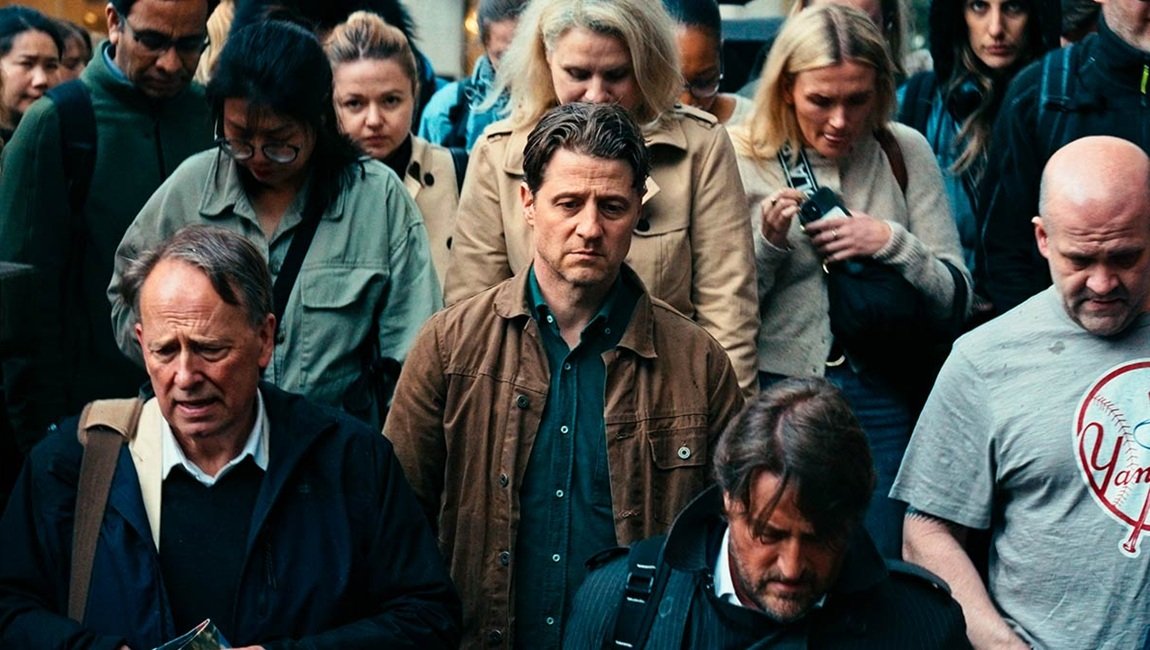
And people trusted this. And trust, as Ben McKenzie (Southland, Gotham, The O.C.) narrates in Everyone Is Lying to You for Money (which the actor co-directs with Giorgio Angelini), is at the heart of what makes an economy tick. The trust, he enumerates, seemed sensible given the economic crises of the 21st century and the shambling political responses that rewarded failure and redistributed taxes and the rest upwards as bailouts. How could a wallet secreted away from the untrustworthy crumbling edifice not appear appealing, if not also more trustworthy? Except it wasn’t and it’s not, and McKenzie excels in painting a picture — in numerous interviews (with luminaries such as Alex Mashinsky and Sam Bankman-Fried), investigative journeys to El Salvador’s “crypto-city,” and archival footage of personalities like Kevin O’Leary — of just how artificially boosted and specious this arcane hidden financial heaven is.
The most moving aspects of the litigation of what McKenzie straightforwardly deems a fraud are those reserved for the unassuming victims who sought various forms of economic salvation in the secrecy of the blockchain, whether it be for retirement, affording healthcare, or gaining some flexibility to spend more time with a child. It’s potently handled and hard to watch, and made all the harder given how many persist in the fantasy of liberation offered by the crypto-community and the alternative narrative peddled to securitize its validity: the tea-leaves weren’t read correctly, the necessary knowledge improperly secured, or the required faith in realizing the project as yet insufficient. Everyone is Lying to You excels in capturing its own infuriated confusion and drawing out of the viewer; just as it also succeeds in making a clear and relatable COVID obsession into something genuinely winning and actually, effectively altruistic when, for example, McKenzie receives his invitation to speak before the Senate finance committee.
Indeed, the film as a whole is charmingly personal, with an odyssey-like structure providing the exact right on- and off-ramps for a journey that wasn’t going to change the destination of anyone already aboard the crypto-ship. And while some fly-on-the-wall familial touches may be a tad cloying on a dramatic and formal level, and the throughline on trust a reductive diagnosis, the documentary succeeds in capturing (and even imbricating itself within) the sense of alienation and generalized despair that leads so many to play games in pursuit of a blessed freedom with encrypted bytes of code that may increase their own hermetically sealed value until they disappear in collapse, all the while doing nothing materially useful at all.
When thinking through writing about Everyone Is Lying to You for Money, the closing observations of No Pasaran: Matt Christman’s Spanish Civil War came to mind. As the war raged, anarchists in the factories of Barcelona and the mines of Asturias gained control of all elements of production, equalized wages, and abandoned the money form in the exchange of commodities, establishing an ability- and need-based rule of barter grounded firmly in trust between people — trust that skills and the fruits of their use were real and would stay good. It was a social revolution that burned churches, as people banished the god of Capital and pursued an immanent salvation in their own socialist heaven. McKenzie is keen to underscore that he is no financial advisor, just as he forwards no political program; but he has presented a critique of the strange world of capitalist Gnosticism and its vision of paradise, religious structure, and theology. Whatever comes next, as capital further ravages previously untouched sectors of the economy and employment through the AI bubble, trust between one another will be essential and the basis for a parallel critique of Earth, law, and politics. That is no secret, nor a hidden form of knowledge. It’s plain old materialist analysis.
DIRECTOR: Ben McKenzie; DISTRIBUTOR: The Forge; IN THEATERS: April 17; RUNTIME: 1 hr. 30 min.
Comments are closed.