
In 2021, the Tolkien barrel was finally empty — it was less than empty. Christopher Tolkien, hitherto guardian of his father’s legacy, had died the year before. He had spent the years between 1983 and 1996 publishing the vast treasury of his father’s unpublished estate. Twelve volumes, entitled The History of Middle-Earth (later supplemented by two volumes of John D. Rateliff’s History of The Hobbit in 2007), represented not a fictional account of Tolkien’s legendarium, but rather a creative history, tracing Tolkien’s process from his first Great War scratchings down to the byzantine folds of his 1970s metaphysics. Tolkien only published — only finished — two novels in his literary career; Christopher’s efforts (which scrape the very highest firmament of filial duty) define a life’s work hidden in libraries of marginalia and draft material. It is appropriate, of course, that the first clause of The Hobbit was scrawled on an exam paper: this was Tolkien’s modus operandi. Following the death of Christopher, the astute and studious Carl F. Hostetter — NASA computer scientist and scholar of Tolkien — made one final sally in his name. Decades earlier, he had been entrusted with reams of J.R.R.’s miscellaneous “philological” materials, most of which made the rounds in the conclave of Tolkien-centered academia. Following the style of Christopher’s History, some portion of these notes was organized and then, in 2021, published as the alluringly-titled Nature of Middle-earth.
Those expecting a natural history were disappointed. Nature is instead a winding, even frustrating, account of artistic failure: it encounters those metaphysical and temporal details that eluded Tolkien to the very end (and were elided, for the sake of clarity and narrative plausibility, in Christopher’s mosaic-edition of The Silmarillion). Page upon page is dedicated to the question of how long a “Valian year” is, with tables and figured calculations reckoning the Elvish perception of time; we encounter queries upon the origins of Elvish numeracy (and childhood finger-counting games); and various loose paragraphs that describe beard-growth, or the specific span of Elvish ageing, or a longer piece on the practice of telepathic communication between Elves. These are tantalizing details for the maniac whose postal address includes East Beleriand, though the obscurity of these diversions and the fragmentation of their form indicate the very end of a very long excavation. One should pay special attention to the particular source of each gobbet, provided by Hostetter, for instance: “These two brief texts are written on two torn half-sheets of two (different) Merton College weekly battels bills.” We are rifling through Tolkien’s loose papers: this is not a barrel-scraping, but an attempt to superheat the barrel, and thereafter inhale the barrel-fumes for one last hit.
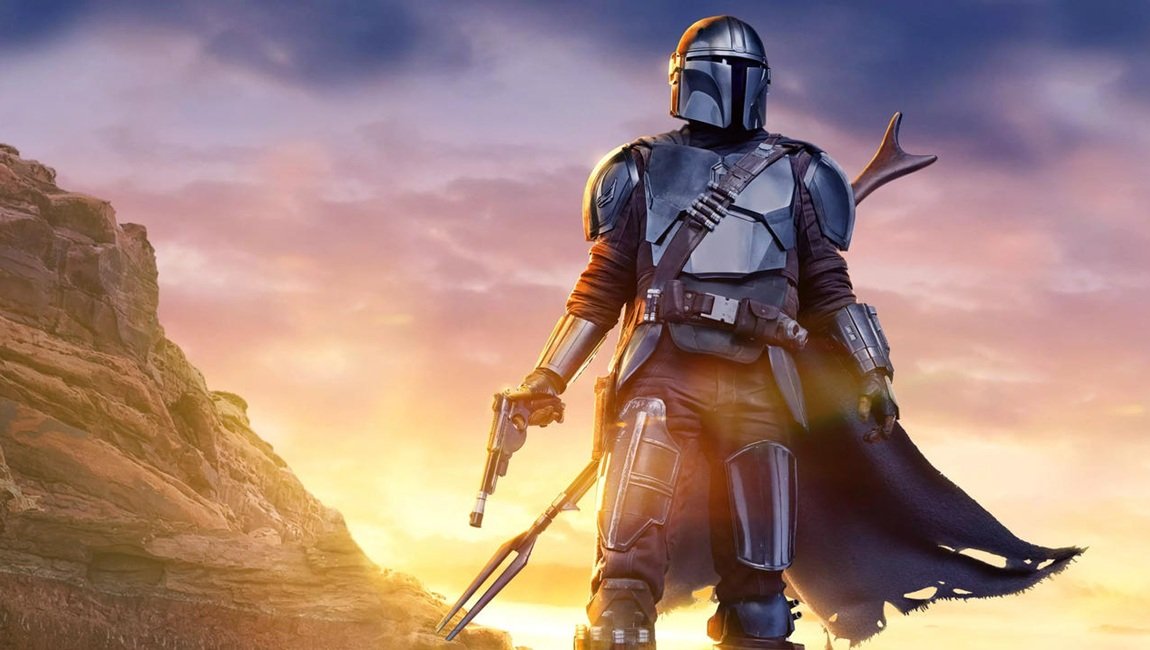
This brings us, not idly, to The Mandalorian, in which there exists an echo of this decades-long archaeology. We ought, before even dealing with the television show (or the movie), to chase the Mandalorian himself: who is this laconic bounty hunter? He is the man who wears the armor. I mean this quite literally. The first Mandalorian (later he would be stripped of this distinction) is Boba Fett, who appears — briefly — in The Empire Strikes Back, after having debuted in a little-seen animated segment of the universally-beloved Star Wars Christmas Special two years prior. His role is marginal. A bounty hunter who tracks down our heroes and reveals their location to Darth Vader, he does all this without firing a shot, or using any of his various and fascinating gadgets. Something about his monklike reticence resonates with the Star Wars public: he is an immediate favorite, his four lines of dialogue passed backward and forward in amateur dramatic societies nationwide. The most tragic: “He’s no good to me dead.” The most reflective: “What if he doesn’t survive? He’s worth a lot to me.” The most assertive: “Put Captain Solo in the cargo hold.” And who can forget his catchphrase (uttered once): “As you wish.”
In an act of what one can only assume is genuine hatred for this much-loved character, Boba Fett’s reprisal in Return of the Jedi features no dialogue at all (besides the stock Wilhelm scream) and an inglorious death. The blind Han Solo accidentally thwacks Fett’s jet pack, which malfunctions and rockets him into a rust-brown hull, before he tumbles down into a giant Sand Mouth. This appears to be a studied attempt to debunk the Boba Fett legend: it is entirely unsuccessful. This strange muse inspires a panoply of books, comics, and (as this writer can personally attest) a cycle of lyric poetry. The question must be repeated, mantra-like, into the void: why? The answer is succinct: the armor looks cool. There is nothing else to it. An astounding design was pinned to an insignificant, and ultimately humiliated character, and it was deemed impossible: it cannot be that this character is (in fact) meaningless. There must be huge caverns of meaning in the sleek lines and cruciform visor.
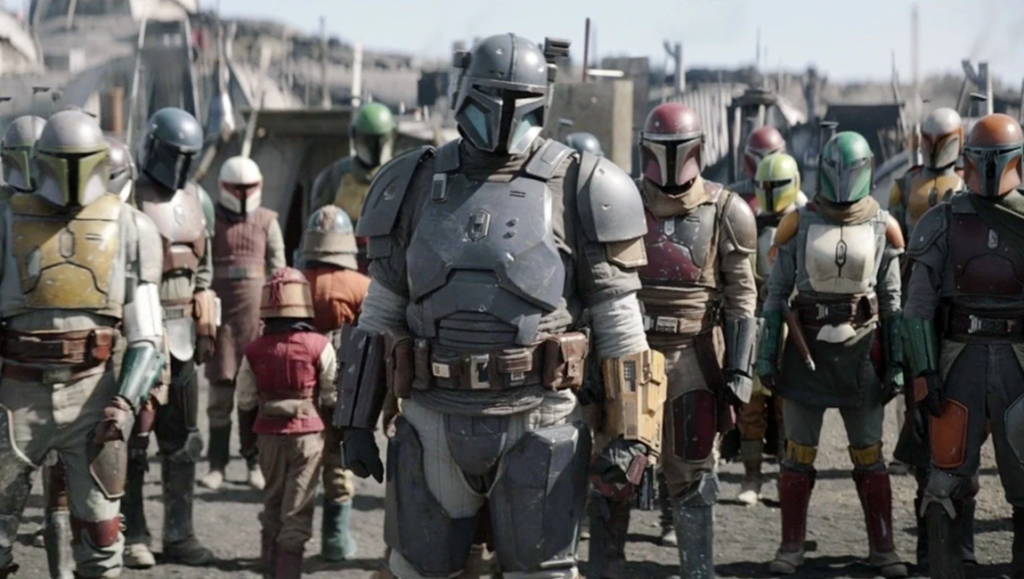
Indeed, it is the armor — and not the character — that commands the most intrigue; so much so that the mythology of the Mandalorians (a term first encountered in promotional material, rather than any of the films) invents a religious practice that prevents the removal of said armor, on pain of death. Crucial, too, is that this armor does not belong to a single bounty hunter, but rather to an entire army — an entire culture — of similarly-garbed warriors, all beholden to this same creed. George Lucas, catching scent of this new religion, briefly mulls editing Boba Fett’s death out of his Return of the Jedi Special Edition (or rather, implying his survival); the expanded universe, both before and after the Disney slate-wipe, decides that Fett survived anyway, by various absurd contrivances. Lucas determined, in the late ’90s, that this now-crucial character (and his armor) must be included in his ambitious prequel project: we find that not only is Boba a clone of his “father” Jango, from whom he inherits his famous digs, but that the very army that first serves and then overthrows the Republic is also Boba-clones. Lucas has successfully raised the Boba-genome to levels of supreme importance. But in his grand gesture to those grateful fans, there has been a shift: the increasingly religious and organized imagination of the Mandalorian has, in effect, exiled Boba from their number. He can’t be a Mandalorian: his behavior is not consistent with their creed. The first Mandalorian is not a Mandalorian at all. But he still wears the armor.
This is an object example in blooming marginalia, by which a fringe character is exploded into several novels’ worth of cultural development. When Disney decanonized the old Star Wars expanded universe, the Mandalorian material was, for the most part, reintroduced unchanged: the helmet-guys had become a pillar at the edge of the Star Wars empire. In 2019, after so many appearances in print, in comics, and extensively in animated television, the Mandalorian was promoted to live action. The Mandalorian was the first live-action television show produced for Star Wars, and served as a form of damage control for a franchise caught on the heels of an intensely negative fan-campaign targeted at The Last Jedi and the underperforming Solo. The former attempted to throw Star Wars into new, unsteady waters; the latter is a nostalgic project, but one that overwrote and telescoped the history of a beloved character — it stood on sacred toes. Both stoked certain controversy for these reasons.
The Mandalorian is a nostalgic project that, in its original vision, steers itself away from the holy texts: it exists, intentionally, on the penumbra. Jon Favreau recently pitched the concept by imagining he had an older brother: while this imaginary brother thrust his Luke Skywalker and Darth Vader models into infinitely repeating battle, little Jon was forced to imagine the culture and ecology implied by his various Ugnaught toys. These misshapen dwarves — you might remember them dismantling C-3PO in The Empire Strikes Back — were deemed unworthy of the older brother’s imagination. But what if a television show were composed entirely of these background guys? These fleeting, memorable nobodies? Those recently-christened Glup Shittos? Given his armor (very cool), Boba Fett never fell quite into this exile, but given his originally marginal importance to the grand narrative, we might consider him the King of the Fringe. He is the character who bridges the gap between an obscure side character and a supporting main character. Therefore, this image, this appeal to cruciform cool, becomes the central node to The Mandalorian, in which a non-Boba variation (really, the armor is what counts) ventures cowboy-like through the Star Wars outlands, accompanied by a non-Yoda green guy. In each episode, he will blast through various half-remembered denizens who were maybe in that one scene where Darth Vader talks to a collection of bounty hunters (the robot IG-88, who only appears in this scene, and does nothing whatsoever, is one such beneficiary). An Ugnaught character, the heroic Kuiil, is at last given his glory.
There is an interesting overlap of creative liberty and humble fealty in this design: by intentionally avoiding the High Canon, Favreau and key writer Dave Filoni were at liberty to spring around those lesser-known canyons of Star Wars with a kind of gay abandon; at once, they were subject to their source material by slavishly adhering to those Tolkien-like fragments that exist at the edge of — but not quite beyond — the existing Star Wars conception. The project came unstuck swiftly: in its second and third seasons (and the intervening Book of Boba Fett), a certain significance fell upon The Mandalorian and all that it depicted. It was no longer the Lone Wolf & Cub riff it began as, in which disconnected, Saturday-morning style narratives came and went (like a summer breeze). Rather, it became itself a Grand Narrative, an explanation for various loose ends in the Sequel Trilogy, and a recapitulation of the instigating tragedy of the Prequel Trilogy, thus losing that liberal springing for an increasingly elaborate compendium of Mandalorian Lore. The marginalia began to invade the main text: an obscure Tolkien note reveals, for perpetuity, that Frodo’s middle name is Scrotus.
The recent Mandalorian and Grogu feature film — the first Star Wars film in seven years — resolves this complaint. It is almost strikingly absent of major stakes, behaving somewhat like a six-episode megacut of a lost early Mandalorian serial (perhaps Dave Filoni, the Lucasfilm television man, can only write episodically). We return to the jobbing Mandalorian, bounty hunter (like his original), blasting minor characters to smithereens. There are several reasons the film fails: it is poorly acted; it is strewn with bad cinematography and poor visual effects; it seems absent of that particular stream of charisma that marked not only the first set of Mandalorian episodes, but all good pulp. But within this melange of poor filmmaking, there is also an indication of that same appeal to marginalia, that same governing impulse, reaching its terminal limit. The film’s key supporting character is Rotta the Hutt, son of Jabba. His first appearance was in the poorly-remembered animated feature film that began The Clone Wars, referred to primarily as Stinky. He is gifted one of the greatest lines of dialogue in Star Wars history: “Do you know how hard it is to be your own man when your dad is Jabba the Hutt?” This is a question many have mulled, and few have answered. We might wonder at Rotta referring to himself as a man — is he not an enormous slug? — but we nonetheless find in this question a certain nerviness in the project at hand. How can The Mandalorian and Grogu prove itself when its father is Star Wars?
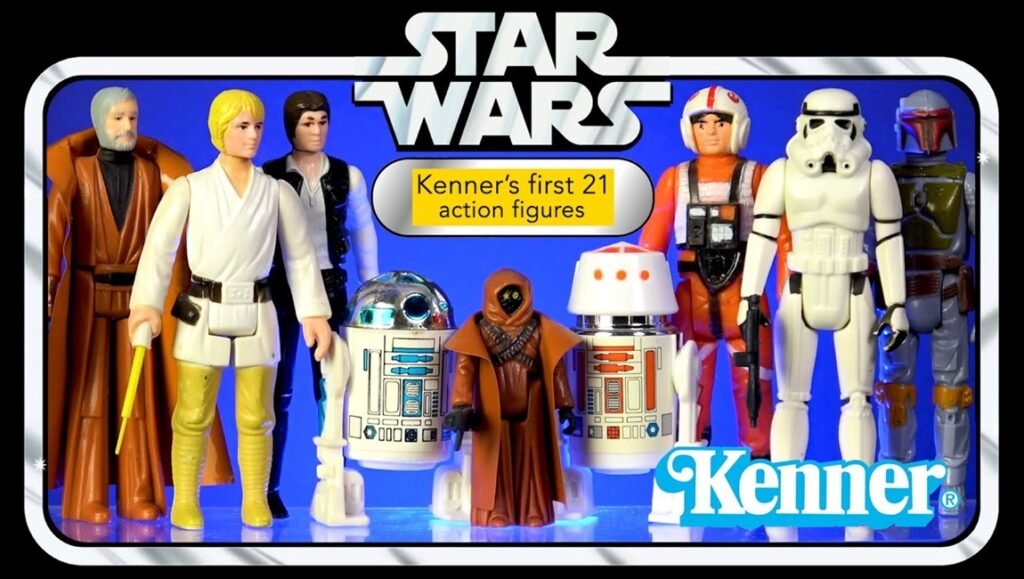
This tension between fathers and sons is, of course, central to the Star Wars mythos — perhaps it is appropriate that each of the many Star Wars resurrections must be locked in a kind of paternal angst of the same character. Rotta is liberated in his ability to be unlike his father — that is, in the story — but for us, watching the story, we cannot look at Rotta without thinking Jabba. Every element, every design, even a significant proportion of the shot coverage, is a direct reference to some other thing we either know or faintly recognize. A shot of X-Wings banking against a warbling, orange sun is taken directly from The Force Awakens, which was itself quoting Apocalypse Now: here, an external referent has been colonized into Star Wars, introduced into the self-propagating cyclone. And then there’s that somewhat endearing tendency to center the peripheral reaches new extremes: an escape pod utilized early in the film is based on a budget Kenner toy from the ’80s, the blandly modelled INT-4; and the snakelike beasties who stalk the Hutt palace are Amani, sighted once in the backdrop of Jabba’s palace, though better remembered (by children of the ’80s) as an especially bizarre entry in a later Kenner range. Favreau has described these toys as “rung-warmers,” the toys bought by confused or well-meaning parents, and received with equally confused or well-meaning expressions.
But the most remarkable of these obscure repetitions is a detail that actually comes from the mainline Star Wars trilogy. Rotta the Hutt is tricked into an arena deathmatch against Hideous Beasts (and this is necessarily a reference to Attack of the Clones — one of whose own Beasts appears in a later scene); these especially weird-looking monsters are actually the very same sprites used to populate the “holochess” board (also known as dejarik) briefly seen in the 1977 original, and frequently referenced since. The lore implications are considerable: that the chess-sprites are not imaginary monsters but a selection of entirely real beasts whose use in arena-battle either inspired the board game, or was reverse-engineered from the board game. In the original film, these figures are charmingly rendered in stop motion (to which this film pays equally charming tribute, albeit in a totally different scene regarding totally different characters), but one would never make the mistake of imagining those chess-fellows to be among the design highlights of Lucas’ original films (in the way that Boba Fett’s armor so clearly is). And here is the gripe, with the INT-4, with the Amani, with the dejarik board: Favreau and Feloni have dug so deeply into the marginalia that they are reproducing the bad material; they have found the least interesting, the least successful, designs and thrown them into a film that cost $160 million dollars.
That is, as ever, the problem with the bottom of the barrel: it is a typical storage space for dregs. This is why certain accusations against The Mandalorian and Grogu are misplaced. Dani Di Placido, writing for Forbes, compares the film to an “AI-Generated Movie.” Can we imagine any AI-devised project specifically aiming for the least successful parts of an ailing franchise? Can we suppose that the shivering suits in their cloud-swathed towers want a project that rifles through the forgotten toy box with such enthusiasm? Indeed, that is the overwhelming feeling behind The Mandalorian and Grogu. We are watching an uninspired play date — Jon and Dave, older brothers having pilfered the lightsabers — in which the kids try to make do with whatever weird background aliens have been left in the box, and on this occasion (it need not be every occasion), the spark of genius lies dormant. Because surely only an enthusiast could produce a film of this character, in the way only an enthusiast would leap at a film adaptation of J.R.R. Tolkien’s notes on beard growth. Yet here we see the flaw in such enthusiasm. The quality of Star Wars, and this writer will grant it a quality, is not the existence of everything within Star Wars, even if it primarily is a combination of an invented material (and otherwise) culture. There must be discretion, when fathoming the obscure depths, in not pulling up the bland and the inglorious; in sorting the nice chaff and the gross chaff. The Mandalorian and Grogu is indiscriminate: it is an undrenching of those best-forgotten memories, now spangled with bright lights.
Comments are closed.