
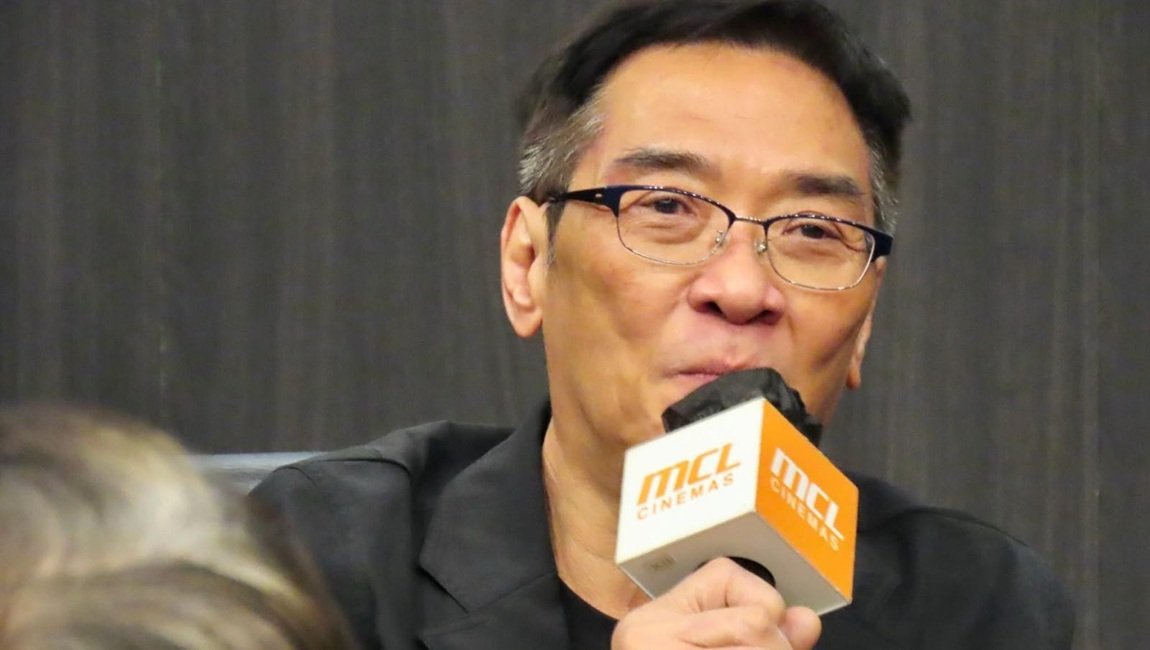
In an era of Hong Kong cinema often defined by masculine action films, Stanley Kwan’s filmography stands out. With films like Rouge, Center Stage, and Full Moon in New York, Kwan explored female relationships, gender dynamics, and queer subtext. As one of the few gay filmmakers of his era, Kwan credits his own life experiences for why he was able to delicately tell stories of lives so rarely shown on screen at the time. Forget Hong Kong, the West was barely finding the grace Kwan gave his subjects.
In Center Stage, Kwan set out to make a biopic about Hong Kong silent star Ruan Lingyu. With so much of her work missing, Kwan wanted to fill in the gaps of a life unknown, tragically cut short. Initially conceived as a starring vehicle for Anita Mui, Kwan had to pivot when Mui declined the project. Casting Maggie Cheung instead, Kwan found a new throughline to Center Stage. Cheung, a major star at the time, found herself the subject of constant tabloid fodder. It’s here that Kwan ditched the typical biopic structure and, in doing so, crafted a masterpiece examining fame and the unnecessary weight it burdens actresses with.
Part biopic with Cheung playing Ruan Lingyu, and part documentary featuring interviews with Cheung, Tony Leung, and people who knew Ruan Lingyu, Center Stage connects its subject’s tragic life with its star’s present reality. A metatext of sorts, Kwan dissects the intense gaze we cast on the famous and faces the limitations of cinema in trying to tell a life story. In his hands, Center Stage becomes so much more than a rote biopic and opens into a dreamy spiral where fact melds with fiction. Two women’s lives converge on screen, and Kwan, by forgoing any attempt to truly resurrect Ruan Lingyu, finds her beating heart one last time.
Ahead of Center Stage’s newest restoration celebrating its 35th anniversary, I sat down with Stanley Kwan to discuss the film, Maggie Cheung, and how he found his own voice in Hong Kong cinema’s most celebrated period.
Brandon Streussnig: I’ve always admired how your work, especially during a period when Hong Kong was focused on masculine stories, often centered on women. What gave you the confidence to tell those stories with such sensitivity?
Stanley Kwan: I was very lucky. After studying in a Hong Kong TVB training program in 1976, I spent several years working as an assistant director with filmmakers like Ann Hui, Patrick Tam, and Yim Ho. They later became key figures of the Hong Kong New Wave, and I followed them into the film industry. Working as an assistant director gave me the chance to observe everything: how directors communicated with actors, collaborated with cinematographers and production designers, and built films from the ground up. By the time I directed my first feature in 1985, those years of observation had given me confidence.
The women in my films also come from something very personal. I became aware of my sexuality when I was around 14 or 15, the same age my father died. My mother, who had been a housewife, suddenly had to support five children. She worked day and night, but she never cried in front of us. I never saw her shed a tear. Her strength stayed with me. Combined with my own perspective as a gay man, it gave me a deep appreciation for women. The contrast between an outward softness and an incredible inner resilience inspired me. That’s why I was naturally drawn to female characters.
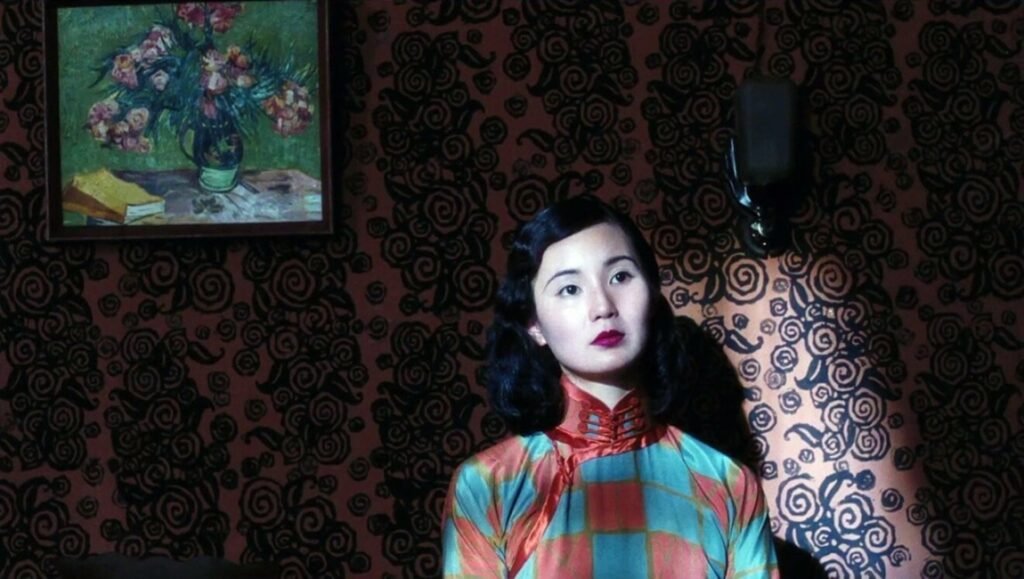
BS: What drew you to Ruan Lingyu’s story for Center Stage?
SK: After Rouge was successful, Golden Harvest asked me to make another film with Anita Mui. I’d admired Ruan Lingyu since I was a student, when I first watched her silent films in the Hong Kong Film Archive. Without dialogue, she conveyed extraordinary emotional depth through her expressions and physical performance. I’ve always believed the Shanghai cinema of the 1930s was the first golden age of Chinese filmmaking, so I wanted to tell that story. Anita later decided she didn’t want to shoot in Shanghai, but I felt the film couldn’t exist anywhere else. Ruan Lingyu’s entire life was rooted there. That’s why Maggie Cheung ultimately took the role.
During pre-production, Maggie herself was dealing with intense media scrutiny over her private life. That gave her a unique connection to Ruan Lingyu’s experience. At the same time, Maggie had a much more modern outlook on celebrity and the press. I realized the film wasn’t just about Ruan Lingyu anymore. It was about two actresses from different eras reflecting each other. That became the structure of Center Stage.
BS: That structure is so unusual for a biopic. Tell me about combining recreations of Ruan Lingyu’s films with documentary-style conversations with Maggie?
SK: That grew out of the research. My screenwriter and I gathered archival material, and the Beijing Film Archive generously allowed us to use footage from Ruan Lingyu’s films. I also interviewed directors, actors, and actresses who had worked in Shanghai during the 1930s and ’40s. Many of them were still alive. The more we learned, the less interested we became in making a conventional biopic. We wanted to create something that reflected both history and the process of remembering history.
Once we understood the film was equally about Maggie, we decided the interview sections should remain open. The questions were planned, but Maggie’s answers were not scripted. Even during production, we were still discovering the film’s form, working closely with cinematographer Poon Hang-sang and our production designers to find the right balance between documentary and drama.
BS: Rouge and Center Stage both look back at earlier eras of Chinese cinema. How did you recreate that period?
SK: Those films were never meant to recreate history in a completely realistic way. I always believed cinema should leave room for imagination. Our production designers created worlds that felt emotionally true rather than historically exact. In Red Rose White Rose, for example, we deliberately used fractured walls and stylized sets. The city outside the windows wasn’t real Shanghai, it was a painted backdrop. Those choices weren’t about realism. They were about expressing emotion. Reality is important, but cinema also needs invention. That balance has always interested me more than strict historical accuracy.
BS: We’re almost as far removed from those films now as you were from the 1930s when you made them. How has the Hong Kong film industry changed since you made those films?
SK: Today I work as an executive producer with younger directors, and the industry is completely different. The large studios such as Golden Harvest, Shaw Brothers, and Cinema City are gone. Most young filmmakers rely on limited government funding, so they’re making films with much smaller budgets. The challenge isn’t only financial. Many young directors are making very personal films, but in the Hong Kong New Wave we also thought about the audience. Directors like Ann Hui, Tsui Hark, and Yim Ho each developed distinctive styles while still engaging with the marketplace. They balanced artistic ambition with popular appeal, and I think that’s an important lesson.
BS: I want to end with the ending of Center Stage. After Ruan Lingyu’s death, Maggie Cheung takes one final breath before the film cuts away. It’s an incredibly moving moment. Why was that important to you?
SK: That ending was in the script from the beginning. Maggie Cheung has spent the film embodying Ruan Lingyu, even lying in her coffin during the funeral scene. Then I call “Cut,” and Maggie takes a deep breath. Immediately after that, we cut to the real photograph of Ruan Lingyu. For me, that’s the difference between the actress and the woman she portrays. Maggie can breathe again because she is alive. Ruan Lingyu, sadly, cannot.
Comments are closed.