
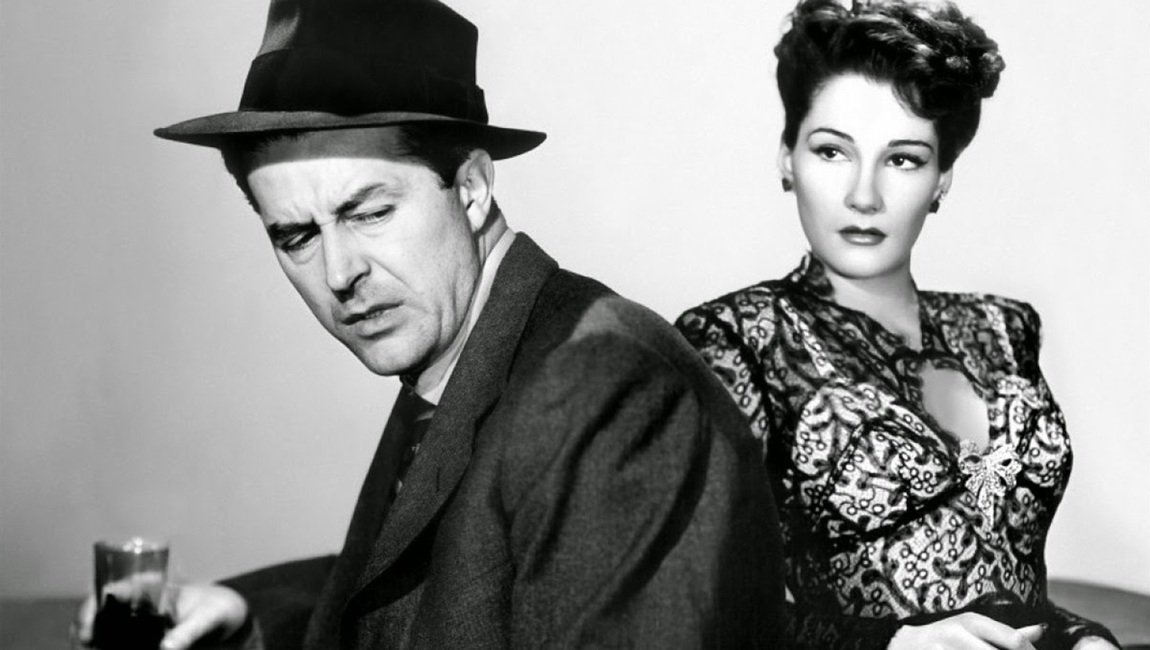
I observe a Dry January most years. Usually, I drink to a moderate level, and prefer alcohol as a sedative rather than as a party enhancement. But while I do not have a problem with substance abuse, I admittedly do relate to the drunk novelist archetype. There are times I’ve written with a pour of bourbon to lower my inhibitions, so that thoughts may flow out more freely, and it feels as though I am fulfilling a career obligation to wallow away my curse of premeditated cultural discourse when I take a sip after completing a paragraph. To me, this is a juvenile romantic notion about cultural work, but automating this practice could lead to a dependency, bringing me all the closer to the actuality that is the alcoholic writer, and all the closer to the millions of people who are working through their alcoholism today.
The legacy of the drunk novelist archetype threatens to outlast its literary output. Alcohol consumption has become so entangled with the writer’s persona, and artists generally, that there is a misconception that it fuels the creative process. It’s naïve to think that writing with a nearby cocktail will unlock a mythical reservoir of talent to produce a timeless work. But while this cliché might reflect a certain truth for the handful of novels whose writers this archetype originates from, their masterpieces are succeeded by eras of graveyard manuscripts.
It should be noted that this trope of the Lost Generation (those born just before World War I, who came of age during the US Prohibition era) and their, at the time, rebellious drinking habits has been reconsidered as a serious physiological disease. As currently defined by the National Institute on Alcohol Abuse and Alcoholism, “alcohol use disorder is a medical condition characterized by an impaired ability to stop or control alcohol use despite adverse social, occupational, or health consequences.” Literary historian John W. Crowley notes that the Alcoholism Movement of the 1940s — supported by the boom of Alcoholics Anonymous and other medical organizations beginning in the 1930s — had “reconstructed the framework within which Americans understood excessive drinking.” Alcoholics were said to be people afflicted with alcoholism, so the recovery narrative — recovery from substance abuse — supplanted metaphorical modernist narratives (Hemingway, Fitzgerald, London), and habitual drunkenness was deemed problematic for one’s health.
Charles Jackson’s most famous novel, The Lost Weekend (1944), is emblematic of this changing landscape of alcohol-forward literature. Billy Wilder’s film adaptation of The Lost Weekend (1945) scrutinizes and sympathizes with people suffering from alcoholism, inspiring a deep consideration of our relationship to substances, and Ray Milland is phenomenal as the alcoholic writer Don Birnam. He speaks eloquently of his own depravity, describing the water underneath glass cups as “vicious circles,” and characterizing his alcoholism as having “no end, no beginning.” Milland glides through the film with a magnetic force, something like a proto-1970s Al Pacino; his mannerisms have a kitchen-sink realism that makes one think, “I know someone like Don Birnam,” or “I know someone who knows someone like that.” Contemporary critics were quick to note the power of Milland’s performance. André Bazin wrote in L’Écran français:
“The difficulty of the leading role resides in the subtlety, even ambiguity, of the figure that Ray Milland so admirably embodies. It is rare to witness such an identification of the actor and his character. A Cary Grant or a Gary Cooper in America, a Jean Gabin in France, always more or less absorbs the character he plays into his star persona. But because we know little of Ray Milland at this point, it is not possible to say whether he is really like Don Birnam, whether Don Birnam is like him, or if there is no resemblance between the two at all. Commanding the screen uninterrupted for nearly two hours, Milland manages to sustain with consistent probability a role of acrobatic difficulty, so much so that the viewer experiences the chimerical impression of familiarity with an actor he otherwise does not know.”
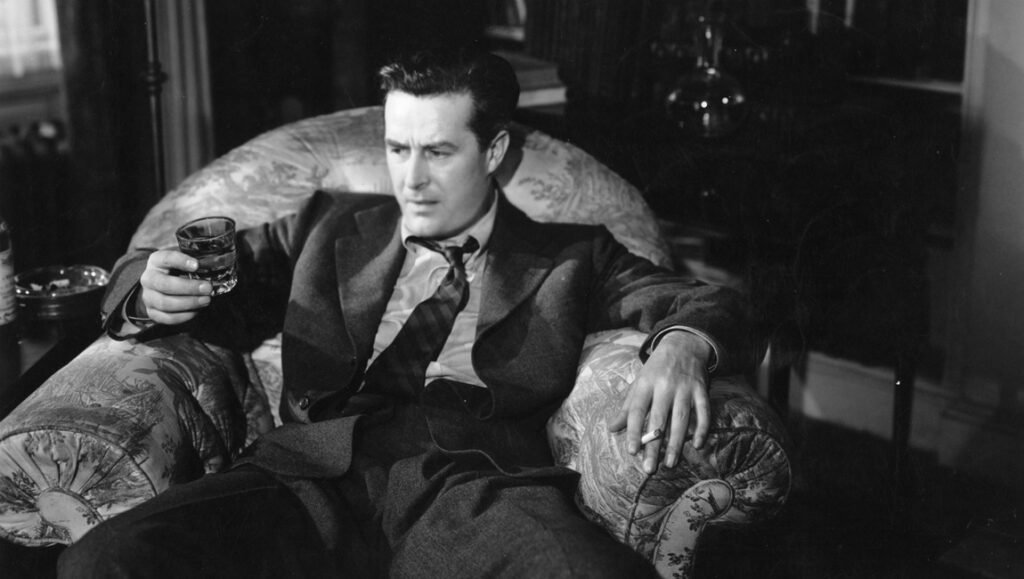
Don’s drunken philosophizing takes breaks only when the drinking is in jeopardy by his generously caring girlfriend, Helen (Jane Wyman), or his dispassionate but loving brother, Wick (Phillip Terry). They reflect opposite sides of care for alcoholics. Where Helen is ceaselessly forgiving of Don’s inability to stay on the wagon, Wick, fed up with his brother’s creative ways to indulge his drinking, decides to leave him to continue their planned weekend trip alone. The enabling bartender, Nat (Howard da Silva), is ambivalent: he is charming with his affable Brooklyn accent, but he’s also aware of Don’s alcoholism and displays only shallow attempts to help him. “Aw, why don’t you lay off the stuff, Mista Boynem?” he says while pouring Don a second shot.
Wilder and collaborator Charles Brackett took Jackson’s novel as an opportunity to depict alcoholism unflinchingly and without distraction. These successes are evident in the script and performances. But looking beyond the surface, there’s a subversive element in film noir styling to further elevate these thematic goals. Just watch the film’s opening shot of the unrecognizable New York City skyline, anticipating the opening of The Naked City (1948) — megalithic buildings in broad daylight in a city where there is endless possibility, where everyone has a story. A slow pan toward three open windows, two in a row with curtains blowing in the wind, the third with a bottle of rye whiskey dangling just underneath it. Without cutting, the camera dollies toward the window to reveal Don packing his luggage for his weekend trip. Just before the cut, and the soundtrack’s unnerving theremin creeps in, he pauses briefly to glance at the bottle with uneasy contemplation. Uncomplicated though this sequence may be, it distills the premise to its finest points: this is a man who can’t stop drinking.
And this is before mentioning the somewhat femme fatale-esque Gloria (Doris Dowling), a sex worker who speaks, according to Don, in “lowly abbreviations” that echo Edward G. Robinson in Wilder’s previous film Double Indemnity (1944). And also before getting around to the alcoholic ward’s nurse, Bim (Frank Faylen), whose queer-coded temperament chafes against the gender essentialism that characterized most Hays Code films, while also alluding to antiquated notions of drunkenness being tied to homosexuality. (This point was scrapped when adapting the novel. Originally, Don is written to have had relationships with men in college, which is said to exacerbate his drinking habits.) The markers of noir are all there, but where there would be smoking guns of an unraveling mystery, in Wilder’s film, there is instead an empty bottle of whiskey at the foot of a sleeping alcoholic.
The Lost Weekend is a remarkable film in its candidness of substance abuse, not only in its illustration of Don Birnam’s strife, but also the pitfalls of literature’s admiration for alcoholic writers. Crowley remarks: “[The novel] began to close the book on these drunk narratives by exposing the literariness of their alcoholic despair. ‘In A Glass,’ [Don’s manuscript (called “The Bottle” in the film)], exists only within the claustral confines of a mind soaked in modernist fiction. In his sober moments, he realizes that his existence does not live up to the high romantic tragedy of the sort he admires, in which the alcoholic culture hero learns the bitter wisdom of the ages from John Barleycorn.” Jackson’s novel is an ugly chronicle of an experience he’s lived through, a work of art that demystifies the idolization of excessive drinking to leave only the undesirable realities underneath it. Crowley quotes Jackson: “The drunken life is ‘merely ludicrous— ludicrous but not worth laughing at, something merely to put up with and bear with because there was nothing else to do about it.’” Such a description of habitual drunkenness is enough to sober anyone up.
Comments are closed.