
Misery isn’t a genre, but it’s a motif and an emotion that many independent and arthouse films seem to think is the defining state of life. Or, if not life — and one can argue that many filmmakers don’t know enough about the world to think of life in so broadly — then at least of cinema. It’s an easy way of making a film come across as real, unsparing, honest, and unafraid without having to truly take stock of the world’s many contradictions and complexities. Tõnis Pill’s Fränk is like an Estonian version of Los Olvidados, only without much of the irony, distance, absurd comedy, social consciousness, or poetry of Luis Buñuel. There doesn’t seem to be a single character in the film who doesn’t either get beaten up, almost get beaten up, or beat somebody up. It’s about a gang of 13-year-old boys, all of whom are relentlessly abused by their neglectful parents, and the terrible antics they get up to in small=town Estonia. That it’s also a hopeful film, ending on an inspiring message, should either be a big surprise or entirely predictable based on how tuned in you are to the clichés of the form.
Our hero is Paul (Derek Leheste), a stoic blonde tween dropped at his uncle’s house while his mom returns to the city to work up the nerve to leave Paul’s abusive father. Friendless and thick-skinned, Paul soon falls in with a motley gang of hooligan boys who spend their days beating each other up, huffing glue, and abusing the local mentally disabled man, Fränk (Oskar Seeman in heavy prosthetics, overdoing Fränk’s disability in a performance that would make Tugg Speedman proud). A gentle soul at heart, Paul secretly starts to form a secret, off-kilter friendship with Fränk even as he publicly throws rocks and paint at him with the rest of the gang. But when the group starts to fracture after Paul publicly humiliates Jasper (Tõru Kannimäe), the ostensible and highly abusive leader, and another member goes into catatonic shock after huffing high-strength glue, things take a turn for the even more grimy and violent.
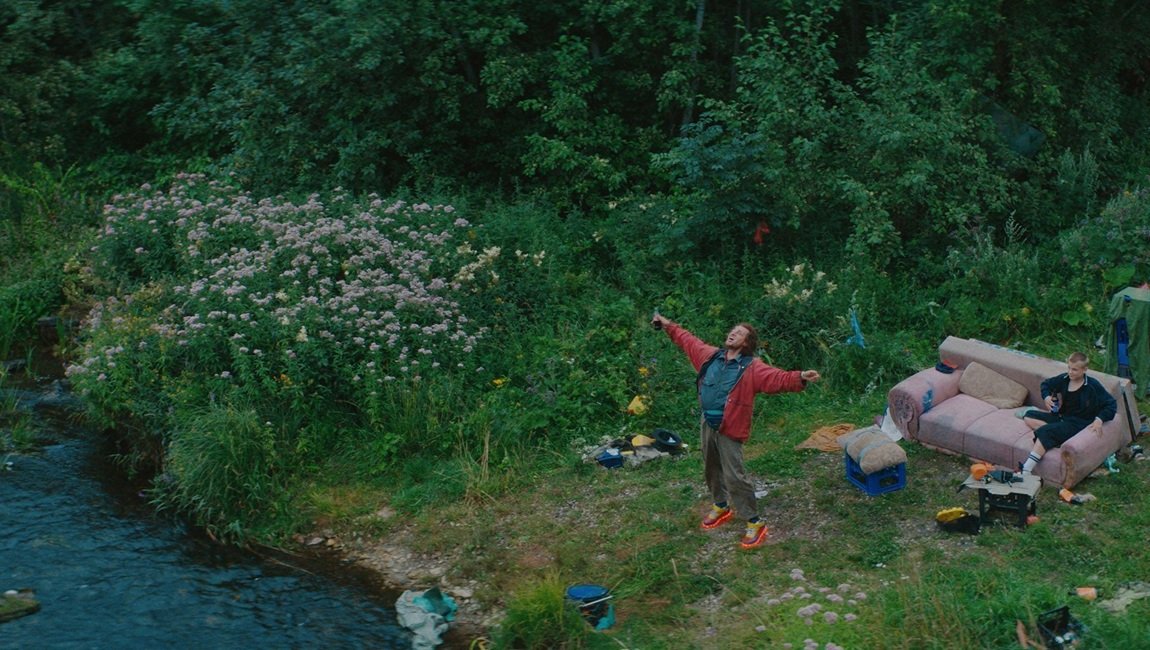
Say what you will about this genre of atrocity exhibition, and this writer generally has very few good things to say about it, what makes Fränk work as well as it does is that it allows itself to become increasingly more horrible long after it seems to have hit bottom. It also, miraculously, doesn’t feel emotionally manipulative even while treating viewers to scene after scene of children almost killing one another. It’s a well-framed film, subtly capturing the beauty of Estonian summer, and it’s stylistically precise enough to move at an even clip, each moment sinking in without knocking you over the head with melodramatics. It’s dubious whether viewers will learn or feel as much as the film would seem to like, but perhaps that’s an issue of who the target audience for the film is. The opening credits warn us that what we’re about to see is uncomfortable but honest, and according to a few Estonian friends this writer made at this year’s Black Nights Film Festival in Tallinn, that claim of authenticity holds up. The film also did make a little splash when it premiered nationally last summer, so, of course, there might always be something that a viewer — this one included — may miss through jaded cynicism, or otherwise. Unfortunately, those who fall in that camp will likely feel a little too dispirited with the whole endeavor to look again and find out.
Published as part of Tallinn Black Nights Film Festival 2025 — Dispatch 2.
Comments are closed.