
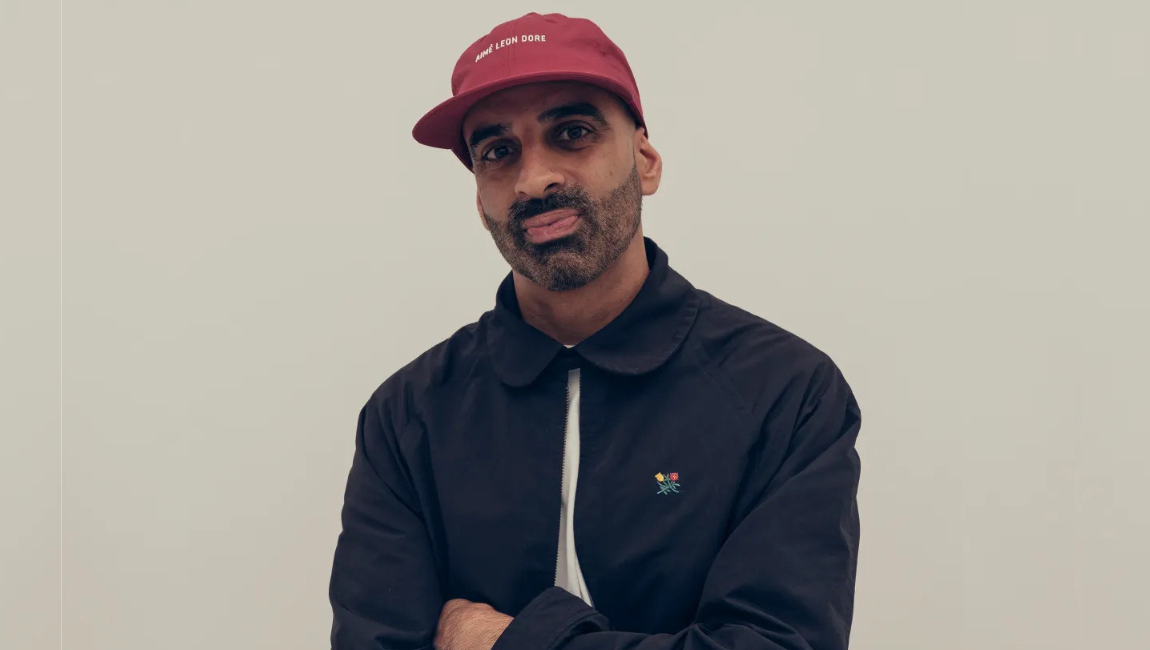
A promotional email hit my inbox last month that cut through the static fuzz, the torrential downpour of inbox shit, and caught me off guard. It was from a Toronto-born filmmaker named Reza Dahya, who reached out directly, to tell me about Boxcutter, his debut film, along with a request to give it a watch. He checked the right boxes by first, making such a humble ask personally, and second, sparking my synapses by describing the film as “a love letter to TO’s hip hop” community. I’m something of a self-declared rap film scholar, so I decided it would cost me nothing to dedicate a few minutes of my time to taking a shot on a screener.
I’ve watched Boxcutter in its entirety twice and can say it is a lovely first film (Dahya has a credited feature on his IMDb dated prior, but explained it was a few short films packaged as a feature by the producers and this is very much his debut), an all-Toronto family affair that does merit the “love letter” cliché, about a young Caribbean-Canadian aspiring rapper/employee at an Amazon-style packaging plant named Rome (Ashton James) who sees opportunity when he finds out a Drake facsimile named Ritchie Hill (Toronto artist and producer Rich Kidd) is going to be at a local club where Rome sees opportunity to slip his music to him. The trouble is Rome’s apartment was robbed by two masked men earlier that day, who knocked him out and stole his recording equipment with all his music on it, which means with his childhood friend and aspiring artist Jenaya in tow (an incredibly charming Zoe Lewis), Rome has one crazy day to get all his tracks back from producers scattered across Toronto and make his dreams come true.
That spin on an age-old template is a starting point for what makes Boxcutter interesting. The film lives in its locations. Rome’s journey takes him across the city, from Little Jamaica to Regent Park, through ethnic enclaves, jerk chicken restaurants, Filipino groceries, and locally renowned rap studios. It is populated by Caribbean mothers sucking their teeth in disdain, corny dudes trying to pull numbers on the TTC by bragging they are the biggest rapper in Hamilton (the East side, not the West side), and a cavalcade of talent from the Toronto entertainment scene who are all game for heat-check cameos, including Junia-T, RUSSELL!, and Clairmont the Second. The score was played improvisationally by the Toronto producer Harrison, whose ruminative jazz keys invoke Terrence Blanchard’s non-brassy work for Spike Lee. And the film uses its setting to balance age-old questions of the human cost of gentrification with the crush of capitalism on the creative spirit.
Boxcutter also has a tremendous performance at its center with Ashton James, who easily could’ve played Rome as a loveable, humble victim of large forces bearing down on him, but instead registers as kind of a dick. He’s both arrogant and crippled by insecurity, a rapper who swears he’s nice but refuses to engage with potential audiences via social media or release any actual music that would confirm these specious claims. The character sketch is not about sweeping awakenings but subtle shifts in philosophy and approach, in not being too precious about your art, beating the naysaying voices in your head, and gaining the courage to put yourself out there at the risk of rejection.
After a few false starts and delays (all on my part), I was finally able to connect with Reza — who I discovered had traded one Caribbean neighborhood for another and lives around the corner from me in Flatbush — over the phone on a Friday afternoon to discuss Boxcutter, the current state of Toronto hip hop, and his unconventional approach to film promotion.
Abe Beame: Walk me through your engagement with the project from the beginning.
Reza Dahya: It starts with me trying to figure out what my first feature is going to be, setting a tone for my career, and what I decided is I wanted to make a hip-hop movie, bring that genre to Toronto cause we’ve never really had that before. So I went to the writer I work with, Chris Cromie, and I pitched it, and he already had a couple ideas, plot ideas and stuff like that. We brainstormed, and he went and wrote the script, and then from there we’ve been collaborating on it ever since. There were a lot of back-and-forth notes, we did two table reads, one was public with like 120 people. It’s been a beautiful collaboration.
AB: As you’re prepping for this, what films are you watching?
RD: A lot of “One Day” films. I have like a list of 20-25 movies, but off top La Haine is a big one. Tangerine was a big one for me, just for the pacing of it, how the camera echoes the mood visually to tell a story. And then obviously Do The Right Thing for the sense of place, the fact that in 1988 Spike Lee can make a movie about one block and not even care about what someone in Manhattan thinks. It’s like we’re making this for us, for this one block, and I’m here in 2025 trying to make a movie with a sense of place and getting told by the powers that be in Canada that this is “too Toronto”. I also got put onto Bicycle Thieves during the casting process by our casting director and it actually helped me crack something in the script that I was stuck on.
AB: What was it?
RD: Like I said, we had really worked the script a lot, and got a lot of notes. I’m big on not working in a bubble. I want feedback, and a recurring thing was people telling me they want to root for Rome more, so I was trying to figure out how to do that. Then I watch Bicycle Thieves, and there’s this amazing scene where [Antonio Ricci] gets the bike back and he starts to work. There’s a couple scenes where you think it’s gonna get stolen, but it doesn’t. And then he parks the bike and starts putting up the posters and sure enough, they come and they take the bike. And you see his eyes and bro, the panic in his face, because he knows if he doesn’t have that bike, him and his family are screwed, and the way he runs down the street desperate to get it back, I’m like this is what we need.
We need to have Rome go through it on screen, and that way you’ll root for him because he’s been done wrong, right? So what we changed is we put the robbery on the screen, so you see that he’s been done wrong. It’s a small thing, but it’s big.
AB: So initially he wasn’t there when the robbery is happening, but you realized that putting him in some physical danger endears him to the audience.
RD: Exactly.
AB: You said that some of the feedback that you got, from what sounds like financiers or producers or something, is that the film is “Too Toronto.” Can you elaborate on that?
RD: Canada’s film industry has its own complications obviously, and my take on it is that there’s not a lot of money in the country for the arts, so it’s hard to make money with music and film without leaving, so the powers that be are forced into this world of conservatism. They feel they have to be really careful about what they make because they don’t have the room to take chances, so that has led to the strange belief where it’s like, we have to cater to the whole country. They’re worried that if something is so hyper-focused on one place, someone in Alberta or Vancouver or St. John’s, Newfoundland on the East side, they won’t really relate to it. And I’ve just always felt the specific cultural films are the ones that work the best. People want to connect. They want authentic culture.
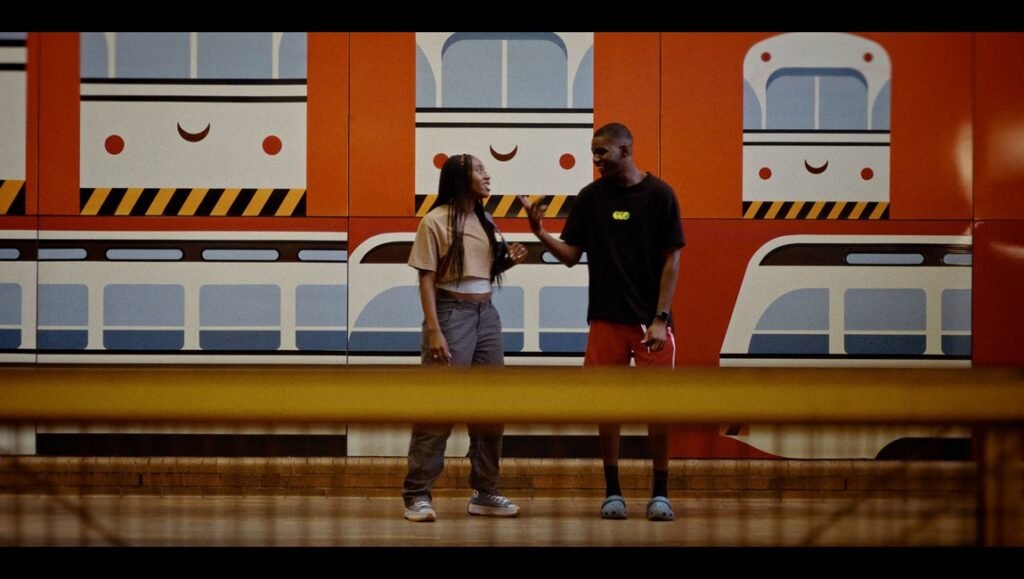
AB: Locations are so crucial to the film. I picked up on Rap’s, but were there any other spaces that were important to you to include?
RD: There are some real Easter Eggs. In the basement scene where they visit Jenaya’s brother at the beginning of the film, that basement is a legendary Toronto studio that belongs to DJ Merciless. He produced one of our classics called “The Northside” by Tara Chase who was in the Kardinal crew, and it’s playing in the background of that scene. Generally, with the locations, it was about showing the physical crossing of the city, showing the journey, the construction, the gentrification — that’s the backdrop of the film.
AB: Gentrification is essentially a character. What is your take on what the film is trying to say about the relationship between artistry, identity, and commerce?
RD: That’s just a common artistic struggle no matter what art you’re making. The whole art/commerce thing has been beaten to death, so I think that’s definitely weighing heavy on [Rome] and that’s the crux of the issue between him and Jenaya, who is the complete opposite. She’s making art for the sake of art. But I didn’t want to go too heavy with it.
There’s this discreet shot of Oak Street; it’s in the middle of Regent Park in downtown Toronto, which is one of the first housing projects in North America. And it’s demolished —half of it is still the old brick buildings and the other side is all condos, and if you catch that shot then you catch it, but if you don’t, it’s okay. It’s not exactly part of the story, but it’s there.
AB: There’s a really interesting character, the South Asian guy who is rejecting Jenaya’s mural proposal and works as a kind of arm of cultural whitewashing and gentrification. He felt like someone taken from life.
RD: The idea was I wanted a person of color there to show that it’s not just white people doing that work. My dad is South Asian, so there’s a lot of racism in India, and South Asian folks — they don’t always get it.
AB: So in your opinion, what is Rome’s deal? He’s a fascinating mix of a guy who seems arrogant, which is perhaps phony confidence, but also cripplingly insecure.
RD: I feel like Rome is taking his time to do all of that work he’s got to do. He’s just not ready yet, he wants to feel ready and he wants the songs to feel finished. He wants to work on his stage presence. He wants to do the thing, but his mind is not ready. What’s happening now is people just put out songs. They just go on stage. They just build fan bases one person at a time. They’re just the opposite side of that approach, you know?
AB: Which is funny because that’s ultimately what Rome learns, right? You never exactly feel ready. You just have to do it.
RD: That’s what I love about the film. Everyone is a little bit right and a little bit wrong in their approach. What I wanted to execute with Boxcutter is: “How do we make a film where the big change, the big moment at the end, is something as simple as an artist starting an Instagram page?” It’s such a small thing, but it’s such a big block.
AB: The willingness to dive into self-promotion.
RD: Yeah. This is the step before the step, before the big show or the album or the record deal, a baby step into vulnerability.
AB: What does Rome’s music sound like?
RD: That’s a good question. People ask because we never hear the music. I always feel like it’s going to be better in your imagination than whatever we’d produce, so we didn’t want to go down that road. And also, the movie is not about the music, so why lean into that? I wanted to make a music movie that’s different, that doesn’t have the scene where you break into a rhyme.
AB: Do you think he’s talented?
RD: I do, yeah. Sometimes in Q&As people will be like, “Yo, we don’t even know if he’s nice,” and people laugh. But I think he’s nice. I would say he’s definitely J. Cole-adjacent. He’s into bars, he’s into thoughtful, emotional shit, but he’s still young so he likes to turn up. That’s why it’s hard for him to share, because it’s so personal.
AB: Do you think he likes Drake?
RD: I think he would like certain things about Drake. Definitely don’t think he would like everything about Drake, but there’s going to be inspiring things about Drake and his music that Rome would relate to, for sure.
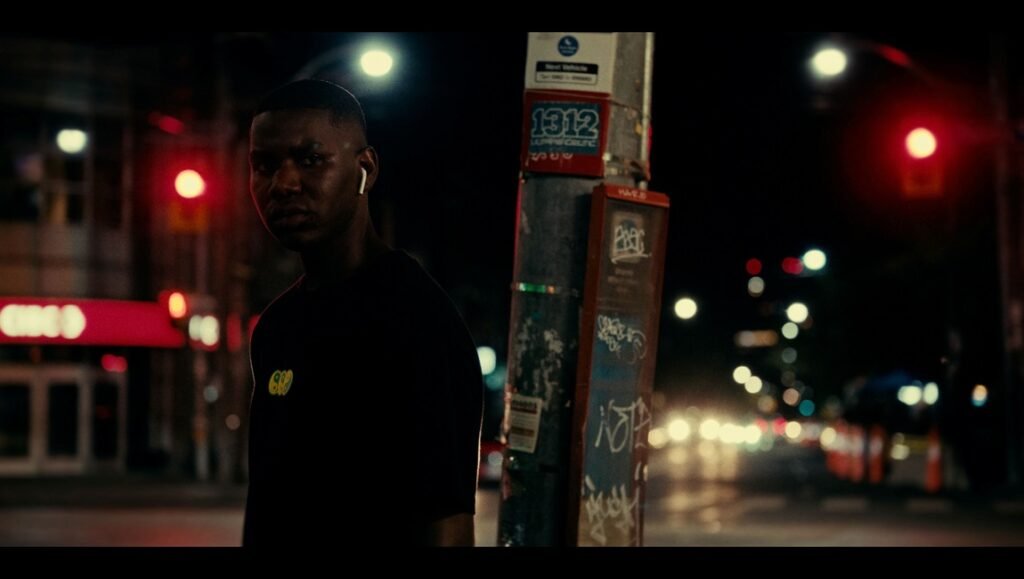
AB: I don’t know if this will actually make the copy, my editor would be well within his right to cut this so you can feel free to pass, but just because I have access to a Toronto hip-hop head I have to ask: where is the city at with Drake at the moment, temperature-wise?
RD: That’s an interesting question. I mean look, there’s a lot of people that have definitely moved away from giving him a pass. I’ve kind of moved on or have kind of cooled the temperature on him, but I would say overall, he’s still our guy. He just popped out at the Vybz Kartel concert and it was crazy. He’s making an appearance on this TV show called The Office Movers, so he’s still our hometown guy.
AB: So I had a completely bizarre experience this morning. We’ve had this conversation on the books for a while, and I’m getting ready, locking the questions while I was listening to a podcast, prominent pop culture podcast, and you came up.
RD: The Bill Simmons thing, yeah bro.
AB: I was like, “Wait, what the fuck is this happening right now?” But I suppose it should’ve occurred to me that when I got an email directly from you, of course you were doing the same thing with many other more prominent people in media. So how does being brought up like that feel? That listenership is insane, and I’m sure many people started asking what the hell is Van Lathan even talking about.
RD: [Laughs] I mean, you know what man, honestly I was just like, “Yo, the one time you could’ve named dropped bro!” You know what I’m saying? Like, if they had just said… But it feels bittersweet man. Putting out an indie film is — that’s the word, bittersweet, because especially a Canadian film, when we released in Canada we had so much love. Obviously, I had a big community there of people that came out to support, and that spreads, but we screened at South by Southwest. We had a week run in New York. We had two screens in L.A., and we could hardly get any press, you know? Like no one cares.
With Van and Sean Fennessey, those are my two guys that I listen to the most as far as podcasts, and I listen to these guys enough to know that they will actually love this film. I know I’m biased obviously, but there are things that they talk about and say where I’m like, we have some of those things in this film. I think they would appreciate it. So I haven’t been emailing them every day, that’s exaggerating, but I did email them a few times.
AB: Did you ever hear back from Van?
RD: No, I haven’t heard back yet, but I do have a few people that know him that have also nudged him, so I’m hustling it. I’m hoping that he responds, and I’ll send him a link or set something up with him.
AB: Well, it’s an unusual approach. How did you hit on it? To personally email press?
RD: With Sean and The Ringer specifically, right from day one I’ve been telling anyone on our team, any PR companies that we work with, these are the guys I’m trying to get to, and frankly no one has really gotten to them. I don’t even know if they’ve tried, because I’m just gonna be honest with you, when PR companies are doing their work, I appreciate them, but I don’t know exactly what they’re doing. Were you ever hit up from a PR company for this?
AB: I will check [Author’s Note: I was, after responding to Rez personally], but I think what got my attention was an email directly from you. I’ve always been impressed and inspired by artists opting for direct engagement. So you decided, “I want to take matters in my own hands. This film is my baby. No one’s gonna fight for it as hard as I am and I might as well just be direct and honest about it”?
RD: Yeah bro, cause it’s fucked up. I’ve been working on the film for seven years, like what am I gonna do? Just sit here and let someone else be like, “Oh sorry man, I couldn’t get any press.” No man, this is my life. This is everything to me, so five years from now or 10 years from now or 20 years from now, I just need to know that I went as hard as I could.
Comments are closed.