
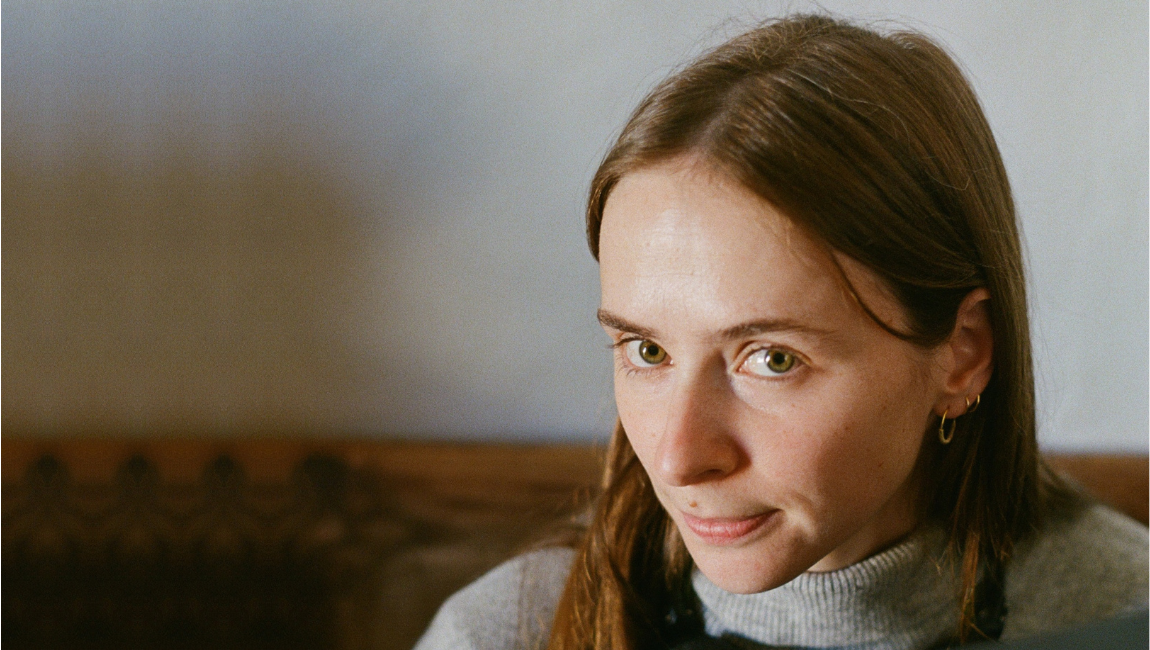
A ghost story doesn’t always have to manifest in slamming doors and falling objects. A possession might not send your body writhing in manic contortions on the floor. In Lucía Aleñar Iglesias’ debut feature Forastera, rather than jumping out, the presence of a ghost and the act of possession unfold in graceful, ambiguous gestures caught in a summer breeze, a crashing wave, and the drape of a dress. After a sudden death, the specters that haunt Cata (Zoe Stein), a teenager vacationing with her younger sister in Mallorca at her aging grandparents’ home, find no match in mythical lore or incantations. Like all truly great ghost stories, the terror and excitement are one and the same, and ultimately inexplicable.
Forastera, Catalan for “foreigner,” is the kind of coming-of-age story that normally gets forgotten about, because it is not interested in answers, and follows no rulebook. The urges of youth are palpable here, but amplified by a subtle provocation: what might happen if someone you lost gradually starts to reappear in the most unexpected, but perhaps most obvious, of places? Like Cata’s ghost, this question haunts Iglesias’ film in measured compositions and a delicate tone.
Ahead of Forastera’s release on May 29, I sat down with Iglesias to talk about directing subtlety, Jonathan Glazer’s Birth, and how to revisit a story after years away.
Chris Cassingham: This is a question I like to start a lot of filmmaker interviews with, especially when place and location are so central to the films. I would love to know about your personal relationship to this part of the world.
Lucía Aleñar Iglesias: Mallorca is an island off the coast of the Spanish peninsula, and my father’s side of the family is from there, so it’s a place I’ve spent pretty much every summer of my childhood. I’ve had a very close relationship to this place because of that, but it’s been a very intermittent one. I was very interested in setting a film in Mallorca, because I think there’s less baggage in this place. It’s very idyllic, and I always thought of it as a place of rest and relaxation, where I could spend time with family, and go to the beach. I found it to be a very interesting contrast for this film about grief to try to set the story in a place that’s so breathtaking, and that I have such fond and beautiful memories in.
There’s so much tourism on the island, but also it’s so rich with cultural traditions that my approach was very much about trying to see it through our protagonist’s eye, through the eye of the forastera, the foreigner. That word in Mallorca is used to refer specifically to the Spaniards that aren’t from Mallorca but visit the island. Even the Spaniards that wind up living there are still forasteros, still foreigners. So I wanted to portray the island through those eyes, through the eyes of a teenager who has a very casual relationship with the place.
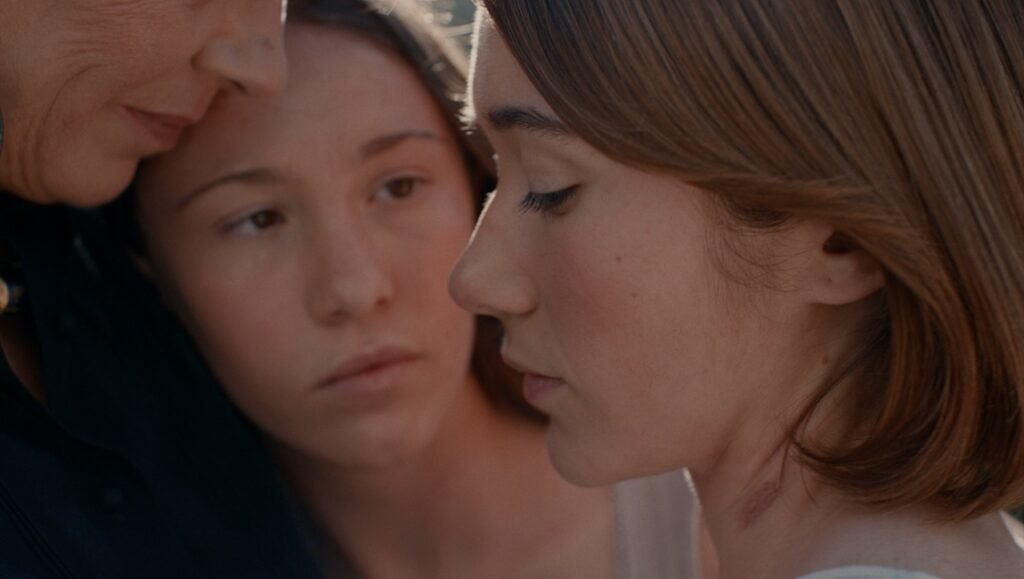
CC: Well, speaking of an intermittent relationship with this place, this feature is an expansion of a short film you made six years ago, so in some ways that intermittent relationship has been documented. I’m curious what about the short film you felt still needed to be explored or expanded upon?
LAI: Yeah, evidently, I took some time to kind of think about what those elements were, right? I felt like there were many things I wanted to continue to explore. For one, I find Cata, the main character, quite interesting, this teenager who’s on the other side of this projection, who is receiving this information. In the short, it’s very clear that the projection is being kind of imposed in a way, and I was interested in giving her more agency in this story, exploring her own curiosity toward her grandmother, and show that her desire to transform and play pretend comes from her first, and what she discovers through that.
I also wanted to open it up. I think the nature of the short is you have to really focus, but I was really interested in how her decisions and her actions affected the rest of the family, especially the grandfather. I think he’s quite different from the short. I was really interested in Tomeu having a greater awareness of the game he’s entering, or the space he’s entering with Cata, that they’re both finding themselves in this moment of grief and of wanting time to stop and that they give each other the space to explore and to get a little bit lost in there.
CC: Tied into that six-year gap are the obvious changes that would have occurred in your lead actor Zoe Stein’s life. You go through a lot of changes in your early 20s, across six years. I’m curious what effect those changes had on the film.
LAI: Completely. I mean, even for myself as well, right? I think neither she nor I were the same people who made the short. Actually, finding each other again six years later was really nice, because it’s like returning to this world but with a renewed, more mature vision, a sense of responsibility. Zoe was already working a lot in her early 20s, but to see her again, and to see how capable and good she is at taking a leading role — directing a first feature is quite scary, but I felt very lucky to have somebody leading that I know, and I trust fully. It made things much, much easier. I don’t want to talk for her as to how she returned to the character, but I think something that we both connect over as artists and collaborators is that we like the unknown, and asking each other more questions rather than having all the answers. It was just fun to dive back in and explore.
CC: You mentioned the sense of agency that you wanted to give Cata, the character. It sounds like maybe the intervening six years might have had something to do with that.
LAI: Probably, yeah. Something that I discovered in the development of this, and that I’ve found very fascinating about these stories, is the strange part of grief of losing someone that creates this new presence, these projections that we make on places and on other people. Playing pretend and diving into a character, I found, reveals more about Cata herself than about Catalina, the grandmother. I think that’s also why I felt like it was only right for this character to dive in for very personal reasons, or that it came from her, you know?
CC: You’d mentioned the sense of the unknown in working with Zoe, and that was something in her character that I immediately held on to when I was watching the film. I would love to get some insight into how — when you’re in the moment on set — how you know whether or not Zoe’s performance is imparting the kind of mystery or ambiguity that you’re after. What are some things you look for?
LAI: That’s interesting. We were very intuitive about it. I think it’s hard to play mystery, right? You can’t really tell someone to be mysterious, so I think we focused a lot on behavior and on building this character as a chameleon, of sorts. It was important to establish that she is sort of like many teenagers, quite moody, but that she behaves very differently depending on who she’s with. And as far as the mysterious or ghostly transformation of hers goes, in rehearsals, we worked with Marta Angelat, the actress who plays the grandmother, Catalina, to establish certain gestures that they could share, but I didn’t want to go beyond that. We didn’t want to make it so mirrored, because, like I was saying, I think this mysterious transformation of Cata’s is more revealing of what’s inside.
CC: I ask this at the risk of you, perhaps, having been asked this a lot already, but I was struck by a lot of surface similarities between your film and Jonathan Glazer’s Birth. I’m curious if that film was a point of inspiration in any way and, if it was, what kinds of things do you do to avoid that inspiration tipping into influence?
LAI: I love that film. I was definitely very inspired by it. I remember pitching this film a lot, and the initial reactions were always very much tied to a sexual nature in the relationship [between Cata and Tomeu], or the possibility of one, and I really wasn’t interested in exploring that. But I was very interested that that’s our reaction. So I think what I was inspired by in that film is how the tone is quite delicate, and there’s ambiguity in the performance and in the handling of these two characters. I’m drawn to the awkwardness of the relationship more so than the darker aspect of it. I think it says more about us as viewers in how we react to the discomfort of the dynamic in my film, but I was very interested in portraying not only the strangeness and awkwardness, but also the tenderness between these two characters that exists in this strange game that they play.
CC: I’m glad you mentioned the delicate mood and tone, because that was another thing I was really taken by. I’m curious what determines your approach in achieving it, because this is a film that could very easily lean into the heavy emotional elements, even the supernatural elements, but you keep everything very level-headed and delicate, as you said.
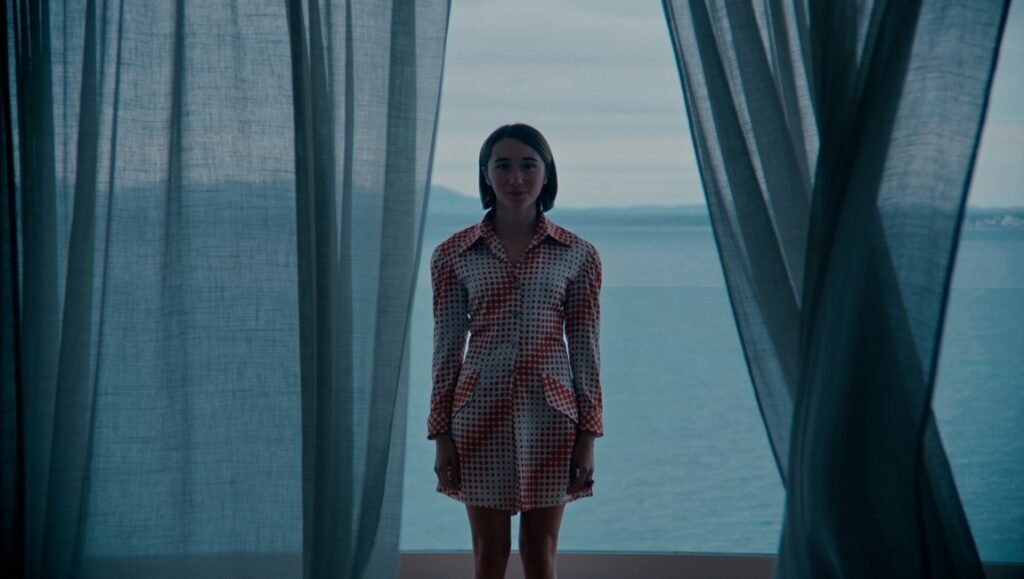
LAI: That’s hard to answer, because I think it’s just a sensibility thing. Part of how this tone came about is also the mise-en-scène, and how we decided to shoot the film. I was very interested in making the house just as much of a character as the rest of the family. Going back to your first question about Mallorca, right, of this idyllic setting, it was about maintaining the idyllic images, but giving them a slightly colder perspective. We were very drawn to the idea of creating postcards, these images that we keep and we hold on to, that are so beautiful, but are also odd and fabricated. I think that the idea of fabrication and playing pretend is also something that informed the tone for me. This looks like the real world, but I almost wanted it to be left-of-center, so everything must follow that tonally.
CC: Can you tell me about — maybe prior to and up to the point of making this film — what your relationship to spirits and ghosts was? I’m curious about the ways in which films, and storytelling in general, give us permission to indulge in these beliefs, even if we don’t necessarily take them seriously in our real lives.
LAI: I have never had a ghostly encounter, and I don’t know if I necessarily believe in ghosts, but I believe that we need them, if that makes sense. And I think that was important for me in portraying and including this ghostly presence in the film. If you want to see it, you will. A lot of the ghostly or glitchy moments — we referred to them in the film as glitches in reality, like the ants, and the cat, to the light that crosses through the house — for me, are there, and the way I think about them in film and in life is that, if you want to see something, if you need to see something, you will. When somebody tells me they’ve had a ghostly presence, I believe them, I understand it.
Comments are closed.