
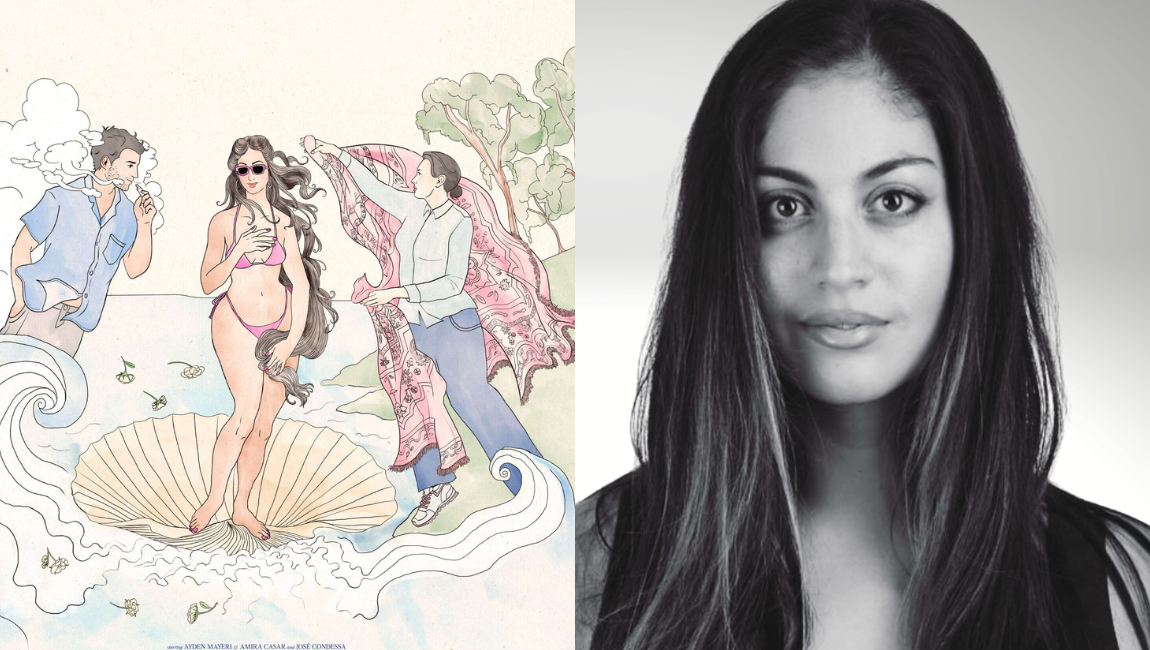
Film festivals can feel like these nebulous, sometimes exploitative, labyrinthine constructs. At their best, however, they should hopefully be a place to foster creation and community. For Lilian T. Mehrel, writer and director of Honeyjoon, a film festival quite literally changed her life.
The recipient of Tribeca’s AT&T Untold Stories grant, Mehrel pitched her story to a panel and was awarded over $1 million to make her dream a reality. Two years later, that story, loosely based on her own life, of an Iranian mother and her American daughter taking a trip to the Azores while in the throes of grief over the family’s patriarch, is now being released in theaters. It’s the best kind of story that can emerge from a film festival, one that highlights the way these places, however flawed, still might have some good left in them.
When it comes to Mehrehl, though, one gets the sense that her tenacity and talent would have emerged in some form, grant or otherwise. Taking a well-traveled story about grief and the ways we process it, Honeyjoon stands out in many ways. It looks tremendous, shot on three different cameras with real thought put into its framing, a rarity in modern comedies. Its leads have wonderful mother/daughter chemistry, the great Amira Casar playing the former, Lela, and the very funny Ayden Mayeri as the latter, June. It’s very funny, the contrast between Lela and June’s vacation built around honoring the husband and father they lost, leaving all of the happy couples honeymooning to generate some great moments of comedy. More than anything, though, it’s an honest glimpse into the weird ways we try to engage with our bodies while in grief and the messy, often horny avenues they take us down. Mehrel threads a delicate needle, making a film that’s both very funny and very sensual. Both women experience pleasure in different ways, and it’s refreshing how little the film holds back in that regard. It’s one of the very few accurate portrayals of how our bodies can hold all of these conflicting feelings and how those manifest, often all at once.
Ahead of her beautiful debut feature hitting theaters, Mehrel and I sat down to discuss finding pleasure through grief, making comedies cinematic, and how a film festival can change your life. We begin just after she’s been a part of a jury that awarded a new filmmaker the exact grant that changed her life just a few years ago.
Brandon Streussnig: Before we start, I just saw that you’re on the same Tribeca jury as my friend, Isabel Sandoval. Can you tell me a bit about that?
Lilian T. Mehrel: Yeah, we literally just awarded a filmmaker with the same $1.2 million grant that I won.
BS: Wow, full circle! That’s incredible.
LTM: Yeah! Isabel and I had very similar thoughts. It was nice, we were like this [crosses fingers].
BS: Incredible, she’s a real one. I think this is a good place to start because while I don’t think your work is similar to hers, not really, I do appreciate that you’re both so committed to real, honest sensuality. In Honeyjoon, we don’t just see it through June’s eyes, we also get to see it through her mother’s. It’s refreshing. What made you want to focus on that?
LTM: I love that question. It makes me think about how, when we talk about this film, we might say it’s a film about grief, but that also means it’s very much a film about life. It’s about living with grief and figuring out how to live and how to be alive when not everyone you love is here and when bad things happen in life and grappling with that. When I think about sensuality, I think about what is more alive than being in your body and being embodied and sensing, sensually experiencing the world? It’s something that makes me think about the yin-yang throughout this film. You see it in the visuals, in the themes, in the characters. June, being on the light side of how she tries to cope with her grief, is running toward whatever feels good, trying to feel alive again and feel pleasure. Whether it’s these simple pleasures of candy or eye candy or flirting or whatever — just physical pleasure in the body is trying to feel good through those things.
Then there’s a different kind of sensuality in being in your body in grief, of crying or feeling it in your body, and feeling the ache in your heart. Everyone alive, we have one thing in common. We all have a body. There’s something about grounding us in our senses, which is kind of funny to do in cinema because we can’t feel them, and we can’t smell them, and all of that. But if we can get that feeling, maybe it makes it a little better. Maybe that’s why I also love making people laugh, these bursts of laughter, and then we get quiet and emotional together and ride those waves of light and dark, like the themes of the film. Because then the themes of the film, they’re not just ideas, they’re in their bodies. It’s like this whole full-embodied experience.
BS: To that point, you’ve cast the great Amira Casar as Lela, June’s mother. She’s an astonishing actress and such a full-bodied performer. Here, though, you have her so removed from herself. It’s like she’s floating inside of her body, and then that builds and builds into a release.
LTM: I also love that you noticed that. There’s also something I really love about her costumes in the film. She’s drowning in her husband’s clothes, these baggy men’s clothes, and it’s very stiff. There’s a jacket tied around her, and it’s all very covered up. I think as an actress, she’s so powerful. She was able to craft this character with me, who is vulnerable and frail in her grief, but also powerful. These little moments when she decides to go in the water or things like that, it’s like she just feels like a force of nature. Casting her was this magical thing.
When I won the award, I had under a year to make the film. All I had was my script. I had no cast, nothing. I was just like, “All right. I have to get going. How am I going to find her? How am I going to find both of them?” I had many specific things I wanted for them, their backgrounds. I wanted both of them to be able to hold humor and emotion and just be so natural. I was watching this movie with my cinematographer as a visual reference the whole time I was casting, and the movie was Call Me by Your Name. I’m like, “Where am I going to find the mom in Honeyjoon?” Then Timothée Chalamet’s mom walks into the frame. It was just too perfect. When I got her video from my casting director, she said, “Hi, Lillian,” and I was like, “She had me at hello. It’s her.” I just knew it. She was amazing. My whole cast is amazing.
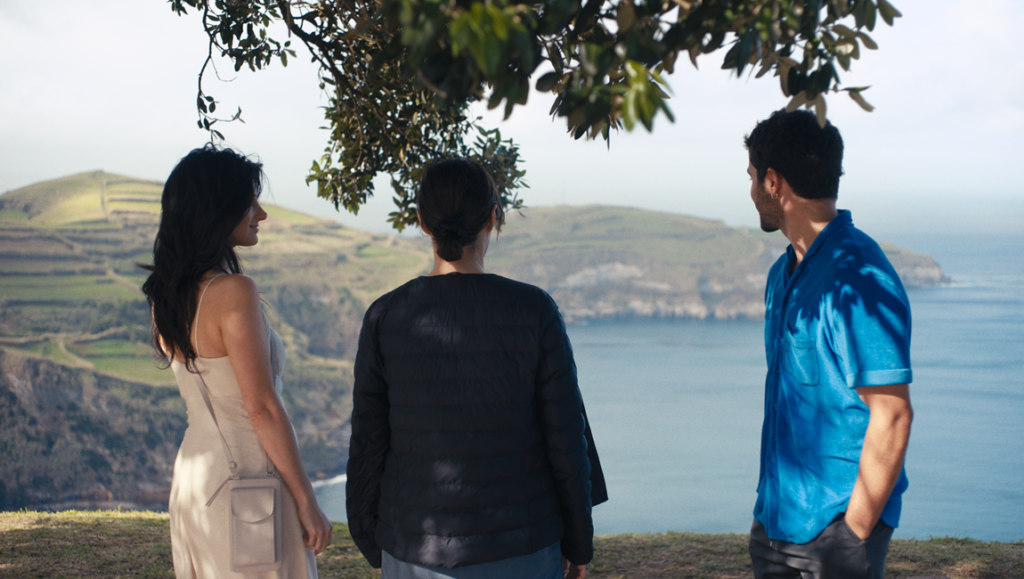
BS: Ayden, especially. Which makes me think about the personal, because I guess in some small way, she’s kind of playing you. I know this is based on your life to a degree but largely fictitious, but how did you approach that?
LTM: It’s coming from a personal place in two different ways. One is just like the things that inspire me as a director, as a storyteller, these tonal balances. I say my thing as a director is the holy trifecta of dark comedy, layered emotion, and stunning cinema. Whenever those three combine, I’m like, “Oh, that’s me.” Whenever I see an opportunity for that, those elements of a story, they’re like magnets, and they come toward me. On the one hand, I’m just inspired by anything that feels like that in life. Then, on the other hand, this film was inspired by real grief and a real trip to this island.
When I went to this island, I wasn’t planning on making a film or anything. I just went there to try to prove to myself and my mom that life could still be beautiful, and I just was like, “What’s a beautiful place in the world?” I found the Azores. I’d never been there. It sounded magical, and so I went there. I was so struck by how beautiful it was and how there was this inherent comedy of contrast, which is here we are in paradise, and we’re grieving. There’s something darkly funny about that. The sun is shining, and everyone else is happy. Then I started imagining being surrounded by happy honeymooners, and you’re just this odd couple, but you’re not that. The fact that you’re not that is just underlined even harder.
So, yes, it came from a very personal question, which is just me grappling with life and being like, “After you lose someone you love, can life still be beautiful?” Trying to find the beauty in being alive with all that it holds. Being like, “Okay. Well, we’re alive, so that’s something.” That’s pretty deep and personal, but then also just the way I see life as a storyteller and the things that excite me and the things I want to do with audiences and make them laugh and make them feel. People sometimes think comedy can’t be beautiful and cinematic, but I remember when I first saw the film Force Majeure, I felt so seen. I was like, “Oh, it can be cinematic and poetic and this formalistic kind of minimalism and still feel like real people in our absurdities and make me laugh and make me feel stuff.”
BS: Is there ever an impulse on set to tell Ayden to do something more true to how maybe you’d done it in your life? Do you have to push back against that at all?
LTM: It’s a great question. From the beginning, when I was writing it, there were moments when it just felt thematically right, but I had never experienced it. I was kind of like, “Where did this come from?” I don’t know. You’re in the writing flow, things just come. I’m very thematically driven, but it’s also kind of a joke to say that because it’s like, “Yes, I have a mom. Yes, we went to this island. Yes, I am around June’s age. Yeah, we kind of have the same hair.” But all that aside, I’ve been making short films for a while, and some of my short films, I made one about a whale or a guy from Puerto Rico. It’s not me, but you put your soul or the things you’re feeling into the characters, no matter what.
In this one, it’s harder to prove to everyone that there was no hot tour guide, nothing happened. The emotional truth is what’s real. It’s not like the details of every little thing that happened. To your question, I never had to be like, “Oh, this is how I did it in real life, but let’s do it differently in the movie.” The movie already had the life of its own in the script, where it was like, “This is what feels like… This is surfing the light and dark waves of life. This is the yin-yang. This is why June, who’s chasing the light, and Lela, who’s in the dark, this is when they’re going to cross places.” I was kind of there. Mostly. Maybe my work has to just be convincing audiences that it’s not me.
BS: Going back to wanting to make this cinematic, I feel like there’s this tendency [to think], like you said, that comedy doesn’t need to look good. I appreciate how much you use your frame and experiment with different cameras. It’s a beautiful film.
LTM: It makes me so happy to hear you say that and to talk about this stuff. I’m a super, super visual storyteller. I kind of think we all start that way because we all start reading children’s books, and they’re illustrated, and the world is visual. When I’m writing, I’m already picturing things. What I loved too was collaborating with my cinematographer. Her name is Inés Gowland, and she’s from Argentina. She brings a different sensibility. She also really loves humor and emotional blends, and that’s rare to find. For a DP to get that there can be comedy in a beautiful shot, that it can be both poetic and funny. I love that.
There is something to me about seeing these characters small in the landscape, these tiny little characters in a vast landscape that feels both poetic, like we’re all these little humans in the big world, but also funny, like we’re these little characters on a chess board. We’re human and pathetic and funny and beautiful. Seeing them from a distance, I think that you can find humor in that.
We shot with three cameras, and each of those cameras brings something different to the table. I shot with Super 8 film, and that’s the memory and the dad’s trip. I shot with an iPhone because that’s what it feels like when you’re on a trip, and we can kind of be in the characters’ POVs. Then we shot with the ARRI ALEXA 35. There’s a playfulness that I could have because of that and because of having an actual iPhone to shoot with. It was souped up, but it was an iPhone. I got to do things like take it on a whale-watching boat, literally me and the actors.
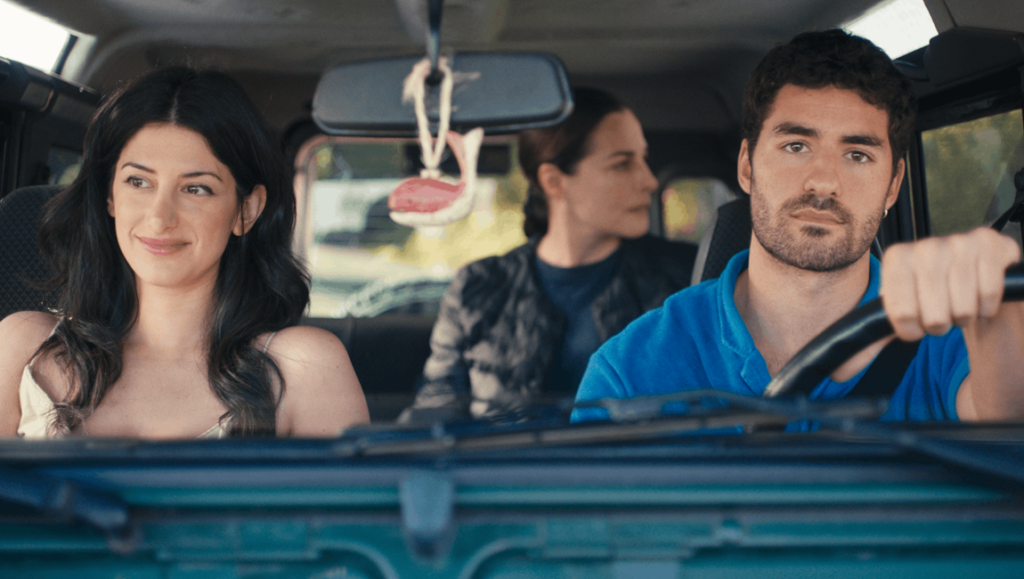
BS: I really appreciate that there’s such a political throughline to this film. It’s interesting because Lela keeps commenting on the women’s movement being quashed in Iran, while having no sense of how her own rhetoric toward how Ayden dresses is very similar to that. You really convey what it’s like to have progressive-minded parents, but ones who have maybe calcified in a moment in time, and now you have to move them forward. It’s very universal, I think.
LTM: I really love the way that you articulated it because you’re seeing this very modern experience, or maybe even a classic timeless experience of trying to get your parents to see the perspective that you have, which is always a little bit further along in some way progressively. It’s like there is this spirit through the film that is reflected in the actual movement that they’re talking about, which is Woman, Life, Freedom. I remember when I first heard the name of the movement, I felt so proud that these are my people, Kurdish women starting this in Iran to be free. What an incredible name for a movement. It just says it all. It’s poetry. This is the land of poetry and Persian cinema. Of course, the name of this movement is Woman, Life, Freedom. It’s everything. If you take those three words, you could also say that’s what Honeyjoon is about, too.
Inherent in that, you have these women, they’re dealing with being alive and dealing with life with grief and freedom. When it comes to the freedom part, I think it’s all connected to this perspective they have about life, which is we’re alive and that’s something special. That’s precious. Not everyone who wants to be alive is right now. They lost the father and the husband, and they know that to be alive means something, and June is like, “So let’s live. Let’s live fully, and what does it mean to live fully?” Like we were talking about with the beginning of sensuality, “Let me experience the pleasure of being alive. Let me be free because we are here, we’re doing it. Why should we oppress ourselves in any way when other people are already trying to do that? We’re against that. We’re trying to get away from that. Let’s honor being alive.” It’s this connection between the perspective of being alive. At the end of the day, people sometimes forget that women’s rights are human rights.
We’re all human. Every single person wants to feel free and feel good and feel good in their body and be allowed to live their life. Everybody wants that. One of the things that actually makes me super happy about this film and sharing it with audiences is that thankfully, even though there are some elements on the surface that someone might think, ” Oh, I’m not from that country or I’m not that gender or whatever, maybe that’s not for me,” I’ve found that audiences from every culture, every gender, every age will laugh, will cry, will come up to me and be like, “I loved it. It felt like me. I felt so embarrassed. How did you read my mind?” Things like that. It’s like, that makes me so happy that people can see beyond what it seems like it’s about on the surface and see what it’s really about, sharing that inside joke of being human and all the things we feel and want and our desires and our pain and our bodies and our funny and emotional body releases.
BS: I want to circle back to what we were talking about in the beginning. You won a grant at Tribeca to make this film, and now, a year later, you’ve awarded someone with that same grant. That’s so special. Can you talk about that grant a bit? I think film festivals, grants, and juries can be a little confusing to people, with regard to how they work.
LTM: For sure. This is a very magical and unique scenario. I won the Tribeca AT&T Untold Stories Award. I pitched my film in front of hundreds of people and a panel of celebrity judges, and I won this award that allowed me to make the film. I had to make it in under a year to have the chance to premiere at Tribeca. We got into Tribeca in competition. We premiered at Tribeca in June 2025. From that day till now, which is one year, I have shown the film at 40+ film festivals.
We’ve won all these audience awards and jury awards and all this stuff I never imagined. It’s like you just make the movie, you don’t know what’s going to happen. Most of all, I got to go to a lot of the film festivals, which is such a gift because I sit in the back of the audience and I feel them laugh and I feel them get emotional and just go through all the waves together, and there’s an energy in the room. Then afterwards, I get to talk to people, and hear from everyone about what they loved and what they connected to, and feeling the electricity in the room taught me about the movie. It taught me what it’s really about.
I noticed when people would laugh at João’s (José Condessa) surfer lines. I was like, “Oh, the surfer lines explain that it’s about surfing the light and dark waves of life, duh.” They teach me about the movie. I learned so much, and it also taught me that this movie has to go to theaters because it’s this shared experience. When you are laughing or feeling something, and you look around, and all these strangers from all walks of life are feeling it too, it makes you feel connected. I was just dreaming up our theatrical release, and in indie film right now, it’s not a given. And now, we open on June 10.
BS: Honeyjoon in June! Incredible.
LTM: Listen to this timeline: June 2023, I was on the island on that trip. June 2024, I pitched the film. June 2025, I premiered the film. June 2026, it comes out in theaters.
Comments are closed.