
Summer camp is a pivotal moment for many a young person. Attendee or counselor, it’s a time away from parents and responsibilities, which allows a young mind to open up. Transformation can occur over those long, hazy summer days. For Emily (Zola Grimmer), a girl in the throes of grief after the overdose death of her best friend, summer camp is going to change her life forever.
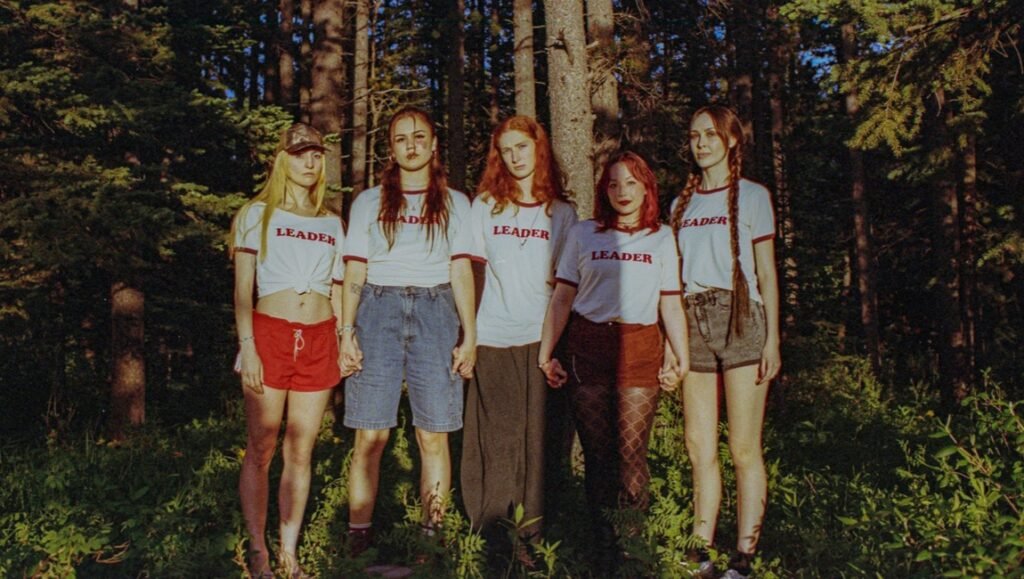
CAMP, the second feature from Avalon Fast, is a stunning, beguiling film. As Emily falls in with a coven of witchy girls, her duties as camp counselor fall away. In their stead, a journey of self-discovery and catharsis wraps itself around her. The children in her and the coven’s care come and go, and the pull of the woods grows tighter. What’s so stunning about Fast’s film is that in different — dare I say less interesting — hands, Emily’s descent would be depicted as exactly that: a descent. Here, it’s a judgment-free, profoundly loving odyssey of sensuality, friendship, and real care. Fast isn’t interested in whether Emily’s interest in “the dark side” is a corrupting agent. Maybe that’s what she needs, and even if it weren’t, who are we to say? Grief and moving on are singular experiences despite what some might have you believe. We can only accept what we’re able and how we process it is our own trip.
It’s a deeply moving and complex thing to watch a film that takes the POV of grief and presents its captive’s journey as falling in with “the wrong people.” Watching CAMP allows you to rewire your sense of biases and contradictions. It’s a brilliant subversion of the “it’s about trauma” cliche and, in turn, one of the best films about the subject in recent memory. Beyond the thematic weight, the film is a visual stunner as well. Animated accents highlight the sky and backgrounds. Views from windows are hypnotic vistas to lose yourself in. The score lulls you into a daze that you never want to come out of. It’s thrilling stuff.
As CAMP hits theaters, Fast and I met up for a lovely, winding conversation about their excellent new film, the community of filmmakers that’s built up around them, why going down a “dark path” is ok, their next feature, and so much more.
Brandon Streussnig: Something that stands out to me every time I watch this is how different the opening of the film feels from the rest. Can you talk to me a little about that? It’s so striking.
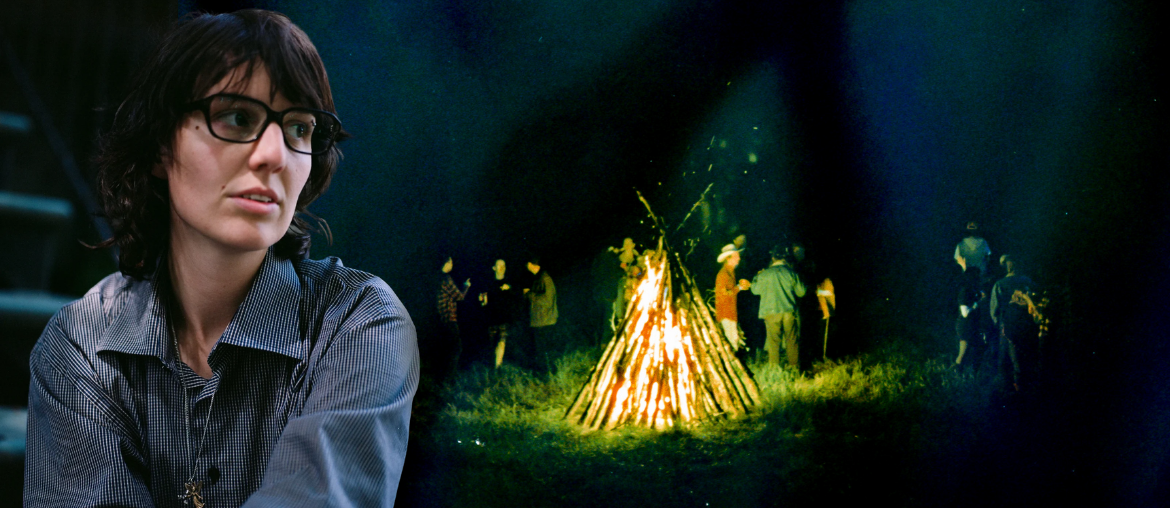
Avalon Fast: It’s interesting, because that opening sequence, everything from the angel and the TV into that party, I had just my hands all over it. It was before we actually got funded to make the rest of the film. It was a test piece. I think there are a couple of things that happened there, but it’s my favorite part of the film, or at least one of them. It’s my favorite part of the film, aesthetically. This is because of a couple of things. One, the fact that we didn’t have our entire crew yet, so my hands literally were all over it, and it ended up being all of these choices that I would make from set dec to costuming, to even the extras that we had there, are all of my friends. We also shot it where I grew up. It was just very connected to who I am as an artist. We also only had three days to shoot that.
Then, for the rest of the film, every day we’re in a new location, or we’re doing something different, and I felt like it went a lot faster, and you kind of just roll with what’s happening. But that just felt so slow. I would love to be able to make a movie where I spent that much time on every scene.
BS: The approach to grief feels so honest here. I imagine that came from somewhere personal.
AF: Yeah. I lost a very close friend, but more like a sister, in the summer of 2021. I would have started writing it a month after that. I don’t think I started with the intention of having it connected to that, but it was just so all-consuming in my world that it became that over time. I was working on the script for three years.
BS: What draws you to these communities of removed women? It’s been fun watching that sort of evolve from Honeycomb to CAMP.
AF: I was thinking about that recently. I don’t know if you’ve seen the Castration Movies.
BS: Oh, yeah. I need to see two, but I love the first one.
AF: Okay, I was going to say, because part two is also about this underground cult of women that’s very removed from society. I hadn’t thought about the deepest connection to Honeycomb there, where it’s coming up with different rules and how you’re going to live your life. I don’t know. I don’t know what draws me to that. I guess it’s maybe a fantasy or something that I could do something like that, or that could be how we would fix some of the societal things that bother me all the time.
BS: You mentioned Castration Movie, and it’s been so cool to see this community of people making films in each other’s circles. Between you and Louise [Weard] and Alice [Maio Macay] and Jane [Schoenbrun], it’s thrilling. What’s that like for you?
AF: I think it’s so organic. It’s really come to a head in the last year, with this interconnectedness. It was just making friends, really. I think the baseline is just that. I met Alice shortly after I became close with Louise. We met here in New York. She just reached out to me. I hadn’t seen any of her work, and I don’t know if she’d seen any of mine, but I think we both knew we were in this together. Then it’s been just a gradual build of finding the people in this that feel similarly, or what we’re all working on right now.
BS: It’s like you’re all creating this universe of sorts. Not narratively or anything like that, but just these new languages of filmmaking.
AF: Yeah, totally. I mean, it’s such a blessing to not be lonely in this. Because at the beginning of this, for me, it definitely felt that way. I think as I go into making new movies in the future, I just want to keep doing that. Louise and I were just in Europe together for Cannes for Camp Miasma. We’re always talking about making movies, and literally, as we’re there, we’re making this really ridiculous movie called Pamela Sloan. It’s just her recording me as a failed filmmaker. Then we got to talking about the next thing that I was going to be working on, or the next thing that she’s going to be working on, we’re definitely going to have a hand in that together. It’s like, “Oh wow, every time I go forward and make a movie, now I have the support system of people that I really trust that can be on all edges of it.”
Getting really close with actors in this community, close with the other filmmakers, cinematographers, producers, and people that I actually trust — it’s a vision of the future that doesn’t feel as dismal as I think that I thought it would be in the beginning. Or even some of the ways that it felt making CAMP, where I’m going into this with a group of people that I don’t know, and I don’t trust yet, and what a weird process to figure out while you’re making a movie: “Do I trust these people?”
BS: Speaking of that trust, you’re kind of touching on something about the film that I love. It almost feels like you’re watching from her grief’s perspective. There’s this beautiful thing you do where it seems like, on the surface, that Emily is being led down a dark path by her new friends, but the reality is that’s her grief’s POV of not wanting her to let go. It’s a brilliant way to convey that.
AF: I read this review. I’m addicted to reading Letterboxd reviews right now, which is horrible. It’s something Alice and I talk about a lot. She’s like, “Get off of there.” And I’m like, “I can’t. I can’t right now, because it’s so fun.” [laughs]
But I read this one where it was like, this movie wants you to think that these girls are good people and they’re not. I was like, “Whoa, this movie does not want you to think that at all.” I’m like, “I don’t know if they are.” I think that’s the thing, in my own life, you meet people who are so attractive and magnetizing. It can feel like a new world being created. I mean, it’s happening right now, but you’re still like, “Can I trust these people? Is this a world that I want to be in?” I think that’s the question. I don’t think there’s necessarily an answer. Is that a dark path that she’s going down? I don’t know, but it’s okay if it is, right?
BS: I mean, it reminded me a ton of my own experiences with my childhood friends. The guilt I felt pulling away from them when they were going down paths that I didn’t think I could. There were a lot of drugs for all of us, but then you hit a point where it’s like “I can’t do this anymore.” I’m sure to them, though, my dark path was largely abandoning them for new friends. I think about it all the time.
AF: It’s almost like the world she’s coming from is more wholesome, too. There’s still weird shit happening, but she’s entering a world that is going to potentially, and even right in front of her, cause death. Right? I think that was the original idea. Instead of removing your guilt by healing through it and becoming a better person, it was to give in, “Oh, maybe I am evil. Okay, I’m going to be evil. I don’t have to worry about feeling guilty anymore, because I’ve just accepted it now.”
In the beginning, when she says, “Oh, I think I’m cursed,” it’s just an affirmation — “Okay, clearly I am. How have I ended up here in this situation?” Then, giving in to it, I think it’s interesting. I think that’s an interesting exploration of life, too — to just let it take you where it’s going to go. I have no judgment of that.
My next film, Drinking and Driving, sounds similar to how you grew up. It was this idea that if my best friend and I, who made it with me, Jillian [Frank,] if we were 17 years old and then we just never learned anything else from that point on and stayed in the place we’d grown up, what our lives would look like. The movie’s pretty bleak in a similar way to CAMP, but it’s also like, “That’s okay.”
BS: It is bleak, but there’s also so much catharsis. It’s also so funny. I love that there’s just this running thing where the girls keep pointing out how much they’re ignoring the kids. Speaking to that, as an independent production, there are a lot of child actors. How the hell did you pull that off?
AF: It was stressful. [laughs]
I mean, my producer, Taylor Nodrick, he’s from Calgary, Alberta, and he pulled things together. We didn’t have a lot of money. The production value that he was able to pull off by being a really well-respected and trusted person in that industry for 10 years, working in different departments, he was able to pull off these stunts, rain towers, the amount of extras we had, all the kids, all these things that, with the budget we had, just do not make sense.
BS: I also like how you sort of subvert who the victims of this coven are and why. Here, it’s the male counselor’s virginity being taken.
AF: I remember in the original script, JB is the one who’s sacrificed at the end, so they’re carrying his body out. That was the plan; they’re going to sacrifice him. Then I thought, “This feels like a transgressive thing to do, but is it really?” This is the end of a lot of films. “Okay, burn the boys. Kill the boys.” I get that, and I think it’s cool, but it’s also like, there’s no way in my mind when I really thought about it, that burning JB’s body, sacrificing him, would give them that kind of power. They have to sacrifice somebody way more meaningful and influential in their world to obtain the amount of power that they do, to levitate and ascend into the sky.
BS: I’m so taken by the look of this film, too. The backgrounds in the window and the animation in the sky. How did you come to that decision?
AF: Sofiya Iurkevych did that. She’s an amazing artist from Alberta. She just clicked with my vision so quickly, and it’s something I’ve always wanted to do in a film. I love mixed media in that way.
BS: Then you have the sequence that’s entirely animated.
AF: That actually came later. It was a way to tie some things together in the edit that weren’t working. But what a cool idea in the end to actually have a full segment animated. It’s now one of my favorite parts. I think we always had that vision in mind. When we didn’t get those shots, it was like, “Okay, well, we have this great animator, and I’m sure she could do something like this,” and yeah, I feel like it ties so well. You still feel you’re at camp in those moments.
BS: When you’re a kid, everything feels so heightened anyhow.
AF: Yeah, I was going to say, that’s how everything looked to me, then.
BS: Even the way this is shot, you have these great perspective shifts. The kids feel tiny, the adults feel gigantic.
AF: That’s all from the cinematographer, Eily Sprungman. A lot of those things… it’s not my brain. It’s all hers. It’s super cool. Again, another person who I just artistically click with so heavily. Same with Max [Robin], who does the music.
BS: The music is genuinely so magical.
AF: I think that’s the biggest scam of being a director. I suddenly get to take credit for all of these people’s genius, you know? But I also think that’s what makes a good director: finding people who are geniuses of their craft, and then hiring them.
BS: Speaking of, how did you find Zola Grimmer? She’s incredible in this, and it’s her first movie.
AF: Just online, but it was crazy because we put out just a general call. Not North America, just in Canada, but she ended up being from a town 30 minutes from mine. She was just living there. She’s from China, but she was going between New York and Courtney, which is very close to where I grew up. So she’d actually auditioned beside a window that had trees and mountains in the background that I recognized, and I was like, “This is weird.” I don’t know if she had read a segment of the script and maybe set it up that way intentionally, but whatever it was, it totally worked.
BS: That’s kind of magical, which is totally in line with the film. Did set ever feel that way for you? I mean, you’re basically creating a summer camp of your own.
AF: Yeah, absolutely. I have a really great memory of one of our locations. We had to walk 20 minutes to get there through the forest, and the grips and the gaffers had set up lights to light the path to get there, but I hadn’t seen that before because we hadn’t done a night shoot out there yet. I’m walking there with my producer, Taylor, and we’re having this pretty stressful conversation about producing stuff and kind of background stuff.
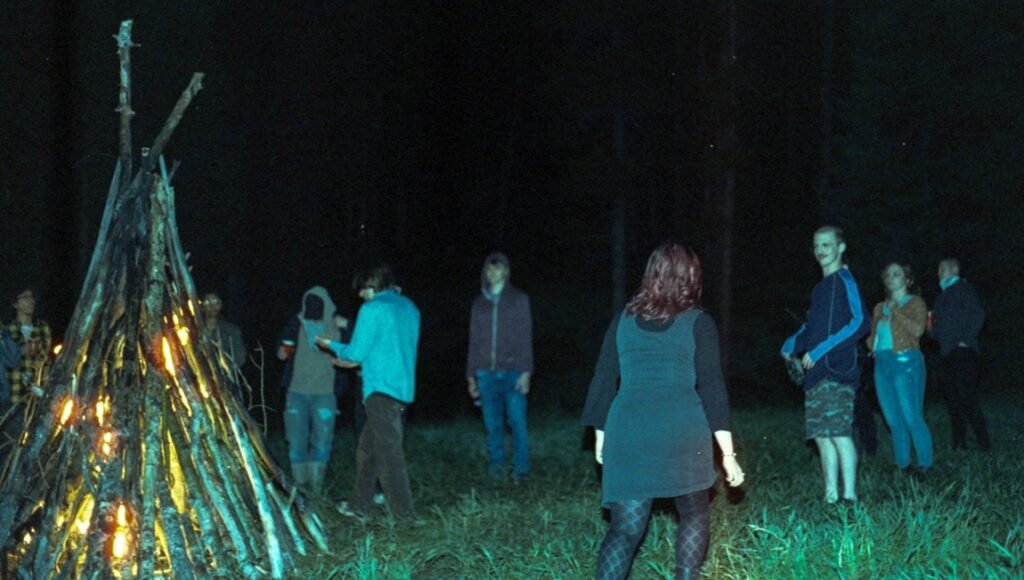
Somebody had gone and done a Tim Horton’s run and gotten good coffee, not just the crafty stuff. So they’d had all these special coffee drinks waiting for us at the set, and the set was like our campfire. It was real fire, so we just had a campfire going, and all the crew and all the cast that were there that day were just sitting around the fire, waiting for us to get there. They all had their coffees, and we took about 20 minutes just sharing stories around the campfire, really naturally. It was a cool moment.
BS: I always try to do a cursory glance at other interviews so as not to step on too many questions you’ve answered already. A running theme in those is people comparing this to The Craft. I’ll be honest, I’d only seen that in the last few years, and it was kind of disappointing. It’s certainly not queer enough.
AF: Yeah, no, totally. When people compare CAMP to The Craft, I’m like, “What the fuck?” Because, to me, I’m just going to be honest, on the most shallow level, sure. Everything else, I’m like those girls are mean to each other. Yes, there are four women in a film, and there’s witchcraft, right? But it’s so superficial.
BS: What I love, too, is that in this film’s queerness, there’s never a moment where you’re didactic or stopping to talk about identity. These girls simply are who they are. Is that a conscious decision?
AF: Yeah, it’s annoying to me that it it feels in films it has to be commented on in this way, where either it’s like a guilty thing or you have a secret, or you’re confessing to somebody in a way that isn’t just, “Oh, I have a crush or I have these feelings, or I feel this way about myself.” I think it’s cool to just let people exist in a space, too, without having to label it. It’s similar, and I’ve had a bit of trouble actually with some programming teams with Drinking and Driving, assuming that it isn’t queer because it’s never specifically mentioned. Which I find crazy, because for me there’s something very small-town queer about both of the films. We didn’t have the words for it in a way. It wasn’t really a conversation. It was just like, that’s how it was. So yeah, I think it’s been intentional. I never wanted her to have to be like, “Wait, I’m gay.” You know? Somebody being like, “When did you come out?”
BS: Before we started, we were talking about Alice and The Serpent’s Skin. You’re incredible in that. Is acting something you want to do more of?
AF: Absolutely. I find doing a film, acting in somebody else’s film, is such a break from how this usually feels for me. I’ve been asked before if I had any kind of hands-on role in The Serpent’s Skin, and the answer is: not at all. I’m not commenting, I’m not directing. There’s no presence there behind the screen. I really like to just go into a friend’s film and just act.
It’s the same when I act in Castration Movie. I have no say, you know? It’s completely up to Louise, and then I’m going to do whatever she tells me, which is really fun when you’re so constantly in the directing mindset, to be able to just let it go and be guided by other really talented people. I want to do that right now. My personality shifts at times, and right now I’m in a space where I’m like, I would love for somebody to guide me and give me a role and be like, “Come do this thing.”
Comments are closed.