
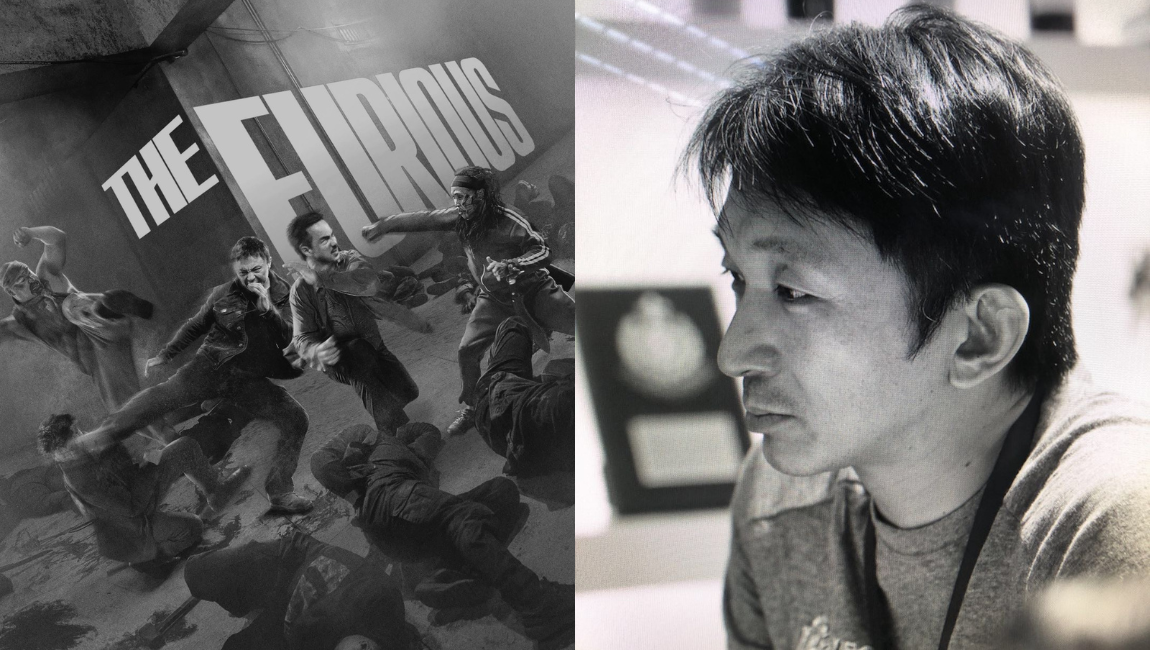
For over a decade, many cinephiles’ one touchpoint for the high watermark in martial arts cinema has been The Raid. It’s for good reason. Gareth Evans’ brutal fight film introduced the world to Indonesian superstars Iko Uwais, Joe Taslim, and Yayan Ruhian and their brand of wicked martial arts. It would be hard to argue with someone if they told you The Raid closed the book on martial arts cinema. Not impossible, however. You see, in that time, two heavyweights of the industry have been continuously rewriting what these films could look like.
Kenji Tanigaki, a veteran of the industry for 30 years, has left his fingerprint all over some of the best martial arts films ever made. Through a long-time collaboration with Donnie Yen, the Japanese director and choreographer has found a way to blend brutal Hong Kong action filmmaking with the fluidity and grace of Japanese martial arts. SPL, Flash Point, Ruroni Kenshin — you name it, and Tanigaki’s steady hand is all over the ever-changing action landscape. Elsewhere, choreographer Kensuke Sonomura has hit the world like a lightning bolt. Through his direction on Ghost Killer and Hydra or his choreography on the Baby Assassins series, Sonomura’s style is like watching somebody discovering fire. The way he contorts bodies into a singular, moving organism is brain-breaking. You’d think there’d be nowhere left to go with martial arts, but each new Sonomura project beams a new vision from some other universe. The Furious brings these two titans together, Tanigaki as director and Sonomura as choreographer, under one insane umbrella. With producer Bill Kong, of Crouching Tiger, Hidden Dragon fame, approaching them with one objective —“Make the ultimate martial arts film” — the two rewrote the rules and set fire to what you thought bodies could do.
After a man’s (a mute Xie Miao) daughter is kidnapped, he must team up with a citizen journalist (Joe Taslim) to find her and take down a child trafficking ring. Boilerplate plot, sure, but where The Furious heads is into territory that even the most jaded fight fan will drop their jaw for. Rounding out the cast are fight legends like Yayan Ruhian and Brian Le, as well as Japanese rising star Joey Iwanaga. The five men, alongside countless extras, and through Tanigaki and Sonomura’s supreme choreography, unleash a swirling of bodies that’s unlike anything you’ve ever seen. Fights will fold and spill into others, sparring partners will roll off of one combatant and into the fists or feet of another, and bodies stack on top of each other like a living mass. It’s astonishing, and as soon as you catch your breath, The Furious has you on the run again, into something even wilder than the what came before. It’s the kind of martial arts film that generation after generation will show to their friends, the same way those before went wild for Jackie Chan vs. Benny the Jet in Wheels on Meals. It’s rare to know you’re watching a classic as it unfolds, but The Furious is one such film.
Ahead of its release, I sat down with director Kenji Tanigaki to discuss how he’s managed to evolve over and over again, the desire to be remembered, and how he tells stories within his fights. [Spoilers follow]
Kenji Tanigaki: Have you seen the film?
Brandon Streussnig: I have! I’ve seen it twice now.
KT: Wow! Twice! At home or in a theater?
BS: Once in a theater and once at home with a screening link.
KT: I wonder, what is that experience like, watching it at home? Does it still work? I hope people watch this with a crowd or at least a friend. Someone they can shout with.
BS: Oh, yes. I don’t think you have anything to worry about. This is very much a crowd movie, though, and I’m very excited to see it again with a full audience. I’ll say this, though: I’ve never been to a press screening where critics were cheering during the movie like they were here.
KT: That means so much to me.
BS: I may have been one of the ones cheering. [laughs] I want to go back, though. You started all the way back with Mortal Kombat: Annihilation.
KT: Wow! You know that??
BS: Of course! I’ve been a big fan of yours for a very long time. I think it’s interesting, though. Back then, you were working with folks who would become household names like J.J. Perry and Tony Jaa. I don’t know that the action genre was what it is now when you first started. It feels like the last decade has allowed people like them to really move into the mainstream. Do you feel the action scene has become bigger from then to now?
KT: Yeah, I think so because it’s become so popular now. In the ’90s, not many people studied martial arts. Most action stars didn’t really do the actual action. Just a punch, just one, two, [mimics throwing punches], John Wayne-style action. The actual actors were very limited when it came to ability. It was really just Chuck Norris, Jean-Claude Van Damme, Dolph Lundgren, Brandon Lee, and Steven Seagal. That’s it. After The Matrix, after Charlie’s Angels, A-List actors, like Keanu Reeves, Drew Barrymore, or Cameron Diaz, these kinds of people began to learn the action or choreography. Then, of course, those movies were very successful and brought action to a prominent place. So that’s a big difference because many people before, just a small group of talented people, were able to do the action in a movie. Now it’s so many people. It’s like all the actors need to do some kind of physical training.
It’s been a big change, and, technically, it’s so different. Now it’s more cross-combat, it’s more than just kicking and punching. I actually think cross-combat is a little easier. If an actor trains for one week, they can learn it. Everybody can do that. But if you are playing a Taekwondo master, that’s not easy. You need at least two or three years of training. So now, because everybody tries to do action movies, cross-combat is more suitable. But yes, it’s always changing. Before, it was just kicking, punching, maybe flipping. Now it’s jiu-jitsu, MMA-influenced fighting, ground attacks. Things like that.
BS: As it’s changed, you’ve always upped your game. Whether it’s Flash Point or SPL…
KT: You DO know your stuff!!
BS: I told you! I’m serious about this. [laughs] But, from there, you moved into the Ruroni Kenshin adaptations, which felt like they took swordplay to the next level. Twilight of the Warriors took that classic Hong Kong style and made it feel fresh. How are you always changing and evolving? I’ve never seen anything like what’s in this movie.
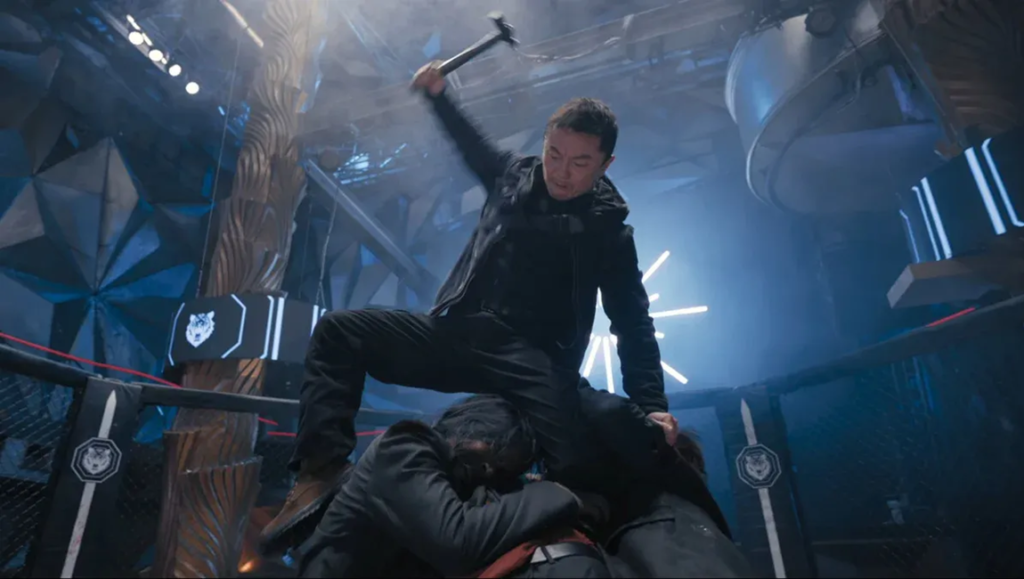
KT: On SPL, Donnie and I tried to do some ground technique or a variation on jiu-jitsu. At that time, people said, “Oh, it doesn’t look good. More kicking, punching, more jump-side kicks, do jump-back kicks, it’s better.” We just wanted to try to do new things. It wasn’t until later that we realized that we did something fresh, and now filmmakers around the world try to do the ground technique. We need to be brave to try new things. For Rurouni Kenshin or Twilight of the Warriors, that’s coming from manga or animation. So we were trying to envision how it would look in live action. Now, we know how to approach that manga feeling, but this time, for The Furious, we didn’t need this. This is more grounded. If those were concerts, this is like unplugged music. I say “unplugged” because the actors can do this. They don’t need training or special effects.
We don’t have to put a lot of MSG on it to make it look good. Just sprinkle some salt, and it’ll taste okay. When Bill Kong came to me, he said he wanted the “ultimate action movie.” We want to make the ultimate action movie. What is the ultimate action movie? I don’t know. I still don’t know what “ultimate” means, but I just wanted to make an action movie that can have a long life. I don’t want people to say, “Oh, this is the best action movie of the year,” then next year, nobody remembers it. This is no good. I want it to be remembered forever.
Personally, I love classic films like The Buster Keaton movies, or Hal Le Roy, or Gene Kelly, and of course, Bruce Lee and Jackie Chan. These films, they didn’t really rely on visual techniques like editing or camera angles or anything like that, not really. They just tried to make the shot wider and wider, and longer and longer. That’s why they became a classic. You could see everything.
For example, Seven Chances by Buster Keaton. It seems very normal, right? It’s just Buster Keaton running, escaping from the 500 brides, and then jumping and running and roaring along. That’s simple. But that movie was around 100 years ago, and 100 years later, I still enjoy it. It’s remembered forever. I don’t know if The Furious will become a classic or not. I just hope The Furious has a longer life. That’s why we relied less on CG and wirework and more on the actor’s ability. It’s timeless.
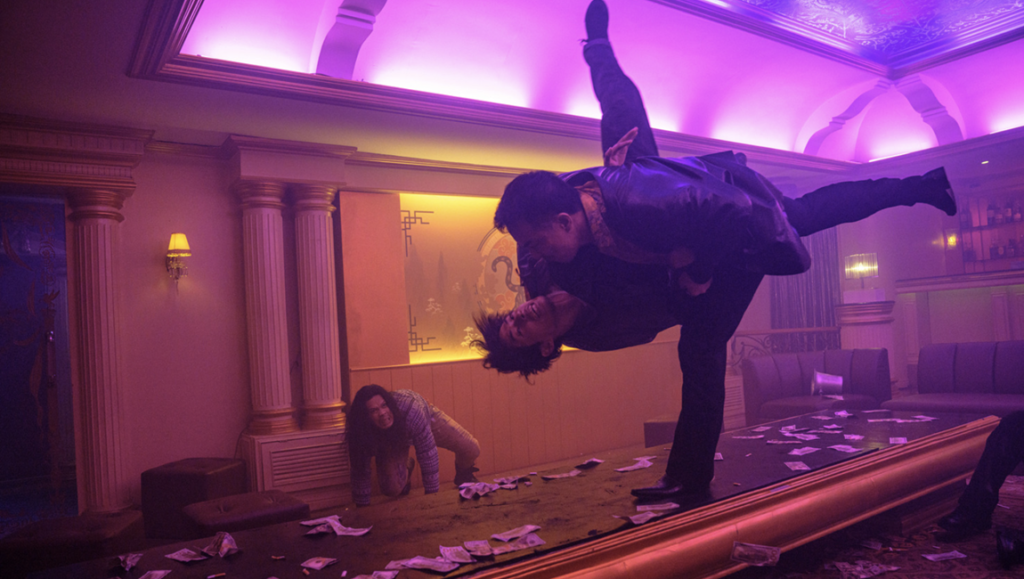
BS: I don’t think you have anything to worry about where that’s concerned. When speaking of the actors’ abilities, I wonder: is it tougher to choreograph so many different styles coming up against one another? You have Joe Taslim, who comes from a Judo background. Xie Miao comes from Wushu. Brian Le incorporates a lot of MMA into his fighting. What’s it like connecting all of that?
KT: When you go back to the ’70s, ’80s, even our martial arts movies, the format is one character brings one martial style or one character brings one specific weapon. This is the typical martial arts movie format. Then you hope every character has a difference because characterization is very important for making an action movie as much as the story. We just use their own background to our advantage. So, for example, Joe Taslim does Judo and Xie Miao is a Chinese Wushu fighter. It’s already very interesting to me because distance-wise and timing-wise, it’s all so different. Joe Taslim, he tries to grab your sleeve and throw you, but then Xie Miao tries to cut you off [mimics pushing away], like “back off, back off, back off.” It’s very interesting.
Then this kind of thing doesn’t rely on dialogue because now audiences are very smart because they are used to watching UFC or MMA, so they know what’s going on. They know what they’re seeing. If you watch carefully during the ending, Xie Miao is not using Chinese Wushu to beat up the main villain — he’s using Judo.
I don’t stop the film to say, “Oh, this is why.” I just hope the audience can feel it. They don’t have to know, but I hope they can feel he’s learned something from the Judo guy, Joe Taslim. Even though this Judo guy has died, he’s still saving Xie Miao. This is another kind of friendship. I don’t think all of the audience will be aware of this. I will just be happy if some think, “Oh, this is Judo. Xie Miao is using Judo.” That’s enough.
BS: I want to ask you about the Thai fight team, which I think deserves so much credit alongside you and Kensuke Sonamura. I don’t think Western audiences are aware of the Thai action world outside of Tony Jaa. What was it like working with them and shooting there?
KT: It’s a very good question. I think the Thai stunt crew… not only the Thai stunt crew, but the Thai crew was amazing. Amazing and very professional. Many American movies are now shot in Bangkok, Thailand, so they are very, very professional. Our choreographer, Kensuke Sonomura, brought the Japanese stunt team to Bangkok and worked with the Taslim team. Surprisingly, their collaboration was so good. They are so strong, and they are so cooperative. Kensuke Sonomura’s style is so unique that it’s very hard to adjust from their own style. So at the beginning, I was a little bit worried. I thought, “Will they get this?” or “Will the Taslim team struggle?” but they are so cooperative, and they are willing to adjust their style. It was a very good collaboration, and I want to work with them again.
Comments are closed.