
The animated documentary, by its very definition, is contradictory. Neither form wants to acknowledge the other’s existence because doing so shatters the convenient illusion that the documentary represents a form of total reality and that animation represents a form of total unreality (aka cinema). But whenever films have explicitly drawn attention to the blurriness of these opposite forms, they’ve done so to reveal just how much animation is, in fact, needed to fill in (or hide) the gaps that reality (i.e., documentary footage) cannot comprehensively (or even truthfully) represent. In Ari Folman’s extraordinary Waltz with Bashir (2008), for instance, classic 2D animation and Adobe Flash cutouts become a form of refuge for our ex-Israeli Defense Forces officer who (unintentionally) uses that layer of artifice to “block” documentary footage images that implicate his involvement in the 1982 Lebanon War, particularly the Sabra and Shatila Massacre. In Keith Maitland’s harrowing Tower (2016), the use of rotoscope animation is precisely the opposite: no documentary footage exists that can “accurately” represent the 1966 shootings that took place at the University of Texas at Austin from the survivor and victims’ POV. So, animation becomes the most haunting form of (actively) recalled memory: in other words, reality depicted most artificially but also most sincerely.
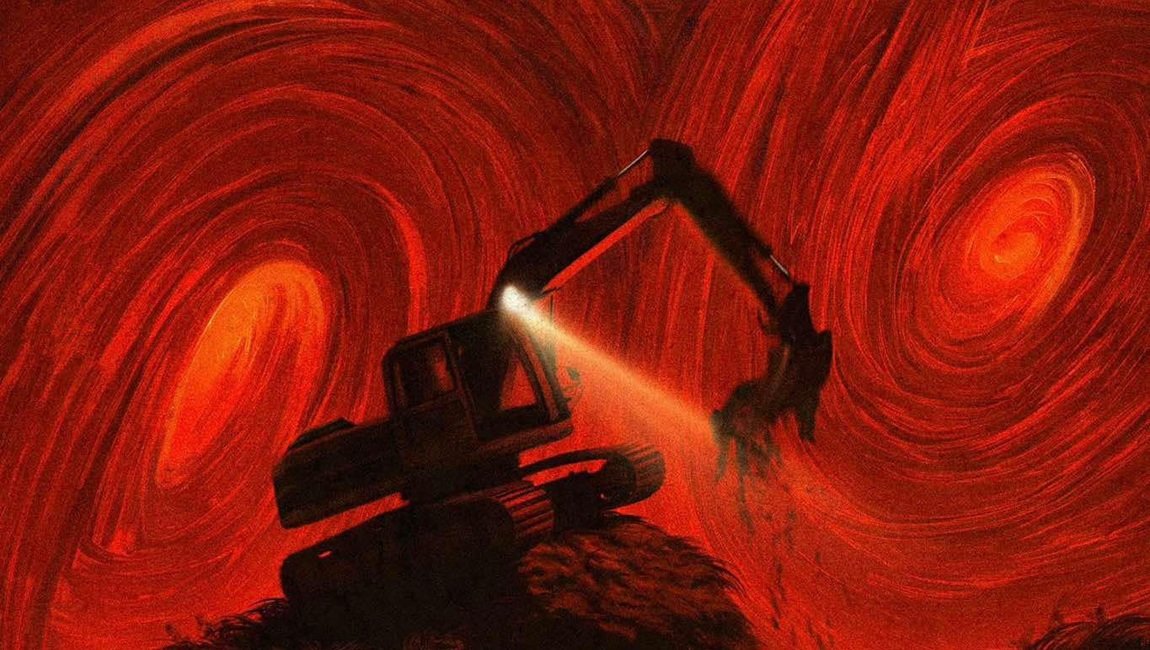
Carl Joseph E. Papa’s 58th sets itself up to follow in the footsteps of Maitland’s Tower. Its primary aim is to use animation — particularly, the rough, demonstrably unnatural textures of rotoscoping — as recalled memory: to, in the director’s own words, “immortalize” a person’s story cruelly forgotten by time. The person in question is photojournalist Reynaldo “Bebot” Momay (Ricky Davao), the unacknowledged 58th victim of the Maguindanao Massacre that took place in Southern Philippines in 2009. And the means of telling this story is a non-linear narrative structured around the filmmaker’s interview with Bebot’s daughter, Maria Reynafe Castillo (Glaiza de Castro). Both the interview itself and Maria’s recollections of her father are animated. Newsreel footage — mainly of families recovering their loved ones’ dead bodies, and the political fallout post the Maguindanao Massacre — make up the rest of the film.
Despite — or partially because of — Papa’s very honorable intentions to “immortalize” Bebot’s memory, there’s little to no structure given to the deployment of (and interaction between) these diametrically opposing forms. Initially, Papa hints at the interplay between different textures within the same animation style to delineate the past from the present — Maria’s “remembered” sections, always accompanied by her voiceover, have a rougher, almost fragile texture to them compared to her “interview” sections, which are flatly rendered. But then Papa liberally abandons Maria’s entirely “blinkered” perspective when he extensively recreates the Massacre in the same animation style he utilized before, without her voiceover. Why do we need to see this when Maria herself never saw it? Interspersing the sequence with documentary footage of the incident’s aftermath conveys the haunting absence (and loss) of lives far more effectively than a stylized recreation that vividly shows the memory (but whose?) of the entire incident. But Papa does both — overcompensating for the lack, only to undercut what effective power one can derive from such a lack.
This ill-discipline extends to the film’s narrative, too. Papa fast-forwards through Maria’s strenuous life post-the Massacre and her memory of her father to incorporate as much Wikipedia-styled political context about the Massacre as possible. The film’s “limited” perspective of remembrance, then, itself rings false. Animation in 58th barely seems to reveal (or even bury) reality then; it merely becomes overburdened by it and, hence, its use feels entirely redundant.
Comments are closed.