
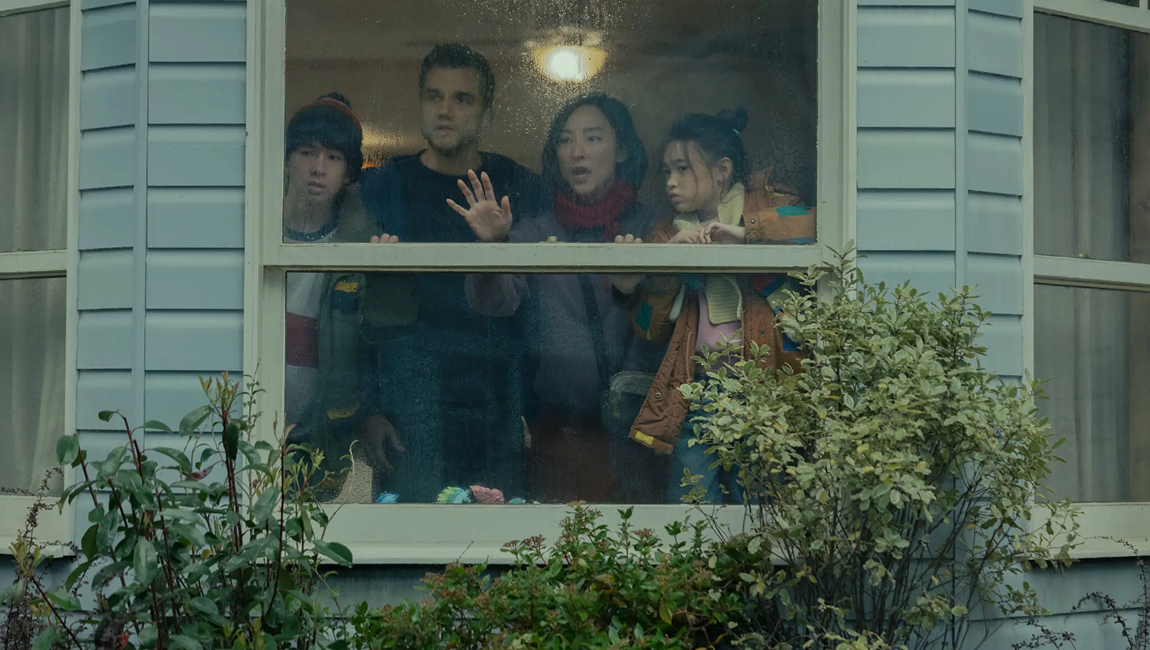
Let’s imagine for a second the the potential recent states of mind of Wagner Moura and Greta Lee. Both are relatively fresh off some enormous acclaim, have had stabs at crossing over to mainstream audiences to mixed results, and could be on the lookout for the film that could earn them the title of an out-and-out movie star. Then a script lands on their desk, the little post-it on the front from says: “Netflix ecological thriller.” Promising, they might think; it ticks the boxes, and maybe there’s even some good done for the world in making it while also stacking that Netflix dollar that can give time for a couple of fulfilling indies after. It makes too much sense not to do. Then, the post-it is pulled off: “Directed by Louis Leterrier.” Ah, so it’s one of those.
Now, that isn’t to say that Leterrier is necessarily a bad filmmaker, but there’s no denying that the track record isn’t great. What he is, however, is quite a good director of bad films, something an afternoon with Uwe Boll’s filmography will remind you is quite a difficult thing to be. When paired with someone with enough charisma to hang a film on, Leterrier can energize often nonsensical scripts into giddy fun, as with his Transporter films or the heroically stupid, personal childhood favorite this writer, Unleashed.
On paper at least, The Last House has exactly the kind of plot that should work in his hands. Here, Moura and Lee are the parents of an ordinary suburban family with the kind of issues that plague such families in films: money troubles, two sulky kids, and a sinking house. One day, amongst a hectic attempt to run errands, their front door jams. They try the back door with no luck. They try the windows, to much the same outcome, and when panic next sets in and they instead try to simply break them, they won’t shatter. As it happens, the windows of the other houses are in the exact same state: everyone in the neighborhood is trapped inside. As the hours turn to days which then turn to weeks, the family must learn to survive with what they have, all as it becomes apparent that there is something dangerous raining down upon their enclave in the frequent downpours.
At this point, you might be thinking that this all sounds like a bit of harmless, silly fun — some lightweight entertainment for a rainy Sunday afternoon, brought to you by a director who specializes in making such silliness rocket along like it and the audience’s life depends on it. But in reality, The Last House is a work of shoddy, badly executed guff. Leterrier spends much of the film’s early stages alternating between wallowing in tar pits of hackneyed family dynamics and trying to bait a mystery that manages to be both nonsensical and predictable. Indeed, many of its woes fall at the feet of the script, a mushy hodgepodge that can’t decide what exactly it wants to be — heartfelt family drama, tense creature feature, or ecological grandstanding — and in committing to none of them, winds up with profoundly nondescript characters (despite Moura and Lee huffing and puffing with all their might in order to bring something to the KIA advert platitudes they have to deliver to each other) and the kind of jarring tone shifts that would kill small animals.
The thing is, as much as The Last House is filled with plot holes so big that Godzilla could easily waddle through them — Moura’s character is an unemployed engineer but is capable of banging out traps and contraptions in a manner like if Nick Park’s Wallace had become an NVA guerrilla — one could easily forgive them if the film just moved like it wanted to be there. Instead, it merely trudges along, seemingly bored of itself, with even the creature design feeling flagging, as if it was first on the pile. Leterrier’s usual energy here seems to only manifest via thrown-in montages that might hurry the film along, but its overall aimlessness just leaves long sections of it dawdling on a road to nowhere.
What irritates more than anything, however, is how palpably pleased the film feels with its own subtext — although using the term “subtext” doesn’t testify to how often it’s being waved so front and center that you can barely see what’s meant to be going on. And what naff subtext it is: a broad strokes take on “We need to learn to respect mother earth again,” executed in tones of the kind of hollow, self-satisfied Hollywood liberalism you’d hoped reached gravitational collapse when Gal Gadot launched into the first lines of “Imagine.” The Last House feels like a film borne of that era, it’s COVID parallels deafening. Yet it has arrived too late to the conversation, pulling everyone together seemingly to say “We could learn from this,” except its in in response to something we’ve already demonstrably failed to learn from. A bad joke with terrible timing.
DIRECTOR: Louis Letterier; CAST: Greta Lee, Wagner Moura, Riley Chung, Emma Ho, Gabriel Barbosa; DISTRIBUTOR: Netflix; STREAMING: August 7; RUNTIME: 1 hr. 50 min.
Comments are closed.