
Tucked into his cozy country home in County Wicklow, Ireland, legendary film director John Boorman — of Point Blank, Deliverance, Zardoz, and Excalibur fame — is asked if he has any advice for aspiring filmmakers. “Find a better job,” is his response. Boorman and The Devil, an elaborate making-of documentary structured around this lengthy, in-depth conversation with Boorman, is a tell-all of the infamously rocky production, and even more cataclysmic reception, of Exorcist II: The Heretic, one of the most famous “bad” horror films of all time. A follow-up to the smash hit William Friedkin original, released the same year as A New Hope, The Heretic was all but primed for failure. Not only that, but the film very nearly killed Boorman, who came down with “valley sickness,” a fungal infection carried in the Californian sands the director filled the studio with to recreate an Ethiopian sandstorm. Production closed for five weeks while Boorman recovered in the hospital, and yet the wound which seems to cut him most deeply germinated with an offhand comment from David Lean, an idol of Boorman’s. “We all make failures,” Lean is said to have told Boorman, “try not to make a famous one.” Yet here we are, examining a wound which “never properly healed.” Boorman and The Devil charts the lifecycle of one of the most famous failures in the history of Hollywood, a film which seems to have marked the dawn of “sequel fatigue,” even during a time when sequels were still a relatively unknown commodity. “It wasn’t a sequel,” rebuts Boorman, “it was a riposte.” At its core and at its best, then, Boorman and The Devil is a compelling portrait of a Hollywood original, an outsider who refused to stand upon his laurels and instead chose to push against convention, good taste, and audience expectation at every turn.
Boorman is arguably, in this writer’s opinion, certainly, one of the most unique film directors to ever set foot on a studio lot. His idiosyncratic vision and deep-set, almost dogmatic belief in the psychological, hallucinatory powers of cinema are on full display in nearly all his films. Hot off the breakout success of Deliverance, Boorman unleashed Zardoz, a confounding intellectualist trip featuring a bare-chested and loin-clothed Sean Connery that leaves audiences no less puzzled today than in 1974. Sandwiched between Zardoz and Excalibur — the latter being, in this writer’s opinion, perhaps the most exceptionally original studio picture made since the golden age of silent cinema — the peculiar and somewhat hermetic Exorcist II: The Heretic seems much less of an aberration. It’s a John Boorman picture, filled with an earnest respect for our suspension of disbelief that one commenter calls the “Boorman magic.” The director, eloquent and thoughtful in his advanced age, describes the process of filmmaking as turning “money into light” and “light into spirit.” Cinema as an art form has, since its inception, always been in conflict with the capital needed to sustain it. The saga of John Boorman is, among other things, another chapter in this epic struggle. The Devil of Boorman and The Devil is just as likely to be Warner Brothers or a gore-hungry audience as it is Pazuzu, the locust-winged demon of The Heretic.
Boorman admits, in as many words, that he shouldn’t have touched Exorcist II. In his opinion, retrospectively, he fundamentally misunderstood the audience. How could he not? He “didn’t enjoy” Friedkin’s Exorcist and had no interest in replicating its fits of demonic possession. He was enticed by the opportunity to make a film about hope, about the eternal struggle between good and evil. The script by William Goodhart referenced the ideas of French theologian Pierre Teilhard de Chardin, who believed that the human subconscious would gradually merge toward a God-like oneness. Boorman couldn’t resist his chance to use studio resources to make a metaphysical film about the power of goodness. How could he know that “fan” culture was only right around the corner? That mainstream audiences were themselves sliding toward oneness, sameness? The main concern of Father Lamont, played by Richard Burton, is that the collective mind prophesied by de Chardin could be one of evil, like a swarm of locusts. How could John Boorman have known he was fighting a losing battle?
Documentarian David Kittredge pulls all this, and more, from a magisterial Boorman (seated alongside his beloved Excalibur and a stone bust from Zardoz), as well as a host of younger film directors — including Joe Dante, Karyn Kusama, and Mike Flanagan — film critics, and, most importantly, the cast and crew of Exorcist II. Kittredge’s film strikes close to a tried-and-true pattern for filmmaking documentaries. Using hand-drawn, cut-out animatics and occasional clip art, the film outlines a basic history of Hollywood extravagances, the epic rise and fall of the 1960s, which led to a rebirth, from Joseph Mankiewicz’s Cleopatra to Mike Nichols’ The Graduate. It’s a history that forms the groundwork for Boorman’s career, and the particularities of The Heretic’s release, but it isn’t especially insightful. More specialized is an overview of “blind bidding,” a process by which major studios pre-sold films, based on director, cast, and logline, to exhibitors. Theaters across the country literally paid for the $12 million budget of Exorcist II: The Heretic. The audience’s disappointment cut that much deeper, of course, and the film was even cited by various state legislatures as the practice of blind bidding was gradually outlawed. These explanatory portions, however, have the tone and aesthetic of many mildly interesting YouTube videos, and ultimately weaken the overall quality of Boorman and The Devil when they rear their head, rendering these stretches as background, autoplay content of a sort. The lessons of John Boorman are arguably essential to any budding filmmaker, which makes this documentary worthwhile, and yet more quality generalized film history can be found elsewhere. What can’t be found elsewhere — in audio-visual form at least, the director’s own writings being immensely worthwhile — is Boorman in his own words.
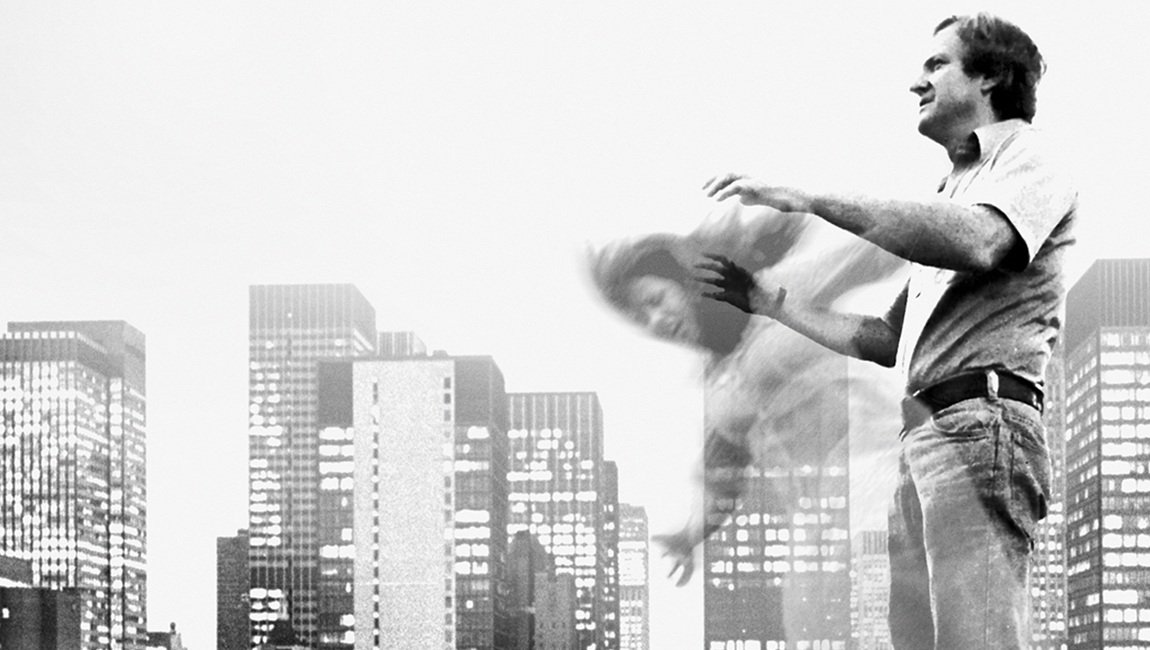
But this too proves hamstrung in execution, as Kittredge’s concerns as a storyteller are somewhat stilted. In interviewing John Boorman, he has managed to document a facet of the intensely painful, possibly masochistic, struggle of the individual artist within a capitalistic media machine. Yet in interviewing Linda Blair, reprising her role as Regan MacNeil, and Louise Fletcher, who played Dr. Tuskin while coming off her success in One Flew Over the Cuckoo’s Nest, the focus remains inevitably on the details of the troubled production itself. Which is engaging, perhaps most for those interested in the myths of a horror production “cursed” by the flying spirit of Pazuzu. The film makes much of the crew shooting atop 666 Fifth Avenue in New York, for instance, as well as the myriad illnesses and ailments that derailed cast and crew, Fletcher in addition to Boorman. The truth, of course, is simply that The Heretic was an exceptionally complicated shoot. Boorman and DP William A. Fraker (Rosemary’s Baby) extensively used optical effects such as ghost glass, creating in-camera superimpositions, and had highly specific lighting effects in mind when bringing the “synchronizer,” a device Dr. Tuskin uses to enter Regan’s subconscious, to the screen. The entire production — except for that infamous Manhattan rooftop — was held on sound stages. Remote Ethiopian landscapes, Vatican interiors, and even the iconic Georgetown home — and its iconic stairs — were built in Burbank. Boorman, inspired by Powell and Pressburger’s Black Narcissus, embraced the “sub-reality” of a built environment. He enlisted matte-painting artist Albert Whitlock (The Birds) and inventor of the Steadicam, Garrett Brown, to help bring the film’s idiosyncratic language to life. Ennio Morricone crafted the film’s enchanting, “mind-blowing” music. In almost any other context, The Heretic should be considered a masterpiece.
In the end, Boorman and The Devil does a good job elucidating these various ways of understanding Exorcist II: The Heretic: as a Hollywood failure of epic proportions; as a harbinger of sequel culture to come; as a typically inventive and engaging John Boorman picture. The making of the film offers up a good story, a cautionary one, perhaps, and Kittredge manages to tell it. The documentary’s style might be decidedly rote, the approach largely too general, but Boorman perseveres. In the end, then, Boorman and The Devil works best as an earnest portrait of a deeply earnest filmmaker — an encounter with a fascinating old man looking back upon his life, upon his deepest and most painful scars. It is fitting, then, that the documentary ends with a recitation of The Heretic’s original, and deeply earnest, ending. “I understand now,” Dr. Tuskin tells Regan, but “the world won’t, not yet.” The ramifications of this statement are perhaps too obvious, too cloying, in the context of this maligned 1970s film, which only much later received the adulation it deserves, but it is in fact the one note struck in this documentary that lives up to John Boorman’s unabashed, undying belief in cinema, and goodness. In the end, Boorman and The Devil casts the devil aside, and we are left with John Boorman. All the better for it.
DIRECTOR: David Kittredge; CAST: John Boorman, Linda Blair, Louise Fletcher, Mike Flanagan; DISTRIBUTOR: Yellow Veil Pictures; IN THEATERS: August 28; RUNTIME: 1 hr. 52 min.
Comments are closed.