
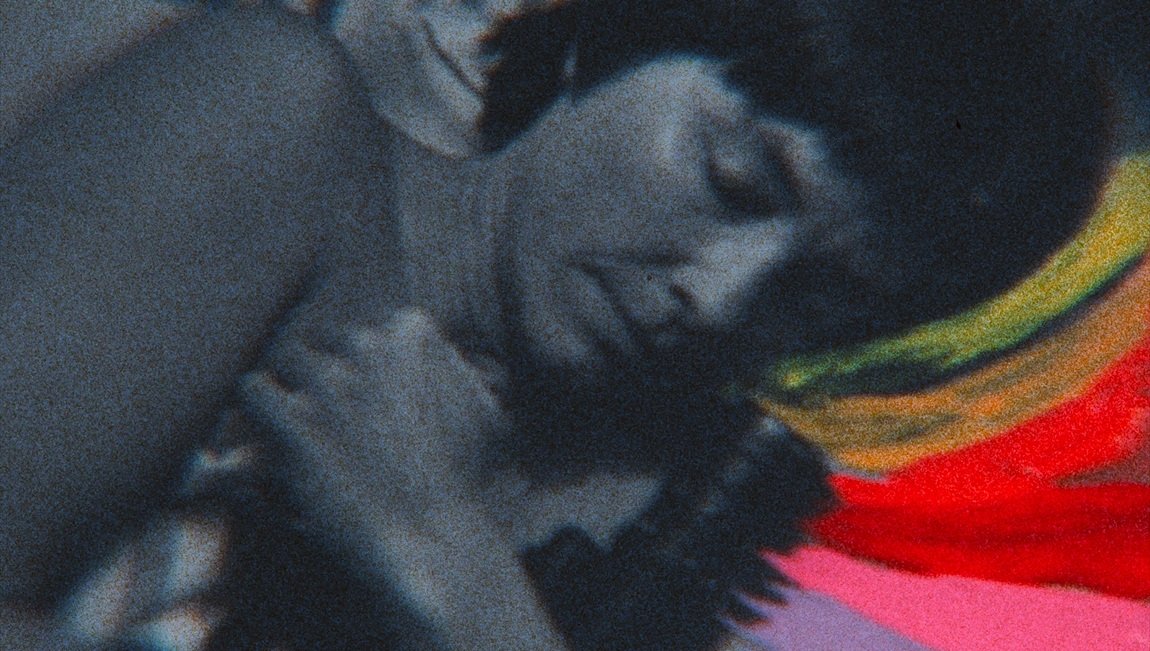
Whether she was shooting her sexual experiences with lovers, the social and political climate of cultural feminism, or an ultimately fatal battle with ovarian cancer, Barbara Hammer lived and breathed through her camera. In the early moments of Brydie O’Connor’s debut feature-length documentary about the life and times of the queer-cinema pioneer, Barbara Forever, Hammer herself reaffirms the aforementioned truth by saying, “My life has been lived in film.” Only another true avant-gardist could potentially mirror this sentiment — perhaps a Jonas Mekas or Andy Warhol who, like Hammer, made films as if it were a means to life itself, a snuffing out of mortality and its inevitability, a vital compulsion. And as Barbara Forever makes it known early on, Hammer’s career was particularly long-spanning and illustrious, culminating in over 80 completed films, many of which are housed at the Academy Film Archive in Los Angeles. Additionally, as of nine years ago this very month, Hammer’s expansive paper and manuscript archive was purchased by Yale University. Luckily, it seems that O’Connor took ample advantage of the vast film, videotape, digital media, and paper archive at her disposal, and her film thrives because of it, flourishing around Hammer’s oeuvre and penetrating to something far deeper and more poignant.
Even with such access, this is, of course, no easy task on O’Connor’s part. What a seemingly futile task it is to attempt to encompass the life of Barbara Hammer. For out of any filmmaker past and present, whose oeuvre is more a testament to their own being than Hammer’s? She is often remembered as a queer artist or experimental filmmaker, or both at once, but these labels — which Hammer seems to now transcend entirely — are only markers of a collective critical underappraisal during her formative years as a filmmaker. As O’Connor makes it known through voiceover audio of Hammer, there never could be a linear path for an artist so very singular. It is an often fascinating exercise as an audience member to view images as abstract as Hammer’s whilst hearing her explain the artistic process from which they were born, or in other cases, the tribulations of creating queer art in a binary world. In one such moment, for example, Hammer speaks of her work’s wrongful omission from the MoMA because of its lesbian content. In another, she revels in the memory of first using an optical printer, which allowed her to edit directly to the frame, producing the trademark textures and scratches synonymous with her cinema. Despite its relatively linear structure, O’Connor’s film is at its best when most tangential, allowing the images and adjunct remembrances to flow as freely and liberally as life itself.
Thus, O’Connor’s debut oscillates between gliding and cascading at any given moment — a simple and entertaining trick, but a fitting one for its subject, whose life’s journey seemed to take on the form of such films as Nitrate Kisses (1992), Women I Love (1976), even T.V. Tart (1988). Likewise, O’Connor grants the viewer a fresh set of eyes through which to view Hammer’s films. That is, a substitution of their own gaze for Hammer’s, a method of experiencing the artistic fervor that sparked her life’s work. But perhaps the most intensely powerful images in Barbara Forever arrive near its conclusion, as Hammer reveals her cancer diagnosis and documents her physical struggles in what would become one of her last works, A Horse Is Not a Metaphor (2008). As images from the film play, Hammer makes note of their poetic idiosyncrasies, detailing, for example, how her love of water was the impetus for a shot of chemo dripping into her veins. It is precisely this sort of cerebral minutiae that makes Barbara Forever tick; a flux of audiovisual stimuli that grounds itself in the mind of one woman. And like Hammer’s films, Barbara Forever is a polyphony of image and sound, sex and love, life and death; a radiant treat for the senses.
DIRECTOR: Brydie O’Connor; DISTRIBUTOR: Strand Releasing; IN THEATERS: September 4; RUNTIME: 1 hr. 42 min.
Comments are closed.