
In Haitian Vodou, “turning someone into a zombie is like putting them back into slavery… forever.” This is among the opening lines of Maya Annik Bedward’s documentary Black Zombie, a challenge not just to the exploitative 1932 film White Zombie, but to the broader legacy of the zombie in cultural consciousness — a legacy fueled by usurpation, embellishment, enslavement in the face of white colonialism.
In Black Zombie, talking heads, archival footage, filmic excerpts, and dramatizations prevail. Bedward and team aren’t necessarily seeking to rewrite or subvert formal convention, but they do make a handful of radical choices within the formula. For one, despite the title being a critical play on the Bela Lugosi-starring horror film, we actually spend a majority of the runtime parsing Haitian spirituality and how its origins have been skewed and sensationalized by white culture. Baron Samedi, in Haitian belief, is a guardian and liaison for the dead, yet in films like the James Bond entry Live and Let Die (1973), he is portrayed as a monstrous, malevolent force of evil. In many depictions otherwise, including Wes Craven’s The Serpent and the Rainbow (1988), Vodou in general is visually defaced within a horror/satanic/sacrificial framework, while in actuality, as detailed by Vodou priest and Director of Haiti’s National Bureau of Ethnology Erol Josué, “[it is] a dance that keeps the spirit of Africa in our bodies, and every dance is a prayer.” Outside archival and excerpted material, the film shows Haitian locals’ engagement with cemeteries as a place of community, their participation in mass spiritual convocations, their intensely jovial commitment to a practice that is very much woven into cultural, racial, and national/diasporic identity. And above all, the zombie in Vodou spirituality is a victim, one who is not allowed to pass on peacefully. It’s quite a wild departure from what the figure of the zombie has become in Hollywood and white-centric pop culture: a flesh-eating, demonic horde.
In W.B. Seabrook’s The Magic Island (the source material for White Zombie), the author is credited with the first English-language use of the word “zombie” after visiting Haiti and witnessing workers in a sugarcane field stripped of their souls, dead in the eyes. A frightening image, certainly, but in retrospect a negligent one. As interviewees in the doc (a mix of scholars, filmmakers, and critics) note, Seabrook wrote his account with no regard for the political context: the U.S. had then been occupying Haiti, and those workers were forced into labor by colonizing sugar companies based on faulty claims of criminality — loitering, stealing, etc. Any excuse to subjugate the locals and outsource their work to the colonial apparatus. Seabrook got rich off this book, and didn’t really look back. Yet through it, he popularized a harmful stereotype that still takes up cinematic real estate to this day.
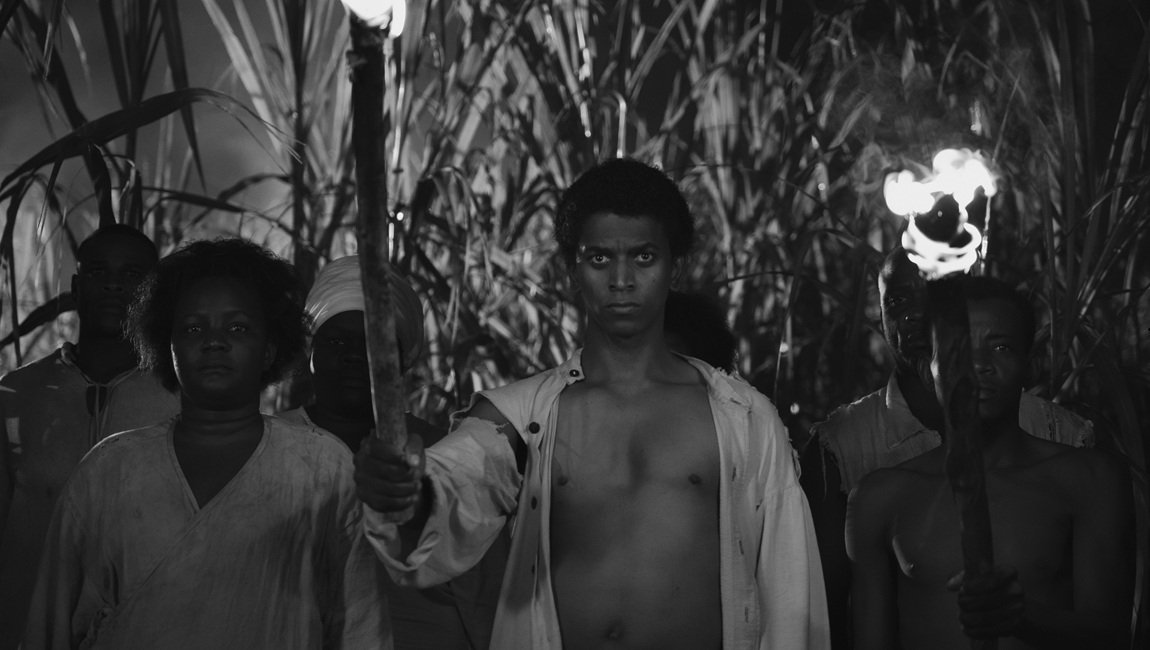
These threads that divert from pure film analysis/history are a welcome addition in Bedward’s docu-structure, while others are not. Slash makes appearances as an interviewee, presumably because his style is an appropriation of Vodou? This is never addressed. And then there’s a brief, inconsequential interview with a “zombie fan” who dons elaborate makeup and prowls about town, playfully scaring her fellow neighbors. Actually, no, not inconsequential — rather, it’s a tangent that actively undermines what Black Zombie is mostly succeeding at. Thankfully, this Walking Dead cosplay is — and other less successful intrusions are — fleeting. What’s ubiquitous, then, is Bedward’s confident excavation of racist visual culture, and appreciation for the origins it continues to zombify. Even the dramatizations, filmed in striking black-and-white photography, are metacritical and beholden to the Haitian interviewees’ opinions as they unfold. Black Zombie ultimately asks us to reckon with one (two-part) overarching question: who owns the image of the zombie, and who should we really fear: the zombies or the ones who vilify them?
DIRECTOR: Maya Annik Bedward; DISTRIBUTOR: Kino Lorber; IN THEATERS: September 11; RUNTIME: 1 hr. 30 min.
Comments are closed.