
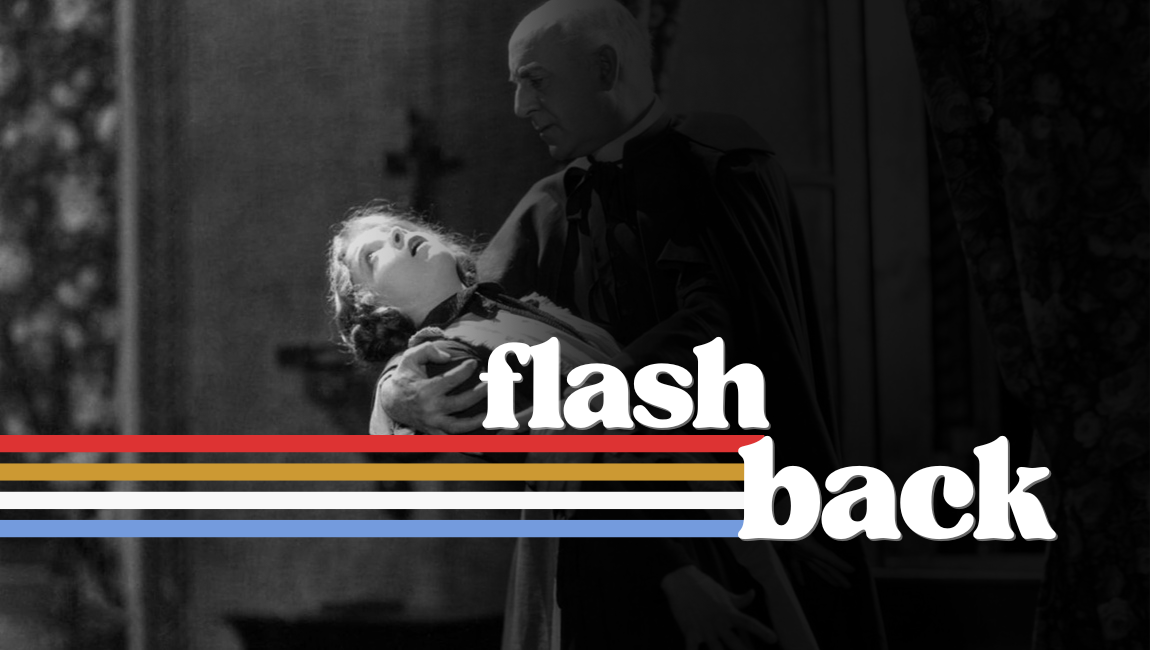
By 1919, 24-year-old Richard Barthelmess was already a star. He’d just played the leading man, albeit in yellow-face, in D. W. Griffith’s Broken Blossoms opposite Lillian Gish, one of the few actresses who could be said to have invented film stardom itself. That one film launched Barthelmess into instant stardom, especially among women. It was a moment comparable to the skyrocketing careers of James Dean and young Leo DiCaprio. Audiences wished for more Barthelmess and Gish, and they got it in Griffith’s 1920 picture Way Down East. With that, Barthelmess had established himself as more than just a handsome fluke. In late 1920, the studio system as we know it had not yet been firmly established, and the myriad independent studios could still make movies with a substantial amount of freedom without fear of being bought out by what would become the “majors.” Barthelmess pooled his resources with director Henry King, another friend of Griffith’s, and Charles H. Duell, an attorney-turned-producer and secret fiancé of Lillian Gish who would later be sued by Duell for breach of contract, to form Inspiration Pictures. The company’s name is not exactly SEO-friendly, but I was able to find that the initial money, provided mostly by Walter Camp of the Harriman Company, was used to make Barthelmess’s dream picture with King: Tol’able David (1921). Though motion pictures were beginning to consolidate in California, King shot the picture near his hometown of Christiansburg, Virginia — a move not unheard of, but certainly a risk that other new studios weren’t taking. This picture was also a success, prompting the owners of Inspiration Pictures to shoot another film on location with the assistance of even more locals and a higher budget. This would be the first American feature ever shot in Italy: The White Sister.
The film stars Lillian Gish (also a major stakeholder in Inspiration) as the Donna Angela Chiaromonte who’s smitten by a Captain Giovanni Severi — played not by her beloved screen partner Barthelmess but by the young British theater star Ronald Colman, who was “discovered” by King when the director caught a New York performance of La Tendresse. But, equally smitten with the dashing soldato is Angela’s older half-sister, the Marchesa di Mola (Gail Kane) who, after their father dies, destroys Angela’s mother’s marriage certificate and their father’s will, forcing Angela out of their estate and into a life of poverty. Though this doesn’t affect Severi’s feelings for Angela, their love is properly star-crossed, as Severi is called to lead an expedition to northern Africa. Angela promises to wait, but when Severi is erroneously reported dead, she joins a convent. Upon his return, Severi is driven mad by Angela’s refusal to break her vow to Christ, and, just as the tension between the lovers begins to boil over, so too does the lava of Mount Vesuvius. The final action sequence is filled with reconciliations, deaths, and elaborate set pieces, like Earthquake (1974) written by Shakespeare.
Gish’s face tells the story of The White Sister. Early in the film, a painter friend Durand (Alfredo Bertone, one of the many Italian actors playing secondary roles here) unveils a foreshadowing portrait of Angela donning a nun’s habit, looking not straight upwards but a bit off, as if getting lost on her way to God. It’s lit with the Vaseline haze of a close-up — cinema’s version of a halo — and it’s a pose immediately identifiable to anyone who has seen the Griffith-Gish films. King is smart enough to scatter this star-making pose throughout the picture: she does so when she reads Severi’s final letter, she looks off again when making her final vows out of the novitiate, and her gaze brings an uncertain solemnity as she poses one last time after her dying sister asks for forgiveness in her lap. The White Sister was actually a result of Duell pushing King to make a vehicle for his secret lover Gish, and King used every bit of her ethereal star power to elevate this picture above rote melodrama.
Yet, the second star is not Colman but Italy itself. According to King’s memoirs, Vesuvius was in a state of rare eruption for the entire eight months they filmed. He ran right up to the edge of the mouth to capture the plumes of smoke and bubbling magma, only to then be chastised by their guide who told them the last idiot who tried that fell in. The architecture of the convent, the streets of Rome, the flooding of Tivoli, and the African desert scenes shot by a second unit in Tripoli — all of these could have been faked in studio sets, but King was proud to shoot the real thing and remain an ocean away from his producers’ nervous rewrites. There’s a sequence of hound-hunting that King uses to show off the lavish Italian countryside, much like he highlighted the rolling hollers and forests of Virginia in Tol’able David. On top of that, hundreds of extras were used for the final flooding sequences, causing First National to admit that they couldn’t release the film as they assumed it to be too expensive. King was even more proud that he made the picture for 1/10th of what First National assumed and grossed nearly sixteen times that budget. This success would allow King the pleasure of shooting on location for the rest of his career.
But why did King do this in the first place? Was he adamant about making a film as authentic as possible? There’s some evidence for that, such as the painstakingly accurate ceremony of Angela’s final vows (overseen by a future Cardinal that King befriended on the ship to Italy). It’s a scene that could’ve been cut down to just a few gestures; instead, it’s the longest scene in the entire film. Surely, that’s evidence enough that King does at least care about getting things right. Cynically speaking, there’s also the bonus of making a movie far away from moneymen and meddlesome producers. John Ford was vocal about shooting in Monument Valley itself for that very reason. However, there’s a more interesting reason to voluntarily submit oneself to this headache. Shooting on location presents unique challenges to every member of every production that can only be solved by interacting with, learning about, and finding oneself altogether closer to the land and the people of that place. To misquote Rivette, every location-shot movie is a documentary of those unpredictable struggles.
Comments are closed.