
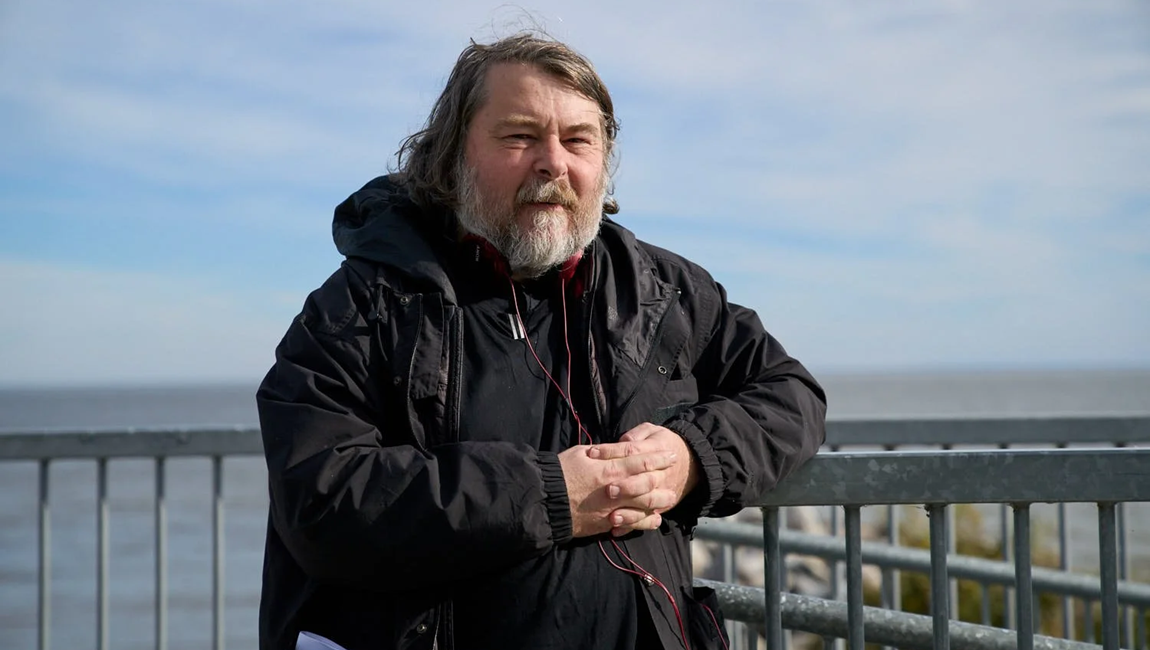
Ben Wheatley has done it all. From humble beginnings with killer indies like Down Terrace and Kill List to Hollywood mega-productions like Rebecca and The Meg 2, there’s almost no stone left unturned for the British filmmaker. Having even dipped into trippy horror surrealism with A Field in England and In the Earth, you’d think Wheatley would have tried it all, but it’s the Western that’s eluded him. Shades of it certainly appear in his work, most notably in Free Fire, essentially a climactic showdown stretched to a feature’s length. However, it isn’t until this year’s Normal that the versatile genre man finally digs into an old school Western with Normal.
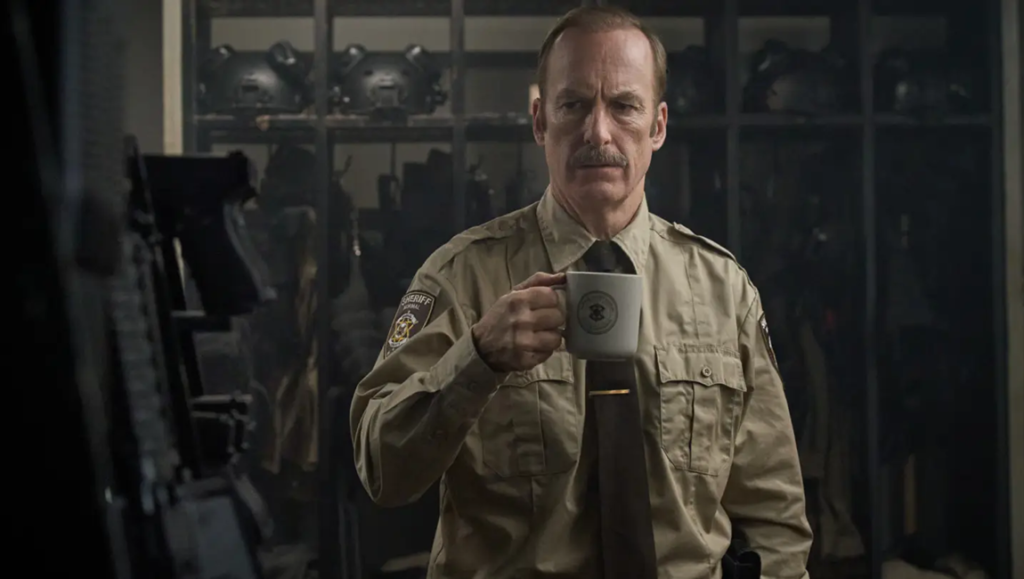
Bob Odenkirk’s Ulysses, an interim sheriff, is brought into the small town of Normal, Minnesota, after the last sheriff dies under mysterious circumstances. A bucolic, snowy paradise in the middle of nowhere, Ulysses thinks his time in Normal will be a cakewalk. With wife troubles back home and a general disposition of “not my problem,” he’s hoping to take a load off. Maybe save a cat or two from a tree and call it a day. Unfortunately for him, nothing is as it seems in Normal, and things might not be so “normal” after all.
What makes Normal stand out from recent action fare, even the two previous barnburners starring Bob Odenkirk, Nobody and Nobody 2, is that its lead isn’t a master assassin. He’s a regular guy in a bad situation, and as such, the fights are messier and less precise. It’s a great counterbalance to Odenkirk the Action Star we’ve come to know in recent years. Wheatley, in tandem with writer Derek Kolstad and Second Unit Director Greg Rementer, both of whom worked on the Nobody series, leans more on comedy and Heroic Bloodshed-esque melodrama. Odenkirk’s Ulysses is a fun spin on the traditional hero, too, as he never spends too long realizing this quaint town is out-of-whack. He clocks it within minutes and decides that it’s not for him to solve, allowing Odenkirk to let that droll humor shine through. Of course, he’s bound to get his hands dirty, but his journey there makes the good man at his center all the more watchable. It’s a refreshing bit of pulpy madness that feels fundamentally different from the endless John Wick clones of the last decade.
Ahead of the film’s release, I sat down with Wheatley to discuss Normal, John Woo, action filmmaking, and how he keeps his head tackling so many different kinds of films.
Brandon Streussnig: Your work feels like it’s been approaching the Western for a bit now. Free Fire has elements of it. There are the tiniest hints of it in Kill List. I think you could even say that The Meg 2 has shades of that, the lone drifter rolling in to kill the evil bad guy, in this case, a giant shark.
Ben Wheatley: Yeah, maybe we should have put a little black hat on the shark. [laughs]
BS: That can be The Meg 3. [laughs] You’ve finally made a full-on Western in Normal. What excites you about that?
BW: I think it’s because it’s a genre I’ve been watching since I was a little kid. It colors so much of the stuff that I watch. Along with samurai cinema, it’s at the base of Star Wars as much as anything as well. It’s like that perfectly boiled-down genre experience of the main character facing off against forces of evil or within a contained space. These towns in Westerns, usually there’s nothing else around them. There’s just the town. Everything is dialed down into storytelling, into iconic storytelling in a way. Whether or not this is historically accurate is irrelevant. It’s like a concoction of Hollywood as well. It’s something that I feel that shadow of has loomed over my film-watching forever, so I think that’s why it made sense to me.
BS: Having followed your career, I’ve often seen you cite Hong Kong and Japanese cinema as things you love as well. I think you could make the case that Normal, at its core, is a Heroic Bloodshed film. Were those films on your mind here as well?
BW: Yeah, totally. It’s such a mix of movies, but John Woo is someone I’m always thinking about. I remember being introduced to Woo’s stuff, and I don’t know how it worked in the States, but Woo and Akira and Beat Takeshi, all these things hit the UK at the same time. I remember seeing Hard Boiled and Bullet in the Head and The Killer and Violent Cop and Sonatine and Tetsuo and Tetsuo II: Body Hammer, all these things just seemed to happen at once in the ’90s. My understanding of Asian cinema at that point was probably just Akira Kurosawa. I had no sense of it. I had no sense of what anime was or anything like that, or manga or anything particularly beyond Battle of the Planets or some cartoons that we would’ve had re-voiced in the UK for kids. It all made such an impression.
At the point where I was watching John Woo, I’d obviously been a massive fan of Scorsese and a massive fan of Peckinpah, and then that just seemed to be like those two things smashed together and then just accelerated by 500%. I’d never seen anything like it. The use of slow motion and the use of action, but then nostalgia and romance and all these things at the same time, and a system of morality that I didn’t quite understand. One of the things I really like about watching other cultures’ movies is the fun of it, of just not getting it and struggling to understand it, and then enjoying it.
BS: It’s pretty incredible that we live in a world where all of this is available in stunning 4K restorations now. I had a similar experience to you, as I’m sure most people around our age did, where you had to stumble upon this stuff as bootlegs or somewhere seedy online.
BW: I was thinking about that the other day. It’s very easy to become an old man who remembers how stuff was better because it was harder to find, but if you look on YouTube now, it’s just so full of crazy stuff if you go digging around. It’s just like this massive thrift store of information. Once you crack out of the algorithm, once you start searching specifically, everything is there. I think it’s a really exciting time for cineastes to be able to discover things.
Just the other day, I started watching a load of anime that I’d never seen before from the ’80s. One tab is on YouTube, and the other is open to a Wikipedia page, going, “Oh, what’s that?” and then just seeing the names and then searching them there. The whole series of this stuff is just sitting on YouTube, and you’re going, “Oh, my God, I can just watch this.” You can’t even buy it anywhere, but you can see 40 episodes of it. I think that’s incredible.
BS: I really dug how this movie, Normal, is this self-contained world within a very small town, but it feels like an entire universe of odd people to itself. It reminded me a ton of High Rise in that way. What goes into building something like that?
BW: It’s the script, but I think a lot of it is tonal in terms of a decision made very early on that when you’re setting the characters up, you like the characters, and that you like the environment. I think that even though some of the stuff is caricatures and there are jokes at people’s expense, I think we had to go into it with an open heart, to avoid the general meanness of it. I think the audience can feel the empathy of it, even though it’s very action-y and whatnot. That’s maybe one of the things that sets it apart from other movies. He doesn’t become a revenge wraith who just goes through all the characters, murdering them. That was a worry that you’d just get into this thing of enjoying it too much. That never used to happen in ’70s movies or ’80s movies. Well, maybe ’80s movies, but in a Clint Eastwood movie, there’d be more of a connection; even at his most Dirty Harry-ness, there was always some kind of connection between the people.
BS: Maybe it’s a stretch, but Bob is almost Eastwood-esque in terms of the kind of action star he is. Eastwood was badass, of course, but he was built like a regular guy. It’s been a thrill seeing Bob take this kind of stuff on at this stage of his career while still playing it like the everyman. What drew you to working with him?
BW: It’s not much of a decision at all to work with Bob. I love Bob in Breaking Bad and in Better Call Saul. Immediately, I knew it was going to be a treat to work with him. I think what it is, apart from the comedy chops of his background, his ability to play empathy is the thing, it’s massive. To be likable is the secret sauce of film stars. He can be doing things where you feel for him at every stage within Normal, you’re always rooting for him. That’s not always the case with leading men or with action stars. I guess it’s more the Harrison Ford end of the street where this guy, he’s a vulnerable character who actually turns out to be quite good at fighting, but it’s not a given, and I think that’s important.
BS: You’ve written your own scripts, and you’ve worked with many screenwriters. Here, you’re working with Derek Kolstad, who is the guy in the action world at the moment. What was that collaboration like?
BW: It was a very collaborative environment. He’s very open, Derek, so is Bob. Everything is being scrutinized all the time to make it the best it can be, so I found it very welcoming. I was happy not to be writing. It’s sometimes a relief not to have to do stuff. There’s something about doing other people’s scripts that is very freeing, so I’m happy with that. I feel like I’m not a frustrated writer who’s desperate to write on other projects. I’m happy not to do it.
I looked a lot at the action side of it. I did a lot of storyboarding and then discussed how the action was going to work, so the script was very detailed, but then there was also space because you can’t write all the action into a script, otherwise it would be 300 pages long. So there was a lot of opportunity to flesh out those things. From my experience of doing Free Fire and Meg, which was a massive amount of action, that all helped make this movie.
BS: I recently spoke with Bob about how action and comedy feel so inextricably linked. I also feel that’s true of horror and action. You’ve worked extensively in both and always seem to find a strong middle. How do you go about melding genres?
BW: It’s tonal. Hopefully, you’re dealing with a mainstream audience, a broad audience, so you know that you can’t go to some of the pulse of what you might do, but then you know that they love that kind of stuff as well. So there’s a massive horror audience, there’s a massive action audience, and there’s a massive comedy audience, but you’ve got to make sure that each of the flavors doesn’t undercut the others. If you put too much comedy in, then certain types of comedy make the action less serious. Then the action becomes light. You don’t take them as seriously as you do if the film doesn’t undercut them. You know what I mean?
So I think that was the thing of looking at it, going, “How do we get from this point to this point?” A lot of it is about sound design, and it’s about breath and time, and then it’s the skill of the performers to pivot from being something that they know is slightly funny, but they’re not totally going for it, and then for their dramatic performances to be convincing. I think it’s so complicated, but we had an amazing cast who really adapted to it. Mainly it’s about taking it seriously, I think. It’s not trying to milk it, because that’s what breaks the action.
BS: I’m always so fascinated by filmmakers like you who have such varied bodies of work. You’ve seemingly done everything, even dipping into the surreal and experimental. Does the base of who you are as a filmmaker stay the same when starting on any project?
BW: I think it’s the same sense that you have as a viewer when you watch stuff that, if you find you can watch something super serious or something that’s really arty, but you can also watch a kaiju movie or a ninja movie or something like that, and enjoy it unironically, that’s the feeling it is. I have a love for all types of cinema, but you have to go wholeheartedly to make these things because if you’re not doing it and not believing in it, then it’s phony. Even if it’s a non-serious film, even if in its very heart it’s quite silly, you’ve still got to take it super seriously to get through it and make it right.
So, yeah, I approach them all the same, but my taste is very broad. I think the general audience taste is pretty broad as well. It’s not as stratified as we think in terms of fandoms. I think fandoms are a big old Venn diagram of overlapping things. People can be very vocal about their corner of it, but they also might like one thing, but also loads of other bits. They’re just not talking about them at that point. So I think it’s taking genre seriously, but also not forgetting that this stuff is about entertainment and fun. If it’s not fun, if it’s a drag or slightly embarrassed about itself, then it’s not going to work.
Comments are closed.