
During a published 2025 conversation with Barry Jenkins, Charles Burnett takes a moment to acknowledge the L.A. Rebellion. This cinematic movement, which he helped spearhead, birthed aesthetically groundbreaking films lauded for their richly textured portrayals of working-class Black experiences. “The L.A. rebellion was making films against the Hollywood interpretation of our lives,” Burnett tells Jenkins. “The thing, I think, we were very proud of was the fact that we were changing the narrative and the look of what Black filmmakers should be working towards.”
Killers of Sheep, perhaps Burnett’s most enduring film, burns with a subtle beauty. It possesses a naturalistic clarity derived from its observational, neorealist style. The family at the narrative’s center is flawed, beset by fatigue, anxiety, and uncertainty, enduring these byproducts of structural poverty and oppression while never losing the capacity to find fleeting joy. And then, like ripples in a pool radiating from the source of impact, the film expands its lens to depict life in the community of 1970s Watts, evolving into a sweeping, rhythmic, and tender portrait of overlooked humanity. Burnett is, to borrow a phrase from writer and documentary producer Jason Parham, a “seer of the unseen.”
Parham uses this phrase, in a January 2026 article and interview, to describe Walter Thompson-Hernández, the writer and director of If I Go Will They Miss Me. In the film, a feature-length expansion of a 2022 short of the same name, you can trace the aesthetic and thematic legacies of works like Killers — the lyricism, the grace, the smoother passages juxtaposed against the harsher edges.
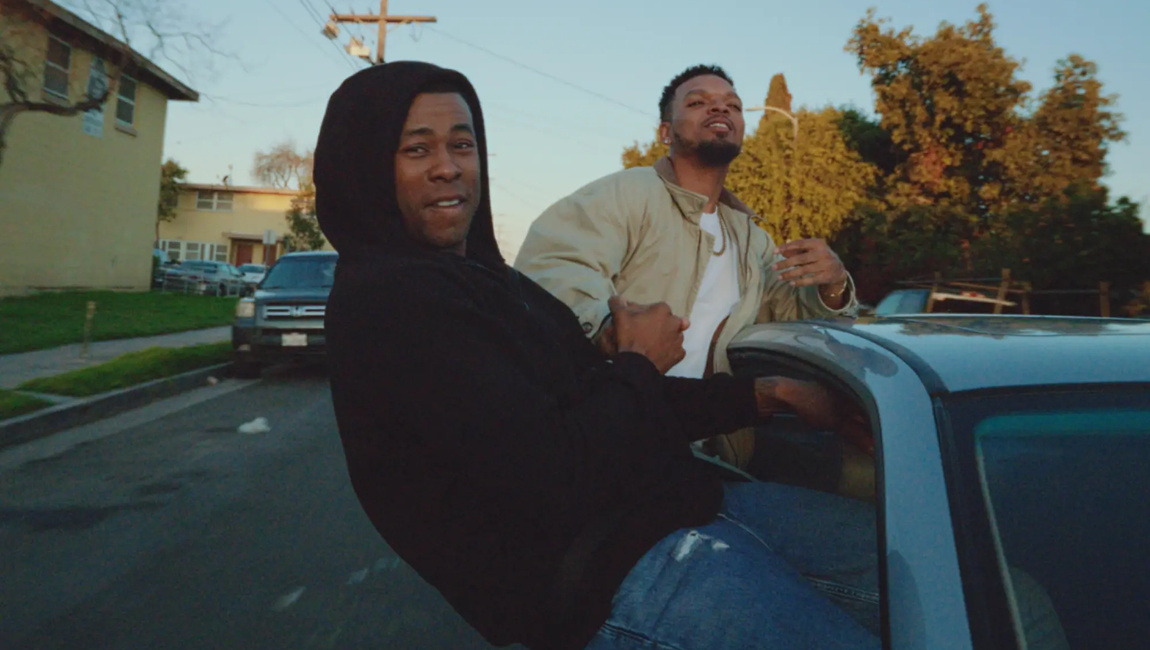
Set in a contemporary Watts, the film follows a family working to restore a sense of normalcy. Big Ant (J. Alphonse Nicholson), having returned home from a stint in prison, navigates being a more present father to his three children and a better partner to their mother, Lozita (Danielle Brooks). The optimistic zeal for life he had upon initially coming back has, over time, become more muted as domestic adult life’s tedium takes its toll. He has an especially ambivalent attitude toward his 12-year-old son Lil Ant (Bodhi Dell), who’s developing into a curious, sensitive young man. Connecting them are visions of white-shirted Black and brown boys and men, mysterious yet undeniably eerie.
A fitting way to describe If I Go’s look and feel would be gently hyperreal. Its more natural aspects (the lighting, the on-location shooting, the non-professional authenticity guiding some background character performances) suffuse the compositions with meaningful vitality. Michael Fernandez’s cinematography employs a dynamic range of shots — favoring medium and wide shots — to strengthen a scene’s intimacy, sow fertile ground for clever internal framing, or stretch the frame to existential proportions, dwarfing the characters beneath Los Angeles’ urban monumentality or the canvas of the sky. Thompson-Hernández has stated he’s “drawn to patient frames,” and fittingly nearly every shot in If I Go is a static one. From that comes a stillness that’s key to the deliberate, meditative flavor of the movie’s poetic approach. The pace is meandering; If I Go’s scenes almost function more like vignettes stitched together in a linear procession. Various characters and corners of the community flit in and out of focus, widening the orbit around the main cast and establishing a limber relationship to time and space.
In this attempt to draw out the essence of this specific world, however, is a lack of specificity in the characters inhabiting it. Nicholson and Brooks succeed in displaying their characters’ inner turmoil through the subtleties in their performances — a cocked head, a sharp, unsure inhalation, an eye twitching as it’s locked in an accusatory stare. To call their characters underwritten would be too harsh; they feel sketched out, with enough shades to present their depths but broad enough to function more archetypally. Big Ant and Lozita are fairly generic but positively so, loosely emblematic of the innumerable understudied, underappreciated lives rarely captured on camera. And this may indeed be the film’s intent: so often works dramatizing struggles associated with the Black experience get saddled with didactic expectations. In them must reside some social or political motive, some instructive or moralizing objective, some thesis for a liberal-minded audience to identify, absorb, and come away from enriched, or else what was the point of sitting down to watch? If I Go isn’t interested in polemics. It doesn’t demand that you analyze these characters; all it asks is that you have the patience to be present alongside them and acknowledge that they reflect so many other lives playing out day-to-day.
A minute or so into the film, you spy an airplane in flight. “Thematically, this movie is about flight and transportation,” Thompson-Hernández says in that Parham interview. “Both the physical flights that one takes, but also the emotional and spiritual flights.” Appearing in various forms, airplanes are If I Go’s dominant visual motif. They represent a liberation from less-than-ideal circumstances, the freedom that being tens of thousands of feet from the ground grants one to imagine different futures, consider what an untethered, actualized life could look like. The idea is stronger in concept than execution, unfortunately, given how often the movie falls back on this plane imagery (read: spamming the hell out of it). It’s the handling of its themes that holds If I Go back from greater heights. At points throughout, Lil Ant envisions his father as a Greek god, someone larger-than-life, endowed with capability and worth, a depiction that Big Ant, carrying deep shame, struggles to reconcile. If the liberatory motif is overdone, then these surreal asides come out a bit undercooked, forgotten threads too neatly addressed in the film’s final act. None of If I Go’s flaws prove fatal, however, and when it’s humming, the results range from pleasant to patently exquisite.
DIRECTOR: Walter Thompson-Hernández; CAST: J. Alphone Nicholson, Danielle Brooks, Bodhi Dell, Kelvin Adekunle, Bre-Z; DISTRIBUTOR: Rich Spirit; IN THEATERS: September 11; RUNTIME: 1 hr. 32 min.
Comments are closed.