
Replacing Science Fiction and Fantasy, romance — colloquially specified as “smut” — has solidified as the dominant literary genre fare in the U.S. In a dwindling American readership left with even fewer affordable novelistic options in the death of the mass-market paperback and the endlessly emaciated literacy programs across the country, smut is the last paraliterary pursuit that Americans appear to have a bottomless appetite for. It’s one of the only genres experiencing an exponential increase in sales this decade, and it boasts a demographically diverse readership from Gen Z to boomers; though mostly female, male audiences are still well represented both as author and audience.
Smut differentiates itself from the typical Harlequin romance in two ways. The first is that its sexual appetites and imagination are more in keeping with 21st-century moral standards. Hence, in Ali Hazelwood’s The Love Hypothesis, which taps into the normally debauched teacher-student relationship model, the female protagonist Olive falls for tenured professor Adam. Olive is not a newly adult freshman, however, but a PhD student, rendering the narrative (as the novel loves to remind us) completely acceptable. All thorny social situations redress themselves similarly, or are vanquished by consummation of the healthier alternative. There can be no “slip-ups” for the reader, no ethical hangnails for attention to catch on and interrupt the primary pleasure of the novel: which is the second difference from Harlequin — sex. There’s a lot of it, at least compared to more squeamish predecessors, and delivered in deliberate detail. Lovemaking in the traditional mass market romance novel was set behind closed doors or located only in the vagaries of the text. Not so in the 21st century, with both readers and writers trained in the raunchier world of fanfiction websites and pornographic novels.
Now, it’s important not to take this as a screed or a tilt at finger-wagging moralism. Plenty of great writers — James Ellroy, Donald Westlake, Lawrence Block — started out writing pornographic fiction, and though they were not great works, there is nonetheless a singular pleasure in reading a stylist’s commercial novels, however anguished it may be. Many of these latest smut books are interesting in the same way, and there are plenty of writers in the field who, provided they have the desire, could make impressive middle-brow stylists in the future, as other fields inevitably do.
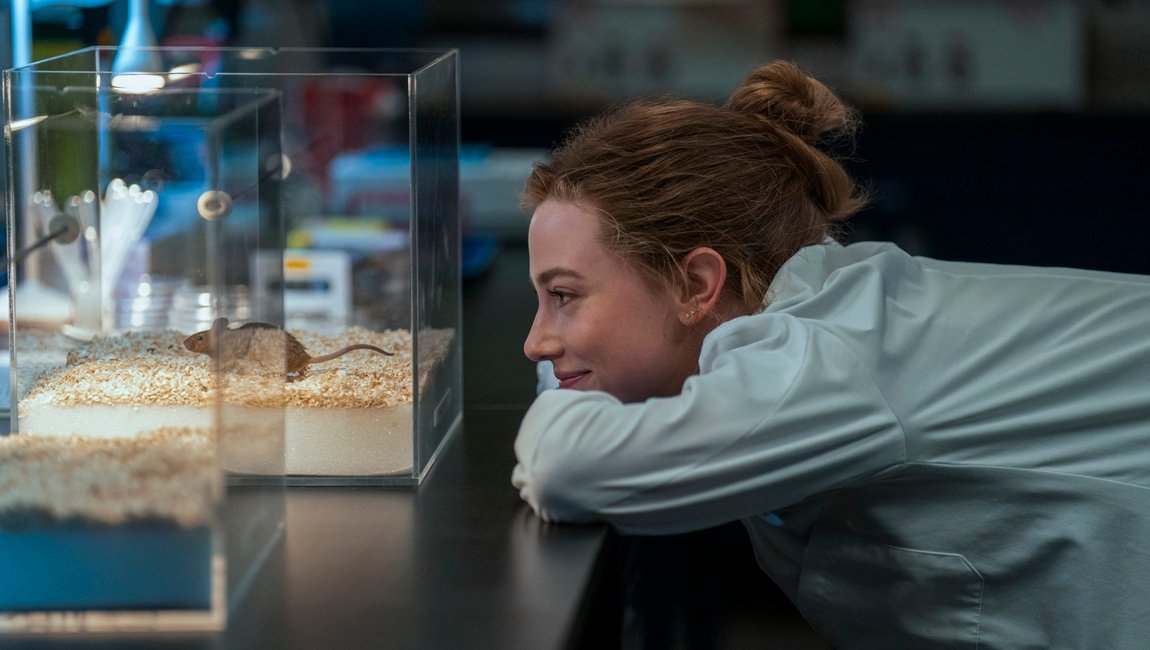
But when these works leave the literary for the cinematic, the results call the whole project into question. The Love Hypothesis, starring Lili Reinhart and Tom Bateman as Olive and Adam respectively, is one such unfortunate example. Claire Scanlon, who in 2018 helmed a surprisingly mature and genre-literate romcom in Set it Up, evokes none of even the basest pleasures the genre can offer. Ali Hazlewood is not one for the Ellroy-Westlake-Block analogy, but she can at least turn a phrase, offering a holistic atmosphere that is anything but the Amazon office sheen the film falls into. Admittedly, on-location college shooting is particularly difficult to find visual interest in. But even outside of Stanford, Harvard, and however many other prestigious, windowless rooms one can organize a script around, Scanlon finds little of interest in the natural, the familial, or the intimate — in other words, what the genre is most interested in.
As the leads tasked with carrying this all off, Bateman is unfortunately stiff, if still manageable; Reinhardt, meanwhile, borders on the very good, or at least she is the only player in the film who seems interested in gesture or movement. The camera should be closing in on these ticks and fidgets, locating the specific amidst a morass of the familiar, but streaming productions have long proven to be allergic to anything but the medium shot. Supposedly, this is what the genre is. Automatons inch in and out of view of a roving camera, flirting without personality, until sex occurs and forgotten problems are spun to completion. For context, it’s at this point worth considering pulp, which has always been accused of automatic writing and cliché plots. But a hundred years of mass market prose later, society has all but accepted there may be more to our Harlequins and Ace science fiction novels than meets the eye.
Smut faces the same problem of analysis: Adam and Olive’s relentlessly P.C. love affair can be construed as an author meeting the demands of a publisher’s boardroom meetings — the age-old chant of what the reader wants paid forward generation after generation. However, such stories are just as much about authors wrestling their sexual desire from expectations of the public norm. Can these quasi-problematic relationships exist in a post-MeToo world? Can one both believe the cliches of previous generations are regressive and still find arousal in their rehearsal? These are basic questions, but essential ones that the new state of romance fiction is in a unique position to explore. The Love Hypothesis does answer them, in a sense. Scanlon’s film posits that, so long as the major beats are unconvincing, played out by robots over an artificial dressing, audiences cannot possibly raise an objection. After all, you only need to worry about the ethics of desire if you’re actually turned on, and The Love Hypothesis makes certain there’s no chance of that.
DIRECTOR: Claire Scanlon; CAST: Lili Reinhart, Tom Bateman, Rachel Marsh, Jaboukie Young-White, Nicholas Duvernay; DISTRIBUTOR: Prime Video; STREAMING: September 23; RUNTIME: 1 hr. 50 min.
Comments are closed.