
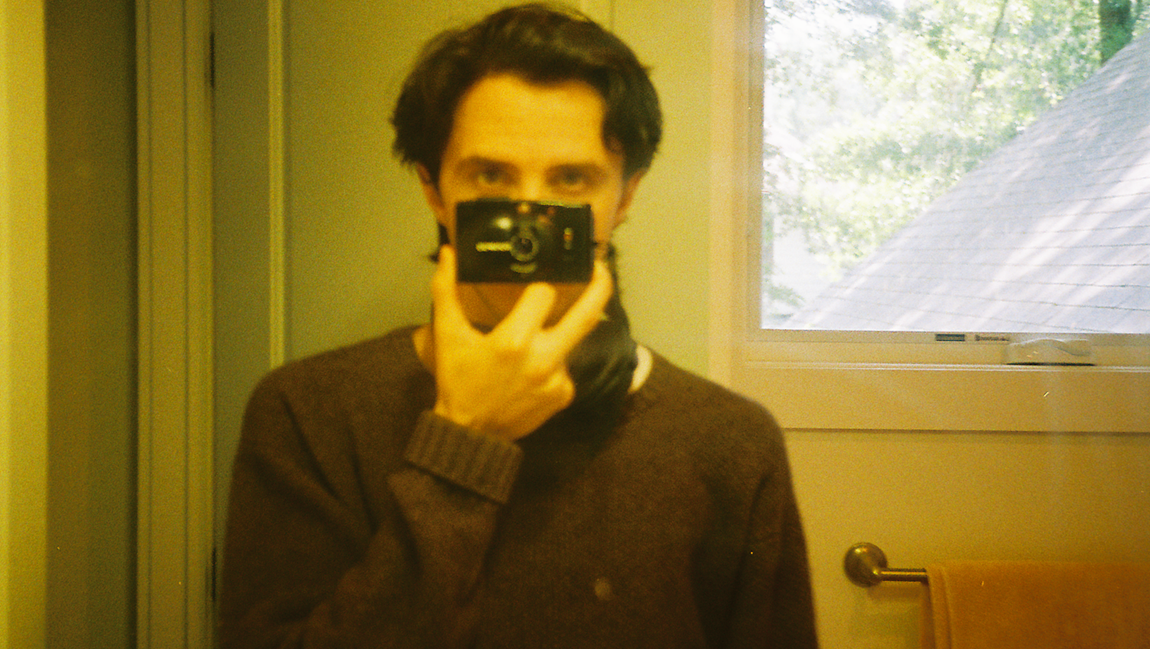
Shot on a Sony PD150 handheld, with very few, if any, location permits, and a lead actress change halfway through production, City Wide Fever shouldn’t work. A lo-fi giallo filmed across New York City, Josh Heaps’s directorial debut is a bit of a miracle. That’s also giving short shrift to the sheer force of will the publicist-turned-filmmaker put into getting it made. It’s easy to look at a film like City Wide Fever, in all its scrappy tenacity, and think “wow, they just picked up a camera and ran with it,” but like all productions, the film took intense planning and process. Filled with friends and locations that many NYC filmheads will recognize, Heaps used every resource at his disposal.
Sam (Diletta Guglielmi), a film student in New York City, stumbles upon a USB drive containing information on a mysterious, forgotten Italian filmmaker, Saturnino Barresi. Cited on the drive as the Father of Giallo, Sam falls into her own giallo-esque rabbit hole trying to find more information about who this man was. From porno shops run by Larry Fessenden to the mansion home of actress Rutayna Alda (Rosemary’s Baby, The Deer Hunter) to a ride-share from hell with an all-time great monologue by comedian Ian Fidance, Sam’s journey takes her all over the city. All the while, she keeps shifting in appearance between Guglielmi and another actress, Nancy Kimball, best known for horror short Doom Scroll. With one lead departing the film halfway through, Heaps could’ve scrapped everything and started over. Instead, he improvised, cast a new lead, and blended their footage with no narrative explanation. The result gives the film an eerier vibe and plays right into the idea that Sam is having a psychotic break while hunting for Barresi.
City Wide Fever is one of my favorite discoveries of the year. A low-budget triumph, Heaps’ vision is both so referential to everything he’s ever loved but also entirely his own. Its grainy digital textures that burst with pinks and purples are breathtaking in a sea of much more expensive films that look indistinguishable from one another. Heaps plays right into the sweet spots of hardened cinephiles while leaving room to mock them for how deathly serious they take all of this. It’s a brutal and very funny metaphor for cinephilia as a disease that makes you kind of annoying.
Using what he learned while working for Cinetic as a publicist, Heaps has been a one-man PR team, cold emailing journalists and theaters alike. It’s how we connected as he’d seen that I bought the Blu-ray of City Wide Fever and posted about it on social media. In fact, this is about right where our conversation starts. Heaps met me at a coffee shop to talk about low-budget filmmaking, working without permits, experimenting with different cameras, and why filmmakers shouldn’t be on social media.
Brandon Streussnig: So you’re saying filmmakers shouldn’t have social media at all? Do you think it makes it too easy for them to become buddy-buddy with audiences?
Josh Heaps: No, I don’t even mean it like that. I’m sure publicity-wise, it totally helps. I get that we live in a world where you kind of can’t afford not to have social media, especially if you don’t have connections. But there is this sexy mystique that is gone now from not only directors, but actors, too. Brad and Leo are like the two final Hollywood stars. They don’t tweet, they don’t post, they rarely do interviews.
Then I think of all of my horror heroes. Someone like Jess Franco. Obviously, they were from a different era, but he could be like a monk in a monastery who I’m never going to see in my life. There’s something so sexy and cool about that. One could argue that even my doing this interview then is bucking against what I’m saying. But I don’t know, I always joke that people over 30 shouldn’t have social media. I’m obviously kidding and being an asshole, but I just think there’s kind of a base level mystique to filmmaking, which to me is a magical art form that can be killed when the shroud or the curtain is pulled too far.
BS: I can agree with that for the most part. I mean, I do think it’s a little corny, for example, when filmmakers start getting into fights with people who don’t like their movies on Twitter. It’s a little embarrassing.
JH: I try not to look at Letterboxd. I try not to read reviews. I will say, I prefer to read a bad review over a good review. I’m very thankful to those who liked the movie, but I’m more interested in hearing the critiques. That being said, the snarky short Letterboxd comments that I’m sent, of course, I do find myself being like, “Well, if only you knew this,” but I think it’s good not to engage. The minute you engage with anybody on an online platform, in particular, it’s a losing battle.
By the way, nothing I’m saying is prolific or new. Everyone knows what I’m saying. I just think there’s a kind of monastic quality to staying silent. If it were up to me, I’d only allow I think certain people to have social media. People over the age of 70, like my mother, are still allowed. I allow Facebook. Like, go crazy. [Laughs]
BS: I mean, it sucks because I’d love to just withdraw entirely because I largely agree with you. It’s just where my writing career spun out of, so it’s like I’m stuck here now.
JH: No, I mean, look. I’m being a snarky asshole, but we’re doing this right now because of social media. Great things can happen from that stuff. I mean, look at Cooper Raiff, right? He got discovered because he tweeted at the Duplass Brothers. So super dope shit does happen. I think it’s cool that Sean Baker has a Letterboxd and that he’s watching the weirdest, sleaziest horror shit. You know what I mean? It’s cool that he’s putting people onto that stuff.
BS: It is extremely cool how much Sean Baker loves that stuff. I mean, I ran into him a few months ago at Bill Lustig’s birthday, and it’s like, “Whoa, what are you doing here with guys like Charles Band?”
JH: Huge Bill Lustig fan, goes without saying. I tried to get him in my movie, and he politely declined. He has such a great voice. Charles Band, though, the Puppet Master theme is played on the piano in City Wide Fever. How that came about is a funny story.
Fabio Frizzi, who was the composer for many Fulci movies, is only in his early 70s now. He was very young when he did all of that stuff in Italy. I reached out to him to do the score for City Wide Fever way back in the day, and obviously, I had no money, and he said, “Dude, I can’t make you a score.” But he said, “I could sell you some of my unused old scores,” which he owned the rights to. One of them was Puppet Master, one of the more recent ones. So I emailed Charles Band, and I asked for his blessing to just use that brief snippet, and he gave it.
It’s funny because multiple people who’ve seen the movie and theaters or Q&As have asked me about it. When my movie played in Toronto at Bleeding Edge, this girl approached me after, and she was like, “Dude, I just watched In The Mouth of Madness.” I was like, “Oh, that’s a good movie.” I didn’t know why she was saying it to me. Then, she was like, “Yeah, but you ripped a whole monologue from that movie,” and I was like, “Oh, did I?” It’s funny how people notice things that I never even realized.
I mean, one thing that I think pissed a lot of people off about the movie is how referential it is, which I get can be annoying and in your face. I always like hearing what people catch, though, and the most notable rip-off is the scene where the Reyna character is in Prospect Park. That’s a shot-for-shot rip-off of Four Flies on Grey Velvet.
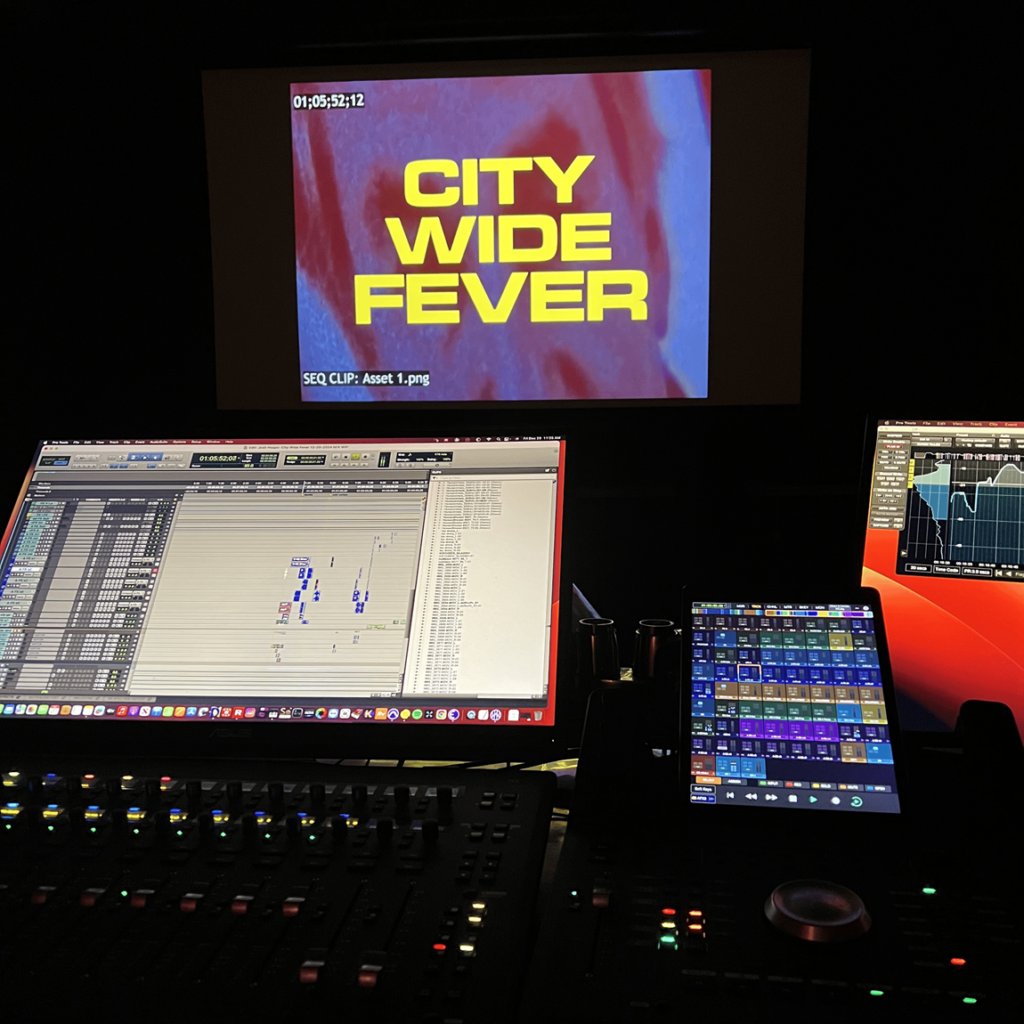
BS: I feel like what we’re talking about is the inherent throughline of the movie: how cinephilia is kind of this annoying affliction. I’ve heard you say this before, but can you elaborate a bit about how you felt like part of making City Wide Fever was you purging your need to pepper a film with references?
JH: There’s something about horror cinephilia and genre cinephilia that’s very edgelordy and annoying. Luckily, I have a wonderful girlfriend now, but I have found that, when I used to go on dates, I’d have that moment where it’s like, “Jesus Christ, if the girl isn’t into movies, especially horror movies, I don’t know what to say.” It does become a disease or, like a disability, in that sense. [Laughs]
It’s like pinning me into this corner where it’s all I want to talk and think about. Definitely, that was on my mind in making this movie. Because there was never like a real, solid script, I knew that a lot of it just had to fill in the gaps. It was like, I’m at Spectacle watching The Fifth Cord or whatever, and I’m like, “Oh, that’s a great thing. I’ll just steal that and then steal this.” So that was a way to get that out of me.
I will say one thing, not a single person involved in making the movie, my producer, my DP, who I love, the actress who I love, ever knew any reference. So they were always like, “Why are we doing this?” And I’m like, “Trust me, it’s worked before.” I just felt like a madman, but they trusted me, and here we are.
BS: We started this by talking about social media, and before we started rolling, we were talking about emailing people like crazy just to get your name out there. It’s something I know all too well. You come from a background in publicity, and I’m wondering, did that ever inform how you made the film? Did you have the roster of critics you’ve spent years having to email in the back of your mind?
JH: It didn’t at all inform how I made it. It certainly helped getting the film out afterwards, though, and that is all due to the connections and the things I learned through working at Cinetic. While making the movie, my number one influence was my friend Mike Bilandic. He’s made some great films like Hellaware and Jobe’z World. His first movie, though, is called Happy Life. Abel Ferrara produced it, and it was shot on a PD150, the same as my film.
That was my number one influence. Mike was so supportive. I just love lo-fi horror, and I wanted to make a kind of movie that I would want to see. I’m happy to say that I was just going buck wild, not really thinking about what anyone else would think. If anything, Cinetic would have dissuaded my making this movie because that is such a full-time job, and it’s generally high arthouse films that my movie was bucking against in every way. I love the folks who work there, but the movie that I made is definitely not their thing.
We shot a lot of the Cinetic office, though. The scene early on with the wall of DVDs behind them. My old boss, Ryan Werner, who’s now at Neon, that’s in his office. Then the whole final scene in that warehouse space where she’s tied to the chair, that’s all an unfinished wing of the Cinetic floor.
BS: I imagine with a film like this, you had very little, if any, permits, so you’re getting locations, like the Cinetic office, as a favor. How much of the film was just you picking up a camera and hoping you could get what you needed, though?
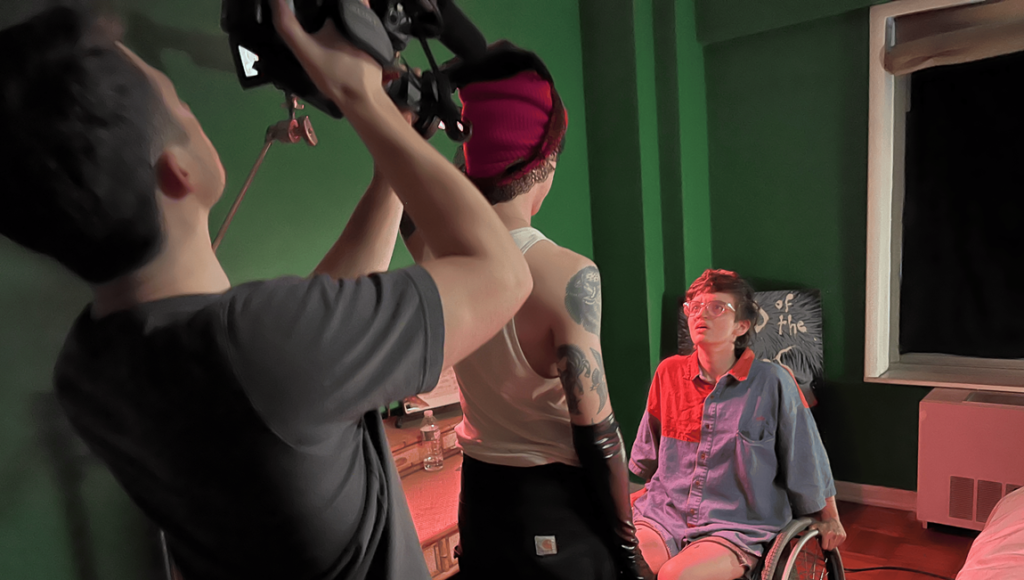
JH: A lot of it. I have kind of jokingly said before that, “Oh, we just picked up a camera and made this movie, but we didn’t. This movie took a huge amount of thought and effort and probably cost more than most people think it did, because making a movie is really hard. When you start factoring in, even the bare necessities of the cameraperson, a sound person, three actors, maybe if you’re lucky, a friend of yours will PA. Poor Ethan, my DP, never got an AC, never got a gaffer, and he basically did it all himself. Even if you just factor that stuff in, that’s still averaging around $1,000 a day for everything combined. I mean, sound people cost a lot of fucking money, as they should.
That scene I mentioned with Reyna in Prospect Park, for example, because I knew I wanted to be outside in the park area at night, we were like, “Fuck. How are we going to do that?” Getting park permits in New York is difficult, and we couldn’t afford them. So we went upstate, and we toured a bunch of places, and we tried to get permits up there, and it wasn’t working. At some point, I said, it, “Fuck it, we just got to shoot this in Prospect Park, dude. Let’s meet at 10:00 PM in this quiet area. We’ll have one guy with like a big light who will be shining for us.” So it was all rather planned out. Though when you’re there, a lot of it is on the go. The stuff in the street, for instance, the opening credits, we had a rough idea, but we kind of just fucked around with that. The nice thing about the camera, the PD150 we shot on, is that it looks like such a hunk of shit physically that no cop is going to be like “Hey, what’s going on here.”
BS: Tell me more about shooting on the PD150. I’m so into how this looks. That lo-fi digital is incredible.
JH: I mean, it’s funny. It’s not like we don’t have access to a RED camera or a Sony Venice. My DP owns some beautiful cameras, but I wanted to shoot it differently. We didn’t have a lot of money. I want to reference this older genre. How can I make this stand out and not look like an out-of-the-box student film? The answer to me was like getting this crunch and grain and grit. We couldn’t afford 16mm or 35mm, and I’m glad we didn’t, because I love digital, and I loved how these cameras look. Happy Life, Mike Bilandic’s film, Inland Empire, Dancer in the Dark, all shot on the PD150.
BS: It’s funny how those were maybe criticized a bit at the time, but all look better than anything now.
JH: Absolutely. I think even Julien Donkey-Boy and maybe even Gummo were shot on the PD150, transferred to 16mm, and then digitized or something crazy. So we have this great look. So much of that is owed to my DP Ethan, who lit so beautifully. Those indoor spaces took forever for him to light, and he did a great job. That being said, I really recommend filmmakers who want to do something a little different to shoot on low-fi formats or different formats. I just bought some spy cameras that I shot some stuff on. I wasn’t spying on people obviously, but I’m experimenting with those or the button cameras or these little Urban Outfitters keychain cameras, like the size of a quarter. All that stuff is really cool, and I love how it looks, and that it looks different. That’s important to me because so many movies look the same now.
BS: I mean, I’m not going to spill the beans entirely, but you know my partner, Aimee, made Cannibal Mukbang, and when we finished this movie, we were so inspired that we immediately came up with something quick and dirty we could shoot on those keychain cameras. It’s really inspiring and attainable.
JH: I mean, even iPhones look great. I have a shitty iPhone, but these new iPhones look incredible. Sean Baker said it best, but I’m sure every filmmaker knows this: if you have good sound, you’re good. That was why the most important thing in our budget, I would say over a third of our budget, almost half, was spent on the sound mix by Neil Benezra. To contrast the shitty image we had, we needed a great soundscape, and he killed it. I really owe it to him.
I’m really inspired to shoot more stuff on shitty cameras. My friend Joao Rosa shot Baby Invasion on different GoPros. It’s just cool that we live in a world where you can do that. I mean, Dry Leaf, right? What was that shot on?
BS: A 2008 Sony Ericsson.
JH: There’s just a lot of stuff like that going on. I’m shooting another project now on the PD150 again, because I love that look so much. I’m doing this other project on those spy cams. I think it’s a lot of fun. It’s like a nightmare for certain DPs, and it took my DP a lot of convincing to use the PD150 because it’s not easy. It’s not like having high-tech new cameras with light sensors, and you really need to figure out how to use them, especially if you’re shooting with tape, which we didn’t.
BS: Talk to me about the cast. You have so many familiar faces, especially for a certain set of people. Larry Fessenden shows up in a very funny moment. Ian Fidance has an incredible monologue. What was your process like for that?
JH: I mean, you probably know this, to be in this industry, you have to be so unembarrassed and persistent. I am the king of literally emailing someone five or six times for a month and a half every week, being like, “Hey, nudging the last thing.” They never answer. And then finally they do, and either it’s like “fuck off” or like, “Yo dude, fine, I’ll do it.” [laughs]
Ian and I met through a friend of a friend, and I was really persistent. Larry, I just emailed him out of the blue because I was friends with Doug Buck. All these people, like Rutayna Alda, I met at an event. Onur Turkel, I met at an event. Guy Maddin, I met him because I was working on PR for Rumours, that movie he did with Evan and Galen Johnson, when I was at Cinetic.
BS: Is that how he came on as a producer?
JH: Yes, it was very generous. I was with him, Evan, and Galen in Cannes. It was Toronto where I became friendly with them because my great-grandpa was a labor leader in Winnipeg, Canada. If you’re from Winnipeg and you care about leftist politics, you might know who he is. He was a big Eugene V. Debs-esque figure in that part of the Great White North. Guy happened to know who he was.
So we bonded over Canadian heritage, and then on a press day in New York, they were on a press junket in some hotel near Lincoln Center. My job was kind of just to hang out with them in between all the journalists coming in, get them water, and shoot the shit. They’re hilarious dudes, and our sensibilities are compatible. We had great compatibility and a kind of rapport. I mentioned my movie, and they were like, “That’s fucking awesome.” Because they love low-budget shit, and I was like, “Hey, Guy, would you consider EPing it?” Evan and Galen kind of looked at Guy, and they were like, “Ball’s in your court, bro, time for you to step up.” Guy was like, “Okay, fine.”
I ran to my computer, sorry to the people reading, but I went on ChatGPT, and I got it to make me an executive producer agreement with Guy Maddin and my movie name in it. I ran to the front desk and got them to print it. I went back to the room, and I was like, “Here it is.” It was like three minutes from his agreeing to do it. He signed it, and I don’t even think he’s seen the movie, but I just emailed him because I know he has a new movie coming up, and he and I email each other, I’d say every few months, just to say hi. He’s so lovely and the most generous dude. Exactly what you’d expect from such a sick filmmaker. I’m just thankful for him letting me abuse his name.
BS: I know that Nancy Kimball, your original lead, left for personal reasons in the middle of production. I imagine that had to scare the shit out of you because it’s like “what do we do now?” Your workaround, casting a new lead, Diletta Guglielmi, and cutting their footage together, makes the movie even better than it would’ve been, I think. How did you figure all of that out?
JH: It does make it better. I mean, look, God bless both Nancy and Dilly. I have no problem saying that this movie paid very little because we had no money, basically, and there was no set schedule ever. It was like, “Can you do it this weekend? Can you do it in two weekends?” A lot of people had to drop out because they have real lives or things that call them from the city, or whatever. So, one of the actors had to leave. I did spin out a little bit, and there was a long period of three days where I was going to jump in and play that character.
Then I found Dilly. She’s Italian, she’s so peppy, and she’s the exact opposite of what this character was meant to be, which is the cynical cinephile. Dilly isn’t a huge movie nerd. It just seemed funny to me that she’s shorter and has blonde hair and is very different from the other actor, who’s taller and dark-haired. It seemed like a hilarious contrast. We fit her in, and so much of the edit was like, “How do we do this?” That required several re-shoots where we had to go back to locations in which we shot with the other actor and then shoot a couple of moments with Dilly there to flash between. I’ve read a little bit of some people’s interpretations on Letterboxd of what it could all mean. Maybe it’s her psyche, or it’s a dream. It really plays more into the Jean Rollin-like weird atmosphere of the film.
BS: Speaking to the Letterboxd of it all, I guarantee there’s a community of young filmmakers who will see this and immediately be inspired. What can you tell them about the steps you took after wrapping? How did you figure out the theatrical of it all?
JH: Well, first of all, the thing that makes me the happiest is when I see a comment that’s like, “This was inspiring.” That makes me so happy, and I’m so proud of myself for that. I’m proud of my team. That’s what I wanted from this, that and the Blu-ray, and I got both of them.
My friend Braden Sitter, who directed The Pee Pee Poo Poo Man, sent me this incredible list of all the movie theaters around the world and their email addresses. Basically, a lot of micro cinemas, not AMC-type places. I spent months, and I’m still doing it. It’s been tens of hours, making my own spreadsheets and making lists of all these places and emailing personalized messages. I will say this: if someone wants to email a million places, do not BCC. The same goes for outreach for articles and press. No one wants to read like a “Hi there (BLANK). You want it to be like, “Hey, I saw your theater here. It looks fucking awesome. I saw you play…” You know? Be real.
BS: I cannot tell you how many press emails I get that are like “Hello, Journalist.” It’s like, can you at least put the effort in of typing my name?
JH: One thing Cinetic taught me is, you make relations with these journalists, and then you email them, and you say what’s up to them from time to time. You make that effort. To whoever’s reading this, Google micro cinemas around the US and you will find at least 20 places, whether it’s Spectacle or Stray Cat or Spacey or Glitterbox or whatever else, these weird little theaters. Just email them and be persistent. Not rude, but persistent.
Many times, especially if you don’t ask for money, which I have never done because I knew I would never make this money back, they will throw it up there. Maybe three people see it, or maybe twenty people see it, but it’s like, there’s this great DIY interconnectedness that exists in the film scene in any city in the world. I think that’s something that is beautiful and should be tapped into.
Comments are closed.