

The Burmese python — an invasive species eating into native animal populations in the Florida Everglades — might be at the heart of Xander Robin’s documentary The Python Hunt, but it’s man who has ultimately assumed the role of predator here. The state’s annual Python Challenge, unfolding over 10 consecutive nights in the film, is positioned as a “removal contest” organized to catch and kill these reptiles as a means of protecting the endangered ecosystem from them. It, however, attracts participants whose intentions aren’t always as high-minded. Take Anne Stratton, an 82-year-old gin-swigging widow whose self-stated quest to “save the native species” unexpectedly segues into the blunt proclamation that she wants to find these pythons so that she can “scramble their brains.” Then there are those who do it for sport, or for the $10,000 prize money that’s gotten at least one such hunter out of debt. For Julian Yuri, on the other hand, the adrenaline rush of python-hunting has come to replace the highs of his former drug habit. “Now I’m hooked on this shit,” he explains.
For all their enthusiasm to catch as many pythons as they can, however, there are topics the documentary’s subjects can’t seem to come to a consensus about. After 900 imported baby pythons escaped into the Everglades in the aftermath of Hurricane Andrew in 1992, has their population since exploded to 50,000 or 500,000? Reports remain inconsistent. Have they really eaten 90% of the mammals in the wetlands or are they being unfairly scapegoated? Opinions vary. Even the Python Challenge itself is referred to as either “World War II” or “the Burning Man of snake hunting,” depending on whom you ask.
Robin, however, isn’t immune to the charm of these reptiles. At various points during The Python Hunt, the camera homes in on numerous subjects developing “snake eyes” or a look of fixated fascination with a reptile they’ve just discovered. Moments of levity come from former professional hunter Jimbo McCartney, who, annoyed with “yahoos” from other states arriving in town for the hunt, plants fake pythons to hinder their progress.
On the occasion of the film’s U.S. theatrical release, I spoke to Robin about the dangers of trawling through reptilian habitats at night with a camera crew in tow, being inspired by filmmaker Michael Mann and how he found his distinctive subjects.
Gayle Sequeira: How did you first come across Florida’s Python Challenge?
Xander Robin: I grew up in South Florida and live there now, most of the time. I’d made a short film about reptiles [in 2017] and thought that was going to be the next thing I made a feature about. So I got involved in the filmmaking community there and was just trying to make that movie. But over the years, the project got stuck in development hell. In July 2022, one of my friends, the documentarian Lance Oppenheim, asked if I’d consider making a movie about this python competition he knew about. It’s probably an idea he was thinking of for himself, but he knew I was interested in making a documentary and he was like, “You’re the reptile guy!” I’d made a lot of hybrid films that were between narrative and documentary, and I was excited about the process of casting different characters so it felt right. So a month after Lance reached out, I joined that year’s competition to see if there was really a movie there.
GS: How did the experience of becoming a participant inform your approach to the documentary? Or even the shoot itself?
XR: I was just getting in touch with different hunters and getting in the back of their cars. Sometimes, I’d be filming with my camera, but mostly, I was just learning. I’d spent a lot of time in the Everglades during the day, but python-hunting takes place at night. Just the sensory experience of being out there — you lose your mind. And I wanted that feeling to come through in the documentary because it contributed to the varied behaviors of the hunters out there. There was also this sense of mystery — you could be out there and just not see anything for so long even after being told there were snakes around. And just randomly one night, as you see at the beginning of the film, we were following some people looking for chameleons and they found a python outside the Everglades, close to civilization.
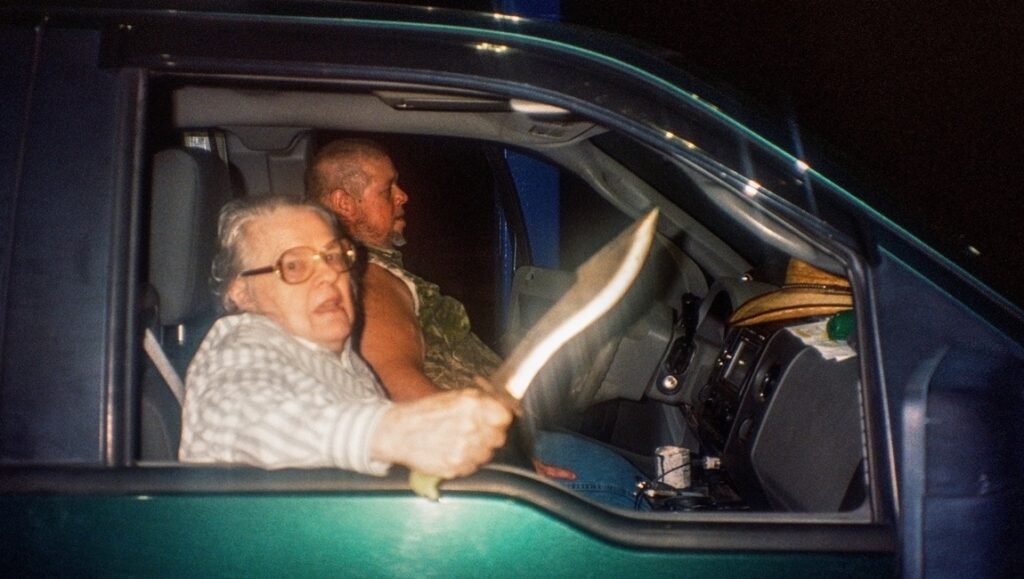 GS: You’re in the Everglades filming pythons at night. You’re getting right up close to them. There are other deadly snakes, like the cottonmouth, in the grass. There are gators around. What sort of safety precautions did you and your crew take?
XR: [Laughs] There was a moment when we were peer-pressured into following some hunters into the water. We had waders that we could’ve put over our boots, but they were about a mile away back at our truck and so we just ruined our clothes following them anyway. We had to have faith that the hunters we were following were experts and trust that they had the ability to protect us. The day after that though, we decided that we never wanted to do anything like that ever again. We had a medic on standby for the rest of the shoot. I’m willing to do anything for a film, but I wanted the rest of the crew to feel comfortable buying into this project.
Knowledge is power on a film like this — you learn that being in the water during the day is a lot safer because alligators are nocturnal. If we’re out there at night, they have the advantage because they can see better than we can and we’re in their domain. We went through all the different species of snakes so we could identify what they were. We were worried about getting lost or dehydrated out there; the cottonmouths were actually more of a danger for the people we were filming.
GS: What were some of the practical challenges you had to navigate during these nighttime shoots? I’m guessing you had to be careful not to make too much noise so as to not risk scaring the snakes off. In terms of lighting, were you relying entirely on the hunters’ trucklights, headlamps, and torches?
XR: The people competing made so much noise. They were moving around so much and definitely scaring away the snakes. [Magazine writer] Toby Benoit liked to say, “The snakes haven’t survived by being stupid.” They understand vibrations. They understand that during these 10 days, there’s going to be a lot of traffic and activity across these roads, and so they don’t cross them looking for food. We had three units filming the hunts and each unit had four people. Filming a hunter might’ve been bad luck because they were distracted by us, and we, on the other hand, were trying to be as natural as possible. The only times we would actually catch something was when we were being very quiet and not doing interviews, just following and filming. It might’ve been boring, but we hoped that if we did this for a few hours, we would see some results.
To be able to see into the night is really difficult. But because a python’s eyes don’t reflect lighting the way a gator’s do — which makes them extremely hard to spot — all the hunters have rigged-out trucks with as many lights as possible. And so we didn’t need to use any other lighting. Sometimes, we’d maybe use one flashlight but that was it.
GS: How did you narrow down your subjects? All of them are such distinctive characters.
XR: It was easy to get distracted by how many interesting people were out there. We were also hoping that some of the people we were following would catch some snakes, which was impossible to predict because those who were good at it had bad luck and vice versa. The year before I shot the film, I was in the Everglades and I met [science teacher] Richard Perengi, who I thought was a local at first because he had a red trucker hat and a handlebar mustache. But he turned out to be from San Francisco, which I thought was very unusual. A few days later, I met Jimbo who was talking about all these “yahoos” coming from out of state to join the competition, and I was like: okay, Richard needs to be in the film because of what you’re saying.
If Jimbo was the anti-hero, we needed someone to be the flipside of that, and we searched far and wide. We were interested in Toby because of his articles. And he was so generous. He had arrived with Anne, and they had this microdrama of their own going on, where she just felt trapped because she expected one thing and the reality was just not what she wanted it to be. She was having the experience that I had the first year I was there, when I was like, “Wait, I thought there were going to be pythons everywhere.” And there weren’t.
For the interstitials, we would go on explorations to find other people to create the kaleidoscope of the kind of people who would go out and do something like this.
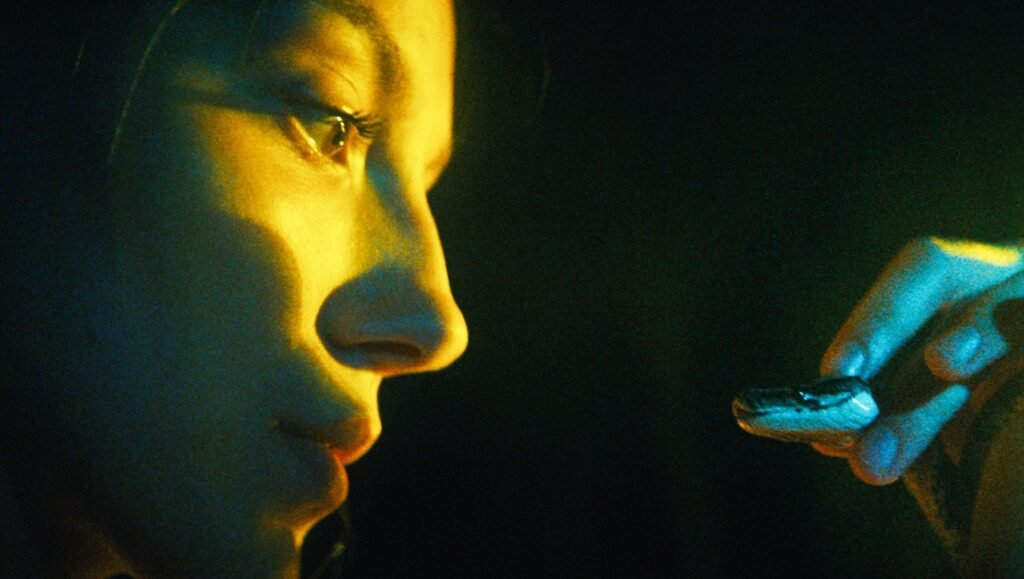
GS: The actual hunt takes place over 10 nights, but you don’t cover all 10. You provide these glimpses of the hunt and then spend more time with its participants as they go about their lives and routines in the daytime. Was that decision informed by how so much of hunting pythons is just watching and waiting, refuelling your car, driving the same paths over and over?
XR: Yeah, yeah. It became clear that this was not a serious competition, at least not for the people participating. It was more an experiential thing for them, even for those who were trying to win. If you’ve seen [American documentary filmmaker] Les Blank’s movies, they’re trying to capture an experience, and here we found that to be just as interesting as the hunt itself. There are already shows like Swamp People: Serpent Invasion that focus more on numbers and hunts. We wanted to have as much of that as we could, but we were also excited to see what people were doing as soon as they woke up and when they got back. We were always looking for people who would be different on Day 1 of the hunt versus on Day 10, but in a documentary, what’s fascinating is you can’t really prompt someone to be different, all you can do is just show as much of their inner life as you can. We had around 250 hours of footage since we shot for five hours a day.
GS: You splice the footage you’ve captured seamlessly with archival material and personal photographs your subjects have given you. What was the process of collating it and putting it together?
XR: It takes longer than you’d think to find the right material. We just wanted to paint a picture of who each person was. Luckily, all of them were just happy to share photos of themselves. A lot of the archival material comes from the website Florida Memory, which had these amazing 4K scans of 16mm footage of the state. They hadn’t put the higher quality versions on the site, but when we reached out, they sent us a drive with all this amazing Everglades footage. When you use archival footage, you never want it to look like a huge downgrade from what the audience has been watching. So they were a huge help.
GS: There’s this chilling sequence toward the end, when a different python-killing contest frames itself in aggressively jingoistic terms. The snakes are called “foreign invaders on American soil” and the fight against them is compared to war. Could you talk to me about some of the creative choices there, like the announcer’s voice gradually becoming muffled and that shot of pythons being skinned overlaid on top of Jimbo’s face?
XR: Some people have accused the film of not taking a stance, and I’m like, “That was the scene in which we, as editors, put the footage together in a way such as to take a stance.” There’s the government competition and then there’s this alternative competition, and what the government tries to hide from their removal efforts is the cruelty of this whole enterprise. We were trying to make a statement about what Jimbo was feeling. He was looking for an alternative to the government competition, and he found it to be just as cruel. I get that the announcer was trying to fire up people to remove snakes that were killing wildlife, but at what point does this become: we’re getting too excited to kill something that’s so cool. I like that we did that scene without requiring narration from Jimbo because it pushes the audience to decide how they feel about it.
GS: The documentary is bookended by the Todd Rundgren song “Tiny Demons.” What made that song the right choice for you?
XR: I worked with this composer, Nick León. He’s a producer and solo artist, and this was his first real score. I really wanted a sense of Florida in the film, and so the whole soundtrack has this contemporary Florida vibe. I’d been a fan of Todd Rundgren for a while, but “Tiny Demons” came up when I was listening to the Miami Vice [2006] soundtrack. When we were doing the night shoots, we were always inspired by Michael Mann and his romanticism of the nighttime, and so this song made complete sense. I’d listened to the lyrics and the whole vibe of the song really meshed with all the other music we’d made for the film. We put it at the beginning as the opening credits played, and then it just made sense to bring it back for the end. Licensing music is always tricky, and so we were just lucky to be able to get this. We have this other song, “Everglades,” which is the first recording of the song from 1959. It’s since gone on to be covered by several other artists. It was important to have that classic country vibe there, but also this ’80s nighttime vibe for the other sequences.
Comments are closed.