
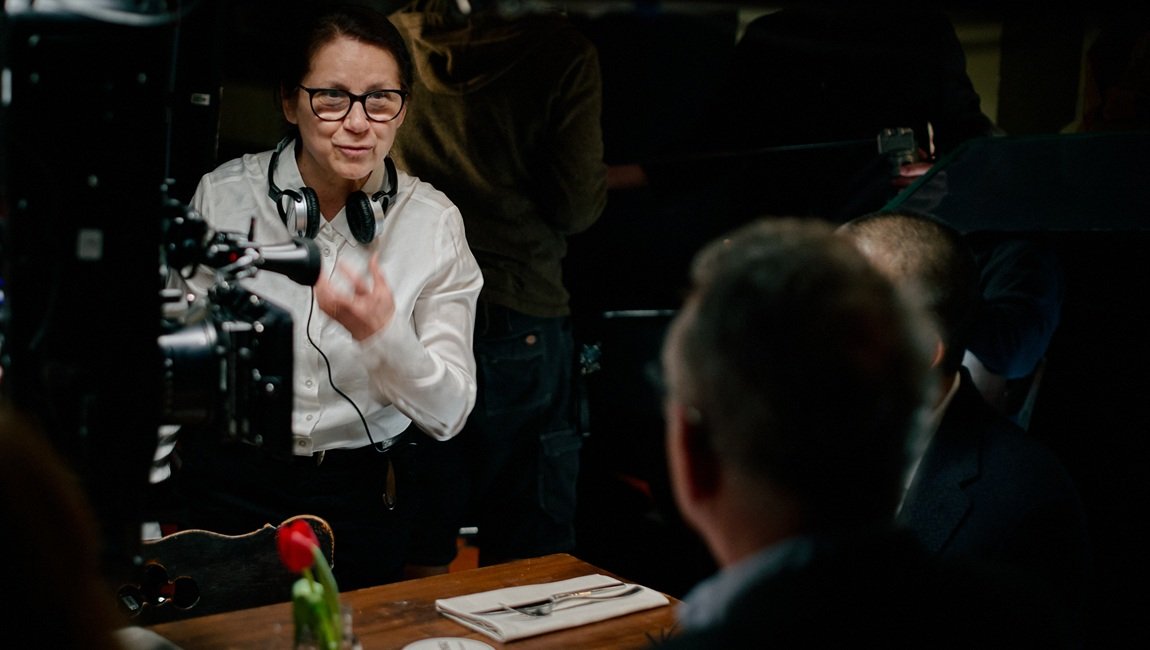
The plant world is a marvel of sight and sound, this Ildikó Enyedi knows. Across several features, the Hungarian writer-director has been steadily uprooting the secret poetics of non-human lifeforms and the connections humans make with them. In her trenchant gaze, these living organisms are self-effacing forces transforming the lives of humans longing for shifting levels of intimacy and therefore their perceptions of what is real and otherwise. Her Venice knockout, Silent Friend, nourishes that thematic contemplation like a butterfly to pollen — to a degree that is both sensual and sprawling. In the film, a centuries-old ginkgo tree that was once a silent, solitary object establishes a new, organic order beyond the sensory limits of the human protagonists.
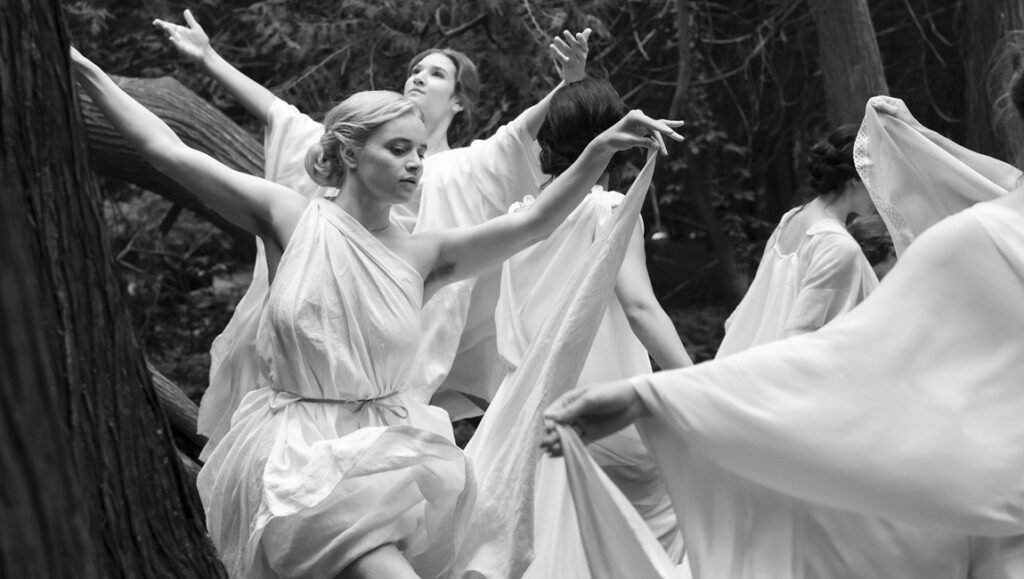
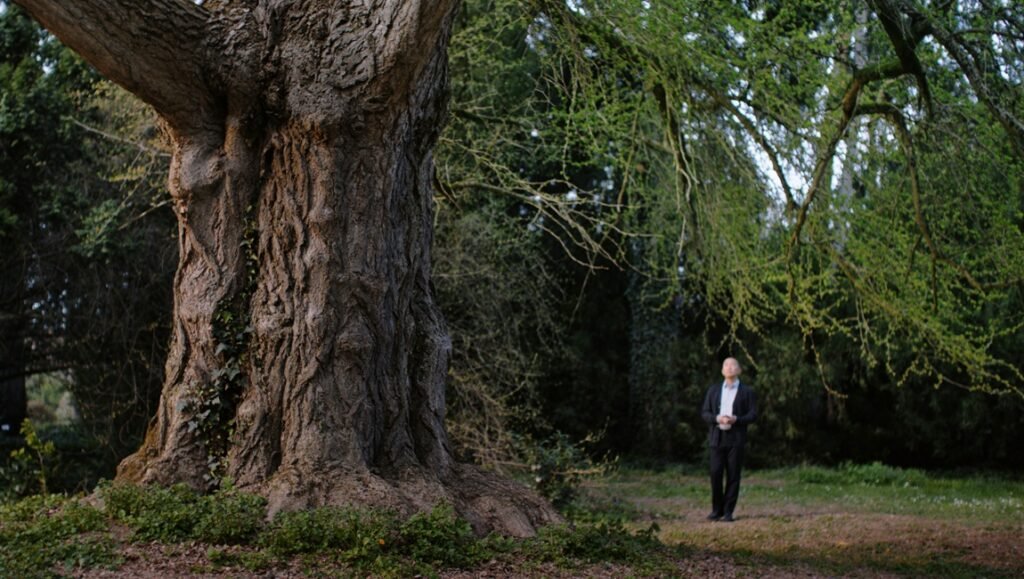
Drifting across time and formats, Silent Friend invokes a triptych of stories all unfolding in Marburg, a local German college, where the sturdy ginkgo tree, which all three protagonists interface with at one point or another, is a constant, seemingly muted presence. There, under COVID lockdown, a visiting neuroscientist from Hong Kong, Dr. Tony Wong (played by Tony Leung Chiu-wai, among the most sensual of current actors, in his first European film) is stranded in solitude as his initial research on newborn consciousness is halted indefinitely. Soon, he strikes up a friendship with fellow scientist Alice Sauvage (Léa Seydoux, who starred in Enyedi’s The Story of My Wife), whose research on the natural world led him to commune with the mighty ginkgo. In 1908, the brilliant Grete (Luna Wedler, picking up the same character name from The Story of My Wife) enters the university as its first female student, studying botany and later discovering photography, while wrestling with the shameless sexism of the time. In 1972, reclusive farm boy Hannes (newcomer Enzo Brumm) takes interest in plant and human bonds as he happens upon the liberated Gundula (Marlene Burow), who monitors a purple geranium that the former will soon takes care o, discovering the sentience of plants just as he encounters first love. The world is in flux, and the ginkgo silently bears witness to it.
As the three adrift souls come in close contact with the mysteries of the plant world, Enyedi unspools a film that is primarily built on sense memory and populated by psychedelic images of budding flora, all set to a soundscape that bewitchingly unmoors the mind. Whereas other filmmakers plant stories, Enyedi unearths them, exploring the deepest of layers and fissures ripe for cinematic interrogation. Here, the director gestures toward the point at which the echoes of the earth assume personal and transcendental weight. And what follows this shifting of our constrained human gaze, she suggests, is the possibility of leading better lives. To a fascinating extent, the film even recalls the staying power of Chantal Akerman’s cinema in that it reconfigures the minutiae into a kind of spiritual possession.
Ahead of Silent Friend’s release, I hopped on a Zoom call with Enyedi to discuss Buddhism, what consciousness is, and the work that went into hallucinating the sentience of the green world. The following has been edited for flow and clarity.
Lé Baltar: How did you come across the centuries-old ginkgo tree, and what made you want to conceive an entire movie around it, or at least a relationship with non-human species, in much the same way that your second feature, Magic Hunter, was about an oak tree living for around 600 years?
Ildikó Enyedi: Layers of time, which are unconsciously reflected in our present, have always interested me. And many plants, for example, trees, have a much, much longer lifespan. Once I had a film project about a crow, which can live quite long as well. So, somehow, perhaps the first thing [I wanted to do was] just to make this not-so-big shift in the perspective and not to look at the surrounding beings, the plants, as objects, but as part of our living community. And if we make this little shift not just in mind, but for real — how differently we [will] feel. And it evokes a tree’s perspective, this film, but it doesn’t want to be so pretentious to tell you, “Yeah, this is how a tree feels.” We have our very human limits. Also in our senses, our body. Also socially, psychologically, we are a construct of our time. Somehow I wanted to show human attempts to create bridges, interfaces, to get a bit closer to what it could be to be a tree.
LB: Obviously, Silent Friend is a natural extension, pun intended, of how you invoke the secret poetics of the plant world in your work. Were you also obsessed with plants growing up?
IE: In a way, yeah. This is sort of different from the general point of view, which was very important for me. You live in a different world if you know that the animals and plants around you have their reality, have their equally valid but widely different reality [from] yours. It questions your reality; the whole [notion of] objectivity becomes questionable. You become less the default. And the world just opens up. And that’s true that in my teenage years, in the ‘70s, when actually so many things were questioned, and, in my opinion, so refreshingly [questioned], and somehow it would influence [my idea of] human-to-human communication, how we treat each other, even how we treat ourselves. So, I passionately followed the plant communication experiments for decades, that’s true. But not because I grew up on a farm or [because] I am a very especially close or a good person with plants, but because of just looking at the world with different eyes and how much it gives us.
LB: Talk to me about resorting to not just multiple but generational narratives while putting the film together.
IE: Sometimes, thank God, quite rarely, people and spectators ask me how the humans in this film are connected with each other. And I purposefully didn’t want to have relationships between them. That one is continuing the research of the other, for example, or anything like that. Because of our very natural instinct to focus always on the human, if not, then on the animal, something which is moving, which is furry, which has a face. And, somehow, even with the structure of the film, I try to offer possibilities, entrances, very different sorts of entrances, to the spectators. To another perspective, other worlds, and through the senses.
So it’s very true what you say that it wanted to be a sensual film, and it tries to tell a lot without words, through evoking, for example, what it was to be a young student at a university campus at the turn of the century, what it was like if you were a female. And then show the same garden, the same campus, same buildings, same little lake at the center of the garden, and we are in the ‘70s, and we see that street garden very differently, with widely growing grass, and the students, who before were just walking on the little passes, they are sitting in the grass, their hair is widely growing. Then you have a very sensual experience about what it was to be a young person, a young student in the ‘70s, and what sort of quite different reality they put together, because they approached life differently. So, it is also encouraging, perhaps, to shift the gaze a bit and put together a more friendly, less lonely, and more relaxed and less [focused] on fight and survival [kind of] reality.
LB: And that shift in the gaze leads to something quite distinct in the film, in that I really appreciate how phantasmagoric and impressionistic it feels in terms of its visual flourishes, but, more strikingly, in the way it flirts with time, and the three stories move so fluidly and kind of bleed into each other, instead of working as more straightforward chapters. What do you find so fascinating about upending our notion of time, and even reality itself?
IE: Besides reading about plant communication, I was always fascinated about this hard question, “What is consciousness?” And I saw how it was defined and redefined and again redefined, and how much we are ready to share it with other beings. How the mind works, if we don’t transform it in a polite way, into a narrative for others, is actually very colorful. Parallelly, we are jumping from theoretical things to very sensual ones, to past, to present, to the person with whom we are speaking, but also reacting to what is around us.
And, somehow, what was very defining for me in the ‘70s was an essay of Thomas Nagel, an American philosopher, which made some waves in that time: “What Is It Like to Be a Bat?” So, the central part of consciousness, how much of it is also the fruit of the body. And then some years ago, I read a book by Anil Seth, a British neuroscientist, and on the front page of my script, there was a quotation from him: “We are hallucinating all the time, and when we agree on the nature of our hallucinations, we call it reality.” And it struck me. [It’s] very meaningful for my natural feeling of existing, and as soon as you look at reality as not just some objective thing — which is oppressing you, and you are a hostage of it, and you have to revolt against or fight it, or fit in — but as something you actually create because that’s what we are doing all the time, we create from the data a sort of reality, that is very freeing. That helps also not to be really inside another being, another human being even, but to somehow evoke that sort of feeling.
LB: Something that also drew me to the film is how generous you are with the use of natural light, even in the black-and-white bits. Were you actively running after sunlight on set? What was it like when it wasn’t the desired weather you had on the day of filming?
IE: Well, for the turn of the century period, we chose black-and-white and 35mm, this very rich texture of the 35mm, because what Grete discovers from the world, what is new, besides the sensuality of plants or the sensual life of plants, is their structure, so we needed strong sunlight. For example, when she’s running out from the entrance exam, and then she enters into the garden, we shot it twice because, on the first day, it became cloudy when we arrived. We shot it because we didn’t know if we had time to reshoot it, but then we reshot it in sharp sunlight, because high contrast focuses on the outline, on the silhouette of plants, and you can reveal much more of their structure. And that’s what she’s doing also in the photo studio: to light them and reveal their universal structures. Some of them have even spiralized as the galaxies, that’s her discovery.
And, for the 2020 [period], we used digital, and we tried to keep it nearly always with the covered sky and not to have sharp contrasts of shadow and light. These are huge, wide shots of spaces where normally there are many people, and now you have only this tiny figure of Tony. So, somehow, as we are advancing in time, the proportions between humans and nature are also changing. It becomes very, I would say, immense, even if it’s a town garden in 2020, and we are much more on the human level and on an intimate level with Grete.
And with Hannes in the ‘70s, we are very much with him, we are empathetic to him, but nevertheless, we observe this guy, so the shots, the nature, are bigger around him. And there the sunlight is used very much in the way impressionist painters used sunlight, just to shoot the moment, really, shoot how every single piece of grass is differently hit by the sunlight, so an impressionist aspect was very much of the ‘70s, experimenting with the senses. And the 16mm, this very grainy, colorful 16 mm, was right, because it blurred the silhouette, it blurred the contrast, and focused us on the colors.
LB: Now, I want to talk about the talents that you have here, who have helped you bring the film to life, especially Tony Leung. I’ve learned that you specifically had him in mind while writing the film. What were your conversations like with him?
IE: [It] is not explicit and it’s not by chance that it’s not explicit, but even if I’m European [and] rooted in Europe, Buddhist thinking is close to me, and this is very much in the film as well. I’m so amazed how the second part of the 20th century, and in the last 20 years, natural sciences have somehow approached, in many layers, Buddhist thinking. And when we had the first Zoom meeting, Tony’s first question wasn’t about the character, the role, what he has to do, who is this guy, etc. He asked me, “Isn’t there a sort of a connection to Buddhism in this film?” And I was so happy that he was much more interested in the whole background of the film, so he became, from the first moment, such a precious ally. And all our conversations and the materials we were sharing and discussing, they were not about how to play this guy, how to build a character, etc. No, I think he understood deeply who he is and how to make it [work]. He knows way better than me. So we spoke about the thinking behind the film because it very genuinely interested him. It was great. But also because I felt that he can be so fully and richly communicative just with his presence. His strength [is that] if he is on solid ground, if he really knows a lot about these territories, if he has time to form his own opinion, his own position, [he really makes the effort], so with him this was the work before we started to shoot. And the other actors, it was really different. Enzo Brumm, it was his first film, and while working on every scene, he also learned how to really exist in front of the camera and keep his focus, etc. So, it was very, very different with each of them.
LB: The soundscape feels so alive here in that it evokes an entire world on its own, accessing a part of us that is equally cerebral and sensual. Tell me how you went about that.
IE: Well, I was sure that when I wrote the script, it was [so] full of smells and touches and things that you cannot show on film, because it’s just image and sound, that I had to find ways, and sound design will be crucial. And also what you said about one time bleeding into the other, when we are just surfing from time to time, and these are not chapters. Sound is also leading us in a very strong, sensual way to really float in time and create this sort of texture of the film and structure of the film, which is not rigid. I worked with an amazing French sound design team, and we had two different tasks, let’s say, to bring those sort of natural sounds, which we are used to, but in most films are just backgrounds. To pull them a bit, not simply louder, but give them a bit more attention. Make the natural sounds into sort of the protagonist of certain scenes, and tell a lot just with them.
And I worked with an amazing sound designer who worked on big nature films. He knows every single bird, which is it, what sex is the bird, at what time of the day it is singing, what time of year that bird is singing. So, every single bird that you hear in this film is really exactly chosen to evoke a feeling, to be really there, and make us feel that, unconsciously, it’s a rich, living world. These are not objects and they have a lot of secrets. So that was one thing, and really a very, very detailed work just to find what sort of wind to choose. For example, Tony has this experiment with the peyote and puts it on the AG net, and his whole journey, let’s say, starts with the rising night wind. So, the forces of nature are around us and more present through sound design.
And then we had to invent sounds for things that we cannot normally see or hear. Half of a tree is under Earth, for example, so the root system had to have an imaginary sound. But also, for example, at the very beginning of the film, when this seed is opening up, we worked two days on that sound design because I very much wanted, from the first moment, to show these very gluey, uncanny, a bit alien sounds. That this is not some little film about cute little plants, it is about the force of nature. And my colleagues knew very, very well at every step what we were aiming for, and their beautiful creativity was very, very necessary for this film. And thank you for asking that because so often we forget about the sound.
LB: Yeah, and that intricacy really reflects well on the film. Now, I wanted to ask about the aspect of being personal in the film. Some filmmakers are indifferent to the gesture of being openly personal in their films because they reckon that that can be limiting to some extent, but you, on the other hand, embrace that aspect of your filmmaking. What do you like about being so personal on screen? Were there instances where you try to sort of resist that instinct or restrict the extent to which you allow yourself to be personal?
IE: I couldn’t ever be autobiographically personal. Even in this film, there is a tiny secret; Hannes is very much my husband as a young student. But otherwise, I really need the distance, and that’s most of the time. The most personal things in my life are the things I’m thinking about, following, or reading about, so somehow it can be very close to me, but not autobiographically personal at all.
It is also a way of reaching out to people, to the spectators. Each film has a very strong desire to communicate and not to force something on them, but just to open possibilities, to think about innovating together, even if we have rare chances to really meet. So it’s sort of an imitation in what I find fascinating, what I am really enthusiastic about, or really curious about.
LB: Will participatory science, like you have here, continue to be this sort of guiding light in your next projects or next movies?
IE: Yes, I think so. The state of science reflects a lot of our actual possibilities, and somehow I find that there is also a glitch between everyday life and where science is. And the tenderness, the caring, the real attention of actual science, instead of a very appropriating and pretentious science, is something that could save us if we just follow the scientists in time.
Comments are closed.