
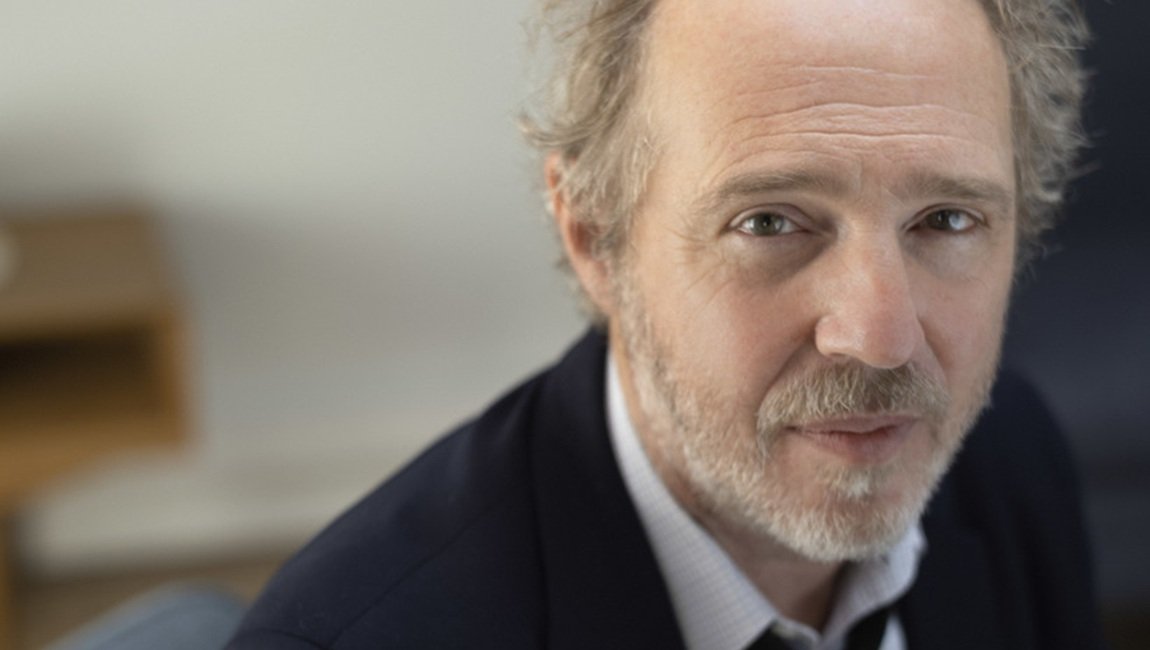
Arnaud Desplechin cares very little for narrative cohesion. In a career filled with elliptical, loose threads as films, Two Pianos finds the director at his most free-flowing. Like the jazzy score underneath it, the film glides along, catching whatever beat feels natural within the moment. One minute, we’re following a happy couple, madly in love; the next, a haunted musician sees what he thinks is himself as a child in a park. It’s unclear how or why these people are connected. Maybe they aren’t. Despite a brief meeting between them early on in the film, Desplechin leaves his web tangled for far longer than most would feel comfortable.
Speaking to the French auteur, you’re immediately struck by how the conversation takes the shape of one of his films. He’ll answer your questions, but not before taking you down side streets and alleyways. A question about the French film industry leads him to profess his love for the artistry of Die Hard. Ask him how he balances his humor with grief, and he’ll tell you it’s because he’s “stupid,” but, of course, you know this isn’t true. He even manages to weave together a small detail that you might have included about yourself in the middle of the conversation as you’re wrapping. Like his films, it all ties together. He’s a master storyteller, and to understand his conclusions, you have to experience the digressions.
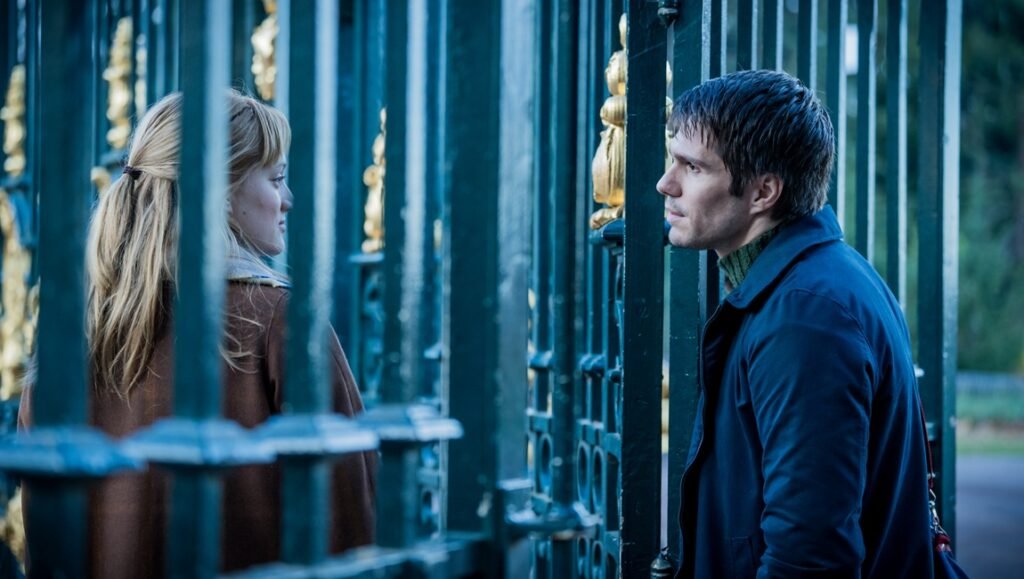
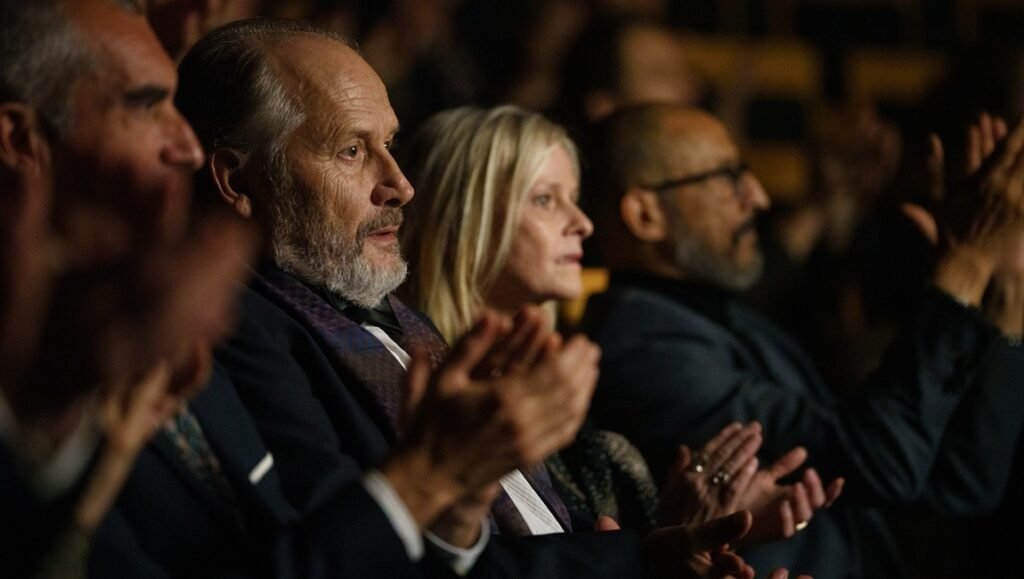
Two Pianos, in easiest terms, follows said haunted musician Mathias (French heartthrob François Civil) as he returns home from self-imposed exile in Japan. One day, while settling back in, he sees what he thinks is himself as a small child in a park. Elsewhere, a happy couple, Claude (Nadia Tereszkiewicz) and Pierre (Jeremy Lewin), are about to experience a life-altering tragedy. Jump cuts and tonal shifts abound, Desplechin meanders us through in that way that only he knows how. The great Charlotte Rampling shows up as Mathias’ mentor. Claude tells a terrible joke during a funeral. And all the way through, you’re rapt, trying to piece together how this puzzle works. It’s his best film in years.
Ahead of its theatrical release, Desplechin and I sat down during the film’s U.S. premiere in March at Film at Lincoln Center’s Rendez-Vous With French Cinema. Our winding conversation is filled with spoilers about the film, but if you’re at all familiar with his work, that hardly matters. As cliché as it is, the journey is always more fulfilling than the destination with Desplechin. As such, it should be no surprise that this is one of the most enriching conversations, top-to-bottom, I’ve had with a filmmaker.
Brandon Streussnig: You co-wrote this script with Kamen Velkovsky. Your initial idea was wrapped around the scene of a woman telling a joke at a funeral to awkward silence, while Kamen’s idea was that of a man who believes he sees himself as a child in public. It’s not immediately clear how those two things intersect, especially tonally. Can you tell me about melding those together?
Arnaud Desplechin: You’re right, it came about as one of the stories of the woman in the cemetery, which came from me, and the other story about the guy seeing himself with the face of a child came from Kamen Velkovsky, the co-writer. The film was born when I was asked to come in, but what do we do with this child, this mysterious child? Kamen said, “Oh, maybe the child is of the woman in the cemetery?” Now, here we have this film.
I realized that I wanted to make a film that can be uncomfortable for part of the audience, but I wanted to break my film into two separate parts, with the break being the death of Pierre in the ambulance. You have one film, it’s its own film, and then that film stops when Pierre dies. The benefit of it was the fact that after Pierre’s death, the ghost of Pierre was floating around for the second half of the film as an endless mourning or a regret of a friendship. I love the line when they are in the park, and Mathias says to the child, “I don’t remember if I was more in love with your father or your mother.” Today, after the editing, after the mix, after the French release, et cetera, I think that you have in the film two women that Mathias loves infinitely, as mad as it can be, one being Elena in the first film, and then Claude in the second film.
BS: I want to expand on that funeral scene. It’s an incredibly funny and honest moment. I don’t think we really like to talk about how moments of grief can lead to very strange, often humorous reactions. There’s a world where that scene lands with a thud, though. How did you find the balance in humor and tragedy?
AD: I think I find that balance because I’m playing all the parts before I cast the actors. Sometimes when the actors are in the room, I say, “May I be you for a second?” I like to think of myself as stupid, or at least really close. So I’m playing the suffering, and I think it’s funny. It’s funny because I’m stupid. So I have to accept that. So when it’s tragic, I have to think, “I’m losing my husband, I’m gentile, there are all these Jews around me, I’m feeling awkward, and I can recall there was this joke about the guy with his dick. No, I shouldn’t say it. It’s so embarrassing.”
On the other hand, each time that I see Charlie Chaplin falling on his butt, I think it’s so tragic, and it brings tears to my eyes. He could hurt himself! So the balance between the two of them is that I see in any event of a human life from a tragic point of view and a ridiculous one. We have to accept and embrace the fact that we can be dead stupid, or we’ll miss the appetite for life. I just accept life whenever it’s tragic, because life is tragic, and I accept it when it’s ridiculous, because we are all laughable. Then the actors love to embrace these two dimensions of a human life.
BS: I really appreciate that this film shows the reality that often goes unspoken, that you can love two people at once, and that your feelings for them can be both different, yet equally as strong. Sometimes that unfortunately leads you to someone else, and there is inevitable pain. Yes, there’s tension here, but you approach it with zero judgment. I’ve been in relationships where that’s the case, and I just found this so, so honest.
AD: You know, you have this scene, which is brief, where young Claude is with Judith on a train, and she’s playing a stupid joke. She’s saying, “Okay, do you love this one or do you love that one?” Mathias is scary. Pierre is comforting. Is she interested in being a bit frightened by Mathias? Or will she land on the side of reason with Pierre? She says, “I stopped taking my pills, and the first one to get me pregnant will win me.” She’s playing a stupid game, and I think she’s playing that joke to show off in front of her friend. But she’s 19 years old. Who could judge someone who is 19 years old? I’m not someone who could judge someone who is 19.
So yeah, she did a stupid thing. After that, she paid the price. She paid the price, and the price is immense. It’s too much. It’s too much for her. Because she is with Pierre, she loves him, and the child is not his. She doesn’t know how to say it. She doesn’t dare to confess it to Pierre. She’s had to live with this silence, with this solitude during the child’s entire childhood. So it’s terrifying. I want to embrace her, to comfort her, to say, “It’s not that bad. It’s not important. Pierre loved you. Mathias loves you. It’s cool. I mean, just accept it. Embrace it.” That’s how I see it.
BS: Classical music is inherently dramatic and cinematic, and here it’s at the center of your film. Your previous work has touched on the world of music, but what made you want to set an entire film around it?
AD: What I love about that is it’s the center of the action. The music was not there just to be where the audience can have a cool moment or for it to feel like a pose. It’s not a pose, it’s a threat. Take the last scene when he’s supposed to arrive and to play Chopin. Will it be better than the other ones? Will he win the contest? Claude asked him to lose the contest. Will he say, “No, I’m going to win it.” There is the suspense.
That’s what I love. The fact that the music is not there just to accompany the storytelling, it was the story itself. For once in my films, there is almost no score, because I thought we can’t compete with Bartok or with Bach or with Chopin. It’s not possible. So we have to find something else. I was listening to Pharaoh Sanders, the music that he composed with the Floating Points. I love that album, and so we improvised something like free jazz with an orchestra and a saxophone solo.
BS: I love the look of this film. It’s so unlike your other work, particularly the handheld camera. You’re working with Paul Guillhaume, the great cinematographer of The Five Devils, among many others. What were your conversations like with him?
AD: It’s very sensitive. It’s just intuitions or feelings. It’s just like with the actors, it’s not all recall. He’s bringing his ideas. Everything is staged and storyboarded, not with drawings, but with photos, with the app Artemis. It was the first time that Paul worked that way, with something so precise. He was afraid. He never told me that he was afraid of that, but I think he was afraid that he might be too rigid. Each morning, I said, “Okay, this is what I planned. This is what you won’t do. You would do something else. So please improvise.” We were just plunging into each scene.
At one point, you have the scene with the mother and the child in front of the bookshelf, and they are cleaning the dust off the book just after Pierre passed. Paul did something, and I didn’t feel comfortable with it, because we had technical problems. We had the windows behind the boy, so it’s a counter-light. How do we manage it? We started with the shot on the boy, and after that, I knew that we would have the reverse on Nadia. I said to Paul, “Look, look, she thought she was hiding a secret for eight years. Suddenly, she realizes that Pierre was aware, and it’s an absolute relief.” So she has to be struck by light. The light, the truth, doesn’t strike the kid, it strikes her. She understands something.
So I was telling him the meaning of that, and Paul did a wonderful thing: “Oh, I get it. She’s struggling. Yeah, yeah, sure.” He took a mirror, he broke the mirror, he took some paste, he glued the broken mirror on the wall, and put a light on the mirror, and then the light was reflecting, and you had this high exposure on her face. The scene could now exist.
BS: You’re known for your jump cuts, and I always find them to be so refreshing. You have such trust in your audience to let you take them on the journey, even if it isn’t readily apparent where we’re headed. I think the jumps in Two Pianos are some of the most striking of your career.
AD: I’m trying not to capture moments of life. No. Abdellatif Kechiche, who’s an absolute master, is capturing moments of life. I’m not able to do that. So what I’m able to do, perhaps, is to capture a moment of truth, like these lights striking the face of Claude when she suddenly understands that there was no mystery in her family.
I’m trying to capture this moment where someone is saying something so important and bigger than himself or bigger than herself. That’s where these jump cuts come in. In my films, there is no script supervisor. I don’t believe in continuity. I’m not there to tell something continuous. They have to be moments. Moments where life is bigger than what it is. That’s what I’m trying to do on the editing table.
I was really pissed with Laurence Briaud when she started to edit the film in a very classical way. I said, “No, no, no, you have to stutter. You have to be more awkward than that. Please brutalize the audience to make them see the truth.”
I remember when we found them on the editing table, the first jump cuts. With the story in the opening, “The Hasidic Tales” by Martin Buber. Seeing the story, you say, “You see?” And the wife is saying, “Okay, do you see something in the water? I can see a yarmulke. Okay, let’s grab the yarmulke,” which we call kippah in French. Then he’s taking the yarmulke. Then the husband says, “Okay, I will be back home.” And who is back home? It’s not the husband, it’s Mathias in the airplane. I said, “That’s what we have to communicate to the audience.” It’s a jump cut. There is a sort of wonderful mystery. It’s magic. That magic, we found with the jump cuts.
BS: I had a moment watching the film where I was like, “Wow, this is truly just an adult drama with movie stars that we just don’t get anymore here in the states.” It doesn’t feel like there’s a hook or a genre wrapped around it. It’s so refreshing in that way. Is this something that the French film industry prioritizes or supports more of?
AD: It’s difficult for me to answer because I don’t feel like I belong to the French film industry. I’m just one or two steps outside. Plus, I’m such a fan of American cinema. Since I was seven or eight years old, I have known more about American cinema than French films. I love some French films.I love the L’Histoire de Souleymane. I don’t know if you saw that film, but it’s a wonderful film from two years ago about immigrants in Paris, a wonderful film.
Saying this, I just saw Marty Supreme twice last week. I love that film. I loved The Phoenician Scheme, which was not as acknowledged as it should have been. I loved One Battle After Another. Last year, A Complete Unknown, the Mangold movie, was so straight, when typically, in America, you don’t see films that are so wonderfully straight.
Now, why did I love American cinema so much when I was young? Because even in the “stupid films” that were made as money grabs, you had miracles of pure art. The moment in Die Hard where you have Bruce Willis, who is outside of the building, and he’s hanging onto a rope, and if he falls, he will die. Then he has this astonishing idea, he takes his gun, breaks the glass in front of him, and falls through the window. It’s so poetic. I mean, Cocteau would have dreamed of making something like that. That was not an arty movie. I love that.
I’ve noticed, though, that the industry today doesn’t allow moments of poetry in the States. So it’s all on the arty directors to bring this poetry into regular films. But the American industry is no longer able to provide us with this moment of pure magic in a commercial film. I think about someone that I admire so much, Sidney Lumet. Sidney Lumet had astonishing vision. Sidney Lumet and Fred Wiseman, they both made such wonderful films about the United States and all its paradoxes and suffering. They’re so great, plus it’s so entertaining at the same time. It’s such a miracle. James Mangold is still able to bring that to some extent, but it doesn’t exist in the American industry any longer.
BS: Bringing it all the way back to Kamen Velkovsky, you’ve often said that despite always working with a co-writer, you always find yourself frustrated by them. Tell me about that.
AD: I’m going to criticize my country, which is so French of me, but usually when you’re a filmmaker and when you’re working with a collaborator on a script, you might say, “I’m blocked here. It’s boring. What can we do?” A French screenwriter usually says, “Well, yeah, it’s boring. It’s wrong. Do you have any idea?” When you’re working with Kamen, and you say that, he starts to smile and says, “Actually, I have four propositions. One is funny, one is eccentric. I have a tragic option,” and then he starts to tell you stories. After that, I can grab this and that in the material and say, “No, I don’t like the first one. I like the second one.” He gives me so much material. For me, it was a real blessing. It was one of the great, great collaborations that I’ve had in my life. Our next film will go even deeper, and it’s in English.
In France, the idea is that everything belongs to the director. Once my son was asking me, because he’s thinking about being a DP or working in theatre, “Dad, what is a director? What is your job? What is the difference between a producer, a scriptwriter, and a DP?” Do you know the joke about the DP? What’s the difference between a DP and God?
BS: What’s that?
AD: God doesn’t think that he’s a DP. [laughs]
I told my son, “Okay, the director is always guilty. If you accept that, if you can cope with that, you’re the guilty one.” What I mean is, if there is a problem, even down to where to park the trucks, it’s because you didn’t do your scouting properly. If the actors can’t play the lines, it’s because the lines were wrong. If the lights don’t work, it’s because you picked the wrong DP. Everything is your fault. You have to accept that, to live with that. When you work in the writing process, because it’s the French mentality, the writer will tell you, “I think it’s your fault, Arnaud.” Kamen never did that. Instead, he’d say, “I think I have a solution.” I was dazzled by his imagination.
I think we’re being told to wrap, yes?
BS: I believe so, yes.
AD: Well, because you shared a personal story about your own relationships, I would like to say something to you. It’s been running in my mind while talking to you. What I love about these adults in Two Pianos is that they are behaving like kids here and sometimes like adults there. They’re in a shocking situation.
Yeah, sometimes it does happen that you have a relationship with someone who’s married as well. It can happen, it can happen. I love the scene, in the little park at the end of the movie, when he’s fixing the shoes of the kid, and having a last discussion with him, and not daring to go and meet Claude, because they already met in the hotel, [and] the fact that we have to be decent. Yes, we are ridiculous. Yes, we are tragic. But we can be decent. I think that when Mathias gives Simon back to his father, his dead father, he’s decent. I think that’s what I’m trying to settle in my films, that kind of decency.
Comments are closed.