
Critic Filipe Furtado recently wrote a piece extolling the virtues of low-budget genre filmmaking, emphasizing how certain action specialists tend to compensate for a lack of resources by emphasizing certain formal elements, especially in editing their films in such a way that respects actors’ physicality and how to position the body within the space of the frame. These are simple pleasures, but per the title of his essay, indicative of a modest, “well-done job.” Baltasar Kormákur’s Apex is, for all practical purposes, the exact opposite of what Furtado is praising. A gargantuan-scaled, big budget action/thriller with star power and virtually unlimited resources, Apex ultimately fails because Kormákur can’t figure out how to marry his performers’ bodies to the rhythms and contours of cinematic space. He can’t direct, in other words.
We first meet Sasha (Charlize Theron) and hubby Tommy (Eric Bana) in the midst of an arduous mountain climbing expedition. She’s the hot head who wants to push harder and faster, while he’s the voice of reason, urging her to pull back just a little. Like one of those movie cops who’s only a few days away from retirement, Tommy won’t survive the prologue, and the film picks up again some months later as Sasha heads to Australia to mourn her loved one. She’s still a thrill-seeker, so kayaking and camping in the remote wilderness are part of the plan, but so is solitude. At her last stop for supplies before entering a huge national park, she runs afoul of some creepy hunters but also the polite Ben (Taron Egerton, here a dead ringer for James McAvoy in Split). Ben can tell she’s a serious outdoorsman, and so suggests a more difficult, secluded part of the river that he assures her will lead to some spectacular rapids and private swimming. After a tense night avoiding those same aggressive hunters, she embarks on her journey.
Kormákur and cinematographer Lawrence Sher take great pains to capture the natural beauty of the surroundings, capturing some lovely vistas, sun-dappled foliage, and the sparkling blues of the river Sasha will be traversing. For her part, Theron is quite good in a physically demanding role, hiking, climbing, and riding through raging rapids with gritty determination. Fittingly, these early scenes of her solo adventuring are the best parts of the film, but it all comes to a screeching halt when Ben turns back up and reveals his sinister intentions. Yes, Apex is another variation of that most dangerous game, and Ben is convinced that Sasha will make a suitable victim for his hunt.
It takes a whopping 40 minutes of runtime to get to what one assumes is the film’s actual reason for existing: a tense cat-and-mouse thriller between an insane serial killer and the intended victim whose survival skills are sharper than anticipated. The platonic ideal of this kind of scenario is John Hyams’ 2020 film Alone, a lean, razor-sharp survival horror tale that was unfairly overlooked in the early days of COVID. But Apex isn’t content to let its own simple scenario play out, instead barreling through plot complications and the dubious psychological profiles of its characters. Kormákur fails where Hyams excelled, which is in letting tension mount through carefully deployed compositions and a keen sense of duration. Instead, Apex undermines Theron and her dedication to doing her own stunt work at every turn, cutting too frenetically and relying on too many close-ups.
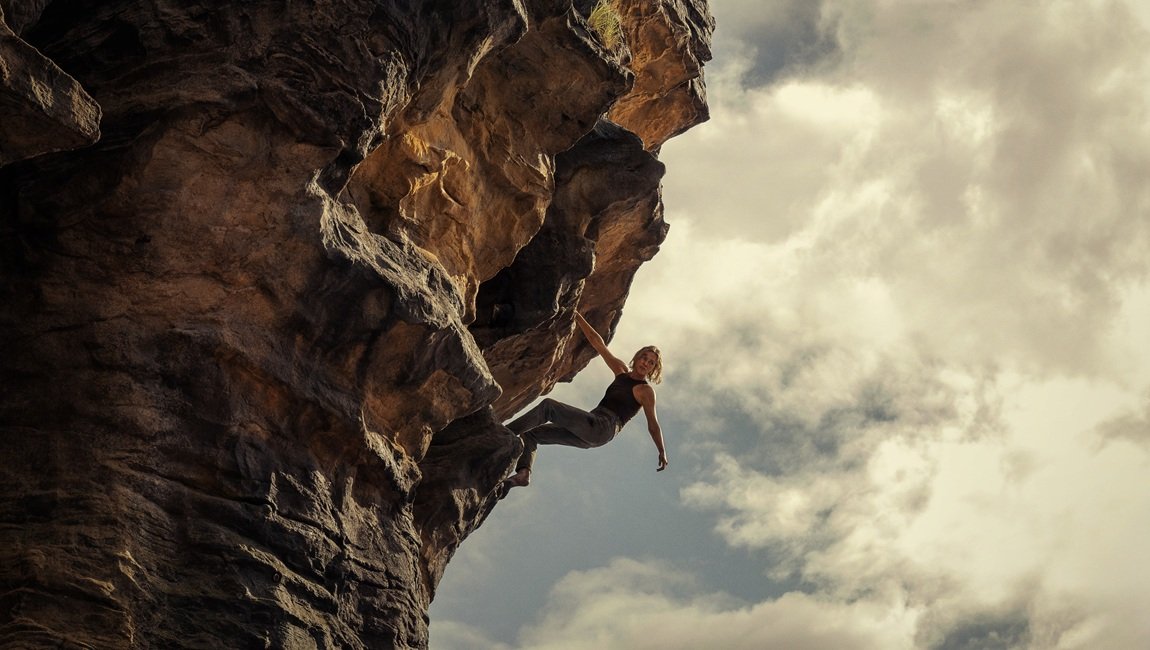
One specific sequence illustrates the films shortcomings: on the run from Ben, Sasha runs into a crevice and must climb up it in order to make her escape. Theron is hauling herself up the craggy rock formations with her bare hands, looking for footholds and any tiny cranny where she can gain purchase. Impressively, it’s really Theron doing all this work, but Kormákur obliterates the performer’s physicality in the edit. There are too many insert shots of feet and hands, and the viewer can’t fully get a sense of the geography of the space nor how difficult this climb must have been. Once Theron reaches the top and crawls out onto solid ground, she realizes she has summited to a great height and the camera begins swirling around her to take in the vastness of her surroundings. It’s technically impressive — if not far easier to execute these days with drone-mounted cameras — but it becomes obvious that Kormákur is less interested in showing us Sasha’s journey than he is capturing pretty landscape shots. That’s a fine goal for a nature documentary, but much less so for a life-and-death thriller.
As these things go, it’s not much of a spoiler to mention that Sasha survives to the end of the film, and there are some entertaining twists and turns as she first evades and then teams up with Ben. A better film, one that trusts its audience and is actually interested in capturing and settling into the grueling physicality of its own scenario, would have kept a few key scenes here but made them much longer, and richer in detail. But that’s so often the problem with Netflix: they’ll give you money and resources, but require the least demanding version of a product in return. Stick with Alone, or The River Wild, or Cliffhanger, or, hell, even Wrong Turn instead. There’s far more life in those life-or-death thrillers than you’ll find in Apex.
DIRECTOR: Baltasar Kormákur; CAST: Charlize Theron, Taron Egerton, Eric Bana, Zac Garred; DISTRIBUTOR: Netflix; STREAMING: April 24; RUNTIME: 1 hr. 35 min.
Comments are closed.