
After it was reported that MUBI had received a $100 million investment from venture capitalists with ties to an Israeli defense tech firm in May 2025, The Los Angeles Festival of Movies found itself thrown into a tailspin. But by last September they announced the end of their partnership with the now controversial streamer, and in February announced a new partnership with Kino Film Collection. The third year of the festival, which recently took place from April 9-12, was sprawled across Eagle Rock, Chinatown, and Westlake. It opened and closed at Vidiots, with John Early’s directorial debut Maddie’s Secret on Thursday night and Sophy Romvari’s feature debut Blue Heron on Sunday.
With a party planned for every night, the festival perfectly captured the city’s crude sort of glamour; brushing shoulders with celebrities, indie darlings, and internationally renowned gallerists alike at a dive bar where you once saw the bouncer shove a man into the glass facade of the entrance. A short run that packed a punch, about half of them the films screened were debuts. I always find myself tapping the “spare African Diaspora Cinema, ma’am?” sign when it comes to festival programming across the board, but with that being said, the nine new feature releases that played over the festival’s four-day run offered a genuinely balanced range of tonal and aesthetic endeavors.
Kamal Aljafari’s With Hasan in Gaza boasted two sold out screenings. The context of this film’s release essentially edifies the way its images can be read. Following almost three years of footage from the ongoing genocide in Gaza, seeing buildings, churches, restaurants standing, children clamoring to be photographed at the beach, swells a hysteric dread in your chest. But even 25 years ago, when this footage was filmed, the constant state of impermanence for Palestinian people in their own homes was already fully manifested, a green tent standing squarely on a leveled home. The screening was introduced by actor Hisham Fageeh, who gave a brief overview of found footage cinema as operating in two modes; horror and comedy. With Hasan in Gaza is filled with moments of laugh-out-loud serendipity and yet remains clouded in unmitigated horror.
Then there was the U.S. premiere of L.A.-born filmmaker Christine Haroutounian’s After Dreaming, which takes its eponymous directive quite literally with an anamorphic lens and a penchant for petroleum jelly soft focus. The film is a sparse drama couched in a somewhat redundant formal exercise in austerity, but filled with occasionally spectacular images — cosmetically Malick-ian, despite the filmmaker’s objections! Also playing was Kevin Walker and Jack Auen’s Chronovisor, a work of static mobility on the existential pleasure of intellectual curiosity. The back of a French woman’s neck has never been so exhilarating! Being distributed later this year by Grasshopper Film, it contains some of the most thrilling reading you’ll do this year. I missed Tucker Bennet’s cyberpunk Internet comedy In the Glow of Darkness, which has yet to receive distribution but is almost certain to have an extensive niche festival run followed by cult status among a certain subset of cinephiles, and I also didn’t manage to screen Jillian Frank and Avalon Fast’s scum cinema canon entry Drinking and Driving. [Separate pieces on the impeccable isaiah’s phone and Anouk Moyaux’s Selegna Sol will run this later this week.]
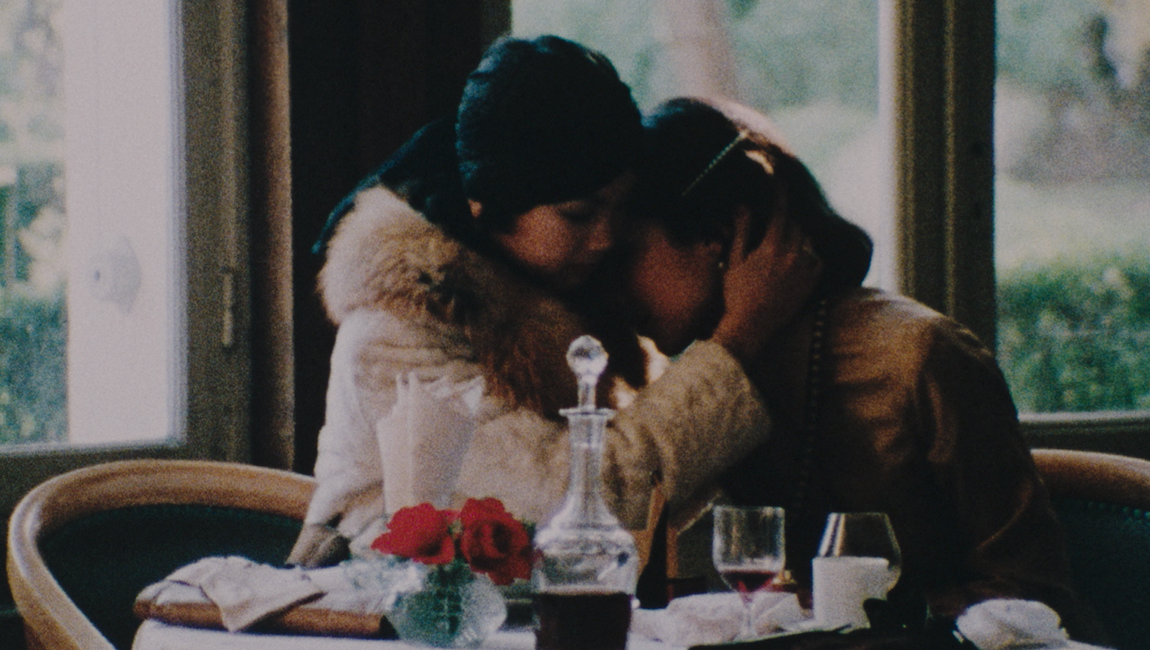
My favorite part of the festival by far were the three shorts programs: “Part-Time” (shorts in collaboration with Now Instant Image Hall), “Presidium Overactive,” and “Animation Today” — but those too command a piece of their own, coming soon. The festival’s final prong was a brief retrospective program, which started with a new restoration of Mary Stephen’s Shades of Silk. The screening was opened by Aarin Burch’s Dreams of Passion, an ethereal and kinetic short about lesbian desire that scores two black dancers, Matima Hadi and Debra Floyd, with Vicki Randle’s indelible gifts. With mentors like Barbara Hammer, Marlon Riggs, June Jordan, and Angela Davis, Burch’s work as an interdisciplinary artist and experimental filmmaker is imbued in a very specific textuality. Shades of Silk, as well as her earlier work Spin Cycle, are both being preserved by the University of Chicago’s Film Studies Center.
Stephens dedicates her disembodied drama about the fractured relationship between two Chinese women to Marguerite Duras. And deservedly so, as the trailing shots of cluttered yet vacant rooms, the delicate photography of feminine grooming, and the convoluted nature of a relationship always verging on platonic and romantic all bring to mind Duras’ Le Navire Night. Stephens, who worked as Éric Rohmer’s assistant editor for some time, creates a nostalgic mood with a predilection embedded in French cinematic traditions. The director stars in the film alongside Alexandria Brouwer, and while it is set in 1935 Shanghai, the entire production was completed in Paris. The text itself is wholly captivating with its formal disponance and evokes interesting conflicts concerning the cultural production of historical memory filtered through a distinctively European sensibility. Somehow, more questions for Aimé Césaire! Dreams of Passion is being restored by L’Immagine Ritrovata, from a 16 mm print scanned at Library and Archives Canada.
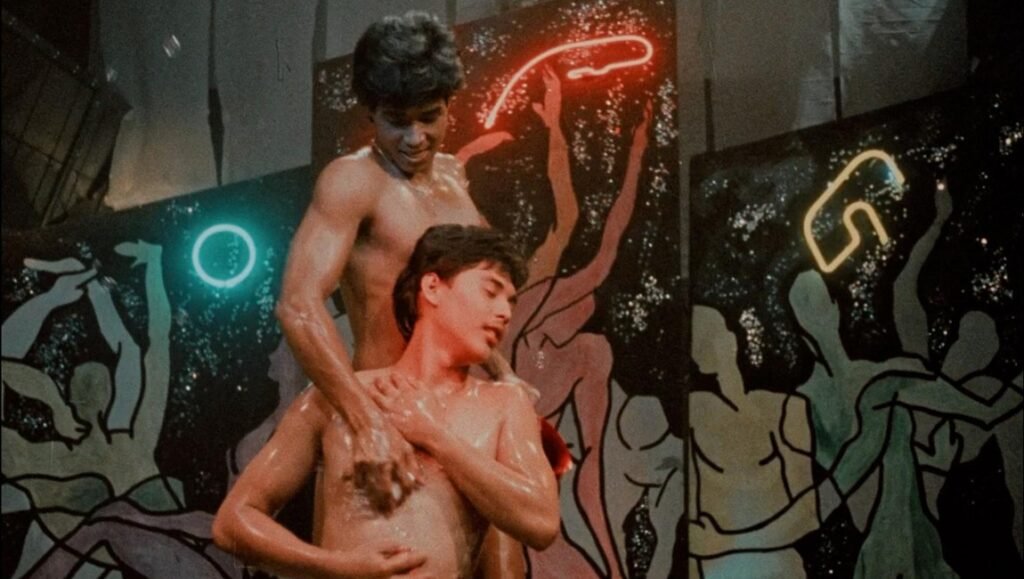
The festival’s second restoration feature was Macho Dancer, Lino Brocka’s dramatic comedy about the complicated and often dangerous sex work industry in the Philippines. The geopolitical landscape of Brocka’s Manila is evident in the opening scene, where features a young Filipino man kind of feigning pleasure as a balding American soldier gives him head. The shifting narrative focus that turns the second half of the movie into a rescue thriller conveys the uneven dynamics of sex work as it applies to men and women, which is further explored in the character of Bambi. Played by Jaclyn Jose, who delivers a penetrating performance, Bambi is resilience personified, but perhaps all that means is that a shred of her humanity is always hanging by a thread. In a city pictured in stretched neon lights and sensual rub-a-dub-dub burlesque, the best you can hope for is a victimless crime. Kani Releasing and Carlotta Films’ new 4K restoration of the film was co-presented by A Bunch of Savages, an LA based collective whose name derives from a phrase Theodore Roosevelt used to describe Filipinos in 1899.
Beyond the actual screenings, two talks on moviegoing were held. Kiva Reardon moderated Josephine Decker and Lisa Hanawalt in a discussion on artists and their movie-watching habits, while Adam Piron did the same with Melissa Anderson and William E. Jones on writers and the future of film culture. A panel on parenthood and filmmaking also engaged several of the filmworkers involved in the festival in a discussion on the joys and horrors of parenting while cinephile. Complete with vendor markets that flaunted local artists and DIY micro cinemas, LAFM exhibited an often disregarded facet of the city: an underlying propensity toward the handmade. No one was walking around with passes that denoted an unspoken hierarchy. In fact, the Hollywood machine that so adamantly insists on inserting itself into every independent space was nowhere in sight. In general, LAFM once again offered a refreshing and rewarding experiment in what the cinema has to offer when we take the time to gather around small feats of human intimacy with the world.
Comments are closed.