
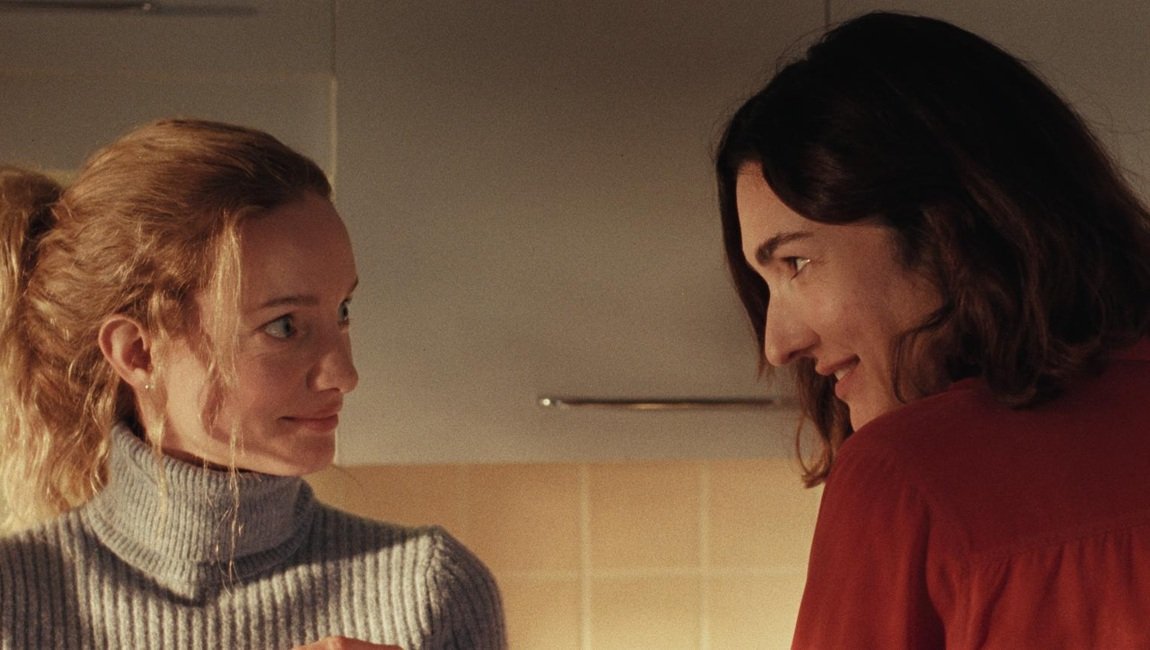
Director Chloé Robichaud’s film Two Women presents as a tale of sexual liberation, wherein two Montréal women trapped in sputtering marriages pursue casual sex that unshackles them from the dull trappings of monogamy. The essential components to a sparkling, subversive sex comedy are all here: fleet-footed and vibrant direction, energetic performances, and, above all, a serious commitment by all parties to the depiction of women discovering genuine pleasure and fulfillment. Yet every flash of promise in Two Women is undercut by the pervading feeling that the film is out-of-time; its focus on the domestic dissatisfaction of middle-class white women and its strange lack of engagement with current discourses around nonmonogamy are the two most prominent examples of its datedness. An adaptation of the 1970 film Deux femmes en or, Two Women is steeped in decades-old ideas that are never persuasively integrated into a contemporary context.
Two Women, written by Catherine Léger, follows two neighbors in a co-op apartment building. Violette (Laurence Leboeuf) is raising an infant with her husband Benoit (Félix Moati), but Benoit travels for work so often that he is barely home. Florence (Karine Gonthier-Hyndman) has a relaxed life with her longtime boyfriend David (Mani Soleymanlou) and 10-year-old son, but she finds herself increasingly frustrated with her and David’s flatlining sex life. Florence decides to revive her own libido by going off antidepressants, and she finds that not only does her sex drive return, but her overall zest for life flourishes as well. She begins hiring handymen just so that she can seduce them, and Violette is inspired to do the same during Benoit’s long absences. While Florence and Violette find satisfaction in their sexual escapades, David and Benoit experience identity crises: David begins taking Florence’s antidepressants, increasing his detachment from his own life, and Benoit falls deeper into an affair with a coworker who has a knack for magnifying his insecurities.
The film’s first hour largely follows Florence and Violette embarking on their parallel quests to bed plumbers, exterminators, and cable guys, and these scenes possess antic, near-slapstick comic energy. Gonthier-Hyndman particularly plays up her hot pursuit of these handsome handymen, each of whom accede happily to her cartoonish overtures. At best, these scenes are mildly amusing, but their exaggerated comic tone and repetitiveness quickly grow tiresome.
Narratively and thematically, Florence and Violette’s devotion to homebound sexual exploration with men they have hired for unrelated services rings false. Both women have professional lives, to some degree, outside of their marriages — Florence is a literary translator, and Violette is on maternal leave from an unspecified job — yet they rarely leave their apartments, and do not appear to have any independent social lives. It also does not quite cohere that, in pursuing casual sex, neither thinks to download an app or go to a bar, and instead rely on sneakier methods. The overall effect is that, while Léger and Robichaud take pains to clarify that neither of these women are “housewives,” they both seem to belong to an earlier generation. When Violette expresses shock to Florence that monogamy is not strictly “natural,” but is instead a social construct, it defies belief; even if we are to believe that Violette lives a cloistered lifestyle, is it really plausible that she has not once been made aware of non-monogamous relationships?
Robichaud brings David and Benoit closer to the center of the narrative in the film’s third act, and in doing so strikes a more reflective tone. These later sequences are more successful, as they provide space for Robichaud to probe deeper into the film’s central relationships. Each of the four central characters interrogate what they actually want from their relationships, and whether they can be fulfilled by monogamy or if they necessitate more radical changes to their lives. Yet Robichaud and Léger end the film abruptly, without fully giving their characters space to complete the narrative arcs they set up. Resultantly, the conclusion reads as perfunctory and unsatisfactory, without revealing any meaningful perspective about monogamy and nonmonogamy beyond the simple takeaway that different people have different needs.
For all its faults, Two Women does move at a pleasantly brisk pace under Robichaud’s direction, and the four central actors give committed and thoughtful performances. Most impressively, particularly for a contemporary domestic comedy, its aesthetics are textured and carefully considered, with director of photography Sara Mishara imbuing each frame with vivid color palates. Overall, though, Two Women cannot overcome its fatally dated narrative foundations. Some of its most important narrative threads invoke ideas both pernicious and clichéd: think, for example, of the film’s three-dimensional middle-class heroines achieving sexual liberation through affairs with one-dimensional working-class men, and the fact that antidepressants function only to make the characters’ inner lives suffocatingly numb. Honest depictions of women’s sexual desires, and nuanced explorations of gendered expectations in intimate relationships, are certainly needed in cinema that aims to dissect contemporary tensions surrounding sex and love. It is admirable that Robichaud attempted to do so in Two Women, but the result is dramatically muddled and thematically outmoded.
DIRECTOR: Chloé Robichaud; CAST: Karine Gonthier-Hyndman, Laurence Leboeuf, Félix Moati Mani Soleymanlou; DISTRIBUTOR: Joint Venture; IN THEATERS: April 24; RUNTIME: 1 hr. 40 min.
Comments are closed.