
It’s never easy admitting that you’re getting old. As we round the corner into the mid-2020s, an entire generation has to reckon with the idea that their formative years were 20, even 30 years ago. Stagnation, be it perpetual ‘80s nostalgia or a pandemic bringing time to a standstill, has obfuscated the fact that, yes, if you came of age in the dreaded “aughts” or early-2010s, time has marched irrevocably forward. The glimmer of hope in the passage of time is that art will finally begin to move on from your parents’ nostalgia and into yours. Nostalgia can be a perilous beast, though; look too far backwards, and you’ll never evolve. The best kind of reflection is art that looks to the past with a sense of reverence, while still realizing that letting go of it is never a bad thing.
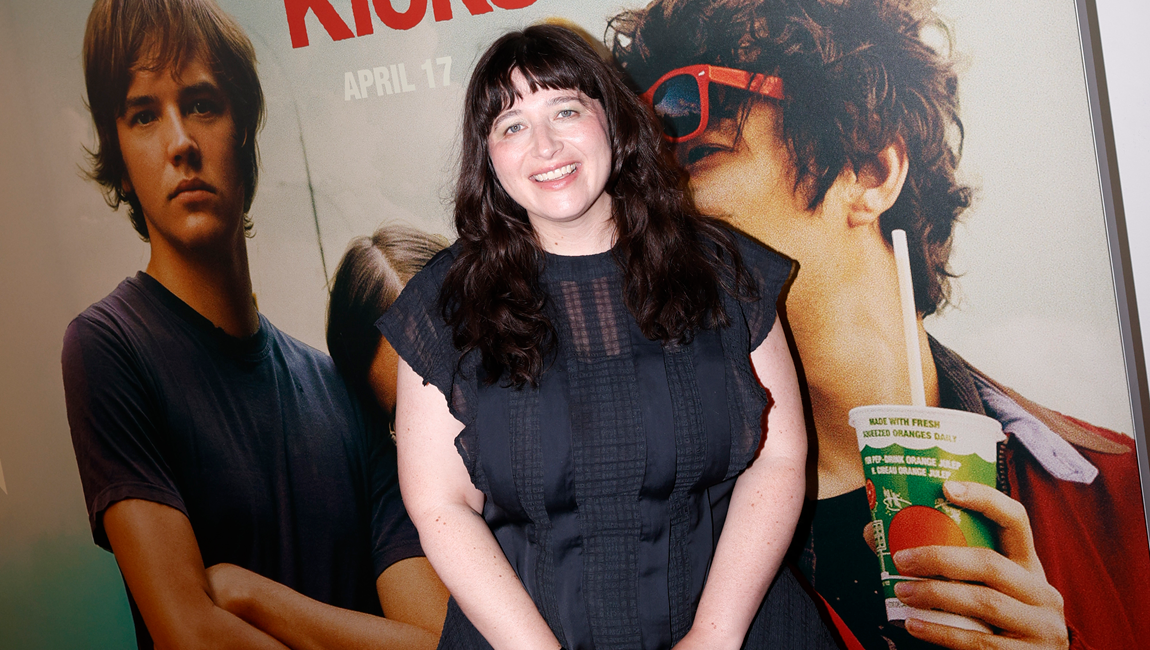
Chandler Levack’s lovely coming-of-age tale, Mile End Kicks, swims in the well of early-2010s nostalgia, doing so with a sober, sweet, and extremely funny point of view. Following Grace Pine (Barbie Ferreira), a Toronto-based music journalist who moves to Montreal to write a book about Alanis Morissette’s iconic album, Jagged Little Pill, Mile End Kicks captures a time and place that’s suddenly disappearing. The odd thing about recent nostalgia is that it might be more vital than any time period before it. With the proliferation and subsequent bubble-burst of the blogosphere, everyone had a voice, and those voices have largely been erased. Pointing back to a time when writing on the Internet felt like an attainable job, one that could open doors financially and socially, Mile End Kicks finds the hope and heartbreak that swirls in the head of anyone who’s written for a publication. Doubly so if said publication has been scrubbed from the Internet.
The feeling of degradation when asking for owed money, missing deadlines because you’re enjoying the access you’ve been given a bit too much of, bylines being erased by petty editors, kings of their own little kingdoms — it’s all here. Filtered through a lens rarely talked about when it comes to being an online cultural commentator, a woman begging for scraps from far less talented men, Mile End Kicks is so specific to that time and place, yet universal about something more. That awkward time where you’re finally an adult and the world is at your fingertips, and somehow, you feel less mature than ever. Nobody’s taught you how to navigate rejection, intimacy, and bills. So you flounder, finally on your own and forced to grow up hard and fast. As the Internet gobbles every photo and article ever posted and dead-eyed billionaires destroy everything we once loved about the World Wide Web, capturing that window where the possibilities were endless is vital. Mile End Kicks exists far beyond a coming-of-age nostalgia trip. It’s a key text examining something that was almost beautiful.
As Mile End Kicks rolls out into theaters, I sat down with Chandler Levack to discuss the film, approaching awkward intimacy on screen, the erasure of third spaces, and so much more.
Brandon Streussnig: This film made me nostalgic for third spaces, specifically ones meant for creative output. I remember going to interpretive dance studios or performance art spaces in my early 20s and always sort of feeling a little embarrassed. A little cringey. Watching this, I couldn’t help but think, “Why was I such a little asshole?” We need those spaces for young people to explore themselves. How important were they to you?
Chandler Levack: When I lived in Mile End in 2011, coming from Toronto, I’d never been to anything like that in my life. Maybe I went to Silent Barn once in Bushwick. I think the Black Lips were playing, and it was so packed, I was standing on a chair and holding onto the wires of the ceiling so I wouldn’t fall to my death in the mosh pit.
Toronto is kind of corporate, with just venues and shows. All of a sudden, coming to Montreal and being in these kinds of illegal DIY after-hours warehouses and lofts, it was completely mind-blowing to me. I really felt like you were seeing something that was authentically DIY and independent, and people weren’t there because they wanted to make money or get signed. They were just there because they were friends fucking around, and trying to make art.
Parts of that scene were very funny, pretentious, and silly. But every so often, you would see something that would completely blow your mind. It was my first time being part of anything like that. I’d been a music critic ever since I was 18, and I’d always kind of worked like this little tiny professional adult. That summer was the first time I actually got to be young around people my own age. It wasn’t like I was there because I had to file a 12,000-word article the next morning. I was there because I was invited to a show, and it changed everything for me.
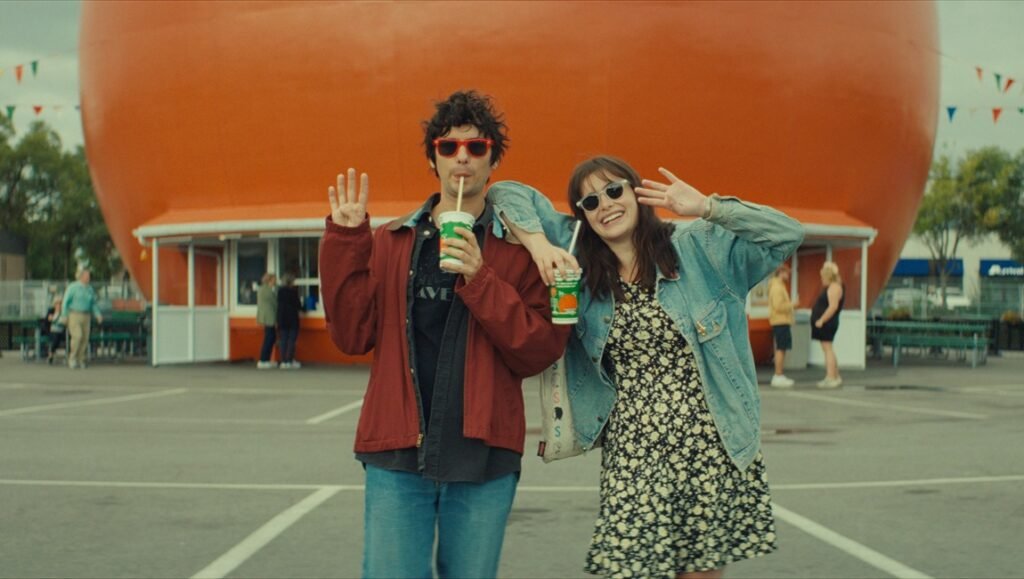
BS: The other thing you really nail is how temporal and hard being a journalist can be. Grace talking about how her outlet deleting her articles from their page hit me in my soul. Coming from that background, how much of yourself went into Grace?
CL: That’s what was hard because when I was first approaching it, I was like, “I don’t care. I’ll just put it all out there, and it doesn’t matter.” I then realized I was giving everybody way too much information. I thought, “Oh, if I’m just as completely naked and personal about what this experience meant to me, it’ll somehow make the film more real, or people will really understand where I’m coming from.” A lot of what I realized as the shoot went on was like, “No, please give yourself the space and distance to actually make this a fictional character and a work of fiction and art as opposed to some kind of weird amorphous performance piece or something.” It’s not an art installation. It’s not a 1:1 ratio of your real life and what happened to you.
It’s somewhere in between. It’s murkier and gives Barbie the agency to create a character that’s separate from me. It became something that we were collaborating on in the middle. That allowed me to be a lot freer. I think there’s so much grubbiness to being a freelancer, and I wanted to portray the shameful experiences. I’m such a self-hating invoicer, and that horrible email you have to send your editor, like, “I would like to be paid. Is that okay?”
BS: It’s so debasing. Then the “Hey, just circling back!” e-mails are even worse.
CL: I can’t tell you how many times I’ve done that. Or, yeah, I’ve probably written for five different publications where all of my articles have been completely erased from the website. There was one publication where I wrote 400 articles, and all completely evaporated. Another one I wrote maybe 200, and they’re just gone. Will never get them back. It just shows the ephemerality of being a journalist. It’s such a crazy career.
BS: I think it’s important that movies like yours or like Meet Me in the Bathroom are documenting that 2010s period and how tangible it all was. It’s so weird how that era felt like something new was happening, where we all had cameras in our pockets, spaces online to transcribe the memories, and now it’s all just disappearing. So much of that writing and the pictures that accompanied are gone, lost somewhere on the Internet.
CL: You’re so right. It’s weird because it’s only 15 years ago, but if you dig deep in the archives of Flickr or friends’ Facebook albums — we did a lot of research for the look of the film there — it does feel like it’s completely different. There was a sort of purity to the last possible ever analog era of how music was shared and disseminated. Even though there were still Facebook photo albums and Twitter, it didn’t feel like what it feels like right now, where I can’t even concentrate for more than four seconds on anything. I also think, post-pandemic, anytime I go to a show or anything, it’s amazing just to see how everyone is just locked in their phones and scared to talk to each other and meet each other. That’s what was so great about those movements at the time. People actually met each other. There was a space to encounter a band, encounter people, and it just doesn’t exist anymore. It’s all being disseminated online.
BS: You mentioned the look of the film, and that’s something I wanted to dig into. I love how this looks, particularly when she’s at shows. You nailed that time period so well. That Mark Hunter photography aesthetic, where the flash is just over-exposing everyone’s face. They’re all sweaty and buzzed. It’s immediately transportative to that place and time. Tell me about developing the look.
CL: My cinematographer, Jeremy Cox, is an absolute genius. He just shot Backrooms for A24. We talked a lot about the old Terry Richardson photos and Cobra Snake, and concert photography of that era, which was that harsh flash-on lighting. We watched a lot of clips. There’s a Skins promo where it has the same aesthetic, and we’re like, “It looks so striking in a photograph, but is it going to translate in a moving image?” We were really worried about it and if it would work, and then we’re like, “Okay, well, let’s just commit to it.” It’s a really great idea visually. It felt so exciting to replicate that aesthetic.
It felt like a really great metaphor for that social anxiety that I felt the first time I walked into a loft party, and my friends who invited me were not there. I remember just giving myself tasks. I was like, “If you go and get a drink, that’s 30 seconds where you won’t look awkward. If you go to the bathroom, that’s two minutes that you can do that.” Then I walked into the bathroom and saw people doing cocaine on a toilet. I was like, “I just want to wash my hands.” But there’s something about the spotlight on Grace and that youthful narcissism of thinking that every single person is looking at you, obsessed with how uncomfortable you seem. When the reality is that everyone is just thinking about themselves and feeling the same way. It felt like a good metaphor.
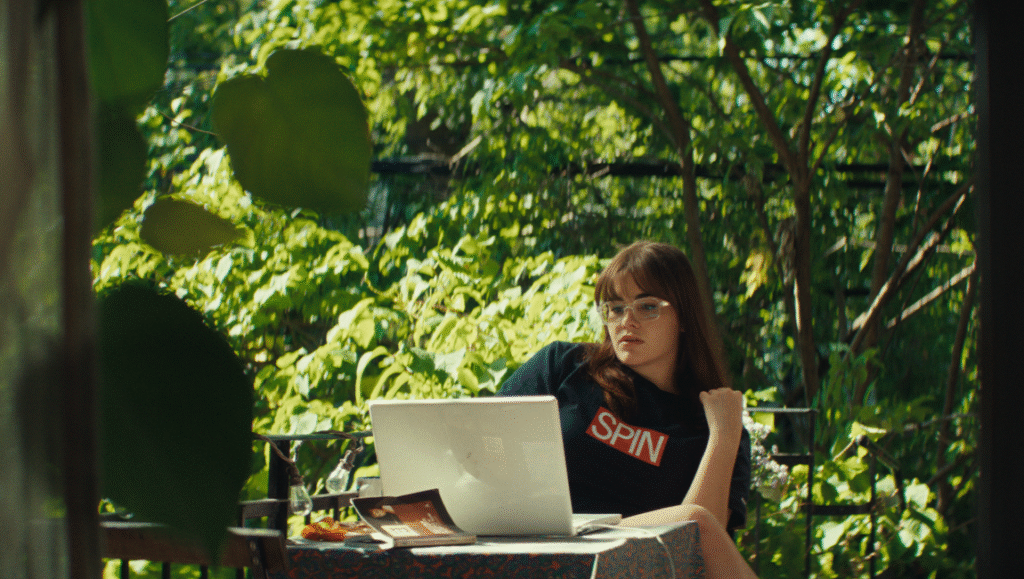
BS: I really appreciated how awkward the sex scenes are. There’s something so honest about how strange it all is, that feeling of hooking up with someone you’re really into and finding out how weird they are, but you commit to it. You strike this balance of it being sexy, you cast beautiful people, and somehow not sexy at all because it’s all so uncomfortable. Can you talk about that approach?
CL: First of all, Barbie was incredibly generous in letting us film her topless. I know that she’d never done a nude scene in anything before, so I wanted to make sure that she felt really comfortable and that all the framing and blocking were going to be really intentional and really privileged the character’s point of view. What became fascinating to me, especially in that first sex scene, was the way that we have anamorphic lenses, which is not something I was thinking about when we were going into the scene. Because it’s anamorphic when he’s feeling her up, her breast is in the foreground, out of focus, and there’s a really insane moment where Chevy’s trying to set boundaries for their relationship while also being sexual. He’s kind of pressing her nipple almost to make a point. It’s the craziest thing I’ve ever seen on film. It’s so funny, but also so bizarre and weirdly cinematic.
I want to emphasize that it’s really the generosity of those two actors being open to using their bodies as tools to tell the story, and the kind of trust and generosity that they gave me as a filmmaker to express that. I feel like so much of my early 20s, when I was figuring out my own sexuality, was with these incredibly passive guys who wouldn’t take their jeans off. I was so confused, and I didn’t know what my role was in that. I thought my sexuality was all about finding the most impossible person who didn’t like me, and if I could win them over or get them to want to be with me, it would prove something about my own desirability. I look back at that now, and I’m like, “Why was that the main focus of my brain power?”
I think it says something about women’s relationship to trauma. I remember showing the movie to this very well-adjusted young woman, and she’s like, “I don’t understand why she would pursue him. He obviously doesn’t like her. She should just move on.” I’m like, “Oh, you’re not broken in the same way that a lot of people I know and my friends are.”
It was fun to make a movie that has this strong female gaze, where it’s the guy that’s being pursued and kind of lusted after, and this object of crazed confusion. So much of my 20s were kissing on the floor, and these weird things where you’re sprawled out over somebody’s mattress, and you don’t know if you kiss them or not, and a beer bottle’s over there, you turn to face them, and it’s just a weird collision of textures. It was fun to shoot that stuff.
BS: There’s something so painful and honest about it. I remember how uncomfortable it felt in my late teens or very early 20s, where you’re this adult finally, and then you try to be intimate and you’re like “Oh, I don’t know how to do this at all.”
CL: The last kiss with Devon [Bostick], it’s so nice because then you get the inverse of that. When we shot that scene with them kissing in the car, it’s kind of like my homage to Call Me By Your Name. I love it in movies when the credits start rolling over the image. I’ve never done that in a film before. So I was like, “Okay. You guys are going to make out for four minutes. I hope that’s okay.” It just ended up being so beautiful. I was crying on set because I love romantic comedy so much, and there’s such a purity and beauty in that scene, and how free they are with each other. It was really beautiful to stage the most horrible sex scenes ever made and then end on this very beautiful romantic kiss.
BS: There’s something really wonderful happening with Canadian cinema right now. There have always been singularly great filmmakers coming from there, but it feels like a moment is really happening with you or Sophy [Romvari] or Matt Johnson or Grace Glowicki. What do you make of that? Can you process it as a moment you’re living through?
CL: I feel like every year I’m just completely wowed and amazed by my peers. It’s a small enough country that everybody knows each other, and I think it has that real sense of support. Dead Lover, I was completely floored by. I’ve known Ben and Grace forever. Universal Language last year, I thought, was just astounding. It’s an amazing thing where all the films are so good. It’s almost like we’re all trying to outdo each other or something because the standard and the bar are so high. I think Canadian cinema gets this bad rap as these kinds of facsimiles of U.S. movies with Canadian accents and low budgets. There’s this kind of uncanny valley of it trying to approximate an American product, but then it’s like the best Canadian movies of all time have always been just deeply idiosyncratic and made by total weirdos, whether that’s Guy Maddin’s work or Adam McCoy and Patricia Rozema, or David Cronenberg. I love Allan King’s documentaries. I think we’re just starting to see that nobody gives a fuck anymore about making something that’s going to appease U.S. markets because who cares? The stakes are so low anyway.
Canadian movies rarely make more than $100,000 at the box office. My distributors were like, “Oh, if Mile End Kicks makes $200,000 at the Canadian box office, that’s an incredible success.” Which is so bizarre to me because you say that to an American producer, they’d be like, “What the fuck? That’s a big flop.” So, it’s like if you only have to make $200,000 at the box office to be considered a box office smash, why not make the weirdest, most personal, craziest art you can?
I really adore Sophy, and I’m so happy for her success this year. I love watching her become this beloved It Girl indie auteur. Morrissey has this quote, “We hate it when our friends become successful,” but I really don’t think that’s true in the Canadian film scene. It just feels like this moment where a rising tide lifts all boats, and anyone’s success, whether it’s Matt Johnson and the incredible year that Nirvana had or Matthew Rankin being shortlisted for an Oscar last year, it’s just really, really glorious to me. Every year, I’m like, “Who’s making a movie this year? Oh my God, that’s the best movie I’ve ever seen.”
Comments are closed.