
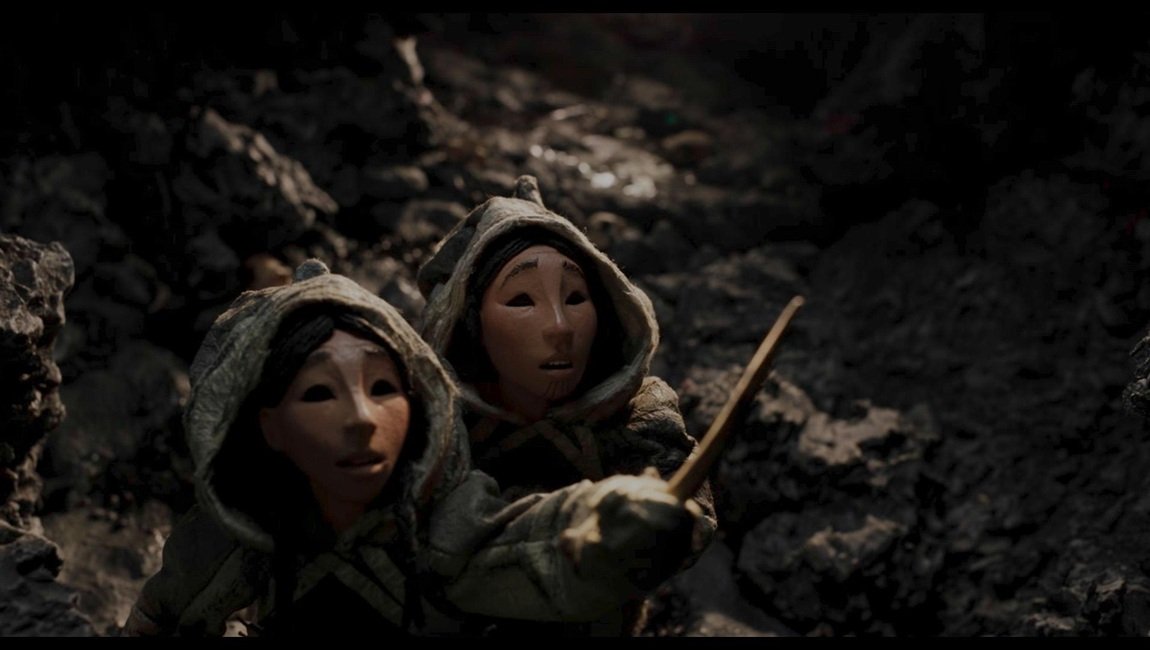
The Part-Time shorts program, in collaboration with Now Instant Image Hall, was presented at the Los Angeles Festival of Movies in two blocks. The first was filled with what I would describe as handmade devotions. The series was a collection of films that thrive in confinement, that revel in the form of the short film. It opened with Abdellah Taïa’s Cairo Streets, a wandering time capsule on the impossible feat of fabricating serendipity. Following that, Kim Torres paints a charming portrait of a Chinese couple living in Manzallino, Costa Rica, lovingly nicknamed Chino and China by their neighbors. I Dreamed of A Gentle Landscape builds its characters through their bonds with each other; with the tone of kind gestures made in jest. And then there’s A Very Straight Neck, Neo Sora’s adaptation of “I Will Go Ahead” by Momoe Narazaki, which proposes throwing yourself down a flight of stairs to feel something. It closes on an all-timer close-up of a scab that I will think about forever.
The first block then continues with Marta Popivoda’s Slet 1988, which lays a clearer narrative about an obscure cultural tradition, told through the diary of a teenage girl. Popivoda uses concrete buildings obstructed by bushy trees, intimate widely framed interiors, and the use of archival footage to retroactively identify the protagonist, all in service of capturing collective cultural memory. Next up was Time Life Volume 15. Monument to a Period of Time in Which I Lived, Mungo Thomson’s exquisite digital collage of a candle burning through a life, and this was followed by the most absurd short of the bunch, Sara Magenheimer and Michael Bell-Smith’s Acetone Reality, which is a clutter of nonsensical aesthetic pleasure, positively Karouacian. The program closed with Dooni, Kevin Jerome Everson and Claudrena N. Harold’s fictionalized eulogy of disco legend Sylvester, as it was supposedly spoken by gospel singer and preacher Walter Hawkins. The film stuns with beautiful black-and-white photography of club scene re-enactments, and moves thoroughly through the ripples of communal grief.
The second block of the Part-Time program was focused on interruptions of collective and individual humanity. Basma Al-Sharif’s Morning Circle opened the program, delivering a glacial exploration of the existential dread of being a colonized subject, of raising a child in a place that you are opposed to calling home. The film is not only moving, but abundantly clear-eyed in portraying the physiological fracture created by all the bureaucratic alienation that comes with displacement. With so much breathtaking blocking and incisive sound design, Al-Sharif’s work is singular in its formal inventiveness. It was followed by An impossible Address in which Suneil Sanzgiri confronts post-revolutionary failures in Goan. The least formally interesting of all the films, Sanzgiri’s eye seems predetermined by a narrow ethos, even incurious at times. Adama Piron’s work of inter-generational historical translation The Early Sun, Red As A Hunter’s Moon merges Kiowa lore and prolonged reunions into an account of time fragmented by colonial violence. And finally, there was Pilgrims cartel / Unclassified by Colectivo Los Ingrávidos, which transformed found footage into a stunning abstraction.
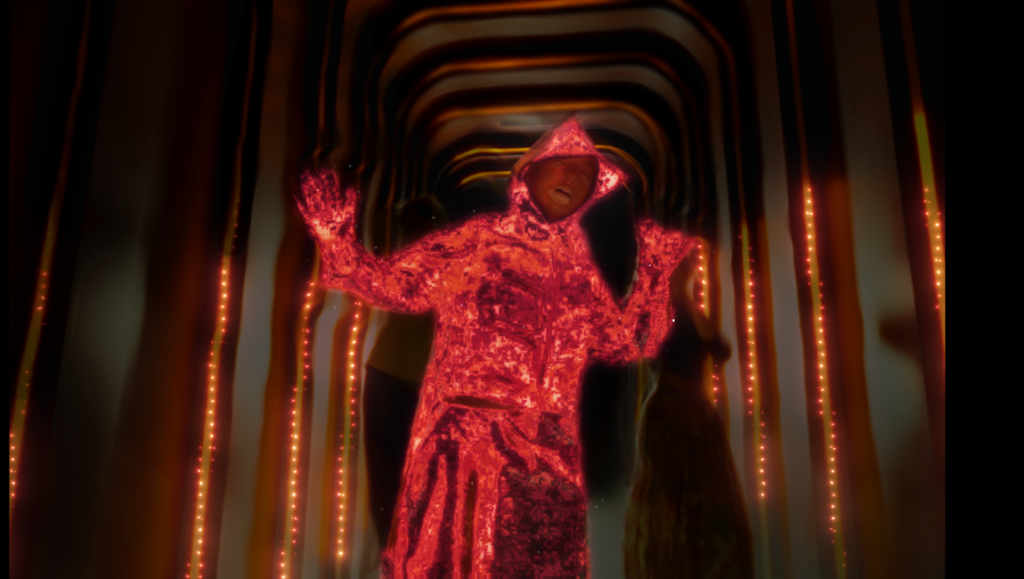
The festival described its other shorts program, Presidium Overactive, as “films that take a variety of cockeyed perspectives on shattered dreams, seductive cults, and the nagging sensation of self-doubt,” a more narrative and comedic mission than Part-Time. The first of these films was Hollis, Conor Scheinberg’s incongruous drama about a woman who — and I might be misreading this — appears to get murdered for having freaky sex. Maybe the correlation is less direct, but in a film with two scenes — one of said freaky sex and the other of a senseless murder — it’s unclear what else one is meant to make of it. Josh Locy’s comedy Potato Potato bravely asks the question: have you ever wanted to see a beautiful sunset through the legs of a woman? The narrative centers around Cynthia, a pregnant woman with no family who becomes penpals with her unborn child, and it immediately slots in as a very welcome lighter entry in the psychosis of motherhood cinematic canon. Joey Izzo’s Going Sane felt the most out of place in the program, a re-enactment documentary where the actors lip-sync tapes of former cult members reflecting on their time at a psychoanalysis utopia. Both myself and the stranger on my left gasped with our entire bodies at the concept of a cult structured around 24-hour therapy.
Code Rogue, Alex Pabarcius’ comedy about a Chinese aspiring gym trainer who works at an amusement park, was the most formally adventurous film of the bunch, and while I personally cannot speak with specificity to the nature of the video game influences at play, it’s not hard to recognize their presence. Collin Druz’s Shadow Daddy was the least impressive entry of the selection, both for its trite drama and lazy punchline. Finally, there was Josephine Decker’s A Stable Marriage. If you’ve ever gone through the arduous pleasures of building a life with someone you love, none of this will seem weird to you; sometimes a woman is a horse. Decker’s proclivity for the self-objectification of women as a rejection of forced objectification is on display here, and propelled forward by two great performances courtesy of Kristin Slaysman and Oliver Harlan.
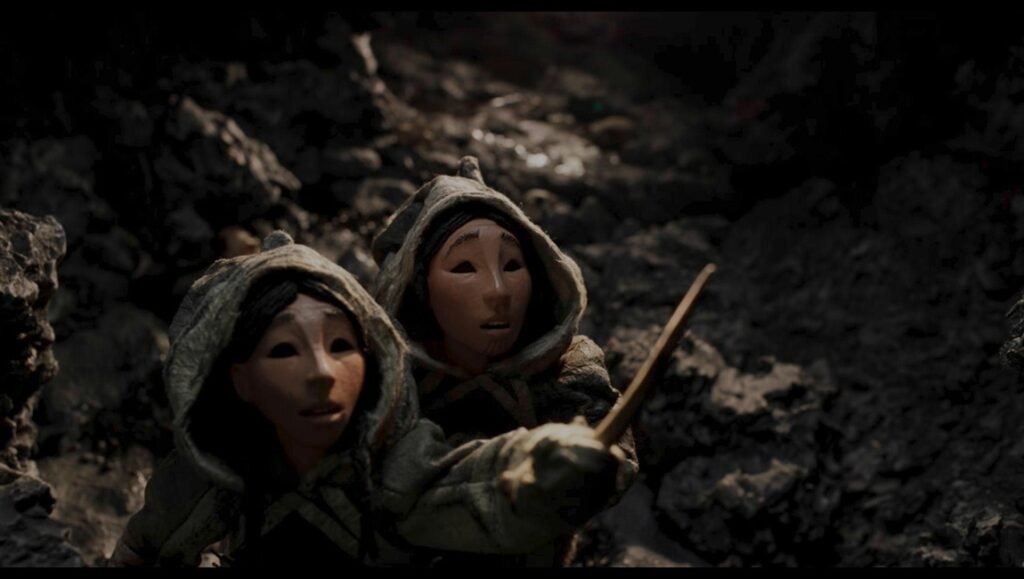
Netx up was the Animation Today shorts program. The people who writhe in their assertions of how animation is cinema are never talking about Norman McLaren and Ted Nameth’s Spook Sport or Leonid Amalrik and Ivan Ivanov-Vano’s Black and White. No, they’re more likely talking about Guillermo del Toro’s Pinocchio. But the Animation Today program contends that animation doesn’t have to be a fairytale; it can be the genealogy of a signature or the shadow of cultural myth.
Animation Today opened with what I consider to be the best film of that program, Don Hertzfeldt’s Paper Trail. Simply described as “a life, as seen through paper,” the film animates scribbles and then misspelled words and then love letters and tests on scantrons, only to end with the eternity of the same signature at the same job that progressively devolving back into an illegible scribble. Without hyperbole, Hertzfeldt’s latest delivered some of the most deeply affecting fourteen minutes I’ve ever lived. Liang-Hsin Huang’s Lethe is drawn and animated in a style that borders a little too much on Alegria art for my taste, but Agnès Patron’s Une Fugue had an impressive texture. The composition of each image and the range of movement between them demonstrated the boundless possibilities of 2-D animation. Jack Wedge and Will Freudenheim’s Acid City, meanwhile, is effectively Mad Max meets Atlantis: The Lost Empire, but framed as a documentary about the resilience of New Yorkers. Tan Wei Keong’s More Than Happy is animated in dreamy blurred lines, but the scenes read to me more like one of those dinner-in-the-dark experiences. Finally, there was Louise Flaherty’s exceptional The Gnawer of Rocks, a stop motion recounting of an Inuit legend about defeating monsters with community knowledge.
As cinephiles of all tastes know, shorts programs at film festivals tend to be a circus of pretensions, where filmmakers racket for the honor of having market potential. There is no place for that at a festival whose very conception is a rejection of standardized independent film slates. Accordingly, the three shorts programs at this year’s LAFM were all filled with moving and surprising works of cinema, none of which appeared, at least to me, to be a “proof of concept.”
Comments are closed.