

Il Cinema Ritrovato, the annual cinephile pilgrimage in Bologna, has reached its 40th edition. As ever, it brings an ample assortment of newly restored films to thousands of spectators who convene from around the world to watch blazing masterpieces in the scorching heat.
Ritualistic gatherings forge unwritten rules and codes. One such rule is that each year the festival dedicates itself to the image of an iconic actress. Usually, you cannot escape her gaze: she is on every catalog and tote bag, on screens and on buses. Multiplied a hundredfold, her image loses its specific referentiality to represent the festival as a whole. Last year’s poster featured a clownishly dressed Katharine Hepburn (to whom the festival dedicated a retrospective) and Cary Grant, in a still taken from George Cukor’s anachronistic gender-bending comedy Sylvia Scarlett (1935). This year’s edition of the program is dedicated to Barbara Stanwyck, who is dressed in a silky, long-sleeved dress and sits against a rippled metallic background. She looks down at the camera, as if to reiterate her dominance over this edition of the festival, a queen surveying her subjects. For a festival that prides itself on an abundance of films, it’s striking that the image of this year’s dedication comes from a publicity photograph. Given the diversity of roles across Stanwyck’s sixty-year career, and her chameleonic ability to inhabit them, perhaps it’s no surprise the festival couldn’t pin down her image to a single film still.
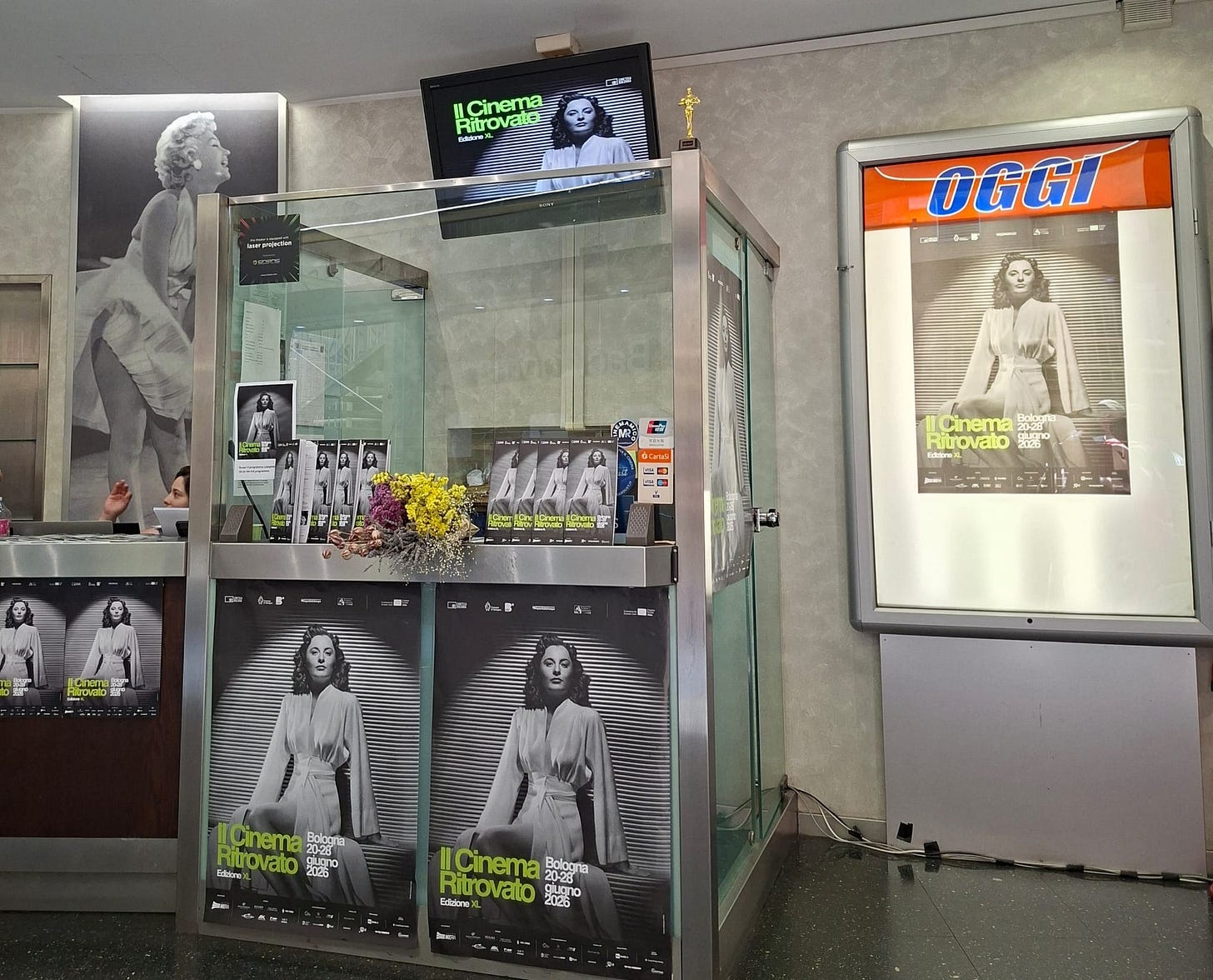
Expectedly, the festival coupled Stanwyck’s image with a partial retrospective, titled All She Desires: Barbara Stanwyck, a feminist slant on Douglas Sirk’s All I Desire (1953) and curated by film critic Molly Haskell. Her selections reorient these Hollywood Classics away from the male gaze and instead toward Stanwyck’s range of characters.
Film festivals are sites of image-accumulation, perhaps especially at Il Cinema Ritrovato. I couldn’t see every film in the festival, or even the Stanwyck retrospective, so I had to do my own personal curation. I began with Frank Capra’s debauched romantic drama Ladies of Leisure (1930). Barbara Stanwyck plays party girl Kay Arnold, hired to attend and brighten up snobby soirees. As these stories go, she falls in love with one of the stuck-up nepo-babies usually in attendance, a painter named Jerry Strong (Ralph Graves). On this particular night, however, they’re both leaving different parties. Kay escapes a yacht function by boat when she comes across Jerry fixing his car’s flat tire, a nocturnal chance encounter that prompts Jerry to hire Kay to model for his next painting, titled “Hope.”
Stanwyck was only 23 when she was cast as Kay, a role that kicked off a string of them throughout the 1930s as the quick-witted girl who gravitates toward rich men. Far from just a blank-faced doll, she’s “real,” according to Capra after watching her screen test. Stanwyck entered Hollywood armed with experience in nightclub and burlesque shows, which supports her authentic performances in this and other early social-climbing films like Baby Face (1933).
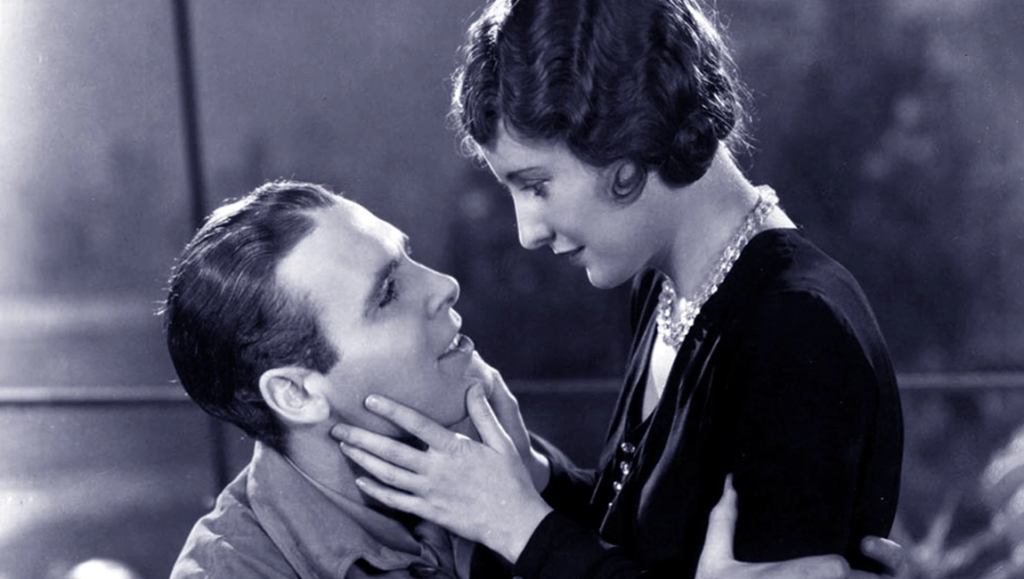
Stanwyck’s famous Brooklyn accent and Jo Swerling’s pulpy dialogue fill Ladies of Leisure, but Stanwyck’s talent shines through even when she doesn’t speak. Distinctive in the early 1930s for its lack of garrulity, Ladies features a wonderful scene built on longing glances and hushed movement. After a sedulous night of painting, full of starts and stops, grumpy Jerry lets an exhausted Kay sleep on his sofa while he rests in the master bedroom. What follows is a delicate montage of a teary, sleepless Kay while Jerry carefully brings her a duvet. Seeing Jerry’s basic human decency slip through his normally crass behavior fills the infatuated Kay with uninhibited love. Jerry’s parents disapprove of his and Kay’s cross-class romance, which triggers a series of melodramatic developments: a painful but tacit separation, Kay’s acceptance of a lesser love, a desperate suicide attempt, and a life-saving reconciliation that tests the limits of realism. But this is Hollywood. There’s no need for hoping and longing when anything is possible.
Right after Stanwyck’s river of tears, I went to see King Vidor’s Stella Dallas (1937). Although similar to Henry King’s 1925 original, it differs by placing greater emphasis on Stella, a complex, working-class woman determined to ascend the social ladder. Played with equal conviction by Stanwyck, Stella’s plan comes to fruition when she marries the affluent businessman Stephen Dallas (John Boles).
From girl-next-door, Stella becomes a lady of high society, though the prude, repressed bourgeoisie don’t accept her eccentric fashion sense or unsophisticated behavior. When Stella throws an extravagant birthday party for her daughter, Laurel (Anne Shirley), and invites all her friends, few of them deign to attend. After further conflict with her Laurel and new family, Stella accepts the seemingly intractable reality that some people are not meant to rise above their station, and goes into self-exile so that her daughter can enjoy the kind of life Stella wants but is not suited to. Real love, as Stella understands it, means removing herself from Laurel’s life to ensure her well-being.
In Stella Dallas, as in Ladies of Leisure, Stanwyck is typecast as the good-time, lower-class girl who believes a rich man can remold her to fit into so-called proper society. As the icy intellectual Stephen Dallas, John Boles is more convincing than Ralph Graves’ brutish Jerry Strong, though not enough to save him from being a dull and one-dimensional leading man. Additionally, both Graves and Boles lack the charisma of their more famous leading lady, and their characters are pitched in a suitably lower register of condescension and ironic superiority.
By now, the subtextual negotiation of personas within Stanwyck’s characters is clear. In The Lady Eve (1941), directed by Preston Sturges, this dichotomy is finally made explicit. Stanwyck takes on two roles, first as Jean, a grifter working with her father, “Colonel” (Charles Coburn), to swindle the high-class passengers of a cruise ship. There they meet Hopsy (Henry Fonda), a rich but socially awkward young man returning to America after a year studying snakes in the Amazon.
Where Ladies of Leisure excelled in moments of silence, The Lady Eve’s dialogue sets it apart. The first time Jean sees Hopsy is in the ship’s restaurant where, buried behind one of his snake books, he’s oblivious to the horde of women ogling him from the surrounding tables. Jean sees herself above both Hopsy and the desperate women fighting for his attention. Having identified her clueless mark, Jean raises her compact mirror to surreptitiously judge these potential suitors’ ineffectual flirting with biting, ironic commentary, which frames and controls our impression of the scene.
Hopsy stands no chance against Jean’s deceptive charm, but Jean decides to call off their romance when her feelings for Hopsy become genuine and disappears from his life at the end of the cruise. To win Hopsy in a way that Jean deems appropriate to his social class, she disguises herself as Lady Eve Sidwich and takes up guest residence at Hopsy’s family estate. Typical Sturgesian hysterics abound, which threaten to expose Eve’s true identity as Jean, but Hopsy never really learns, despite being told. He’s about as in love with both versions as any man can be, and Jean knows she’s in love with him.
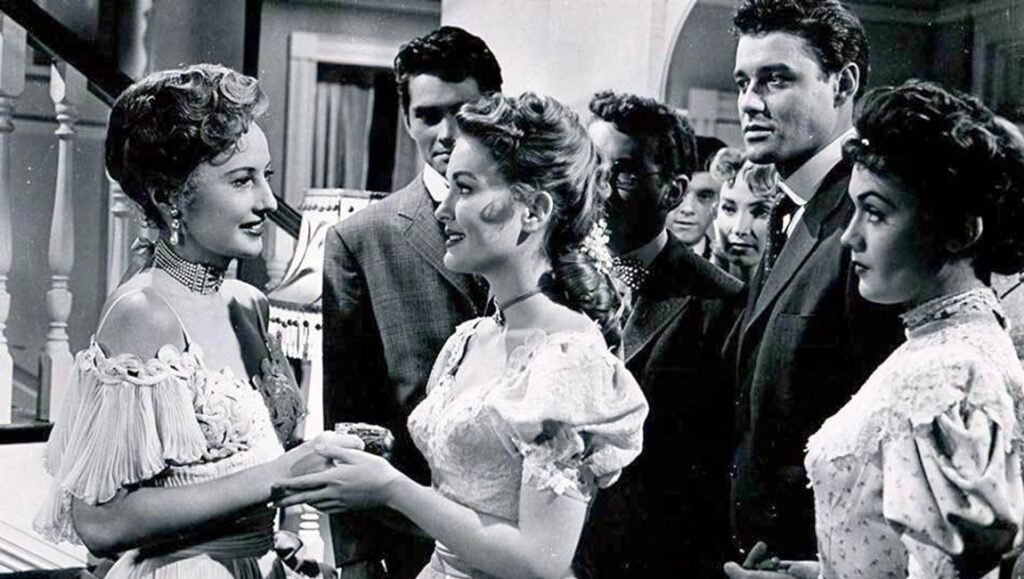
Douglas Sirk’s All I Desire (1953), the first of two films he made with Stanwyck, continues and, in the context of the retrospective at Il Cinema Ritrovato, completes her negotiation of competing identities. There’s nothing of Sirk’s saturated lushness in this low-budget Universal melodrama, though a lack of color and money doesn’t abate the film’s gut-punching, tear-jerking power. Stanwyck plays Naomi Murdoch, an aging vaudeville star estranged from her family, who is unexpectedly invited to attend her daughter’s high school play. Naomi’s lifestyle choices have deemed her a persona non grata in the closed-off suburb she used to call home, but she resolves to shovel through unresolved marital issues and must contend with a stilted former lover in order to unearth her long-neglected maternal instincts.
Despite being set in the early 20th century, All I Desire tackles a recurrent 1950s theme of female defiance toward the entrenched nuclear family. Sirk’s original intention was to have Naomi return to her stage life at the end of the film, but the producers insisted on a profitable “happy ending” — meaning, the reformation of the family unit. Even though the film reinforces traditional ideas about a woman’s place in the home, Naomi’s career as a liberated woman still resonates today. Much like Stanwyck herself, Naomi’s larger-than-life presence will always make her an outsider.
Comments are closed.