
It’s wise for people in Nordic films to not, under any circumstances, celebrate life events with their family members. Ever since Thomas Vinterberg (re)traumatized hapless kin in his visually abrasive Dogme 95 opus Festen (1998), birthday parties, wedding celebrations, funerals, and other family reunions have become histrionic trench warfare for the protagonists of Scandinavian cinema. And as if she never left that emotional minefield, Festen alumnus Trine Dyrholm returns to form with Danish black dramedy The Guest, world premiering in Karlovy Vary’s Crystal Globe competition.
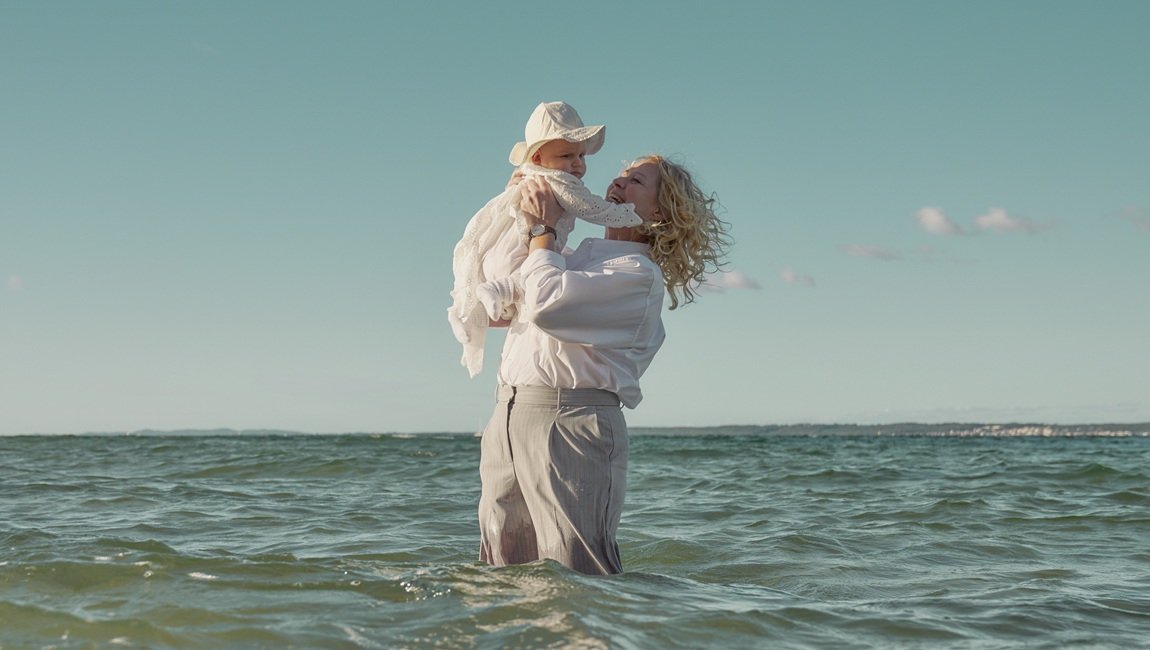
While decidedly more normie compared to the brainfucks of Vinterberg’s outré sophomore film, Mads Mengel’s debut feature still packs the occasional punch. The frictionless normieness of it all is actually the point — soon to be terrorized by Dyrholm’s Vibeke, a loose projectile who rebels against everything basic and banal. She is the surprise guest of the party that her son Karl (Simon Bennebjerg) and his wife Emilie (Mette Klakstein Wiberg) are preparing in a Danish luxury hotel around the christening of their infant son. It’s a trite affair, carefully catered to Karl’s in-laws, who attentively debate the most trivial of matters, like whether asparagus or salmon should be served as the dinner party’s entrée. Understandably, Vibeke was not invited to this boring ritual, as Karl wants to keep his baby at arm’s length from a woman with a checkered past of mental health crises and clinical diagnoses that are never named but easy enough to guess at.
His sister Rikke (Josephine Park) is then the Judas of this holier-than-thou celebration — the one who unexpectedly brings their demonic mother back into the fold. It’s a setup so simple that it can’t help but be effective: Vibeke’s appearance disrupts the familial peace, perverts the meaning of the celebration, and, ultimately, exposes the pathetic lifestyle her son is trying to cultivate. You can feel the inevitable cringe coming from a mile away, rendering The Guest a bit too low-stakes for its own good. Nonetheless, the viciousness of Dyrholm’s fearless performance supplies the film with a heavy causticity it sorely needs.
Co-penned by Christian Bengtson, Mengel’s screenplay sympathetically unpacks Vibeke’s hot-wired brain, gradually transforming her from deranged party crasher to wise sage, who lovingly cuts through the bullshit Karl has curated in his adult life. Although clumsily delivered, her speech at the otherwise pre-scripted dinner party turns into a nuclear soliloquy that somehow gets to the essence of the family’s underexplored traumas, turning a nightmarish shitshow into a strangely cathartic collective experience. Naturally, Dyrholm’s theatrics are supposed to overwhelm her fellow cast members, but actually it’s the way Bennebjerg’s Karl quietly absorbs the psychic damage from his mom that is most interesting to observe here. David Bauer’s cinematography is well-tailored to study the sudden impact of Vibeke’s barrage of truth bombs, relying on crisp wide shots that eagerly crash-zoom on the horrified faces of dinner guests who awkwardly take in the familial in-fighting.
None of this screams originality, but The Guest works as a kind of Nordic rite of passage for its debut director, who did well riffing on Vinterberg’s legacy so early in what shapes up to be a promising career. Like Karl has to wrestle with his mother’s influences, so do Scandinavian filmmakers need to reckon with their cinematic forebears. And while the result feels a bit too indebted to Vinterberg’s quintessential social horror, it nonetheless opens a compelling filmic space for European powerhouse Dryholm to flex a form of acidulous acting rarely displayed by the Danish thespian.
Comments are closed.