
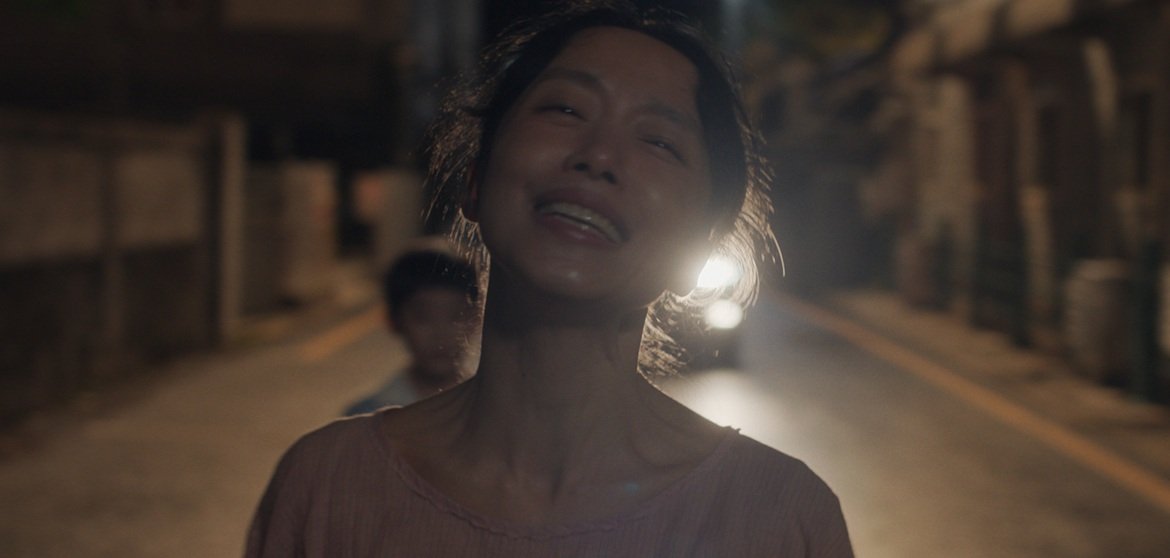
Possible Love
Rare is the film that earnestly inspires you to hold your loved ones closer. Rarer still is the film that does so while making room for the innumerable conflicts of our contemporary lives. Nigh impossible is the film that does all that and doubles as an artistic self-immolation, like those of Scorsese’s Killers of the Flower Moon or Godard’s Weekend. Lee Chang-dong has, miraculously, accomplished all this and more with Possible Love.
The film pits two couples against one another to examine the ever-widening fault lines between the working class and the elite, but where many arthouse dramas (like Mungiu’s underwhelming Palme-winner Fjord) would settle for pat contrasts, Lee digs into the dark particulars of his characters. On one hand, we have Ho-seok and Mi-ok, the husband and wife who get by on the latter’s meager salary since Ho-seok was, euphemistically, laid off from his job as a welder at a large manufacturing corporation two years ago. On the other, we have Ye-ji and Sang-woo, an exorbitantly wealthy pair with time and cash to burn. Ye-ji is a documentary filmmaker, and she’s targeted Ho-seok because of the circumstances surrounding his firing.
The title and an opening card with the words THOU SHALT NOT COVET over black suggest a tale of simple infidelity between the pair; what transpires instead is a rich and complicated modern fable (knowingly) in the spirit of Kieslowski’s Dekalog. Burning, Lee’s first digital feature, is a powerful gateway drug into his world, but it suggests a deviation from Lee’s strengths as both writer and director. Possible Love finds Lee internalizing some of the lessons the transition to digital taught him while returning to the sturdy storytelling instincts of his early 2000s era, and it’s something of a relief for this writer to report that Lee has not lost his touch as a dramatist.
He has, in fact, only gotten sharper. Possible Love unfurls like a riptide to Edward Yang’s Yi Yi, which opens with a wedding, ends with a funeral, and utilizes as its linchpin the emotional life of a young photographer: this film opens with a funeral, ends with a wedding (if you squint hard enough), and locates its greatest resonance in the eyes of an autistic boy who can see clearly the folly of the neurotypical adults in his life. Like Yi Yi, Possible Love carves complete lives out of small gestures and lifts the weight of entire economic systems in throwaway lines, but Lee also ventures out where Yang did not. He dares to critique the social-realist mode of filmmaking, and his own role in it, while reminding us of its inherent value.
Early in the film, Ye-ji and Mi-ok sit down for coffee. They talk about their lives and loves frankly, and Mi-ok emerges as quite a compelling raconteur. Ye-ji gets so excited that she pulls out her camera to have Mi-ok repeat her story. It’s the first of many intrusions the camera makes on Mi-ok’s life, but, being a film director, Ye-ji believes these intrusions are worthwhile: “I’ll make sure their voices are heard,” she says to a boardroom of potential financiers. She’s a filmmaker focusing on laborers and outsiders; i.e., the types of characters Lee typically trains his eye on. The funding board gives her a hard time about her chosen subject, saying her focus on human labor is outdated in an economy rapidly moving toward complete automation. She insists otherwise. Ye-ji’s family name? Lee.
Elsewhere in the film, Sang-woo drives Mi-ok to set, and they discuss the circumstances of the film’s production. “What’s an independent film independent of?” Mi-ok asks. Throughout Possible Love, Lee Chang-dong plants mines to blow up our naïve understanding of the independent film industrial complex — the compromises, the awkwardness, and the moral failures. Yet, while doing so, he still stands firmly on the side of the working family he’s depicting. We in the audience are given access to their emotional lives in ways the viewers of Ye-ji’s film would not. Lee is a filmmaker who recognizes the limits of the very films he makes, yet he can’t help but make an iron-clad argument in favor of those films because of his choices as director. He does what others in this mode can’t — or refuse—to do: he lets us live with his characters.
When Mi-ok tells tales of her childhood, for example, Lee deploys conventional flashbacks (the first time he’s done so in his career). We go with Mi-ok into her past, and it’s a brilliant use of a device that could otherwise read as trite. Or when the documentary crew invades Mi-ok and Ho-seok’s home, Lee puts us in the closet with their son Cheoi. Very nearly adopting Cheoi’s POV, the documentary’s DP tries to photograph him, but Cheoi slams the door shut. We briefly stay with Cheoi in the darkness he creates. Lee has such a firm grasp of the visual storytelling grammar, but he doesn’t make a show of his mastery: the shining of a full moon, the appearance of a rainbow in a shower of mist — his images cut through the cacophony of post-modernity and bring us back, hushed, to an understanding of what it means to be human. It takes a level of maturity most artists don’t even dream of, let alone achieve, to be able to hold contradictions like the ones Lee holds in Possible Love.
Possible Love is not Lee’s masterpiece (that would be Oasis), but it is his most cumulative work: it incorporates Poetry’s compassionate gaze, a towering central performance from Secret Sunshine’s Jeon Do-yeon, and, most importantly, picks up the pieces where Burning’s rage against tech oligarchy and post-globalization malaise failed. As with most Lee films, we’ll be living with its mysteries for some time — this review just scratches the surface of what makes Possible Love so great. Tear the awesome Oak down to its roots, however, and it’s about one thing we can all understand: the heart is big, and it wants a lot. Like U2 dropping their album Songs of Innocence on every Apple device in the world, this writer hopes that Possible Love will play automatically when each Netflix member logs in on November 6. Increasingly, it’s easy to skew nihilistic about the state of cinema. A few times a year, though, something can still remind us why we love the art form so much. Possible Love is one such miraculous movie. — ETHAN J. ROSENBERG
Heil Jupiter!
Whatever one thinks of Carlos Reygadas, it’s hard to argue against his ability to open a movie. His newest film Heil Jupiter!, largely spoken in an imaginary language with some Spanish sequences mixed in, begins with slowly morphing shapes and colors over the course of the opening title cards. The aim of pure formal amorphousness continues all film long, but it’s most successful when we open on images of water: sequences of waves are morphed into new patterns by visual effects, and then we overhear snatches of a conversation from the perspective of the sea floor. Four youths (two boys and two girls, all clearly Indigenous) are frolicking on the beach and its rocks, and while the conversation and initial pairings suggest heterosexual couples, Reygadas quickly shifts to them having same-sex hookups on the rocks. As one of the boys spreads his cheeks, the camera seems to go inside and shifts to colonoscopy footage accompanied by psychedelic effects: Uncut Gems (2019) seems to have influenced American independent and Mexican arthouse films alike, but the visceral textures of the blood, sweat, and sand that Reygadas adds to the actual sex sequences are entirely his own.
Reygadas followed the world premiere of Heil Jupiter! by saying he wanted to leave as much of it as possible up to the audience’s interpretation, that he did not think images rooted in realism were up to depicting the current moment, and that he wanted to avoid having too much of a point of view, even if that was fundamentally impossible when making the film. On the one hand, who is this writer to deny him his aims when it’s so confidently executed? The film becomes unsummarizable almost immediately, but anyone who saw Reygadas’ Post Tenebras Lux (2012) might have a rough idea of what to expect in terms of shapeshifting inscrutability and the general look. It’s all individual set pieces that might cut to something else entirely with a single cut or eccentric dissolve. He’s gone even further out on a limb with Heil Jupiter!, right down to the imaginary language being entirely dubbed in post and the subtitles being decided upon after the fact — nobody making this film entirely understood what it was about until it was finished, and they still might not have the answers.
Nothing in this film is as beautiful as the high points of Post Tenebras Lux, but everything here is consistently madder. The director’s glass-like lensing that provides a sort of halo to the edges of the frame is back, along with his fondness for extreme close-ups and bizarre angles — perhaps the most memorable involves a pig giving birth to piglets that subsequently either nurse or struggle to live. The four characters at the start make some recurring appearances, most memorably in a fiery cult and peacefully painting in the mountains, but it’s never quite clear who they’re meant to be (are they even the same characters throughout?), and Reygadas just as easily shifts to entirely different worlds that don’t seem to have much to do with them. (Outside of the Uncut Gems colonoscopy, the only other film that comes to mind as a potential cinematic influence is the similar four-character-freakout structure of David Lynch’s 2006 Inland Empire.) We see human legs get chopped apart as if being prepared for a butcher’s market (curiously bloodless), someone’s face is transfigured into a donut shape, but they still deliver a monologue, and a pilot taking off briefly has a screaming woman on his windshield before she gets blown away like a bug. It certainly ranks as one of the most unpredictable narrative films ever made, if it even qualifies as one.
All of the above makes Heil Jupiter! seem like a black comedy of absurdism, and while there are a few elements of that, the film ultimately skews far more serious. Here’s where “on the other hand” comes in: it’s Reygadas’ deliberately murky political statement, with numerous sequences possessing clear fascist connotations and a clear preoccupation with both A.I. and contemporary persecutions, usually of Indigenous people. The title is a hint: a Nazi’s salute to a temperamental father-god figure that controls nearly everything in the universe. (Is Reygadas hailing himself?) The first and most memorable of the political trials is a clear contrast to the opening sequence’s watery lusts, with the water being a stagnant and muddy pond. It’s shot from the perspective of a policeman’s body cam (Reygadas cited police body cam videos as the most frightening movies being made today), which reveals a world whose absurdist, A.I.-motivated laws surrounding translation and final statements of suspects also turn into a riff on the Salem Witch Trials. If you sink and drown, then you’re innocent; if you float and live, then you’re guilty and will be drowned anyway. The modern (or post-modern) touch is that these trials involve a chair with the suspect tied to a bulldozer, which dunks itself into the water to submerge the suspect.
Much more troubling is a series of trial sequences that are both clearly meant to be about unjust persecution, and feature a clearly intellectually disabled performer serving as the just-as-clearly evil judge. (Is Reygadas implying fascists are functionally intellectually disabled?) Said trial sequences get the most unappealing lighting and filters in the movie, and don’t shy away from presenting all the participants as useless enablers — until the time comes for there to be a riot in the courtroom. What are the reasons for the riot? What’s the purpose of the trial? No answers here, but a late-film sequence that is clearly meant to evoke Auschwitz’s mass graves and cremation has similar uncomfortable connotations, particularly with the return of that dunking bulldozer filling a more conventional purpose. It only makes two appearances, but it’s perhaps the ultimate symbol of destruction disguised as progress.
Reygadas’ commitment to letting the viewer interpret events however they like is perhaps tricky to marry to such a free-floating morass of loaded symbols with clear political signifiers, but it warrants serious consideration for being such a committed reckoning with some of the weightiest existential questions of the current age — and for trying to find a new form for it. Much like our world, it’s frequently ugly and boring and hard to put up with, but the unpredictable beauty of it can keep you going if you roll with its punches. (From the perspective of seeing it at the 64th New York Film Festival, Heil Jupiter! made most of the experimental short films in Currents look even more stale and reiterative than several already clearly were.) It’s near-impossible to assess whether Reygadas crashed or soared with Heil Jupiter!, but that’s probably just the type of reaction he wants to provoke. — ANDREW REICHEL
My Undesirable Friends: Part II – Exile
It would be an exaggeration to call Julia Loktev’s previous documentary, My Undesirable Friends: Part I – Last Air in Moscow, a smash hit. Clocking in at nearly six hours, it was always destined to be a niche production. But a funny thing happened. Following its world premiere at the 2024 New York Film Festival, many around the world found Last Air in Moscow to be something along the lines of a criminal procedural. Through her intimate verite portrait of independent, opposition journalists in Russia, Loktev shows the screws of fascism being tightened in real time. Putin always made it difficult for these journalists to do their job, and it was clearly dangerous. But with the invasion of Ukraine, these “undesirables” were immediately marked for arrest, or worse. They did their jobs, feeling that things were bad but not unlivable, until suddenly they were forced to flee their homeland.
The sad fact is that fascism is on the rise all over the world, and Last Air in Moscow provided a kind of glimpse into how, slowly but inevitably, it takes over all aspects of life. The film won numerous awards and was picked up by MUBI for streaming, and in a sense its inadvertent prescience has heightened interest in the sequel. Once you “escape” fascism, what happens next? Part II – Exile picks up immediately where Last Air ended, with the various journalists moving from country to country, attempting to find a place from which to resume their efforts. Russian media is on a total blackout apart from state propaganda, which means that organizations such as TV Rain, the independent news channel outlawed by Putin, remain resolved to deliver true reports about war crimes and destruction in Ukraine. Over the course of Exile’s six hours, the channel reestablishes itself in Latvia, runs afoul of its state media regulators, becomes a YouTube-only entity, just to eventually end up working in the Netherlands.
But TV Rain and its fortunes are but one thread in this complex global narrative. Exile is about diaspora and dispersion, as the tight-knit group of friends and colleagues are forced to various parts of the world: Georgia, Czechia, Austria, Israel, the U.K., and, for some, the United States. All of them must continually start again with nearly no resources, trying to eke out a living while producing world-class journalism in cramped, temporary lodging. But they remain at risk. One writer, Elena Kostyuchenko, was poisoned while in Berlin. And two of the women living in Prague — Irina Dolinina and Alesya Marokhovskaya — discover that Putin has operatives all over the world. They are safer than they were in Moscow, but they will always be looking over their shoulders.
Where the real-time developments of Last Air in Moscow often made it seem like a riveting drama, that same sense of immediacy can sometimes feel frustrating in Exile. This is because viewers know all too acutely how things are going to turn out. When a few of the reporters express a firm belief that the invasion of Ukraine will be over in a couple of months, it speaks to the limitations of on-the-ground analysis. But when others who are facing prison sentences actually consider returning to Russia to do their time, as Navalny did, it can be difficult to refrain from shouting at the screen as if you were watching a horror film. Loktev inevitably addresses this in the final chapter, when the world learns of Navalny’s death in prison. It is shattering for these young people so committed to the anti-Putin opposition, but one gets the sense of something larger dying within them. Many of them speak of being able to return “home” one day, holding out hope that Putin’s regime won’t last forever and that a different Russia, one committed to democracy and human rights, is still possible. We eventually see that hope extinguished, and several of the journalists begin to wonder whether their work has any purpose at all. (In fact, one reporter, Peter Ruzavin, quits journalism to join the Ukrainian Army.)
Over the long period covered by Exile, Loktev chronicles the last vestiges of a kind of alternative Russia, one kept alive through resistance and also through narrative. These dissidents believe that they carry the true nation in their hearts, and that one day they will see the triumph of truth, reason, and love. But the flipside of this counter-patriotism is that they see themselves as partially responsible for Putin and the violence against Ukraine. As Russian citizens, it is their nation that is perpetrating these crimes, and they take that responsibility seriously. At times this can be a reflexive sort of tic in their rhetoric, as someone will complain about having no money or no place to live, and then quickly state that Ukrainians obviously have it worse, and no Russian can see themselves as a victim.
But we hear this rhetoric a lot less as Exile goes along. One of the reasons TV Rain’s license was canceled by the Latvian government was that a couple of on-air personalities, including TV Rain’s best-known journalist Anna Nemzer, referred to Russian military forces as “our army.” This acceptance of guilt was paradoxically taken as a sign of disloyalty to Latvia, under whose governmental auspices Rain had been reincorporated. As their lives in exile continue, as these reporters face more hardship, they seem less concerned with apologizing for themselves, although none of them ever claims victimhood. And once Navalny is killed, a certain patriotic undercurrent in their spirits seems, if not to snap altogether, to at least become less pronounced. Many of them finally grasp that Russia may never again be their home, and to some extent it maybe never was.
This is of course analogous to the rise of Trump and MAGA in the U.S., something that was indeed implicit in Last Air in Moscow but that Loktev openly addresses in Exile, if only briefly. One wonders how one’s neighbors, family members, or loved ones could invite this kind of open authoritarianism into their society, and when faced with this dilemma, one can and should fight. But is it really “the nation” that is worth fighting for, or is that a big part of the problem? Patriotism is so easily twisted into jingoistic chauvinism, and it can be difficult to keep struggling to love a country that tells you in no uncertain terms that it does not love you back. — MICHAEL SICINSKI
Comments are closed.