
Lee Chang-dong
Preview over. Hear the full episode on Substack →
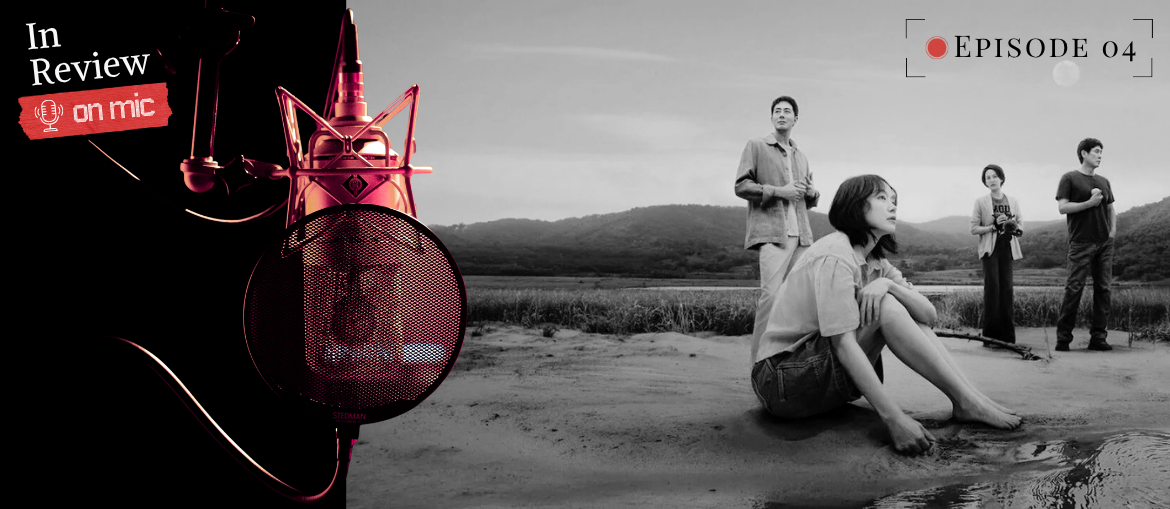
With Possible Love now on Netflix, Hugo Emmerzael is joined by In Review Online contributors Padai Ó Maolchalann and Ethan J. Rosenberg to look back at the cinema of South Korean auteur Lee Chang-dong. Three films from a modest seven-film oeuvre: his 1997 debut Green Fish, his follow-up, Oasis (2002), and this year’s Venice Grand Jury Prize winner Possible Love. Along the way: grace in a gangster movie, urination as a motif, Murakami and Jarmusch, the ethics of representing disability on screen, Faulkner’s Benjy, Kieślowski’s Dekalog, and why love is possible in an impossible world.
On the mic
- Hugo Emmerzael, host. Film critic and programmer.
- Padai O Maolchalann, critic and In Review Online contributor, contributed a new essay on Oasis for our Lee Chang-dong retrospective
- Ethan J. Rosenberg, critic and In Review Online contributor, who reviewed Possible Love here.
The films
- Green Fish (Lee Chang-dong, South Korea, 1997). Lee’s debut feature, made at 42 after a career as a novelist.
- Oasis (Lee Chang-dong, South Korea, 2002). Silver Lion for Best Director and the Marcello Mastroianni Award for Moon So-ri at Venice.
- Possible Love (Lee Chang-dong, South Korea, 2026). Silver Lion Grand Jury Prize at Venice, now streaming on Netflix.
Chapters
00:00 Intro; 01:31 Welcome, and why Lee Chang-dong now; 03:01 Three films, and first encounters with Burning and Poetry; 04:55 Green Fish: a gangster film with grace; 07:16 Humiliation, precarity and small moments of dignity; 08:47 Compassion for every character; 10:23 Spoilers: a dying man’s breath on a windshield, and urination as a motif; 12:01 Green Fish as a microcosm of South Korea: Murakami, Jarmusch and Tom Waits; 14:42 The scarf, and a John Woo moment; 16:05 Where Lee sits in South Korean cinema: Hong Sang-soo, Kim Ki-duk, Park Chan-wook, Bong Joon-ho; 19:01 Parasite, style over character, and why Lee is never nihilistic; 20:07 Oasis: the plot, and the ethics of representation; 22:13 The dove shot and Lee’s willingness not to cut; 24:45 Moon So-ri’s performance; 26:03 Compassion and magical realism as a window into the mind (and a theory about Burning); 28:46 Breaking naturalism, the assault scene, and Kim Ki-duk; 31:58 The final act: a naturalist thriller and a “heteronormative courtship script”; 34:43 Faulkner: Barn Burning, Benjy and The Sound and the Fury; 36:45 On to Possible Love (which Hugo missed in Venice); 38:02 The plot: two couples, layoffs, a documentary, and a Dekalog origin; 40:29 A cumulative work: what happens after Burning’s rage; 42:44 Hong Sang-soo, No Other Choice and Lee’s universalism; 45:13 Three hours that end at the perfect moment, and the ethics of telling other people’s stories; 46:39 Possible Love as a retrospective in itself: Jeon Do-yeon, Sol Kyung-gu, Poetry and Secret Sunshine; 49:02 Plugs and goodbyes; 49:55 Outro.
Mentioned in this episode
Films: Peppermint Candy, Secret Sunshine, Poetry and Burning (Lee Chang-dong), Parasite (Bong Joon-ho), No Other Choice (Park Chan-wook), A Prophet (Jacques Audiard), Dekalog (Krzysztof Kieślowski)
People: Moon So-ri, Sol Kyung-gu, Jeon Do-yeon, Hong Sang-soo, Kim Ki-duk, Park Chan-wook, Bong Joon-ho, John Woo, Jim Jarmusch, Tom Waits (”Temptation”), Kathleen McHugh (on Oasis and intersectionality)
Reading: Haruki Murakami’s “Barn Burning” and The Wind-Up Bird Chronicle, William Faulkner’s “Barn Burning” and The Sound and the Fury. You can read Ethan J. Rosenberg’s review of Possible Love and the full Lee Chang-dong retrospective on our Substack.
In Review On Mic is brought to you by the team of In Review Online. Produced by Chris Cassingham, Emily DuGranrut, Luke Gorham and Hugo Emmerzael. Edited and mixed by Hugo Emmerzael. Music by Beau Zwart. Recorded October 2026.
Subscribe wherever you get your podcasts.
Comments are closed.